Artwork
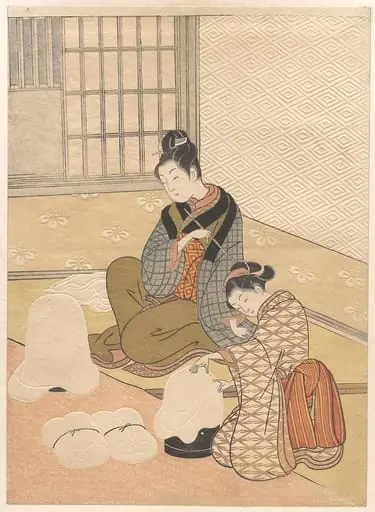
未月|The Seventh Month (Fumizuki)
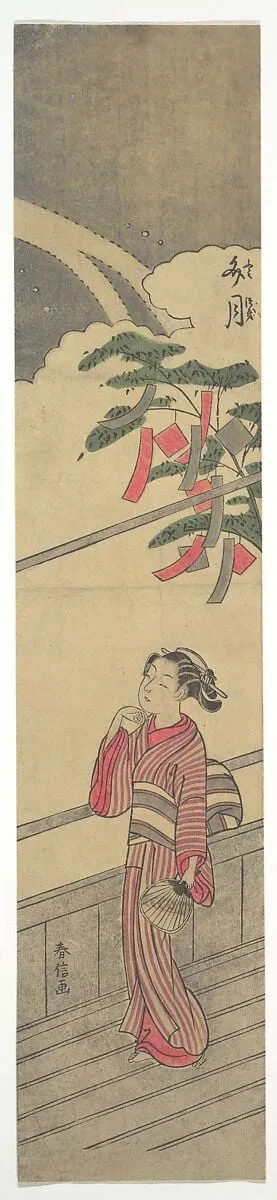
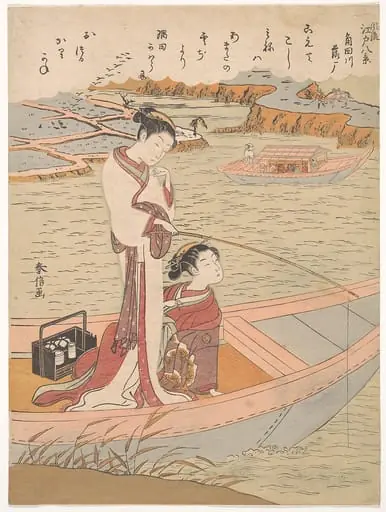
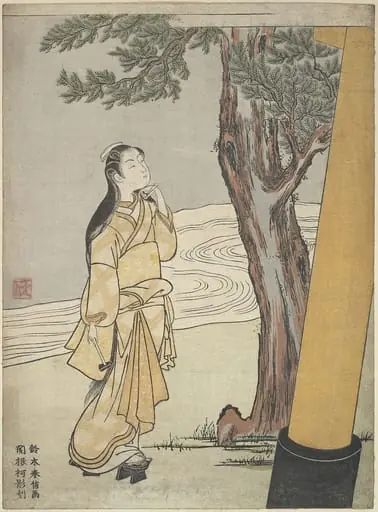
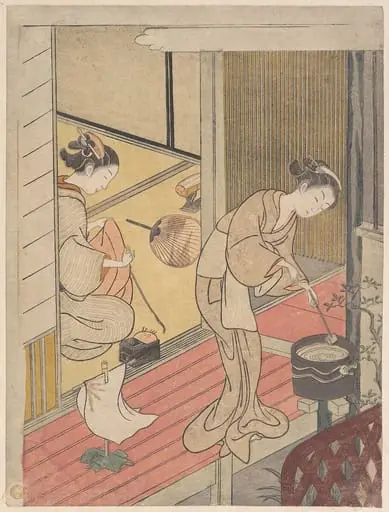
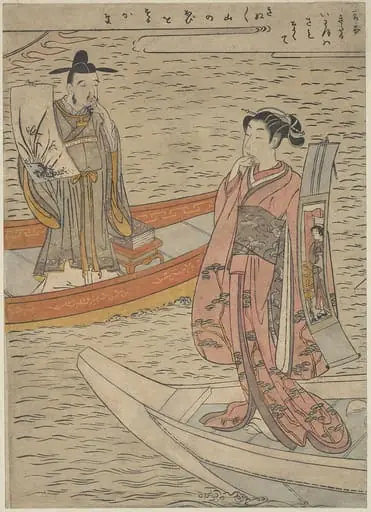
未月|The Seventh Month (Fumizuki) is an ink print by the Impressionist artist Suzuki Harunobu. It is held in the collection of the Metropolitan Museum of Art.
About this work
Overview
Created around 1865, this woodblock print by Suzuki Harunobu is part of a series depicting the months of the year.
Created around 1865, this woodblock print by Suzuki Harunobu is part of a series depicting the months of the year. It captures a quiet moment in domestic life, rendered in ink and color on paper. The work is currently held in the collection of The Metropolitan Museum of Art, where it exemplifies the refined aesthetic of mid-19th century ukiyo-e prints focused on seasonal rhythms and intimate scenes.
Subject & Meaning
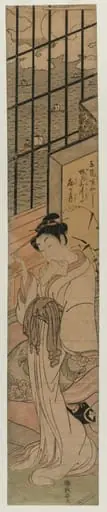
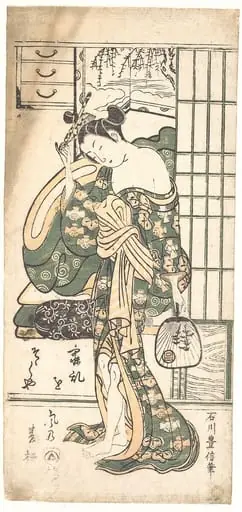
The print portrays a woman standing on a wooden balcony, gazing into a garden adorned with hanging red lanterns. Her attire—a vivid red-and-white striped kimono and matching obi—suggests formality, possibly linked to a midsummer observance. The lanterns and tranquil setting imply a quiet festival or ritual, evoking the seventh month’s association with ancestral remembrance and seasonal transition in Japanese tradition.
Technique & Style
Harunobu employed delicate linework and subtle, layered pigments to achieve a soft, atmospheric effect. The pale sky and wispy clouds contrast gently with the bold stripes of the kimono, while the lanterns and foliage are rendered with minimal detail, suggesting rather than defining form. This restrained palette and emphasis on harmony reflect the artist’s mastery of nishiki-e, a multi-block printing technique that elevated color woodblock art in the Edo period.
History & Provenance
The print was produced during the late Edo period, when Harunobu was pioneering full-color prints for a growing urban audience. It entered The Metropolitan Museum of Art’s collection through established acquisition channels, likely as part of a broader effort to document Japanese print culture. Its preservation reflects its significance as an example of early Meiji-era ukiyo-e, bridging traditional themes with evolving artistic practices.
Context
This work belongs to a series illustrating the lunar calendar months, a popular theme among ukiyo-e artists. Each print typically paired seasonal activities with figures engaged in daily rituals. The seventh month, Fumizuki, was associated with Obon, a time honoring ancestors, often marked by lantern-lighting. Harunobu’s focus on a solitary woman reflects a broader trend toward introspective, emotionally resonant scenes over dramatic narratives.
Legacy
Harunobu’s approach influenced later printmakers by emphasizing quiet beauty and emotional nuance over spectacle. His use of color and composition helped define the aesthetic of late Edo domestic scenes. While not widely known outside specialist circles, this print remains a touchstone for scholars studying the evolution of Japanese printmaking and its engagement with time, seasonality, and private life.
Artist & collection