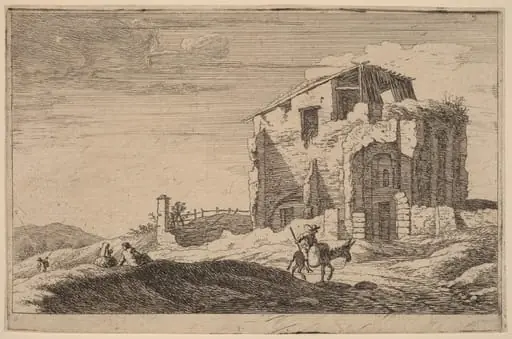
Artwork
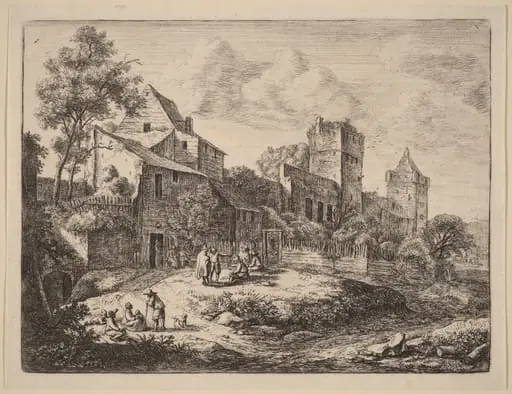
Ruined Building with a Tower
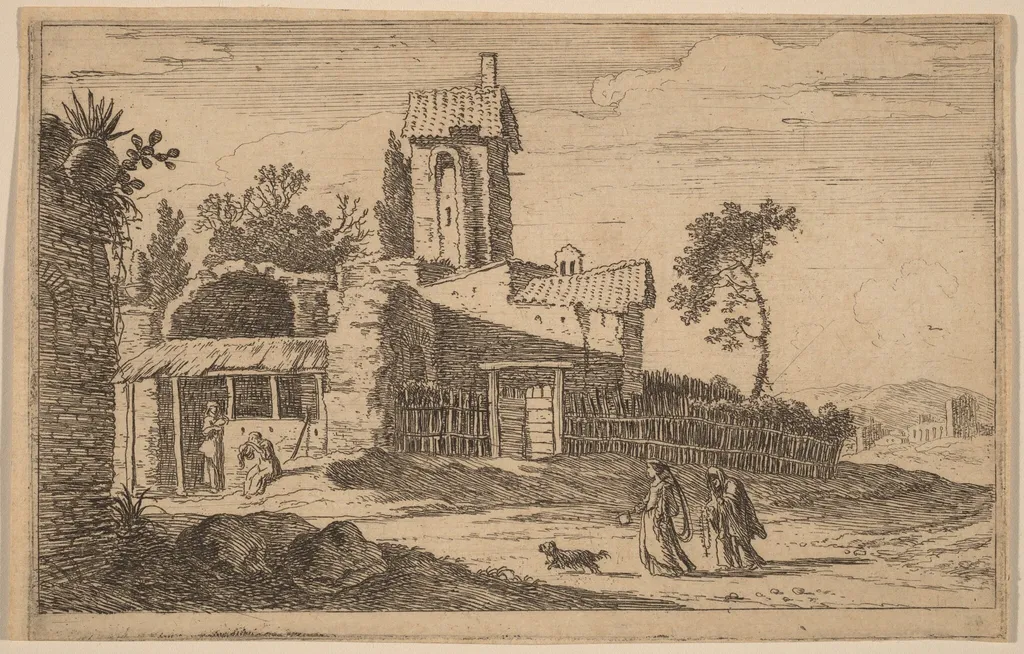
Ruined Building with a Tower is an ink print by the Baroque artist Herman van Swanevelt. It dates from 1628 and is held in the collection of the National Gallery of Art.
About this work
Overview
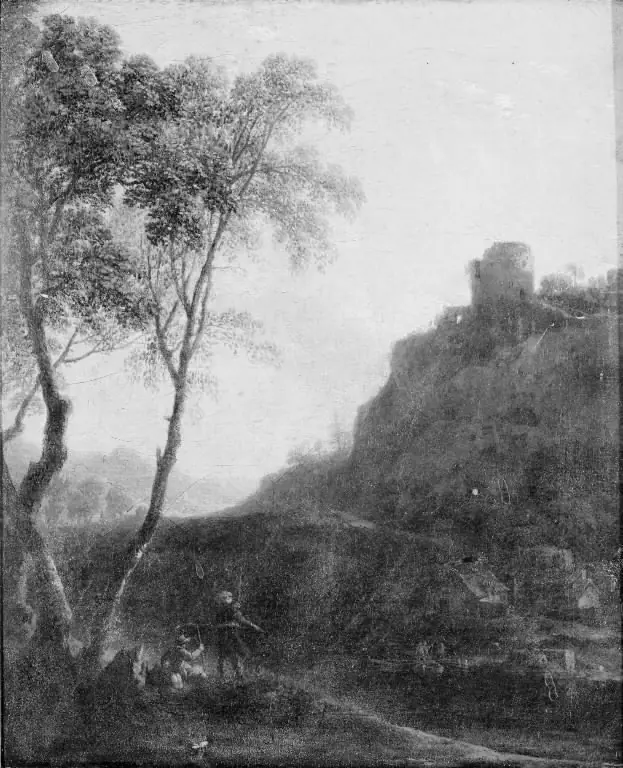
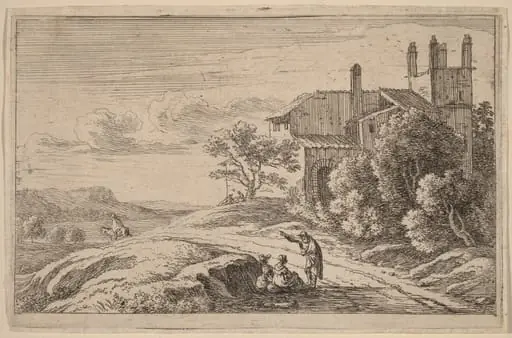
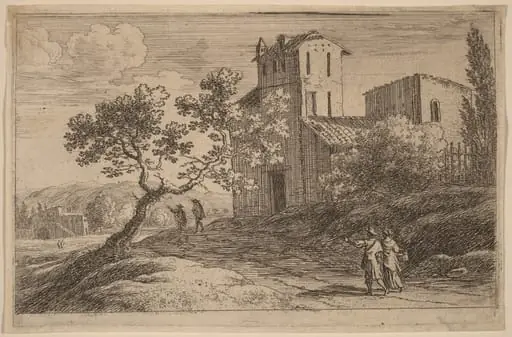
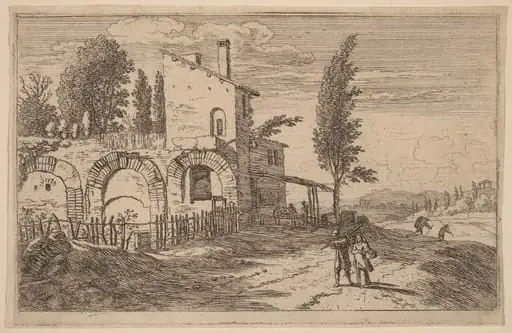
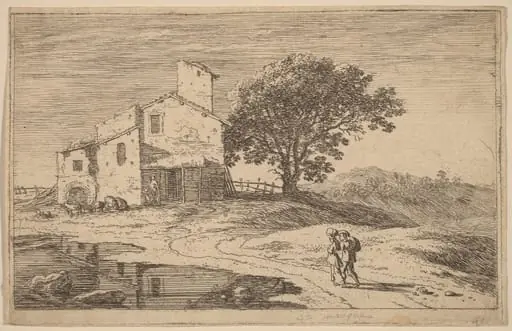
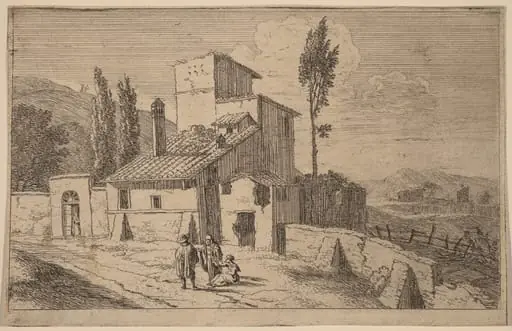
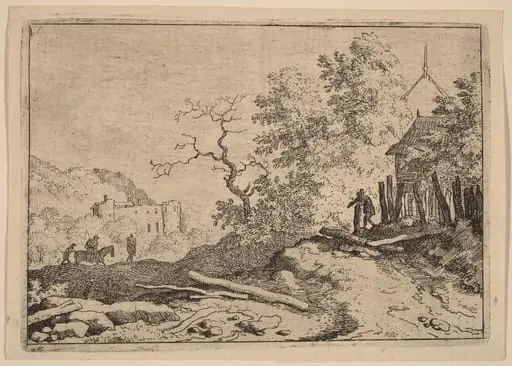
Created in 1628, this etching by Herman van Swanevelt depicts a quiet, decaying rural scene dominated by a leaning tower and collapsed structures. Rendered in monochrome, the print captures the quiet erosion of time through delicate lines and tonal gradations. The composition balances architectural ruin with subtle human presence, suggesting abandonment without overt drama.
Subject & Meaning
The scene portrays a modest village in decline, with crumbling dwellings and a tilted tower that dominates the skyline. Two figures sit indoors, while a woman walks with a child and dog outside, hinting at ordinary life persisting amid decay. The absence of grandeur or narrative climax invites contemplation of impermanence rather than lamentation.
Technique & Style
Van Swanevelt employed fine, controlled etching lines to model form and texture, using cross-hatching to suggest weathered stone and uneven ground. The sky is rendered with fluid, undulating strokes that imply atmospheric movement, possibly wind or shifting light. The tonal range is restrained, enhancing the somber mood without dramatic contrast.
History & Provenance
The print dates from early in Van Swanevelt’s career, shortly after his move to Rome, where he absorbed Italian landscape traditions. Though not widely documented in early collections, it aligns with his known interest in ruins and pastoral decay. Its survival reflects its appeal to collectors drawn to Northern European interpretations of Italianate scenery.
Context
In the 1620s, Northern artists increasingly turned to ruins as subjects, blending topographical observation with symbolic undertones. Van Swanevelt’s work responds to this trend while retaining a quiet, observational tone distinct from the theatricality of later Baroque ruins. His etchings contributed to a growing interest in landscape as an independent genre.
Legacy
This etching exemplifies Van Swanevelt’s role in shaping early landscape printmaking, influencing later artists who favored subdued, atmospheric ruins over grand historical narratives. Its quiet realism and technical precision helped establish etching as a medium capable of conveying nuanced environmental moods beyond mere illustration.
Artist & collection