Artwork
Bâlciul
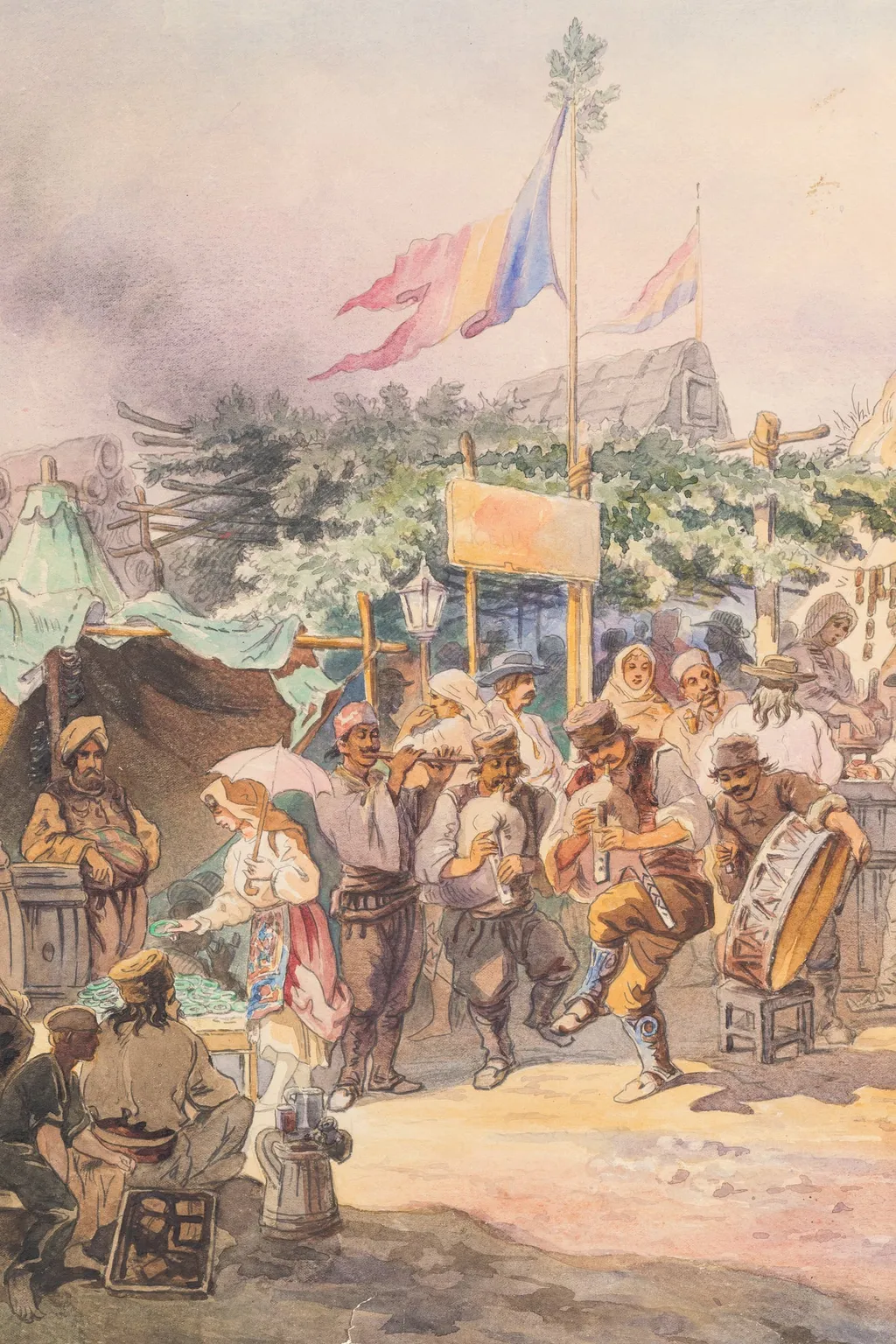
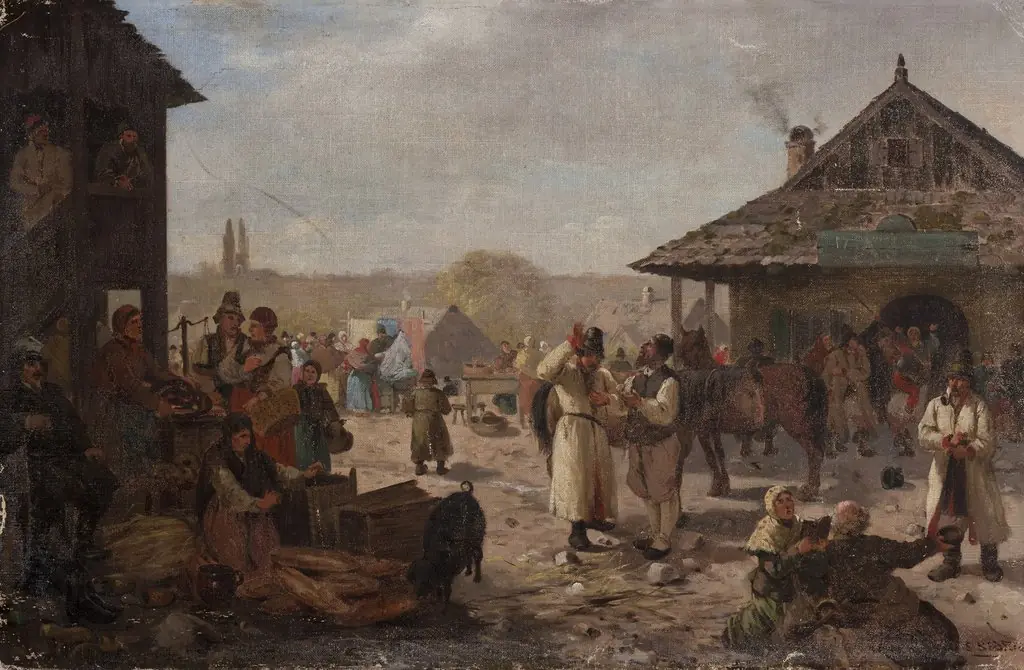
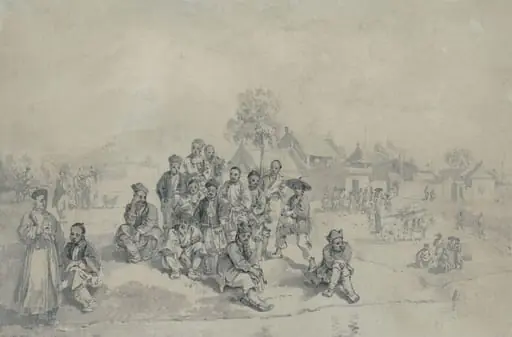
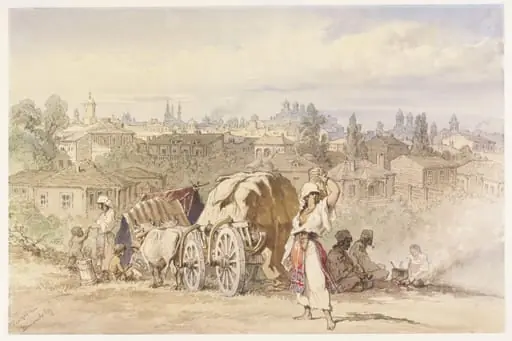
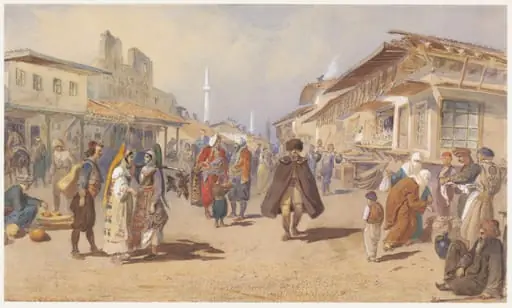
Bâlciul is a print by the Impressionist artist Carol Szathmary Popp. It dates from 1880 and is held in the collection of the National Museum of Art of Romania.
About this work
Overview
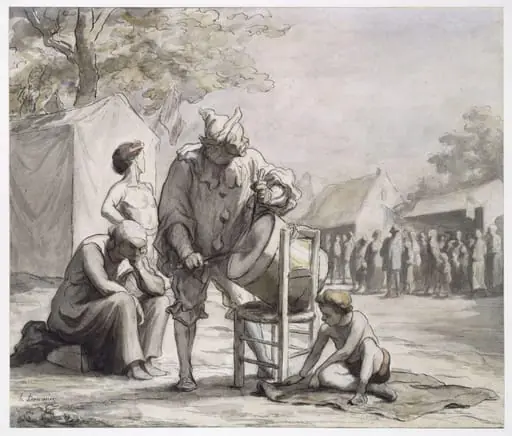
The composition centers on a group of figures interacting around a vendor’s stall, their gestures and postures suggesting casual commerce and social exchange.
Bâlciul, painted in 1880 by Carol Szathmary Popp, depicts a bustling outdoor market scene in Romania. The composition centers on a group of figures interacting around a vendor’s stall, their gestures and postures suggesting casual commerce and social exchange. The setting is rendered with attention to natural light and spatial depth, anchored by trees and a distant structure that frame the activity without dominating it.
Subject & Meaning
The painting captures a routine moment of rural or small-town life, emphasizing community interaction over narrative drama. Figures are engaged in conversation, bargaining, or observation, conveying the rhythm of daily commerce. There is no overt symbolism; instead, the work values the quiet dignity of ordinary moments, reflecting a shift toward everyday subject matter in late 19th-century Romanian art.
Technique & Style
Popp employs loose, visible brushwork and a restrained palette to convey movement and atmosphere. Light falls naturally across the scene, suggesting late afternoon, with shadows and highlights modeled through quick strokes rather than fine detail. The handling of paint avoids academic precision, favoring a tactile immediacy that aligns with broader European tendencies toward observational realism and proto-Impressionist methods.
History & Provenance
Created in 1880, Bâlciul emerged during a period of cultural consolidation in Romania, when artists increasingly turned to native themes and local life. The work remained within Romanian collections for much of the 20th century, documented in regional archives but rarely exhibited internationally. Its survival reflects a growing institutional interest in documenting national artistic output beyond academic traditions.
Context
In the late 1800s, Romanian painters began moving away from historical and religious subjects toward scenes of contemporary life. Influenced by French realism and early Impressionism, artists like Popp sought to portray the textures of everyday existence. Bâlciul fits within this trend, aligning with broader European efforts to elevate the mundane through attentive observation and informal technique.
Legacy
Bâlciul stands as a representative example of Romania’s transition toward modern visual language in the late 19th century. Though not widely known outside national circles, it contributes to the understanding of how regional artists adapted international styles to local contexts. Its preservation offers insight into the evolution of Romanian painting beyond institutional norms and into the realm of personal, observational artistry.
Artist & collection
Artist
Carol Szathmary Popp made lively scenes of everyday life in late-19th-century Romania.