Artwork
The Triumph of Wisdom
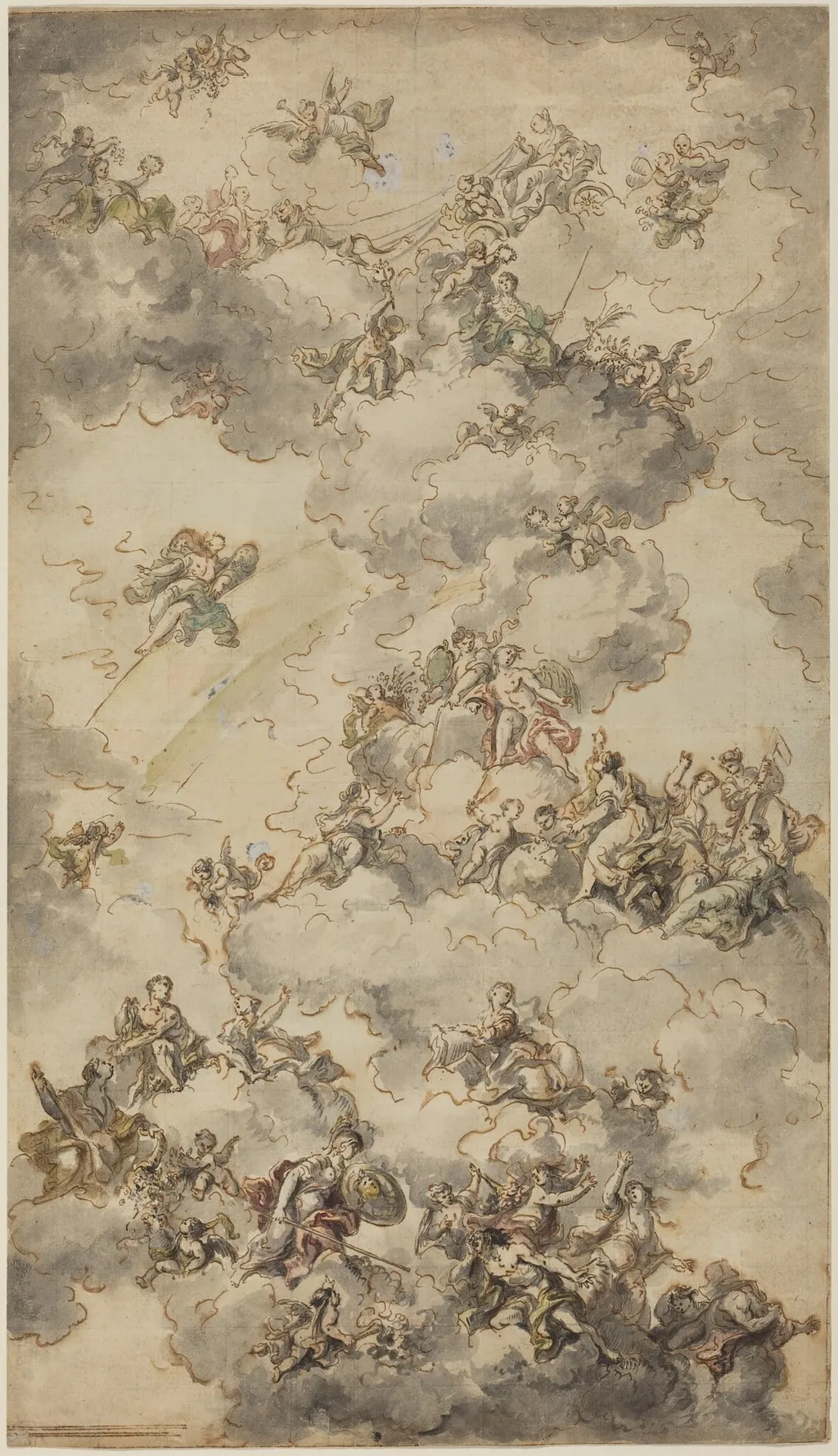
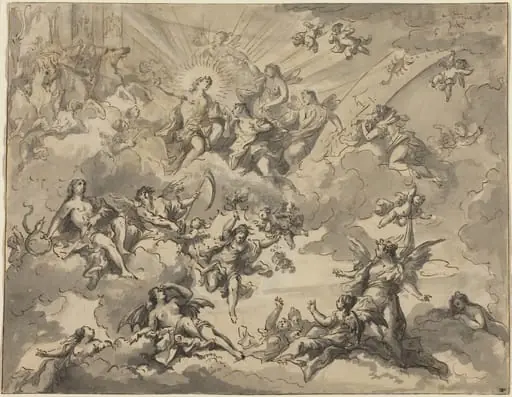
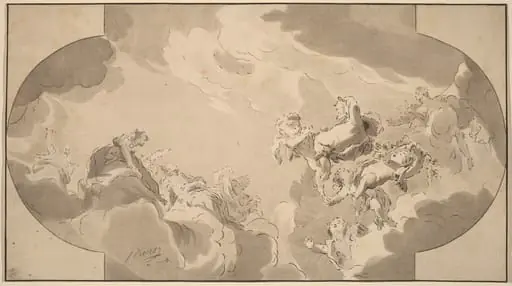
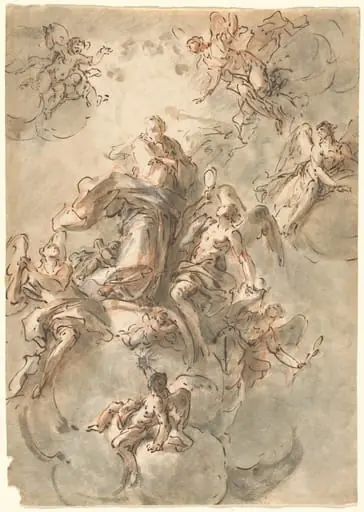
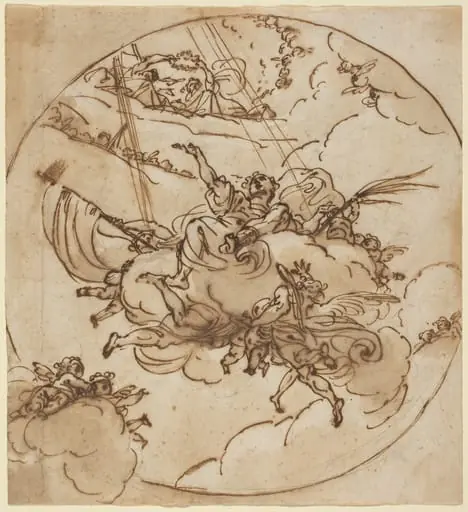
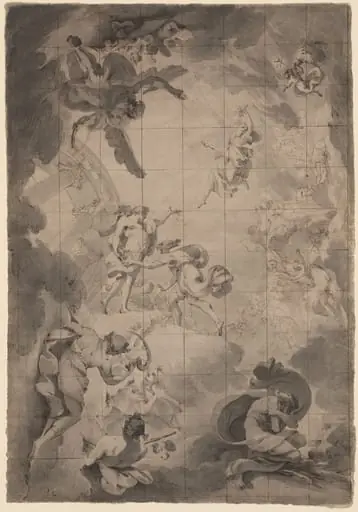
The Triumph of Wisdom is an ink drawing by the Baroque artist Bartolomeo Tarsia. It dates from 1750 and is held in the collection of the National Gallery of Art.
About this work
That means the artist planned to make another version of it, maybe on a bigger scale or in a different medium.
This painting is called The Triumph of Wisdom. It's an allegory, which means it's a picture that tells a story using symbols. The artist, Bartolomeo Tarsia, made it around 1750.
It's drawn with brown ink, gray and brown wash, and white heightening over black chalk. The paper is laid paper, and the whole thing is squared for transfer in black chalk. That means the artist planned to make another version of it, maybe on a bigger scale or in a different medium.
If you like this kind of art, you might want to look up more about the Baroque movement.
Overview
The drawing titled The Triumph of Wisdom is attributed to the Italian artist Bartolomeo Tarsia and is dated to around 1750. Executed on laid paper, the work functions as an allegorical composition, employing a range of drawing media to convey its thematic content. It remains a single surviving example of Tarsian draftsmanship from the mid‑eighteenth century.
Subject & Meaning
As an allegory, the image personifies Wisdom in a victorious pose, surrounded by symbolic elements that suggest triumph over ignorance or folly. The composition uses conventional iconography of the period to communicate moral and intellectual superiority, inviting viewers to contemplate the virtues associated with enlightened thought.
Technique & Style
The drawing combines brown ink, gray and brown wash, and white heightening applied over an underlying black chalk sketch. The artist employed a squared transfer method in black chalk to map out the design before adding the layered washes, a practice common among academic draftsmen seeking precision before final execution. The tonal contrasts produce a subtle three‑dimensional effect.
History & Provenance
Created circa 1750, The Triumph of Wisdom was likely intended as a preparatory study for a larger work or a finished piece for private contemplation. Its provenance traces back to collections of Italian Baroque drawings, though specific ownership records prior to modern acquisition are limited. The piece now resides in a museum collection dedicated to 18th‑century graphic arts.
Artist & collection