Artwork
Portrait of B.F. SUERMAN
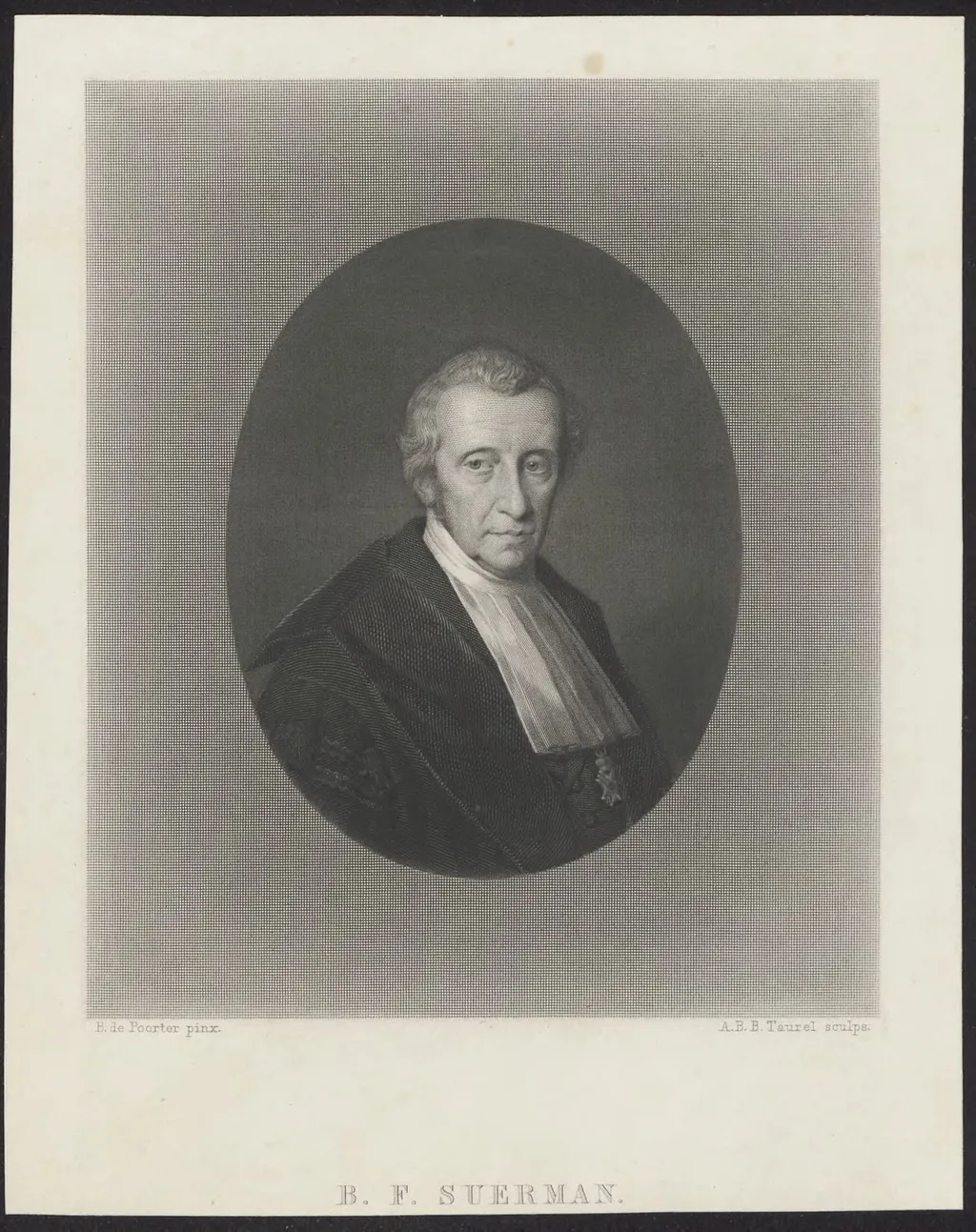
Portrait of B.F. SUERMAN is an unspecified painting by André-Benoit, Taurel. It dates from 1850 and is held in the collection of the Leiden University Libraries. This portrait depicts B.
About this work
Overview
This portrait depicts B.F. Suerman, rendered in oil on canvas by the artist Taurel. It is not an original composition but a reworking of an earlier portrait by B. de Poorter. The piece reflects a practice common among 19th-century painters who engaged with existing works as sources of inspiration rather than solely relying on direct observation.
Subject & Meaning
B.F. Suerman is portrayed in a composed, seated posture, suggesting a formal, perhaps professional, identity. The portrait does not emphasize narrative or emotion but instead conveys presence and dignity through restrained composition. Its purpose appears to be commemorative, preserving the likeness of an individual within a tradition of portraiture rooted in earlier artistic models.
Technique & Style
Taurel’s handling of light and shadow shows awareness of sfumato, a technique associated with Leonardo da Vinci and later adopted by Flemish painters like de Poorter. Soft transitions between tones and muted contrasts give the face a subtle, lifelike depth. The brushwork is controlled, avoiding dramatic highlights in favor of a quiet, atmospheric realism.
History & Provenance
The painting was created by Taurel following de Poorter’s original portrait, indicating a lineage of artistic reference rather than direct commission.
The painting was created by Taurel following de Poorter’s original portrait, indicating a lineage of artistic reference rather than direct commission. While the exact date and ownership history are not fully documented, its existence as a derivative work suggests it was produced within a network of artists who studied and reproduced each other’s compositions for educational or commercial purposes.
Context
In the 19th century, it was common for artists to study and reinterpret the works of predecessors as part of training and professional practice. Taurel’s portrait reflects this tradition, where copying or adapting established compositions was not seen as unoriginal but as a means of engaging with artistic heritage and refining one’s technique.
Legacy
The portrait stands as a quiet example of how artistic influence operated across generations. Rather than asserting individual genius, it reveals the collaborative and cumulative nature of visual culture. Its value lies not in novelty but in its testimony to the transmission of style and method among lesser-known artists of the period.