Artwork
Gideon Chooses His Soldiers
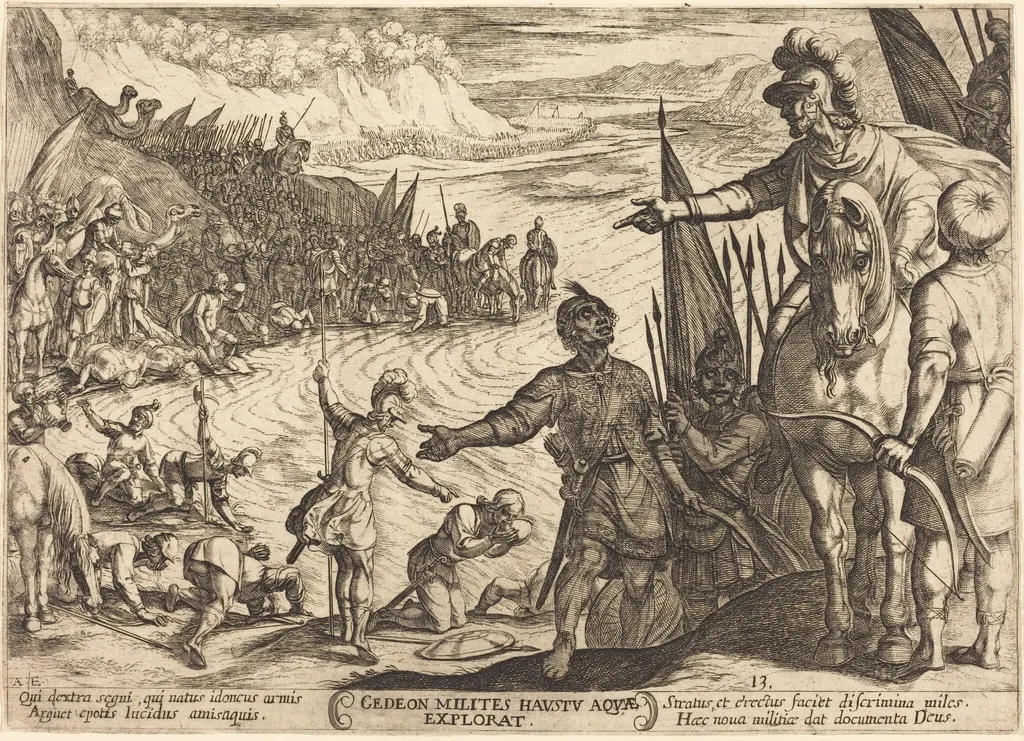
Gideon Chooses His Soldiers is an ink print by the Baroque artist Antonio Tempesta. It dates from 1613 and is held in the collection of the National Gallery of Art.
About this work
Overview
Gideon Chooses His Soldiers is a 1613 etching by Antonio Tempesta, an Italian artist bridging Baroque Rome and Antwerp’s artistic traditions. The work depicts a pivotal moment from the biblical narrative of Gideon, where he selects his soldiers.
Subject & Meaning
The etching illustrates Gideon choosing his warriors, as indicated by the central armored figure pointing at a kneeling man beside a shield, amidst a chaotic battle scene. This biblical subject aligns with Tempesta’s penchant for historical and military themes.
Technique & Style
Executed in etching, the piece showcases sharp, busy lines capturing dynamic movement and intricate details in attire and weaponry. The composition efficiently integrates multiple active figures within a compact space, characteristic of Tempesta’s skill in printmaking.
History & Provenance
Created in 1613, this etching reflects the era’s widespread use of printmaking to disseminate classical and biblical stories. Its provenance details are not specified here, but it is attributed to Tempesta’s body of work from this period.
Context
This work situates itself within the early 17th-century printmaking boom, facilitating the broad circulation of religious and historical imagery. Tempesta’s involvement in this movement highlights his role in popularizing such narratives through accessible art forms.
Legacy
While specific legacy details of *Gideon Chooses His Soldiers* are not provided, Tempesta’s overall contribution to linking Roman Baroque with Antwerp traditions, through works like this, remains notable in the history of European printmaking.
Artist & collection
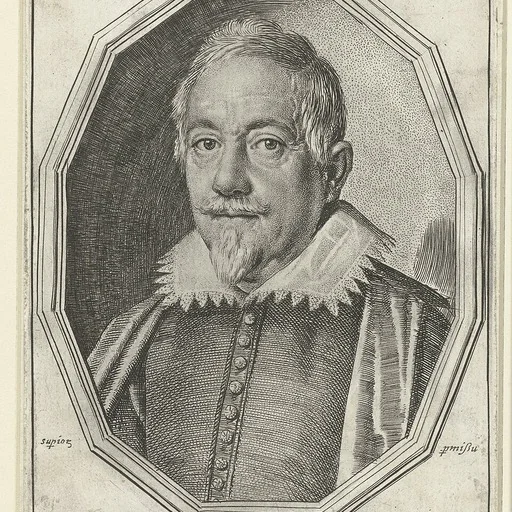
Artist
Antonio Tempesta, also called il Tempestino (1555 – 5 August 1630), was an Italian painter and engraver, whose art acted as a point of connection between Baroque Rome and the culture of Antwerp.

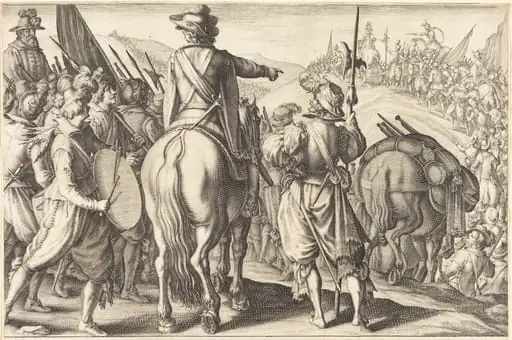 The Troops on the March
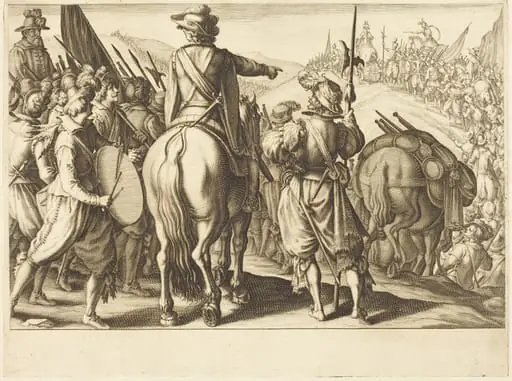 The Troops on the March
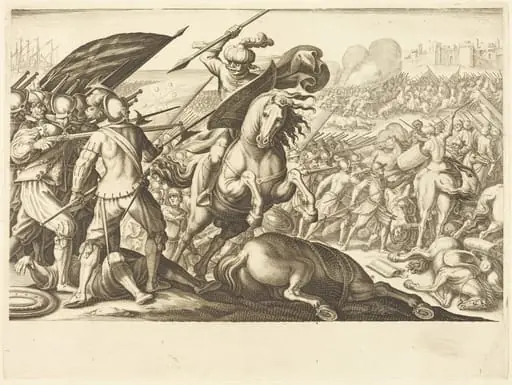 The Defeat of the Turkish Cavalry
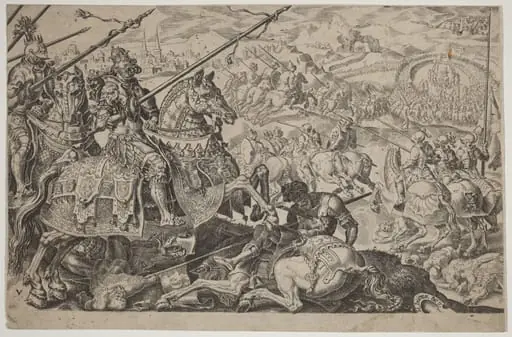 Suleiman the Magnificent Forced to Raise the Siege of Vienna
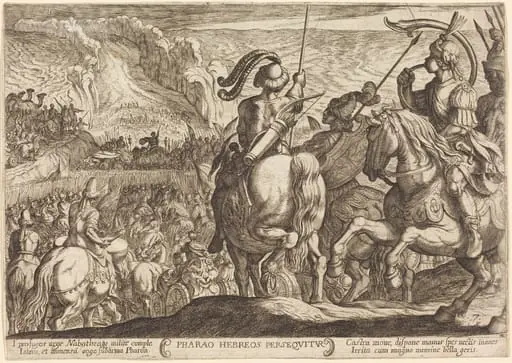 The Egyptians Pursue the Israelites
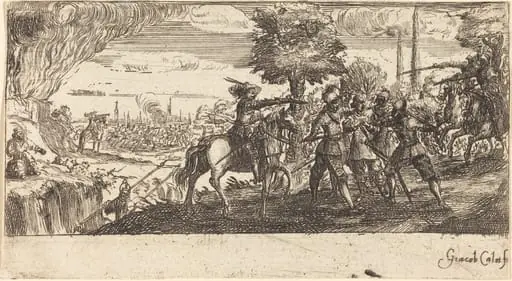 Landscape with Battle Scene
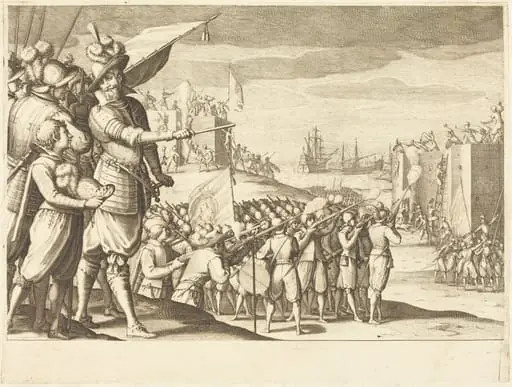 Assault on Two Fortresses
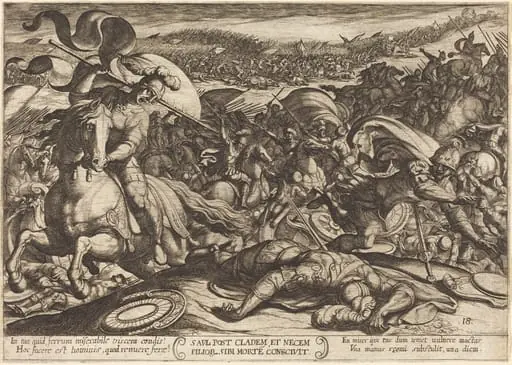 Saul Kills Himself after the Defeat of his Army by the Philistines
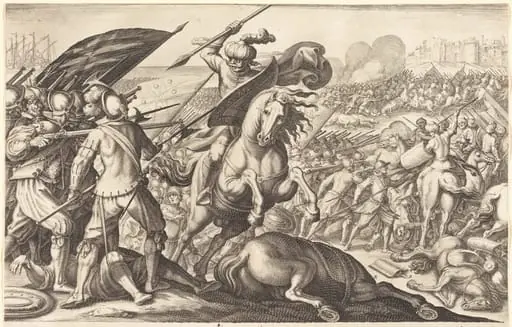 The Defeat of the Turkish Cavalry
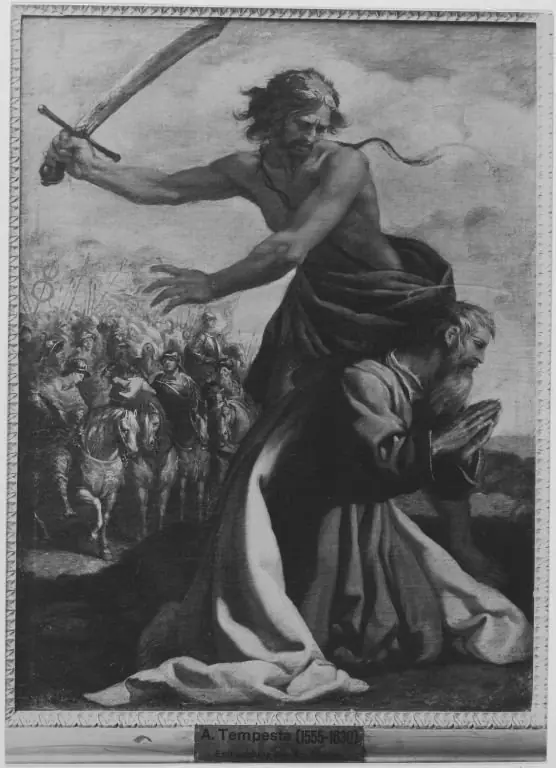
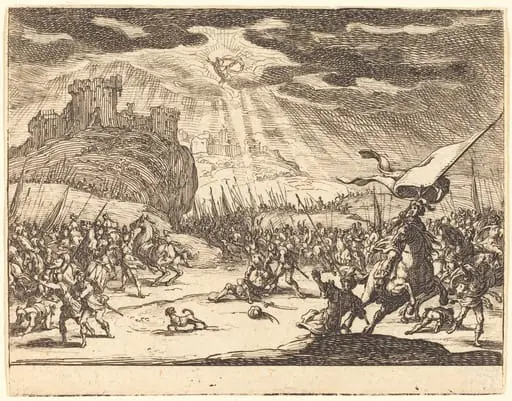 Conversion of Paul
 The Hangman
 Triumphal Entry of Margaret of Austria