Artwork
Gideon Frightens His Enemies in Their Camp
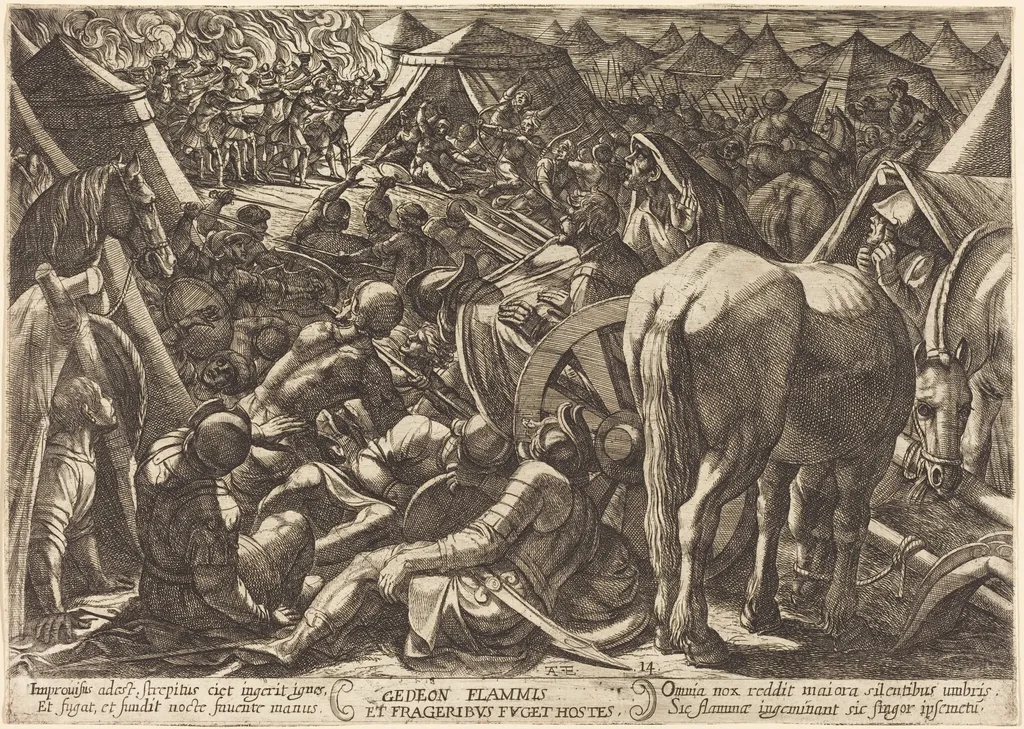
Gideon Frightens His Enemies in Their Camp is an ink print by the Baroque artist Antonio Tempesta. It dates from 1613 and is held in the collection of the National Gallery of Art.
About this work
Overview
Antonio Tempesta’s 1613 etching captures the biblical moment when Gideon launches a sudden assault on the Midianite camp, provoking widespread panic. The composition is dominated by a rearing horse in the foreground and a tangled mass of figures, some upright, others sprawled, set against a backdrop of tents and a blazing fire. The scene conveys a sense of immediate chaos and alarm.
Subject & Meaning
The print visualizes the scriptural narrative of Gideon’s nocturnal strike, emphasizing the sudden disruption of the enemy’s orderly encampment. By portraying the Midianites in disarray—falling, fleeing, and confronting a charging horse—the work underscores themes of divine intervention and the overturning of military might through unexpected tactics.
Technique & Style
Executed in etching, Tempesta employs vigorous line work and pronounced chiaroscuro to model forms and suggest depth. Bold hatching creates texture on the horse’s musculature and the flickering flames, while cross‑hatching defines the crowd’s tangled bodies. The dynamic composition and dramatic contrasts align the piece with Baroque sensibilities, favoring movement and emotional intensity.
History & Provenance
Tempesta, a Florentine born in 1555, was active in both painting and printmaking, linking the artistic currents of Baroque Rome with the engravers of Antwerp.
Tempesta, a Florentine born in 1555, was active in both painting and printmaking, linking the artistic currents of Baroque Rome with the engravers of Antwerp. This image forms part of a larger series of prints that depict biblical and historical battles, reflecting his interest in martial subjects. The etching entered several European collections in the 17th century, later appearing in auction catalogues of the 19th century.
Context
During the early 1600s, print media served as a vehicle for disseminating religious narratives and heroic exploits. Tempesta’s work catered to a market eager for vivid visualizations of scriptural events, while also resonating with contemporary military concerns in a Europe marked by ongoing conflicts. The emphasis on dramatic confrontation mirrors broader Baroque preoccupations with theatricality and the power of divine providence.
Artist & collection
Artist
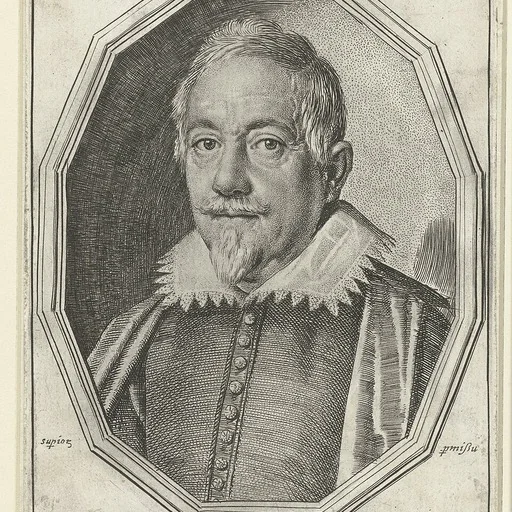
Antonio Tempesta, also called il Tempestino (1555 – 5 August 1630), was an Italian painter and engraver, whose art acted as a point of connection between Baroque Rome and the culture of Antwerp.

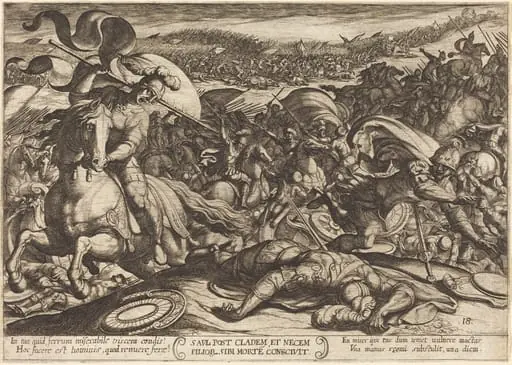 Saul Kills Himself after the Defeat of his Army by the Philistines
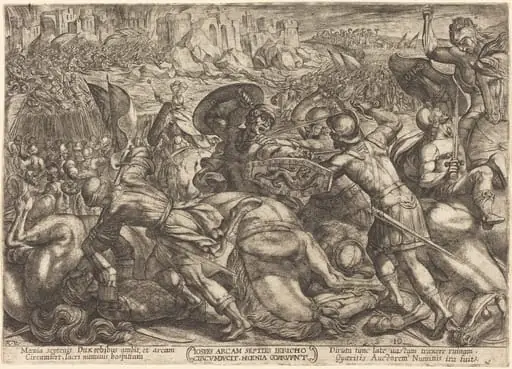 The Taking of the City of Jericho
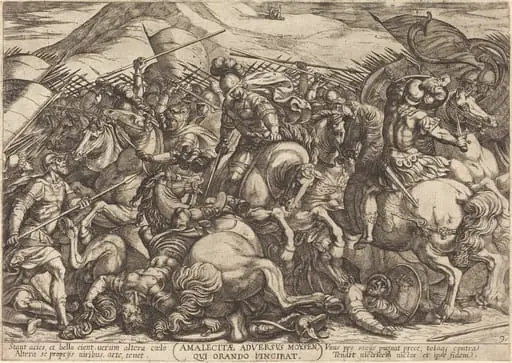 The Defeat of the Amalikits by the Hebrews
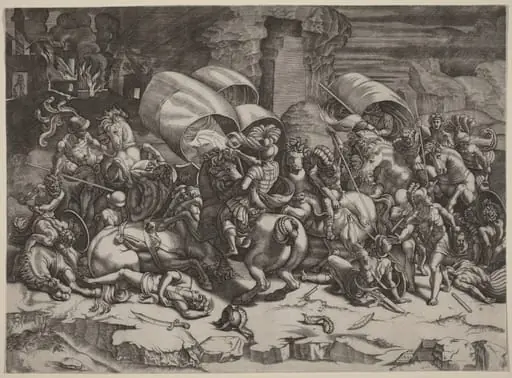 The Battle with the Cutlass
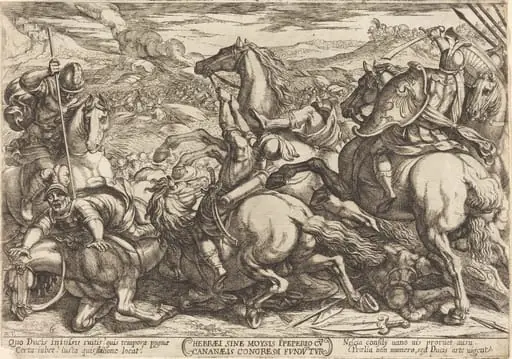 The Hebrews defeat the Canaans
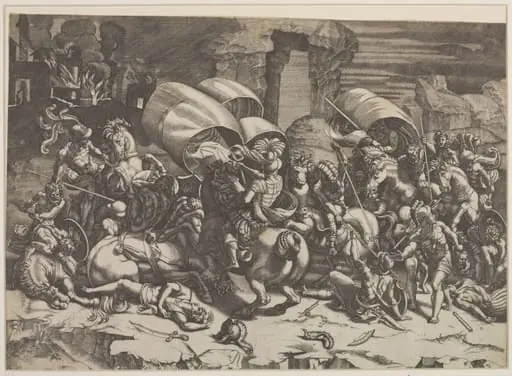 La bataille au coutelas
 The Victory of Scipio over Syphax
 The Seige of Carthage
 Joshua Ordering the Sun to Stop
 Christ Tells His Disciples of the Last Judgment