Artwork
The Defeat of the Amalikits by the Hebrews
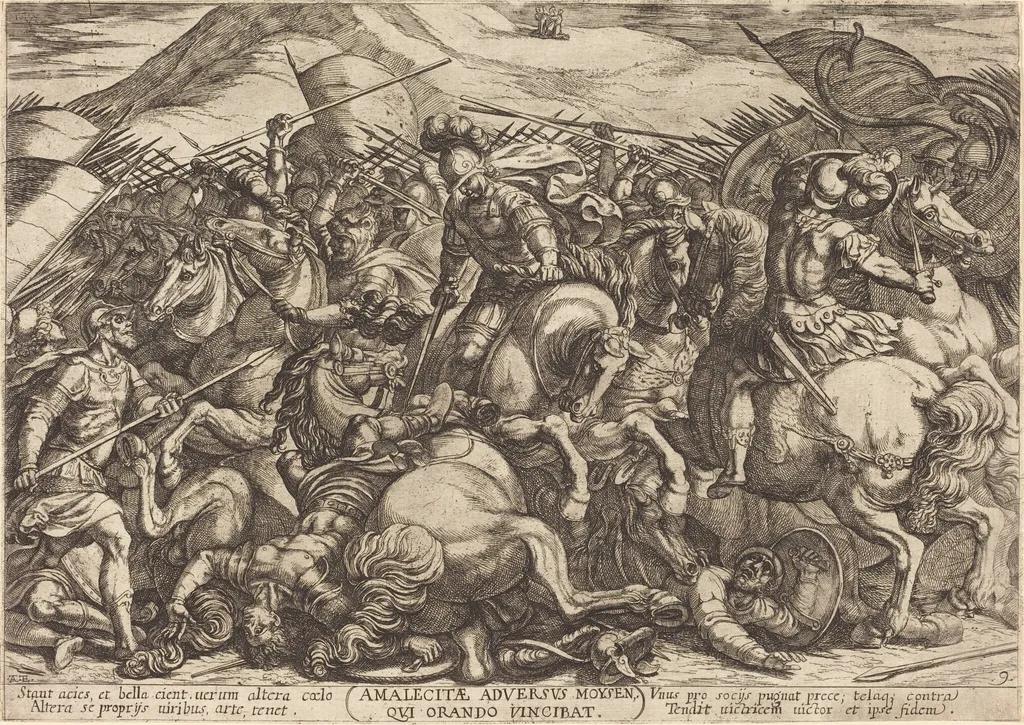
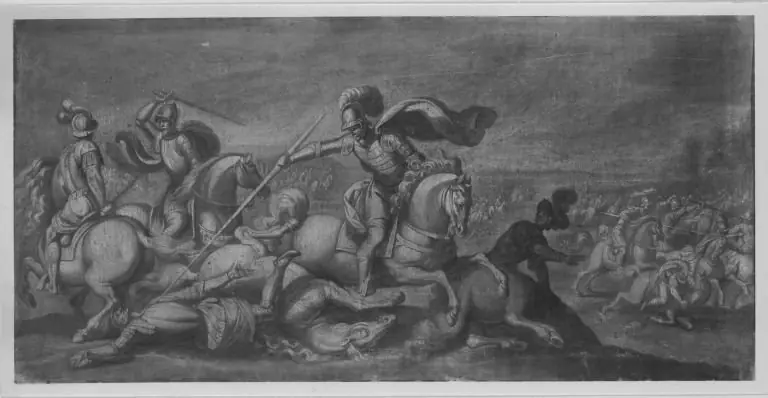
The Defeat of the Amalikits by the Hebrews is an ink print by the Baroque artist Antonio Tempesta. It dates from 1613 and is held in the collection of the National Gallery of Art.
About this work
Look for a man in armor on a rearing horse. He thrusts a spear at a smaller figure in strange robes.
Tempesta made this image in 1613. He used etching—scratching lines into metal, then inking the plate to print the scene.
See how the lines bunch near the horse’s legs. It gives the horse a nervous charge.
Find the same bold style in prints by Tempesta, Antonio.
Overview
Antonio Tempesta’s 1613 etching, *The Defeat of the Amalikits by the Hebrews*, presents a dynamic battle tableau. Central to the composition is a heavily armored rider on a rearing horse, spear poised toward a diminutive, oddly dressed opponent. The work captures a moment of violent confrontation, rendered with the energetic line work characteristic of Tempesta’s prints.
Subject & Meaning
The scene depicts a legendary clash in which Hebrew forces overcome the Amalikits, a narrative drawn from biblical or apocryphal tradition. The juxtaposition of the dominant, armored horseman against a smaller, foreign‑clothed figure underscores themes of triumph and cultural conflict, reflecting contemporary interest in historic and mythic victories.
Technique & Style
Tempesta employed the etching process, incising his design onto a metal plate before inking and pressing it onto paper. The lines converge around the horse’s legs, creating a sense of tension and rapid movement. This dense, expressive line work aligns with Tempesta’s broader graphic style, which blends Italian Baroque vigor with the detailed vigor of Flemish printmaking.
History & Provenance
Created in 1613, the print belongs to a prolific period in Tempesta’s career when he produced numerous works focused on warfare and notable historical episodes. While specific ownership records are scarce, the etching circulated among collectors of early 17th‑century prints, contributing to Tempesta’s reputation as a leading figure in the print market of his time.
Context
Tempesta operated at the crossroads of Roman Baroque aesthetics and the detailed narrative tradition of Flemish engraving. His fascination with martial subjects mirrored the broader European preoccupation with heroic history and biblical drama, situating this work within a network of visual storytelling that appealed to both elite patrons and a growing market for printed images.
Artist & collection
Artist
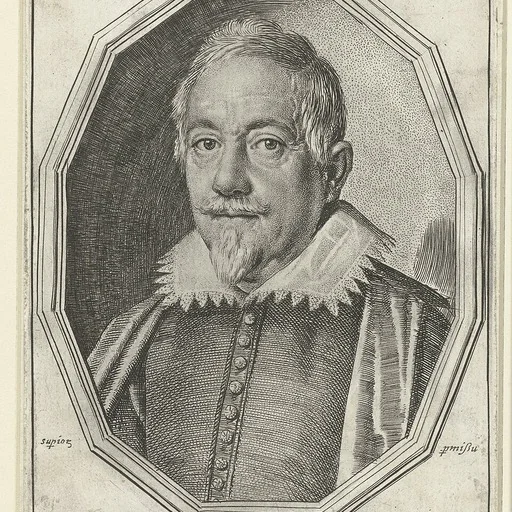
Antonio Tempesta, also called il Tempestino (1555 – 5 August 1630), was an Italian painter and engraver, whose art acted as a point of connection between Baroque Rome and the culture of Antwerp.

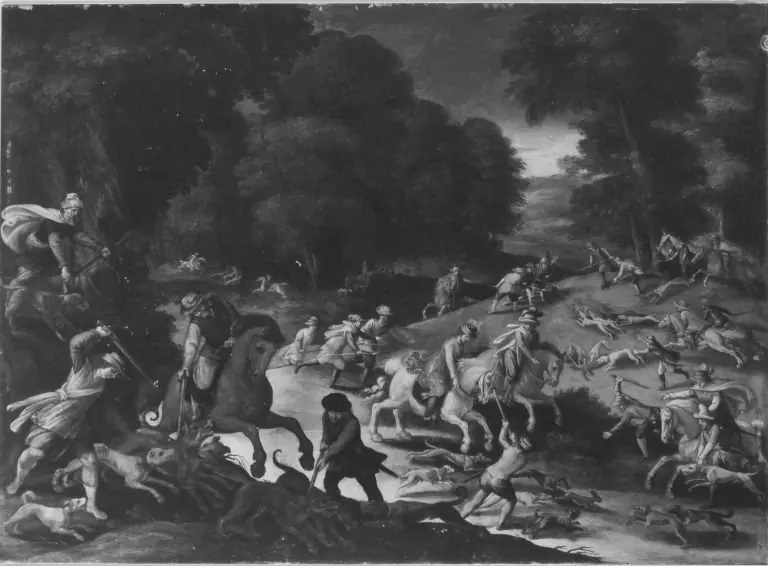
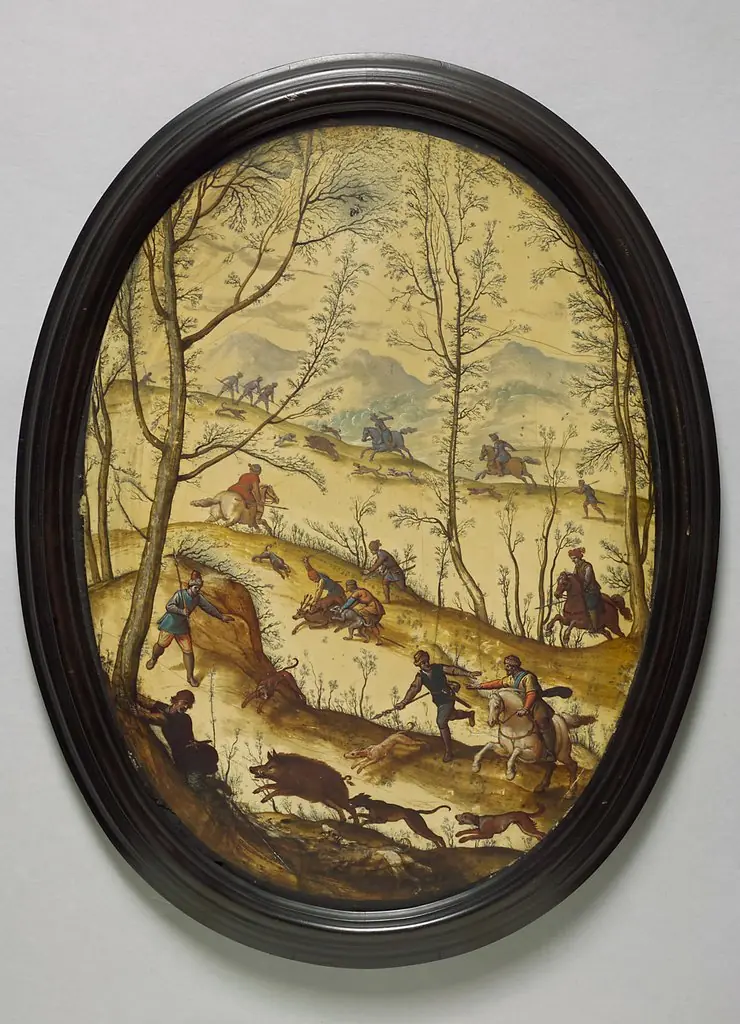
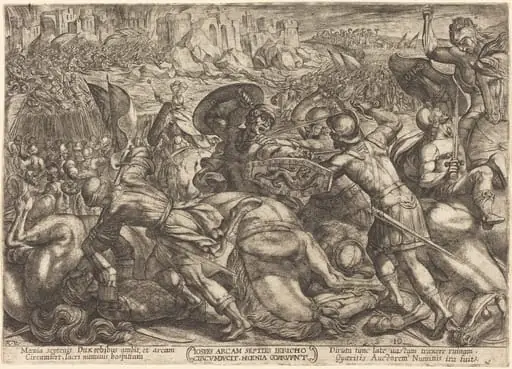 The Taking of the City of Jericho
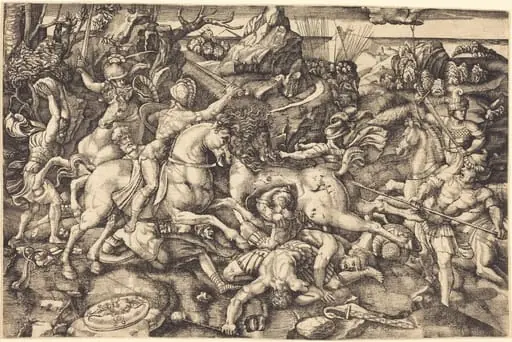 Combat between Horsemen and Foot Soldiers
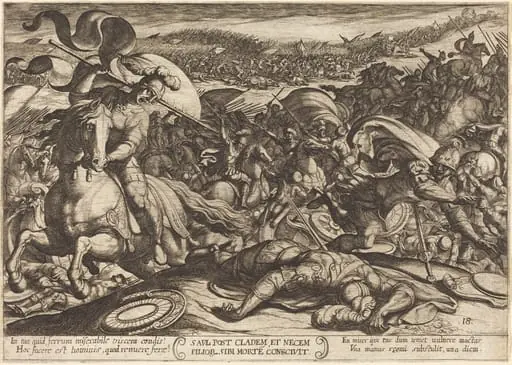 Saul Kills Himself after the Defeat of his Army by the Philistines
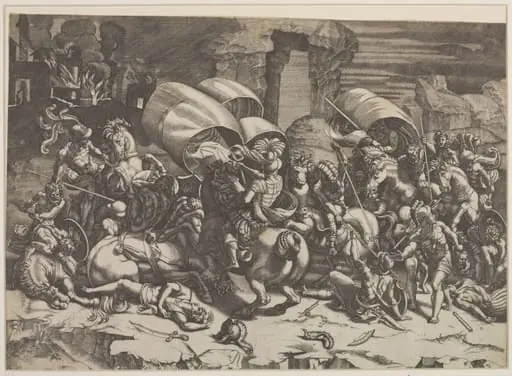 La bataille au coutelas
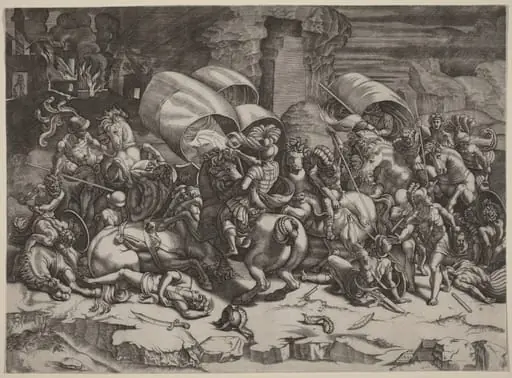 The Battle with the Cutlass
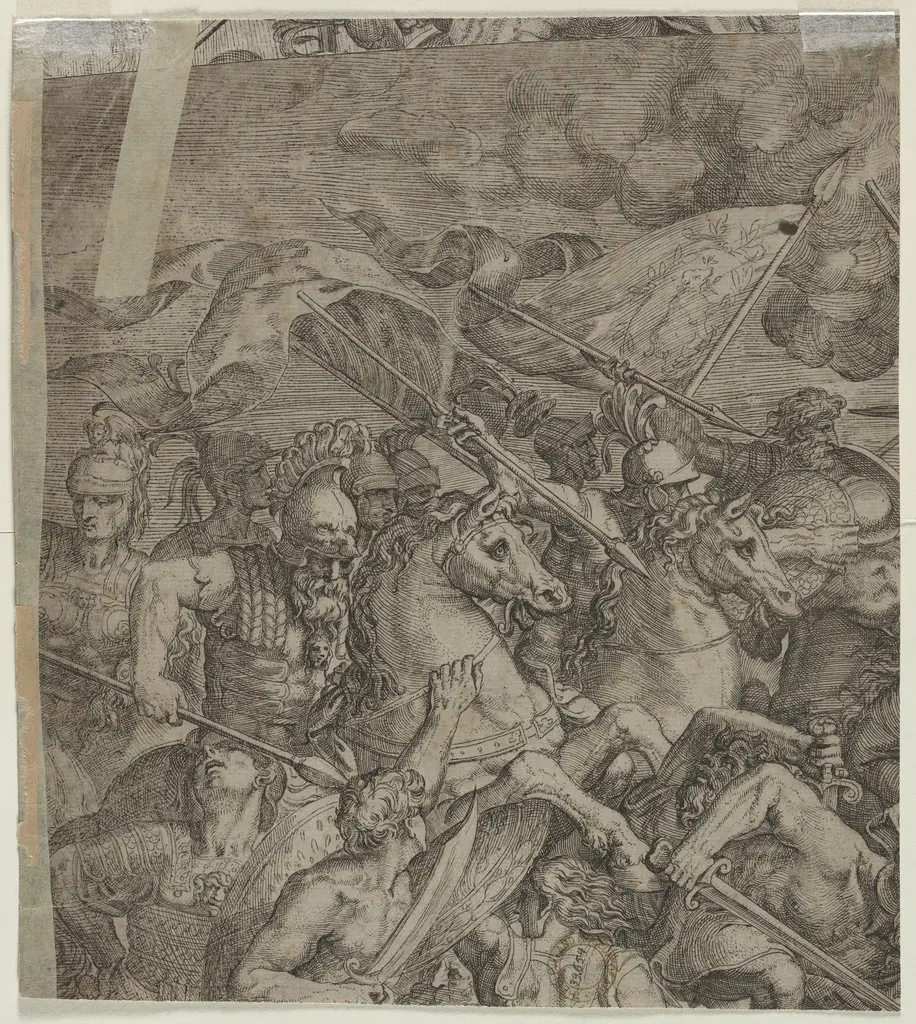 Battle of the Milvian Bridge between the Roman Emperors Constantine I and Maxentius
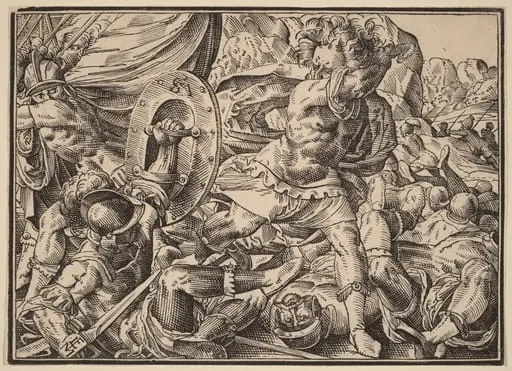 Christ Tells His Disciples of the Last Judgment
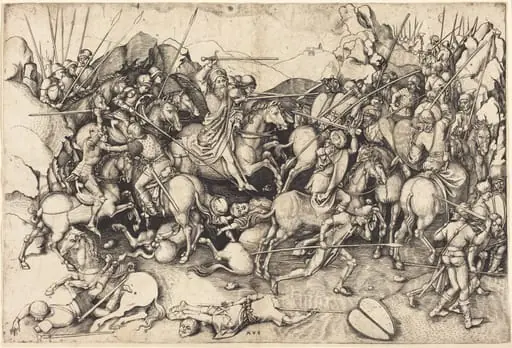 The Battle of Saint James at Clavijo
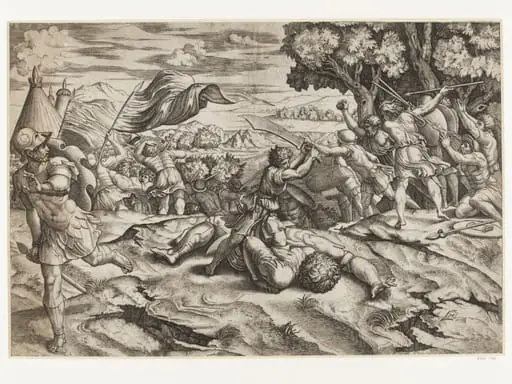 David cutting off the head of Goliath
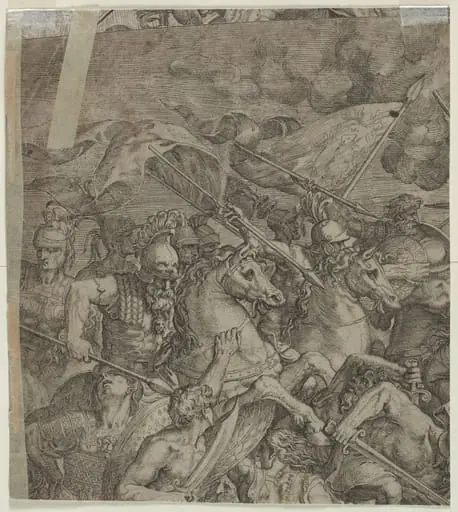 Battle of the Milvian Bridge (fragment) (verso)
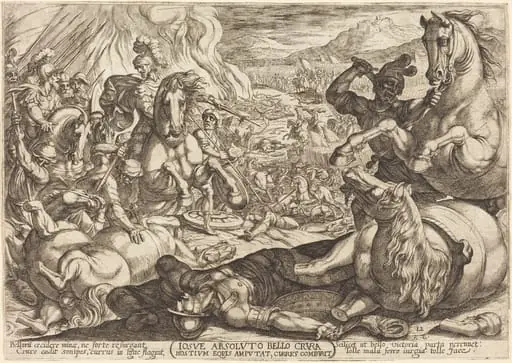 Joshua has the Chariots Burned and Cuts the Legs off His Enemies
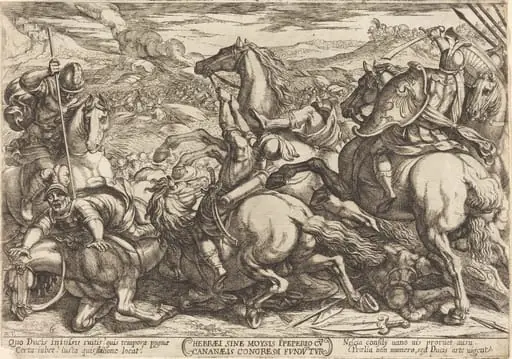 The Hebrews defeat the Canaans