Artwork
The Taking of the City of Jericho
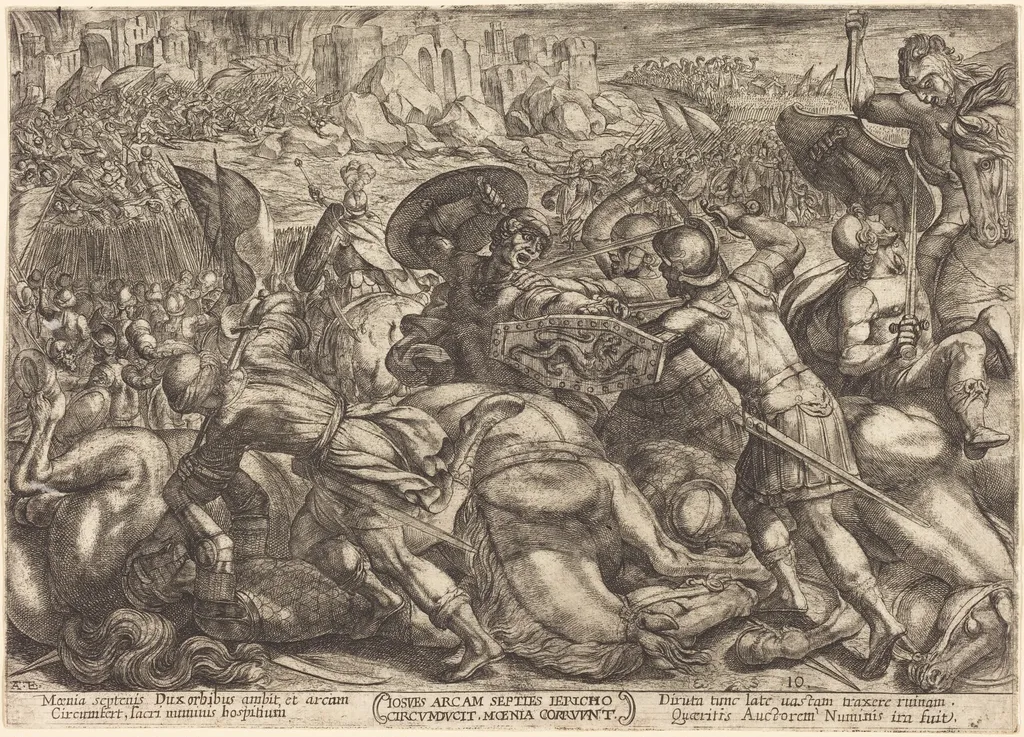
The Taking of the City of Jericho is an ink print by the Baroque artist Antonio Tempesta. It dates from 1613 and is held in the collection of the National Gallery of Art.
About this work
This etching shows soldiers swarming Jericho’s walls as the city falls.
This etching shows soldiers swarming Jericho’s walls as the city falls. The walls look flimsy, like paper. A few defenders fire arrows, but most just run.
Tempesta made this in 1613. He used etching—a way to carve lines into metal plates. Ink fills the lines, then paper presses against them. It’s like drawing with acid.
This style pops up in battle scenes. Try looking at Jacques Callot’s etchings next.
Overview
Antonio Tempura’s 1613 etching, *The Taking of the City of Jericho*, portrays a bustling siege in which troops overwhelm the city’s walls. The composition centers on the collapsing fortifications, while a handful of defenders launch arrows before retreating. The image captures the moment of conquest with a dense crowd of soldiers and a sense of architectural fragility.
Subject & Meaning
The print illustrates the biblical episode of Jericho’s fall, emphasizing the overwhelming force of the attackers against a seemingly defenseless city. By showing the walls as thin and paper‑like, Tempura underscores the inevitability of the city’s surrender and the futility of resistance, aligning the scene with broader themes of divine or military triumph.
Technique & Style
Tempura employed the etching process, incising lines into a copper plate with acid before inking and pressing onto paper. The technique allows for fine, intricate detailing of figures and architecture, characteristic of early 17th‑century printmaking. The work’s dynamic arrangement of figures and the stark contrast between light and shadow reflect a Baroque sensibility blended with Northern European print traditions.
History & Provenance
Created in Rome, the etching circulated widely across Europe, particularly in the artistic centers of Antwerp where Tempura’s prints were popular. It belongs to a series of works by the artist that focus on historic and biblical battles, demonstrating his sustained interest in martial subjects during the early Baroque period.
Context
Tempura’s career bridged the Roman Baroque and the flourishing print culture of the Low Countries. His prints, including this one, were disseminated through the robust network of Antwerp publishers, influencing contemporaries and later printmakers who explored similar violent narratives.
Own this work as a print
Artist & collection
Artist
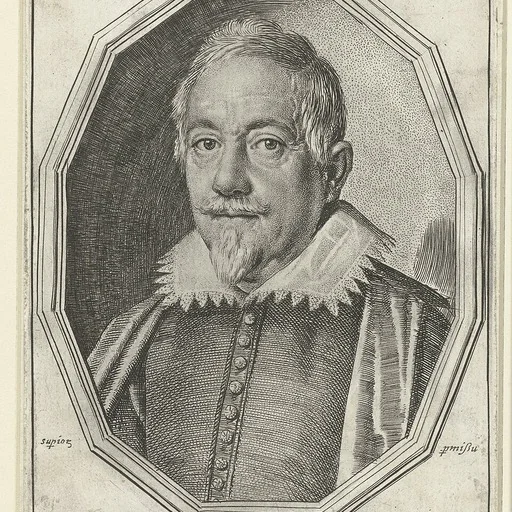
Antonio Tempesta, also called il Tempestino (1555 – 5 August 1630), was an Italian painter and engraver, whose art acted as a point of connection between Baroque Rome and the culture of Antwerp.

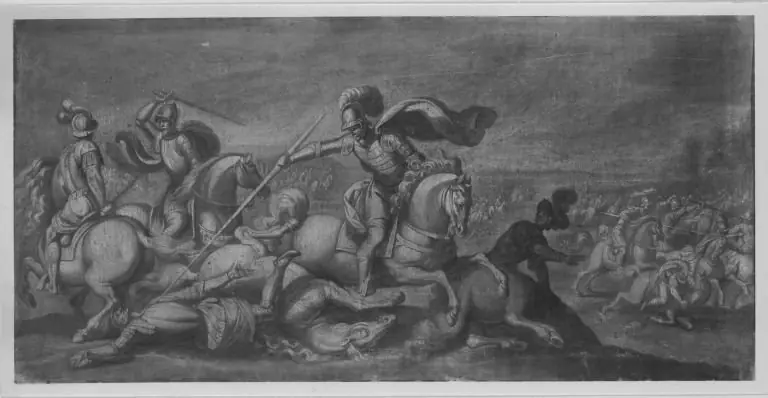
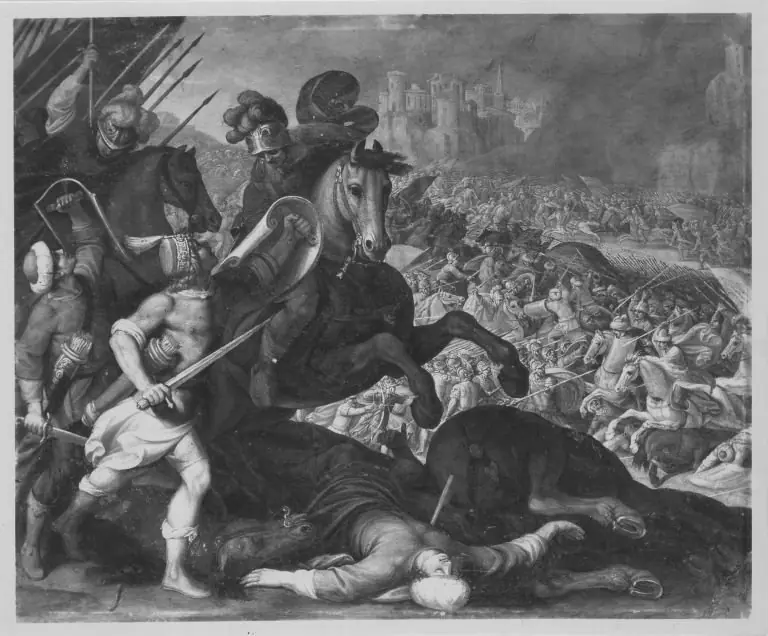
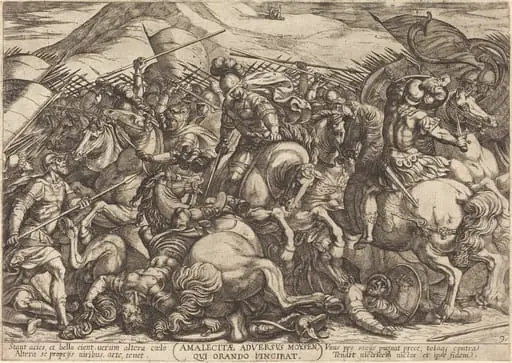 The Defeat of the Amalikits by the Hebrews
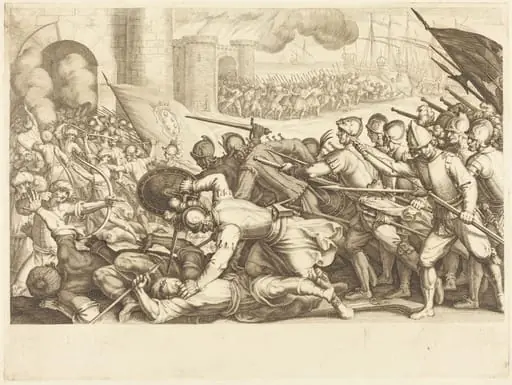 The Troops Forcing the Gate of a Town
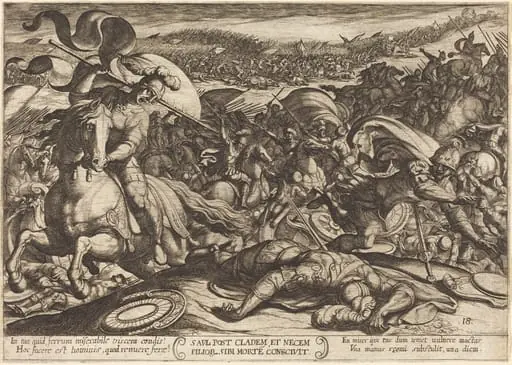 Saul Kills Himself after the Defeat of his Army by the Philistines
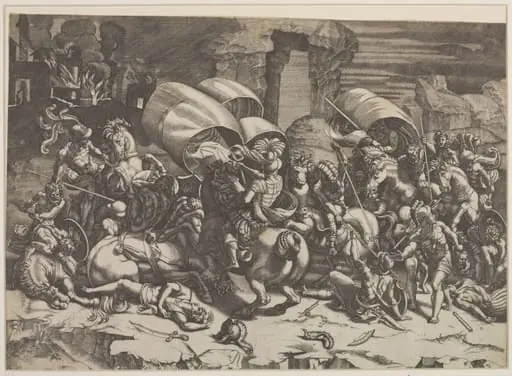 La bataille au coutelas
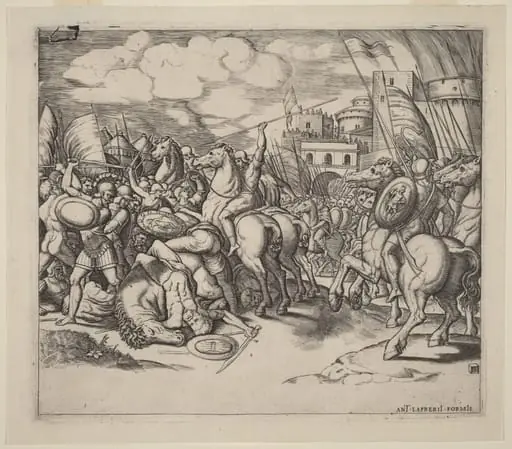 The Victory of Scipio over Syphax
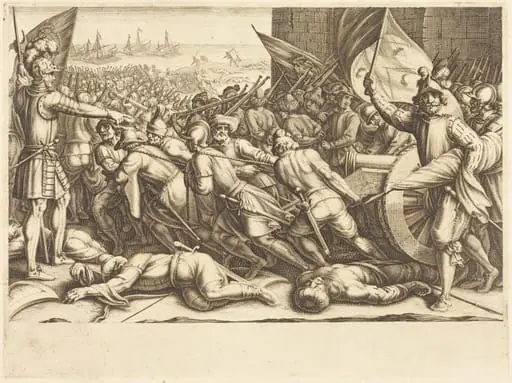 The Re-embarkation of the Turks
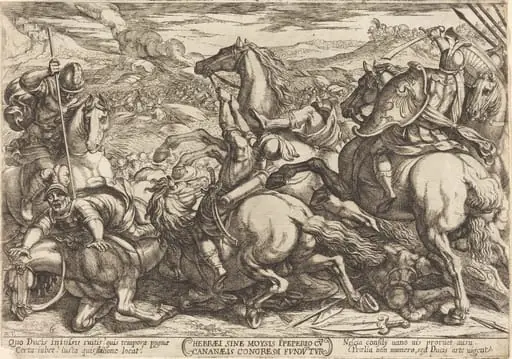 The Hebrews defeat the Canaans
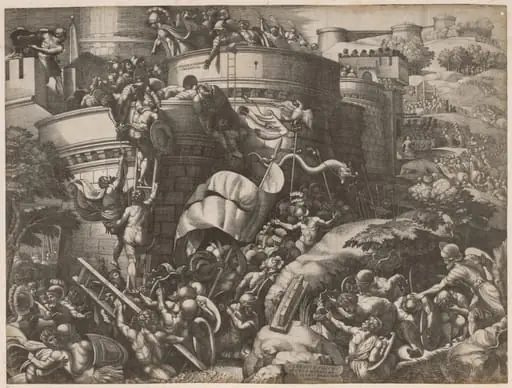 The Seige of Carthage
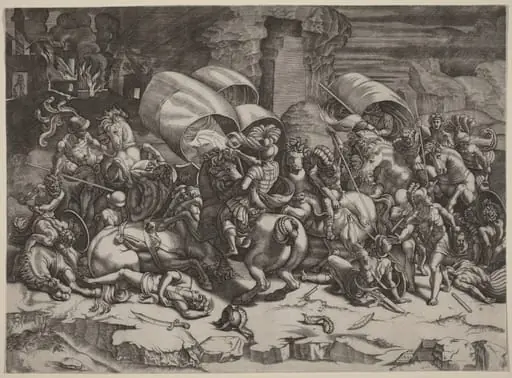 The Battle with the Cutlass
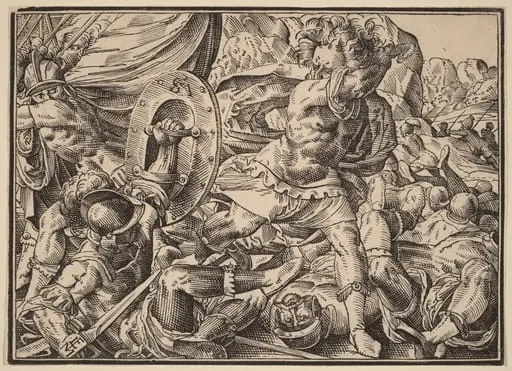 Christ Tells His Disciples of the Last Judgment
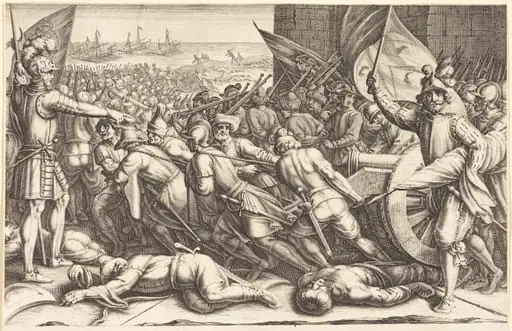 The Re-embarkation of the Troops
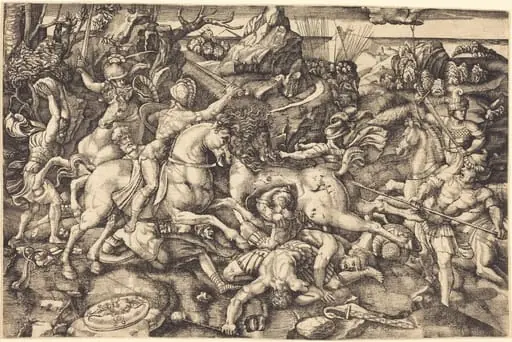 Combat between Horsemen and Foot Soldiers