Artwork
Joshua has the Chariots Burned and Cuts the Legs off His Enemies
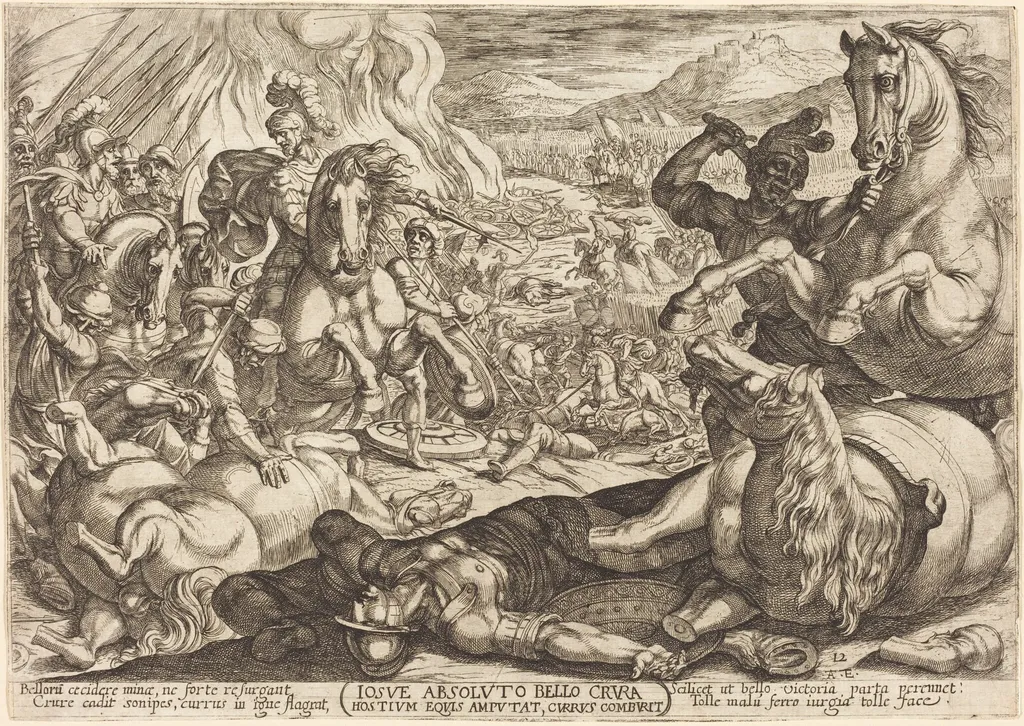
Joshua has the Chariots Burned and Cuts the Legs off His Enemies is an ink print by the Baroque artist Antonio Tempesta. It dates from 1613 and is held in the collection of the National Gallery of Art.
About this work
Overview
Antonio Tempesta’s 1613 etching, titled *Joshua has the Chariors Burned and Cuts the Legs off His Enemies*, presents a turbulent battlefield drawn from the biblical account of Joshua. Executed in the etching technique, the work captures a moment of violent confrontation, with figures on foot and horseback locked in combat amid a burning landscape.
Subject & Meaning
The print visualizes the scriptural episode in which Joshua orders the destruction of enemy chariots and the mutilation of opposing warriors. Tempesta emphasizes the chaos of war, showing overturned chariots, struggling horses, and soldiers brandishing swords and spears, while flames lick the walls of a distant fortified city.
Technique & Style
Rendered in fine lines characteristic of early 17th‑century etching, the image displays intricate textures in armor, horsehair, and smoke. Tempesta’s handling of light and shadow creates a sense of depth, while the dense composition reflects his skill in portraying dynamic, crowded scenes typical of his battle prints.
History & Provenance
Born in Florence in 1555, Tempesta worked in both painting and engraving, moving between the artistic currents of Baroque Rome and the print traditions of Antwerp. This work belongs to his broader series of martial and historical subjects, underscoring his reputation for dramatizing conflict.
Context
The etching aligns with the period’s fascination with biblical narratives as allegories for contemporary warfare. Tempesta’s choice of a violent Old Testament episode mirrors the era’s taste for dramatic, morally charged scenes that could be interpreted as reflections on power, conquest, and divine sanction.
Artist & collection
Artist
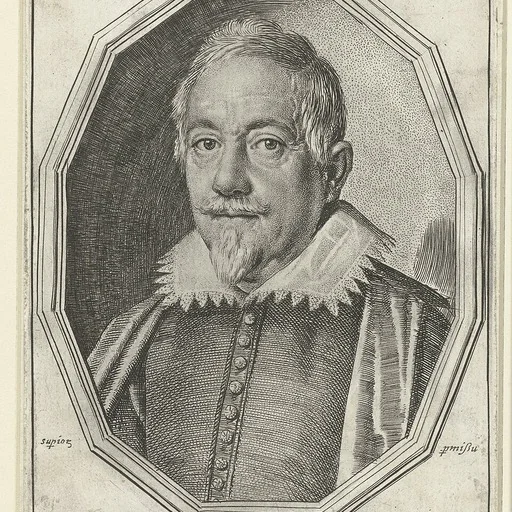
Antonio Tempesta, also called il Tempestino (1555 – 5 August 1630), was an Italian painter and engraver, whose art acted as a point of connection between Baroque Rome and the culture of Antwerp.

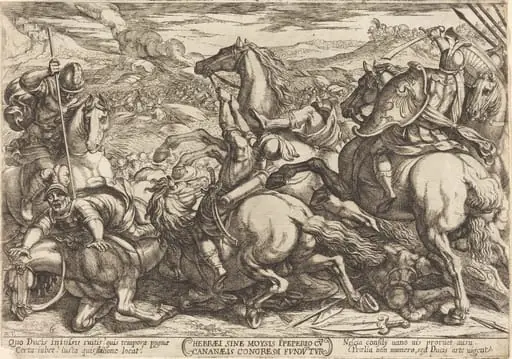 The Hebrews defeat the Canaans
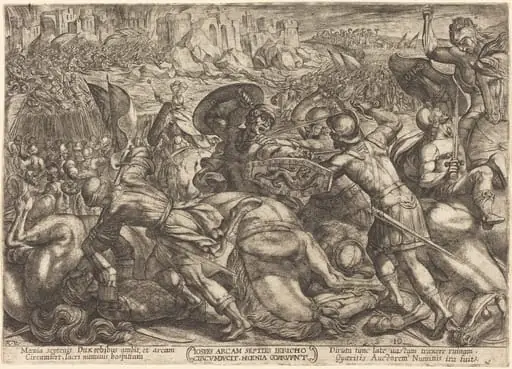 The Taking of the City of Jericho
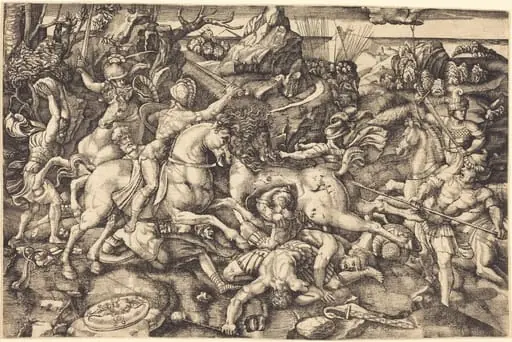 Combat between Horsemen and Foot Soldiers
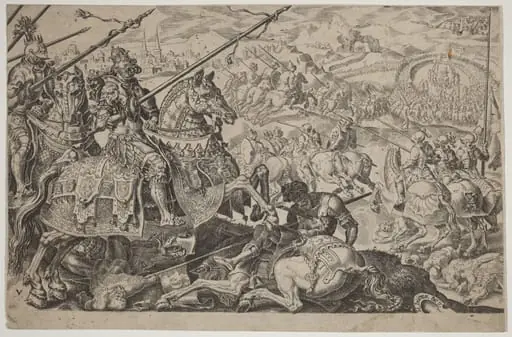 Suleiman the Magnificent Forced to Raise the Siege of Vienna
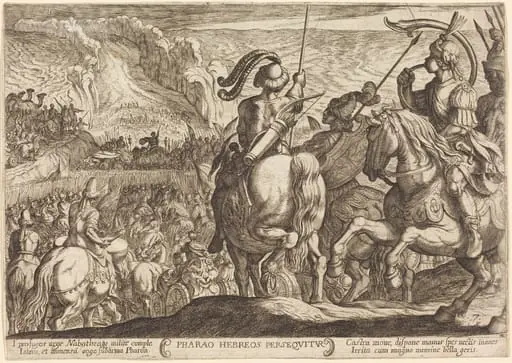 The Egyptians Pursue the Israelites
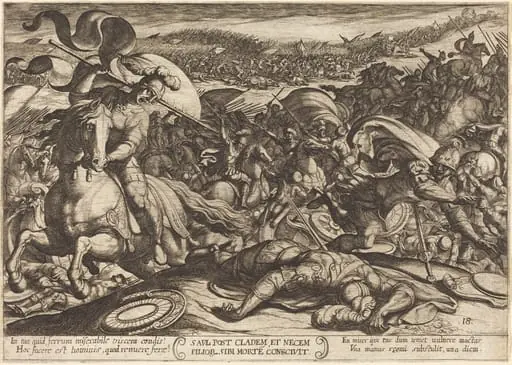 Saul Kills Himself after the Defeat of his Army by the Philistines
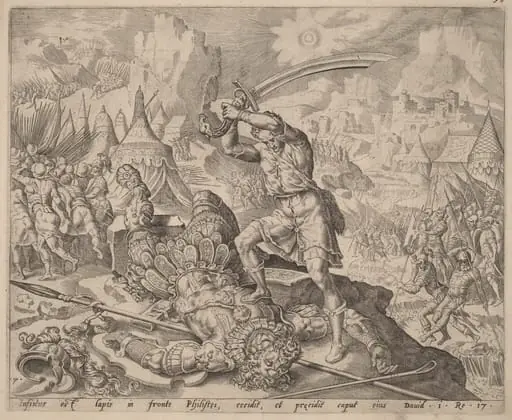 David Cutting Off Goliath's Head
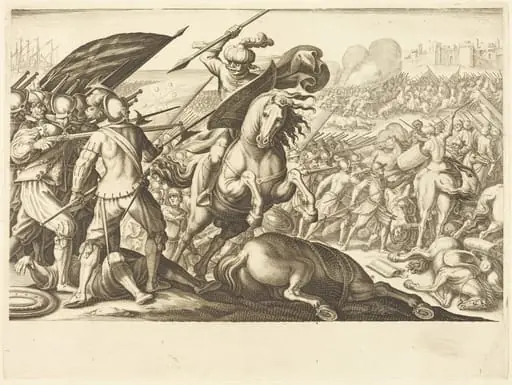 The Defeat of the Turkish Cavalry
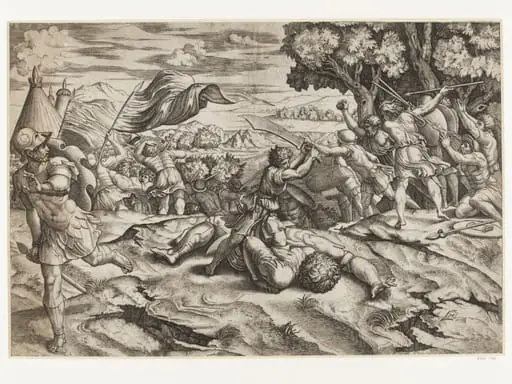 David cutting off the head of Goliath