Artwork
Moses makes the Hebrew army march against the Ethiopians
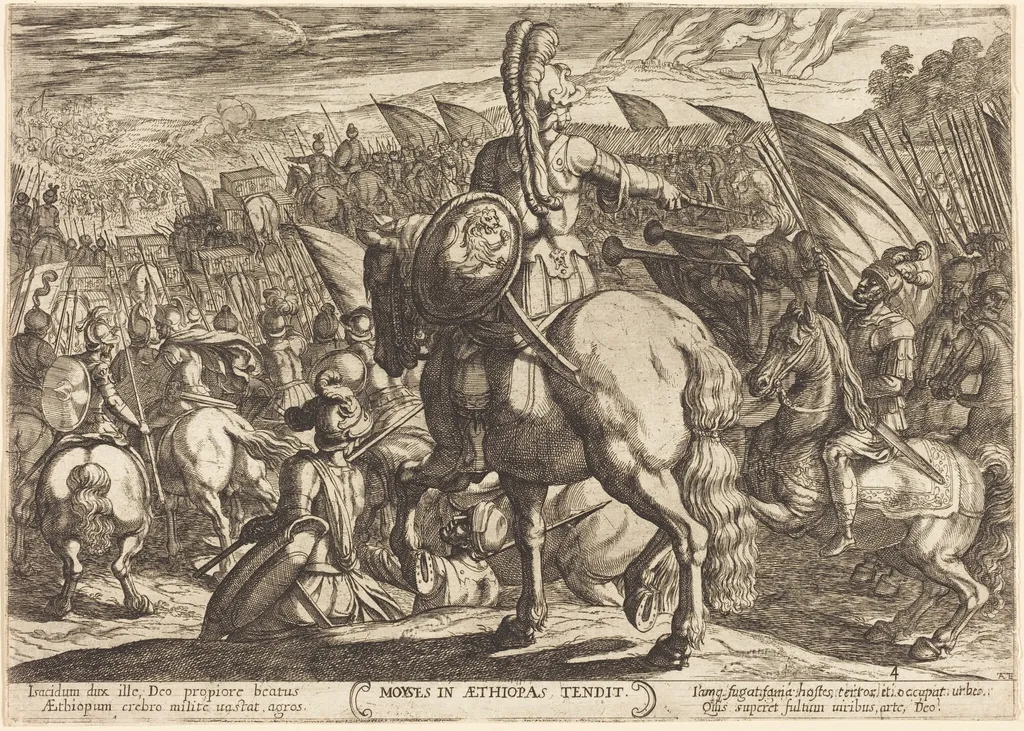
Moses makes the Hebrew army march against the Ethiopians is an ink print by the Baroque artist Antonio Tempesta. It dates from 1613 and is held in the collection of the National Gallery of Art.
About this work
Overview
Antonio Tempesta’s 1613 etching portrays a biblical confrontation in which Moses leads a Hebrew force against an Ethiopian army. Executed as a print, the composition centers on Moses, staff raised, flanked by armored soldiers with spears, set upon a rocky terrain that suggests a battlefield.
Subject & Meaning
The work visualizes the Old Testament episode where Moses commands the Israelites to march against the Ethiopians, emphasizing divine leadership and martial resolve. By focusing on the commander’s elevated stance, the image underscores the theological theme of God‑guided warfare and the collective identity of the Hebrew warriors.
Technique & Style
Tempesta employs intricate line work and delicate hatching to render the texture of metal armor, musculature, and the uneven ground. The fine cross‑hatching creates subtle tonal gradations, giving the figures a three‑dimensional presence while maintaining the crisp clarity typical of early 17th‑century etchings.
History & Provenance
Created during Tempesta’s productive period in Rome, the etching forms part of a larger series illustrating Old Testament narratives. The artist, known for both painting and printmaking, disseminated his works across Italy and the Low Countries, where they were collected by patrons interested in biblical and historical subjects.
Context
Tempesta’s interest in military scenes reflects the broader Counter‑Reformation fascination with heroic biblical episodes. The depiction aligns with contemporary print traditions that combined devotional content with dynamic composition, catering to an audience that valued both religious instruction and visual drama.
Legacy
While not as widely reproduced as later prints, Tempesta’s etching anticipates the detailed line work later seen in the prints of artists such as Rembrandt, influencing the development of narrative engraving in the Baroque period.
Artist & collection
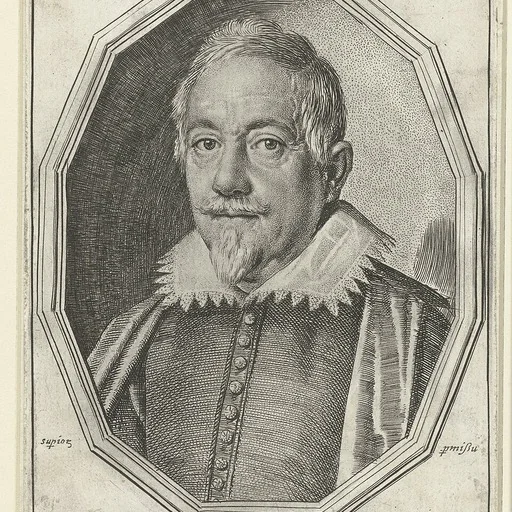
Artist
Antonio Tempesta, also called il Tempestino (1555 – 5 August 1630), was an Italian painter and engraver, whose art acted as a point of connection between Baroque Rome and the culture of Antwerp.

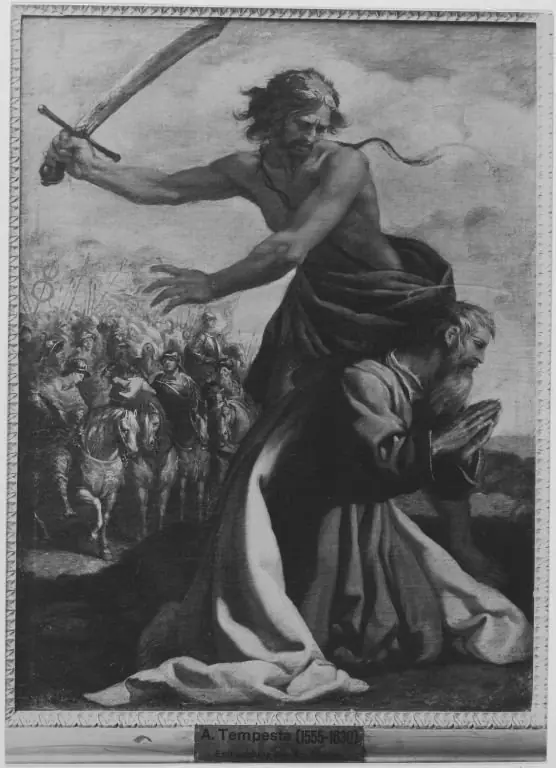
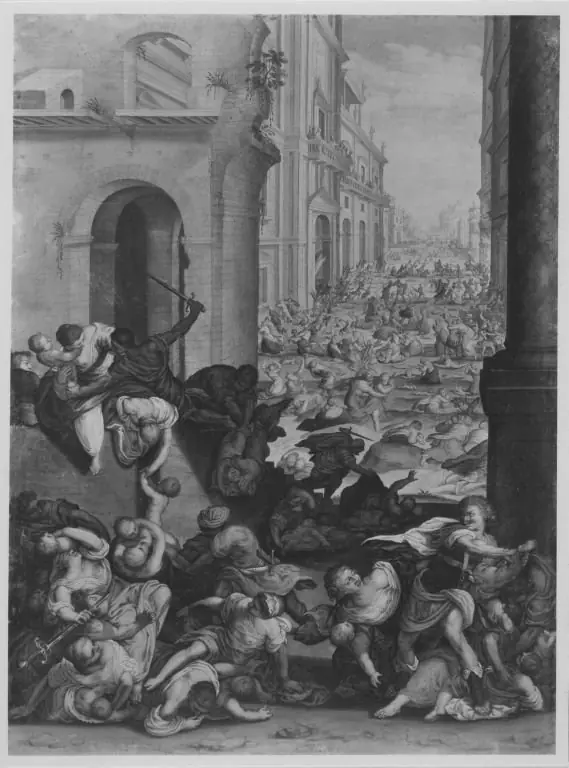
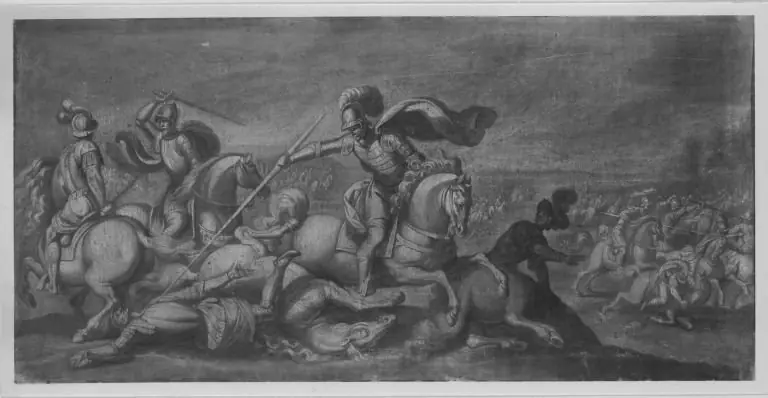
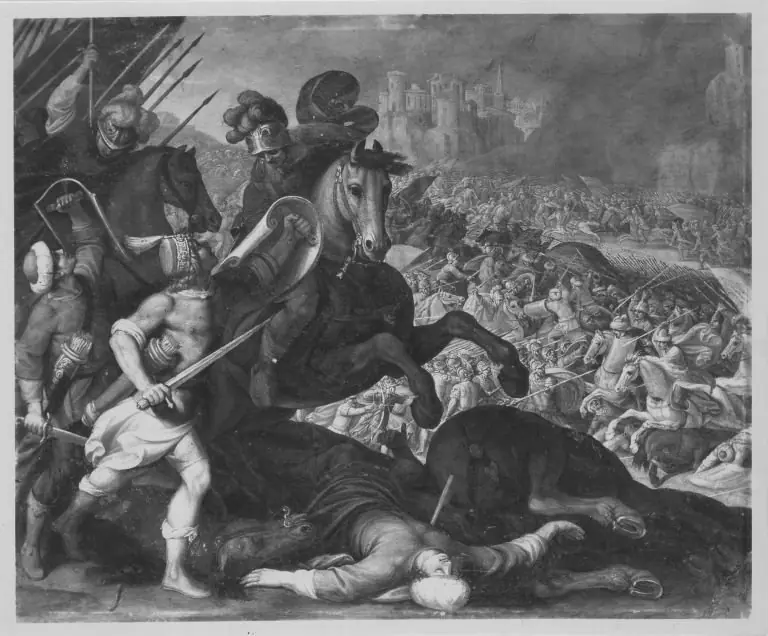
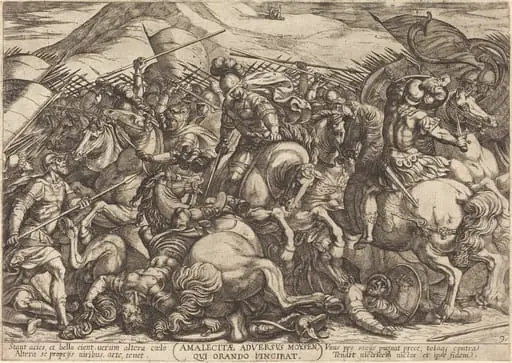 The Defeat of the Amalikits by the Hebrews
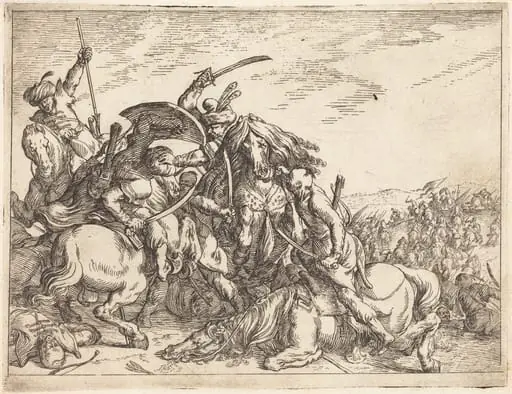 Capricci di varie battaglie
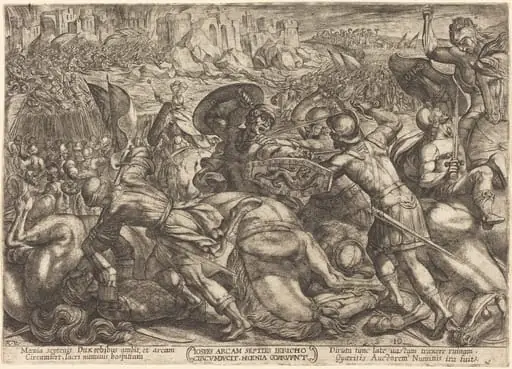 The Taking of the City of Jericho
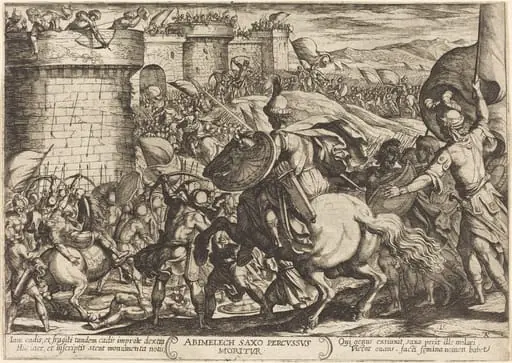 The Death of Abimelech
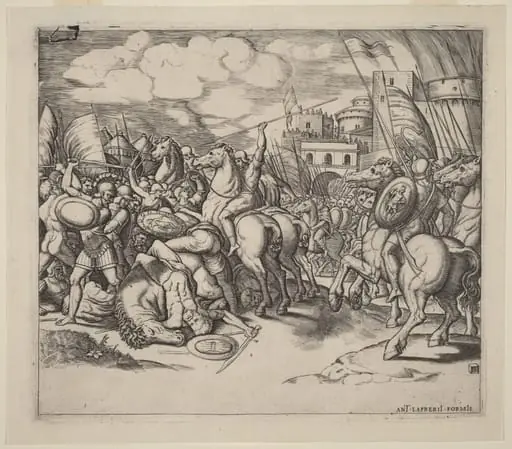 The Victory of Scipio over Syphax
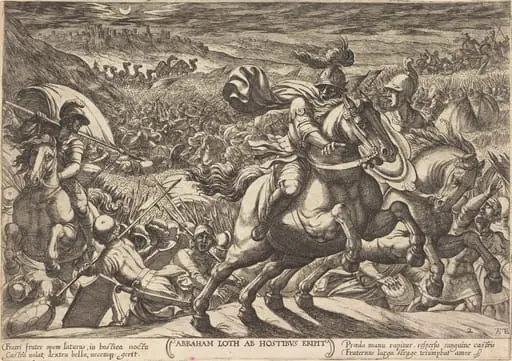 Abraham makes the enemies flee who hold his nephew
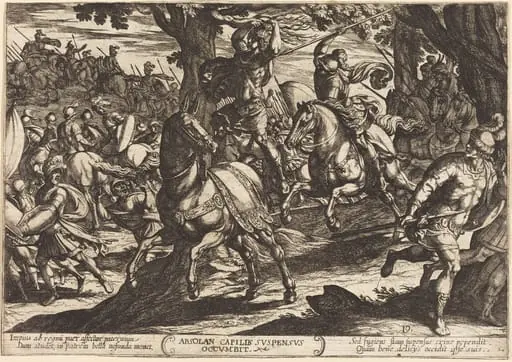 Jacob Kills Absalom, Son of King David
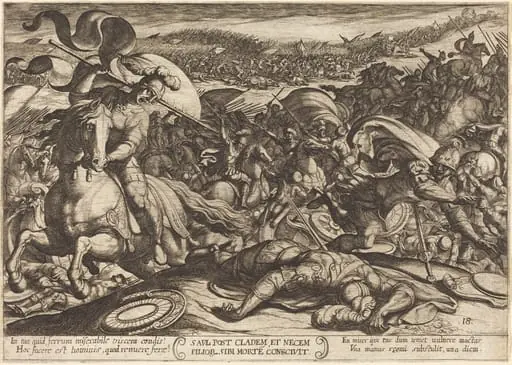 Saul Kills Himself after the Defeat of his Army by the Philistines
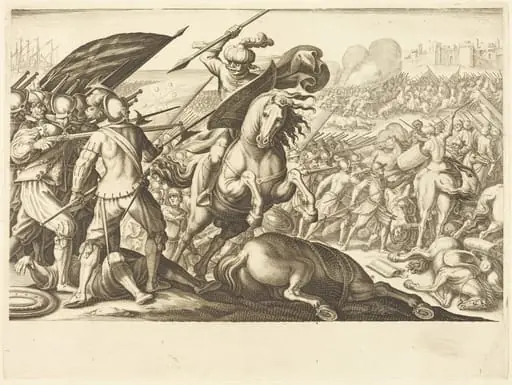 The Defeat of the Turkish Cavalry