Artwork
The Death of Abimelech
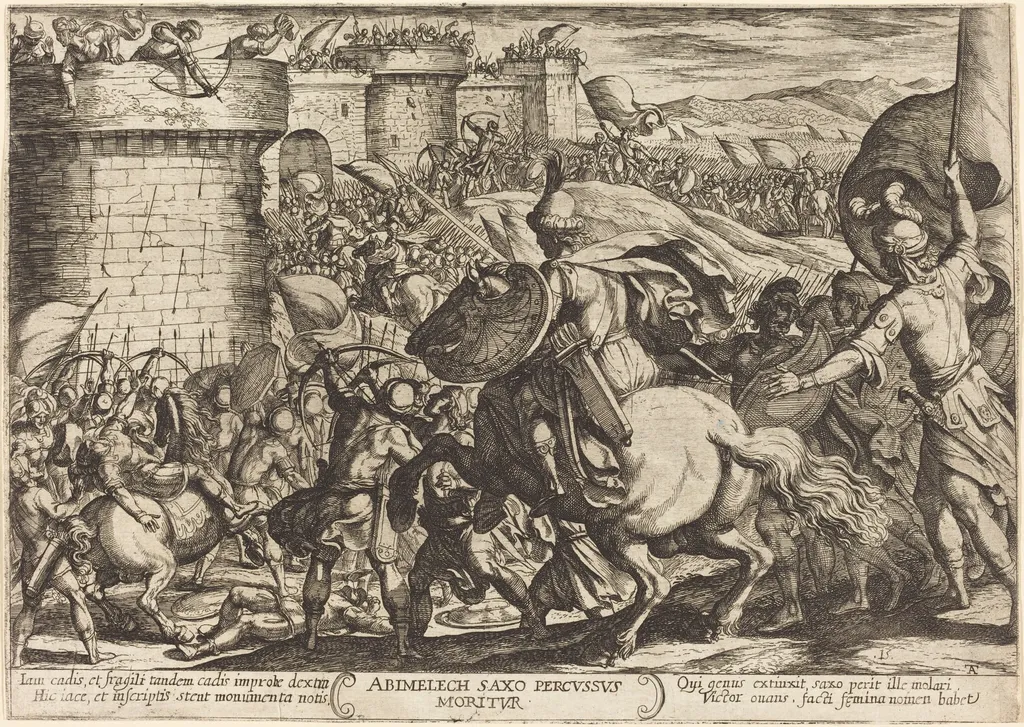
The Death of Abimelech is an ink print by the Baroque artist Antonio Tempesta. It dates from 1613 and is held in the collection of the National Gallery of Art.
About this work
Overview
The Death of Abimelech is a 1613 etching by Antonio Tempesta, depicting a pivotal moment from an Old Testament narrative. Characteristic of Tempesta's graphic style, the print showcases a dramatic battle scene.
Subject & Meaning
The etching illustrates the chaotic final moment of Abimelech, a figure from the Old Testament, as he falls from a horse amidst a battle. The scene conveys turmoil and conflict, highlighting the narrative's dramatic intensity.
Technique & Style
Tempesta employed etching techniques to achieve detailed, expressive lines. The work features chiaroscuro, with strong light-dark contrasts creating depth and amplifying the scene's drama. Textural shading adds dimensionality to the composition.
History & Provenance
Created in 1613, the etching is part of Tempesta's body of work produced during his time between Rome and Antwerp, reflecting his penchant for historical and battle themes.
Context
As an Italian painter and engraver active in the early 17th century, Tempesta's work, including *The Death of Abimelech*, sits within the broader tradition of European Baroque art, characterized by dramatic lighting and intense emotional depictions.
Legacy
While specific legacy details of *The Death of Abimelech* are not highlighted, Tempesta's overall contribution to etching and his depiction of historical subjects have influenced the development of European printmaking and narrative art.
Artist & collection
Artist
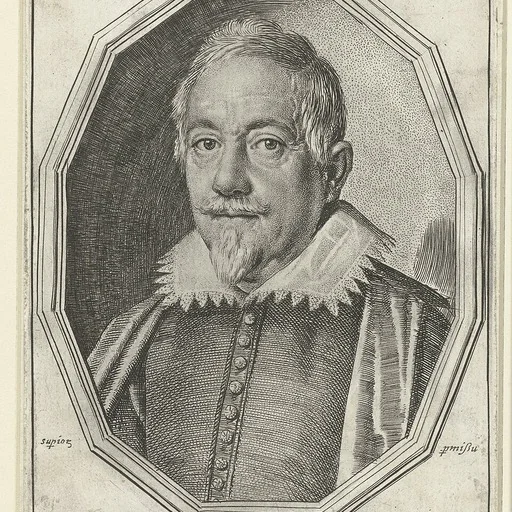
Antonio Tempesta, also called il Tempestino (1555 – 5 August 1630), was an Italian painter and engraver, whose art acted as a point of connection between Baroque Rome and the culture of Antwerp.

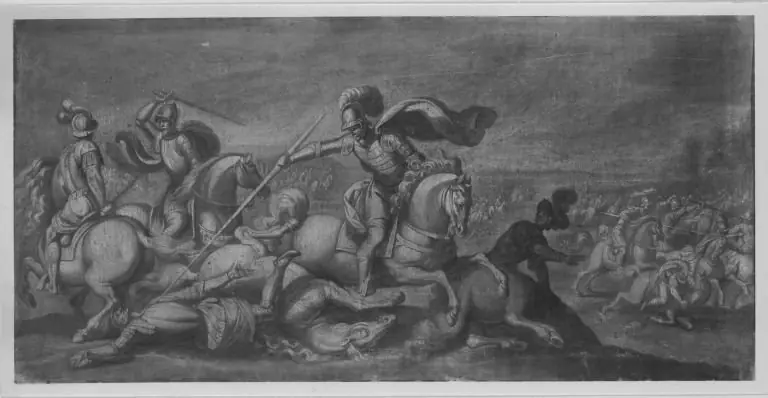
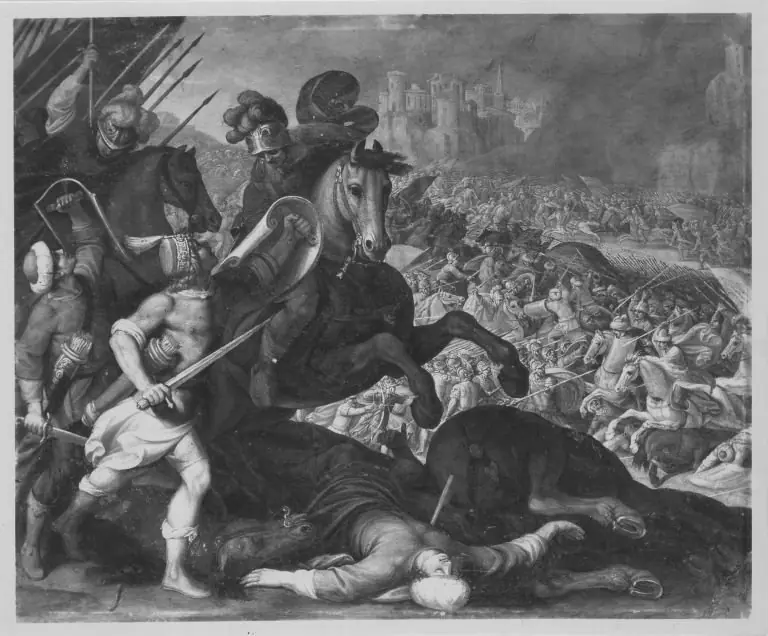
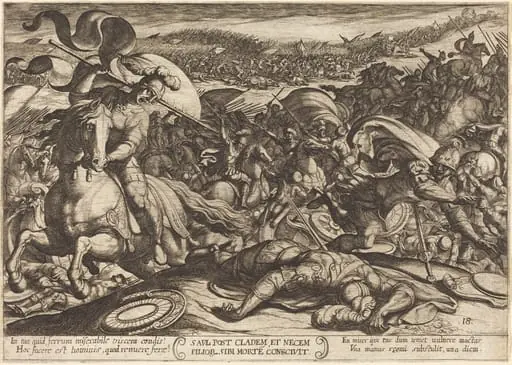 Saul Kills Himself after the Defeat of his Army by the Philistines
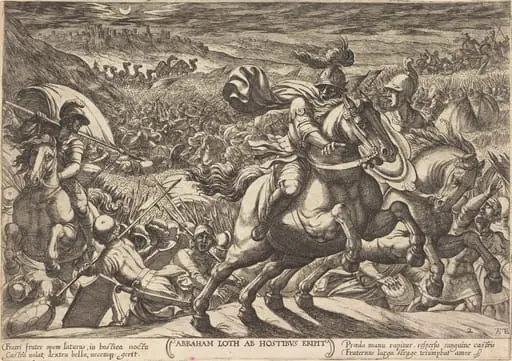 Abraham makes the enemies flee who hold his nephew
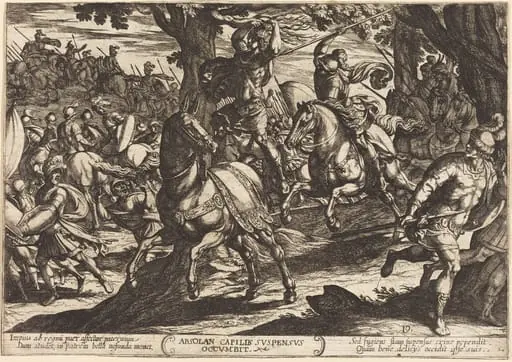 Jacob Kills Absalom, Son of King David
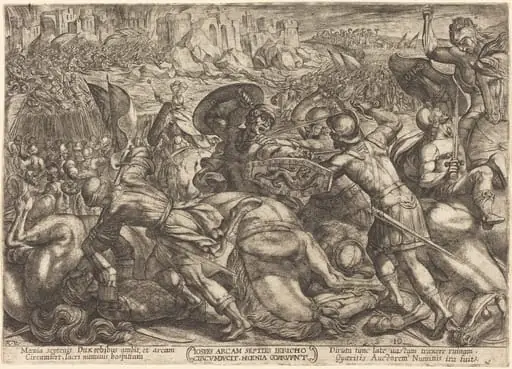 The Taking of the City of Jericho
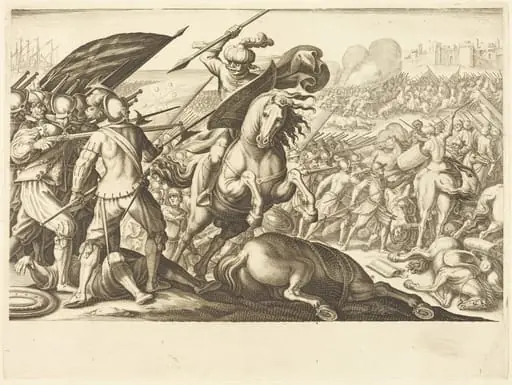 The Defeat of the Turkish Cavalry
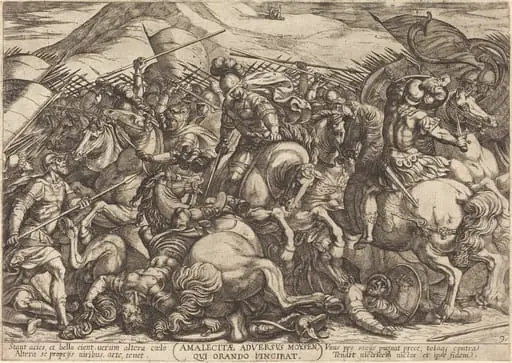 The Defeat of the Amalikits by the Hebrews
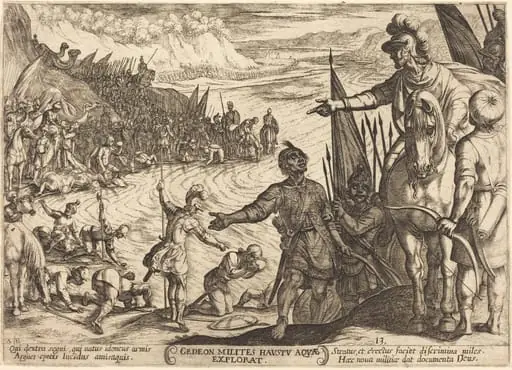 Gideon Chooses His Soldiers
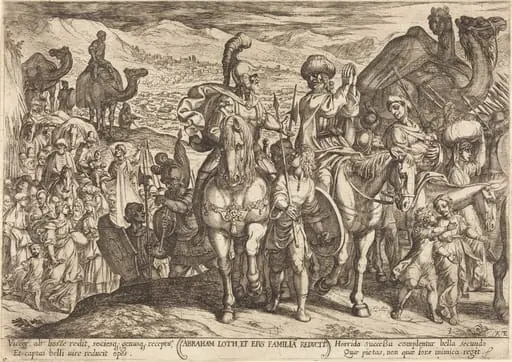 Lot and His Family recalled home by Abraham
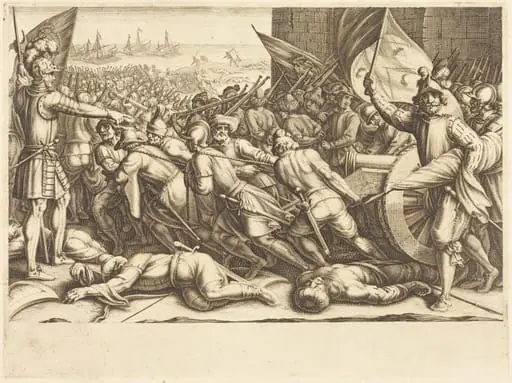 The Re-embarkation of the Turks
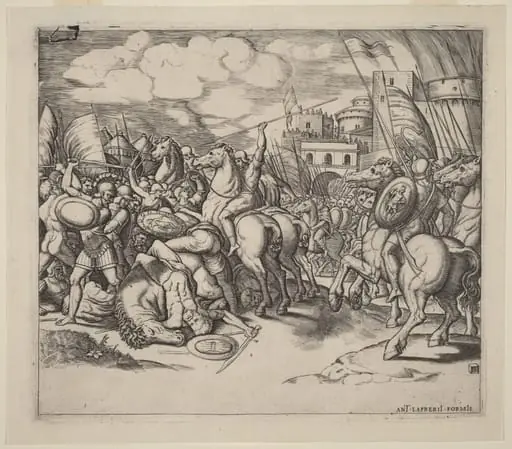 The Victory of Scipio over Syphax
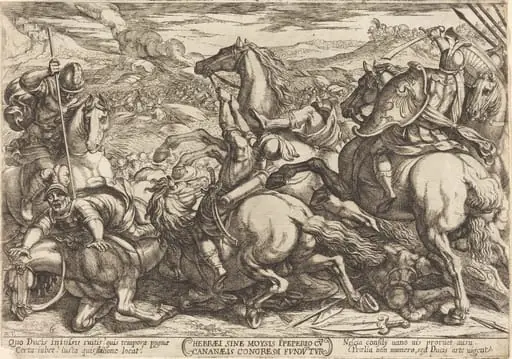 The Hebrews defeat the Canaans
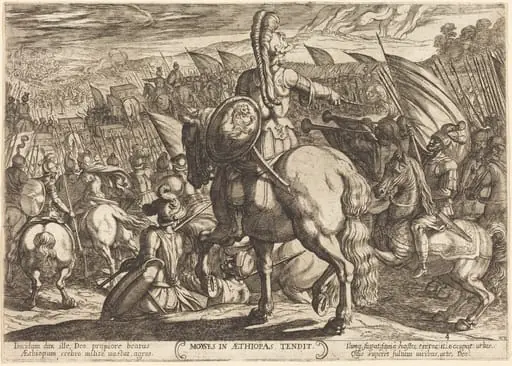 Moses makes the Hebrew army march against the Ethiopians