Artwork
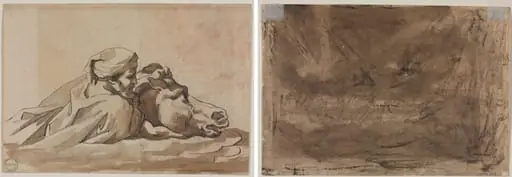
Man Clutching a Horse in Water, after Poussin's "Deluge" (recto)
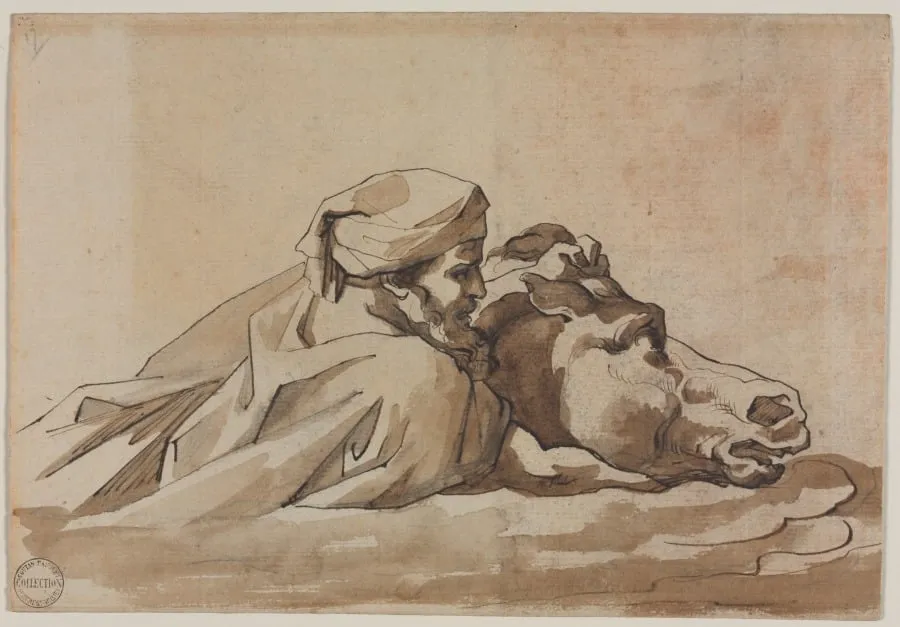
Man Clutching a Horse in Water, after Poussin's "Deluge" (recto) is a drawing by the Romanticist artist Théodore Géricault. It dates from 1816 and is held in the collection of the Cleveland Museum of Art. This small drawing by Géricault depicts a man clinging to a horse's mane as they struggle to stay afloat in turbulent water.
About this work
Overview
This small drawing by Géricault depicts a man clinging to a horse's mane as they struggle to stay afloat in turbulent water. It is a detailed copy from Nicolas Poussin's painting 'The Deluge'.
Subject & Meaning
The drawing captures a moment of intense struggle and panic, conveying a sense of monumental drama despite its small scale. The scene is characterized by the desperate attempt of the man and horse to remain above the dark, swirling water.
Technique & Style
Géricault employed his 'antique manner' of drawing, characterized by heavy contour lines and broad washes, to recreate Poussin's scene. This style, developed around 1815, emphasizes bold outlines and expressive use of light and shadow, creating a sense of immediacy and tension.
History & Provenance
The drawing is a copy of a detail from Poussin's 'The Deluge', created as part of Géricault's practice of copying works from the past, including prints after ancient sculpture and works by Renaissance artists like Raphael and Michelangelo.
Context
Géricault's work reflects his renewed interest in the art of the past, using it as a foundation to develop his own style and expressive capabilities.
Artist & collection
Artist
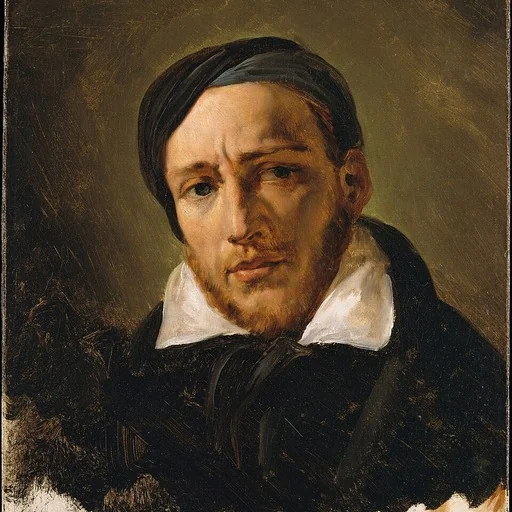
Jean-Louis André Théodore Géricault (French: ; 26 September 1791 – 26 January 1824) was a French painter and lithographer.

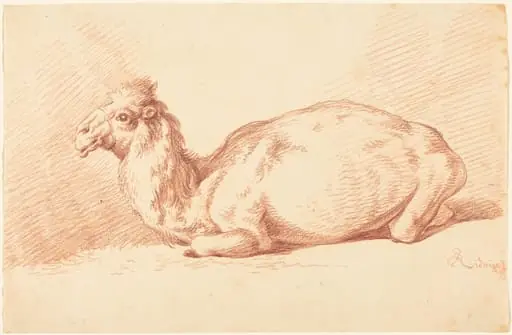 A Dromedary Camel
 Sketch for "The Thought of Death alone, the Fear Destroys"
 Sleeping Peasant
 Eliezer and Rebecca at the Well
 Two Men in Oriental Dress
 Figure Studies including Seated Mother and Child
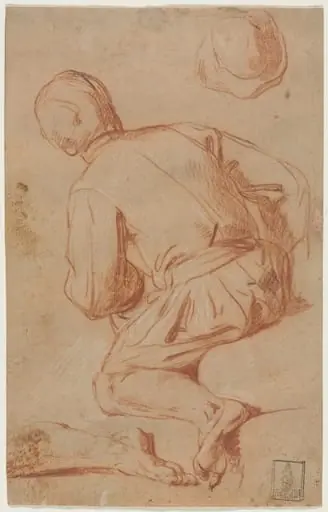 Rear View of Seated Man
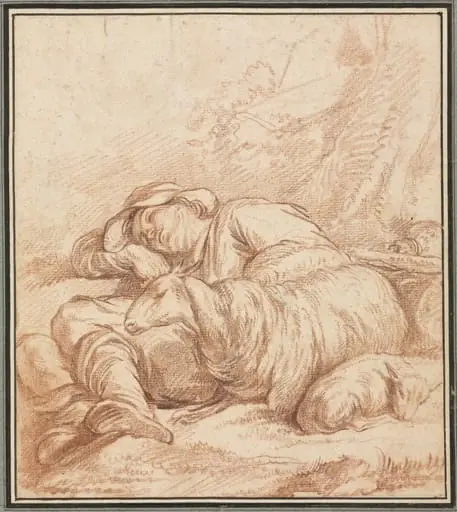 A Sleeping Shepherd
![Young Woman Kneeling and Reaching Forward [verso], by Charles de La Fosse](https://artifactworldgallery.com/img/charles-de-la-fosse--young-woman-kneeling-and-reaching-forward-verso--dad9d34b84dadb6d-w320.webp) Young Woman Kneeling and Reaching Forward [verso]
Young Woman Kneeling and Reaching Forward [verso]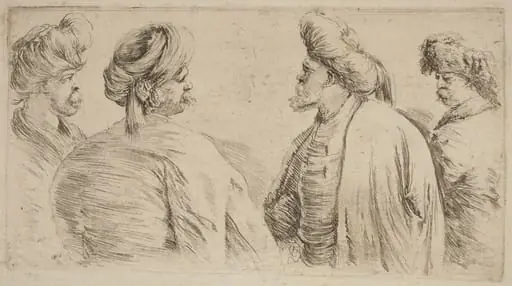 Four Turks Wearing Turbans
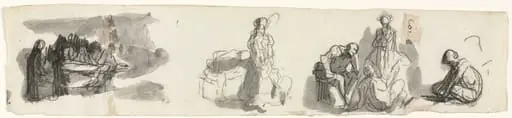 Sheet of Studies with a Group of Four Figures to the Right (recto)
 Man Clutching a Horse in Water, after Poussin's "Deluge" (recto); Compositional Study? (possibly for "Poussin's Deluge") (verso)