Artwork
Ferdinand, Ariel, Prospero and Miranda (from William Shakespeare's 'The Tempest')
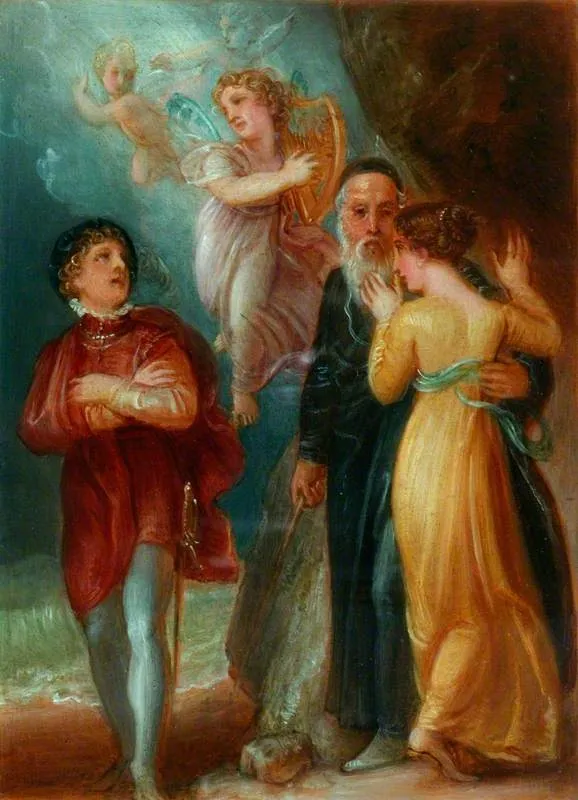
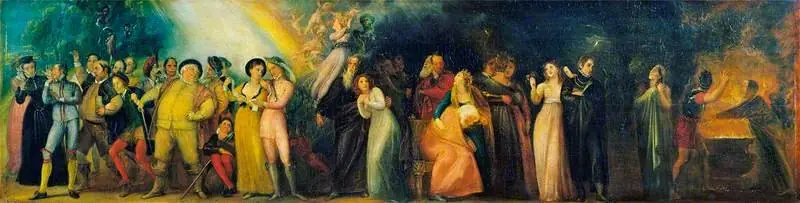
Ferdinand, Ariel, Prospero and Miranda (from William Shakespeare's 'The Tempest') is an oil painting by the Neoclassicist artist Thomas Stothard. It dates from 1795 and is held in the collection of the Victoria and Albert Museum.
About this work
Overview
Thomas Stothard’s 1795 oil painting captures a moment from Shakespeare’s The Tempest, portraying four key figures from the play. Executed in the neoclassical idiom, the work reflects the period’s interest in literary subjects rendered with formal grace. It is part of the Victoria and Albert Museum’s collection, where it remains as an example of late 18th-century British narrative painting.
Subject & Meaning
The scene depicts Ferdinand, dressed in red, meeting Miranda in a tender embrace, while Prospero, in a dark robe with a long white beard, observes them. Ariel, the spirit, hovers nearby, playing a harp as a cherub flies above. The composition suggests a moment of reconciliation and gentle enchantment, aligning with the play’s themes of forgiveness and natural order restored.
Technique & Style
Stothard employs chiaroscuro to model forms with subtle light shifts, enhancing the three-dimensionality of the figures against a dim, atmospheric background. Warm hues in the clothing contrast with cooler tones in the setting, creating visual harmony. The figures are arranged in a balanced, almost sculptural group, reflecting neoclassical ideals of clarity and restraint.
History & Provenance
Painted in 1795, the work was likely commissioned or created for public exhibition, as Stothard was known for illustrating literary works for print and gallery audiences. It entered the Victoria and Albert Museum’s collection in the 19th century, where it has remained as part of its holdings of British art tied to literary culture.
Context
Stothard worked during a time when Shakespearean scenes were popular in British art, often used to elevate painting with moral and poetic themes. His approach blended theatricality with classical composition, responding to both public taste and the academic emphasis on narrative clarity. This painting reflects the era’s fascination with reconciling emotion with order.
Legacy
Though not widely reproduced today, the painting exemplifies how 18th-century British artists interpreted Shakespeare through visual form. Stothard’s attention to character and symbolic detail influenced later illustrators of literary texts, contributing to a tradition of narrative painting grounded in textual fidelity rather than dramatic spectacle.
Artist & collection
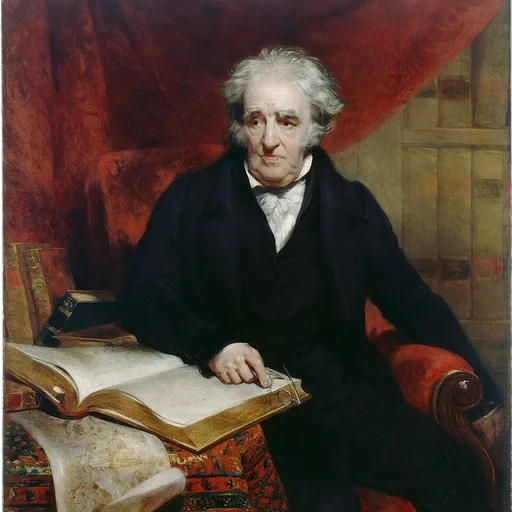
Artist
Thomas Stothard (17 August 1755 – 27 April 1834) was a British painter, illustrator and engraver.

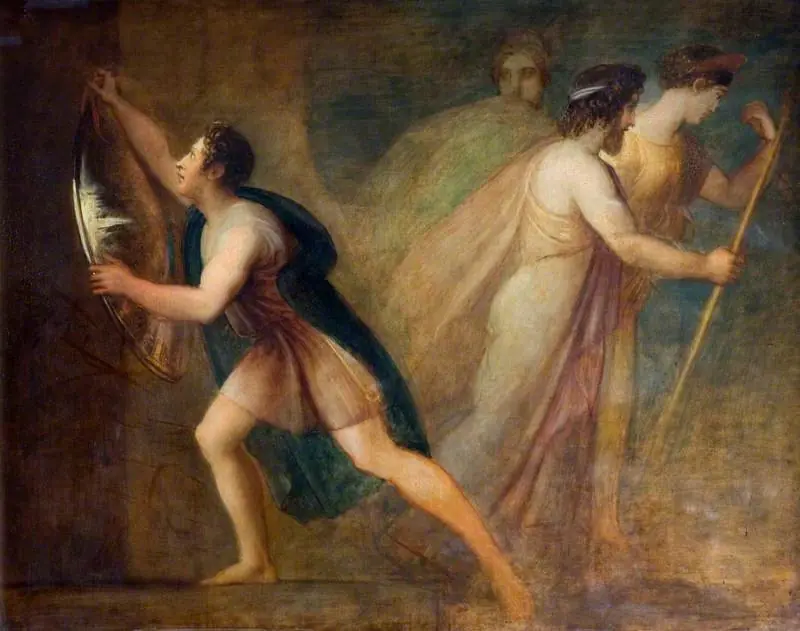 Orestes Hanging up the Shield of Agamemnon
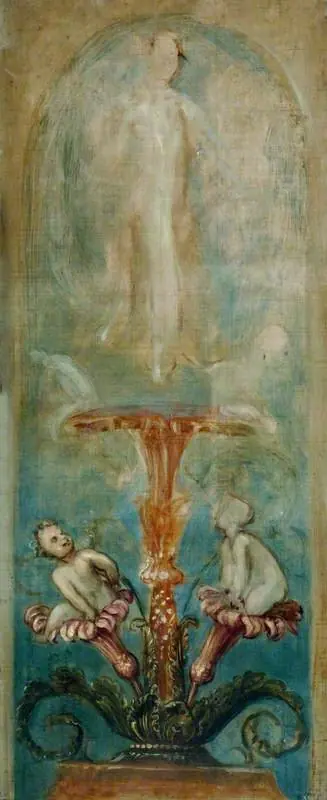 Arabesque Decoration with a Female Figure (sketch)
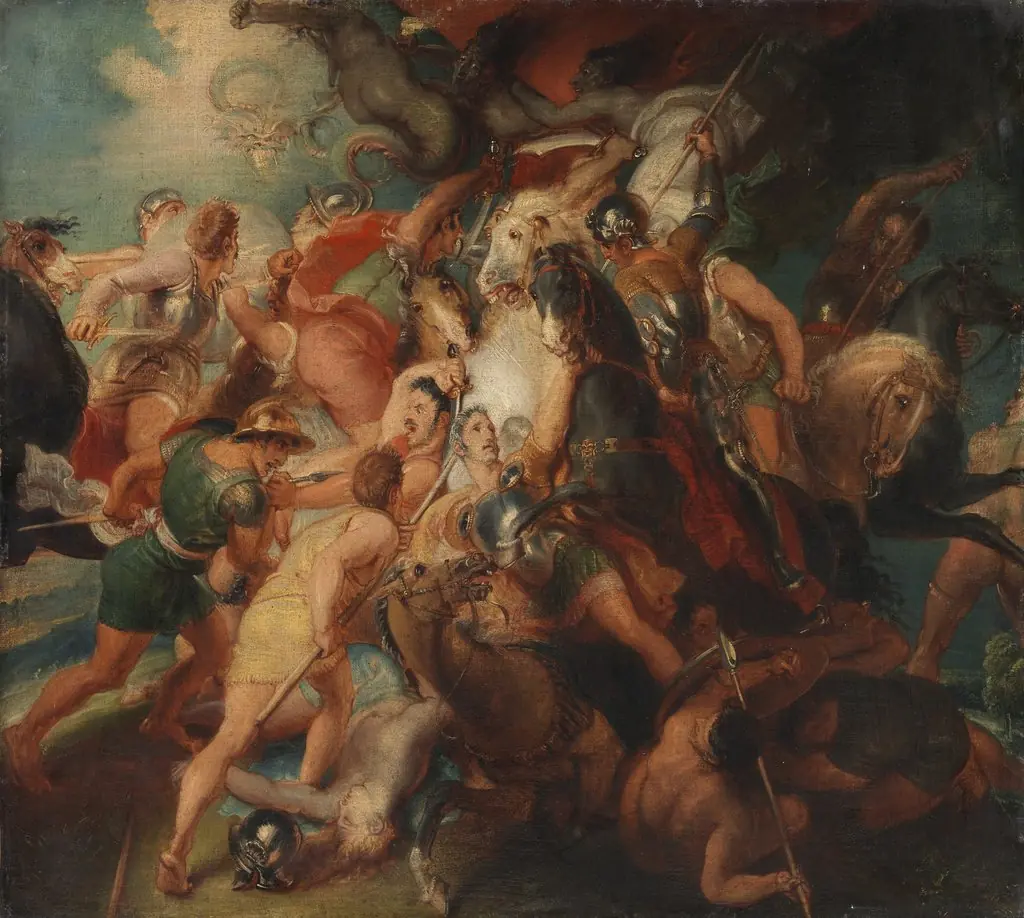 The Horrors of War, Sketch for Burghley House Mural
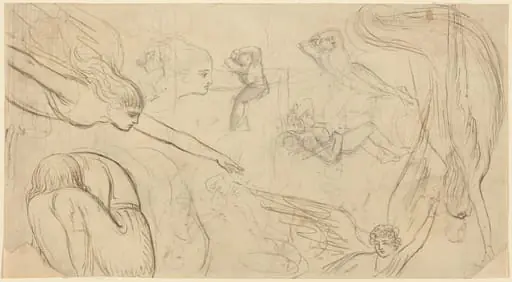 Sheet of Studies with Angels and Cowering Figures (Illustration for Macklin's Bible?)
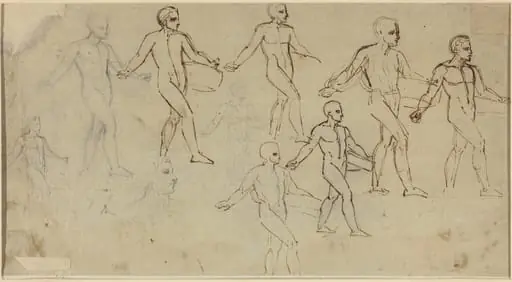 Studies of a Sower (Illustration for Thomson's _Seasons_)
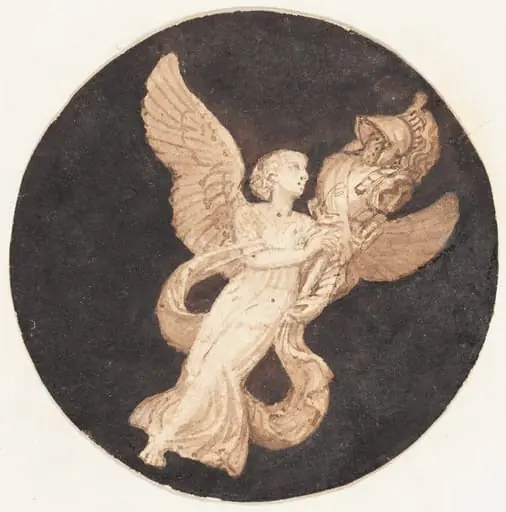 Vignette for a Title Page: "Winged Victory"
![Design for a Book Illustration of Circe and Odysseus [recto], by Thomas Stothard](https://artifactworldgallery.com/img/thomas-stothard--design-for-a-book-illustration-of-circe-and-odysseus-recto--5bd59a6f73de4838-w320.webp) Design for a Book Illustration of Circe and Odysseus [recto]
Design for a Book Illustration of Circe and Odysseus [recto] Peter and His Children Visited by Three Flying Figures
 Zoraida, Discovered by Her Father, Agimorato, in the Arms of Rui Pérez de Viedma (from Cervantes' 'Don Quixote', Part I, Chapter 14)
 Petrarch and Laura
 King Lear in the Storm
 Sancho Panza and the Duchess (from Cervantes' 'Don Quixote')
 Pierre du Terrail, Chevalier de Bayard
 Constance and Arthur (from William Shakespeare's 'King John', Act III, Scene 1)
 The Lady's Dream
 Joseph of Arimathea Preaching to the Britons
 The Captive
 First Love
 Selim discovered with Zuleika by Giaffir and his men
 Shakespeare's Principal Characters