Artwork
Sancho Panza and the Duchess (from Cervantes' 'Don Quixote')
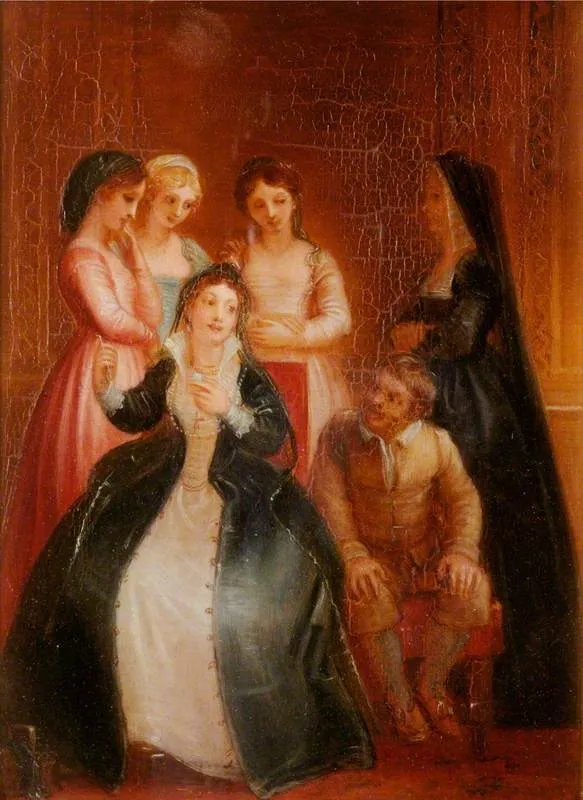
Sancho Panza and the Duchess (from Cervantes' 'Don Quixote') is an oil painting by Thomas Stothard. It dates from 1804 and is held in the collection of the Victoria and Albert Museum.
About this work
Overview
The painting is part of the Victoria and Albert Museum’s collection, reflecting Stothard’s engagement with literary subjects during the early 19th century.
Thomas Stothard, a British artist known for his illustrations and historical scenes, painted this oil work around 1804, illustrating a moment from Cervantes’ *Don Quixote*. It depicts Sancho Panza and the Duchess in a domestic interior, capturing a scene of social interaction rather than action. The painting is part of the Victoria and Albert Museum’s collection, reflecting Stothard’s engagement with literary subjects during the early 19th century.
Subject & Meaning
The scene portrays Sancho Panza kneeling before the Duchess, who observes him with quiet authority. Surrounding figures—five women and a standing man—suggest a courtly setting where social hierarchy is subtly performed. The moment reflects the Duchess’s playful manipulation of Sancho, a recurring theme in Cervantes’ novel, where nobility toys with the peasant’s gullibility. The composition emphasizes power dynamics through posture and gaze.
Technique & Style
Stothard employed soft modeling and muted tones to render figures in a refined, almost theatrical manner. The clothing is detailed but not overly ornate, with distinct colors distinguishing each figure. The red floor and brown walls provide a restrained backdrop, focusing attention on the central interaction. His brushwork is precise yet fluid, characteristic of his illustrative approach, blending narrative clarity with gentle realism.
History & Provenance
The painting was completed around 1804 and entered the Victoria and Albert Museum’s collection in the 19th century. It was likely acquired as part of a broader interest in literary-themed art during the Romantic era. Stothard’s son, Robert T. Stothard, also became a painter, though no direct link between the son and this work is documented. The painting has remained in public ownership since its acquisition.
Context
Stothard’s work emerged during a period when British artists increasingly turned to literature for subject matter, particularly Cervantes’ satirical novel. The popularity of *Don Quixote* in England, translated and adapted widely, made such scenes familiar to audiences. This painting reflects a trend of visualizing literary moments with moral or social nuance, aligning with contemporary tastes for refined, narrative-driven art.
Legacy
Though not among Stothard’s most widely reproduced works, this painting exemplifies his skill in translating literary narrative into intimate visual scenes. It contributes to the broader 19th-century British tradition of illustrating classic texts, influencing later illustrators who sought to capture character and social nuance. Its presence in a major museum ensures continued access for study and public engagement.
Artist & collection
Artist
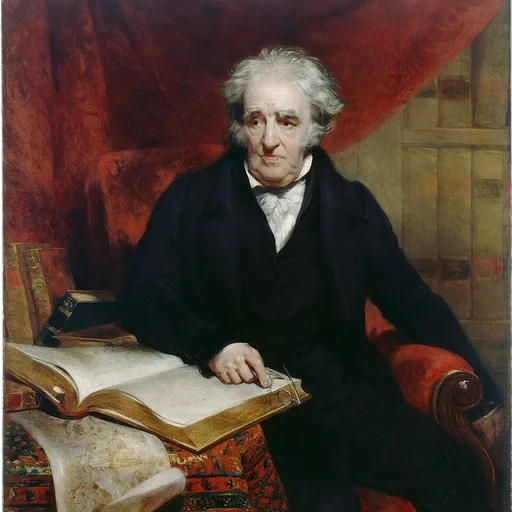
Thomas Stothard (17 August 1755 – 27 April 1834) was a British painter, illustrator and engraver.

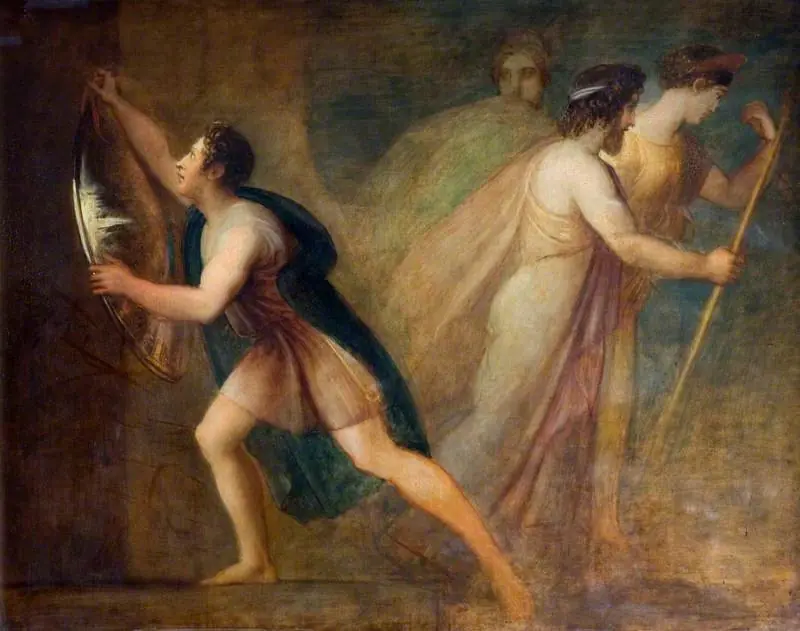 Orestes Hanging up the Shield of Agamemnon
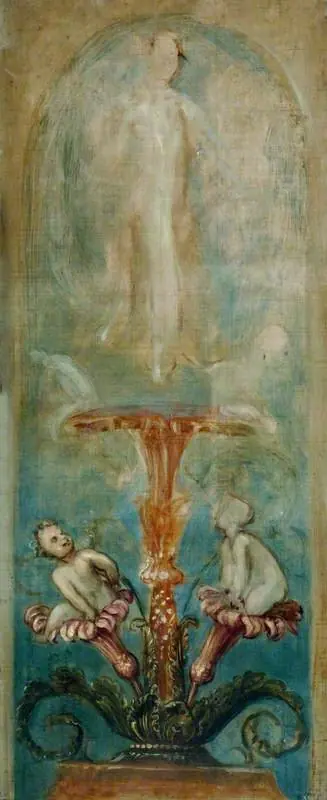 Arabesque Decoration with a Female Figure (sketch)
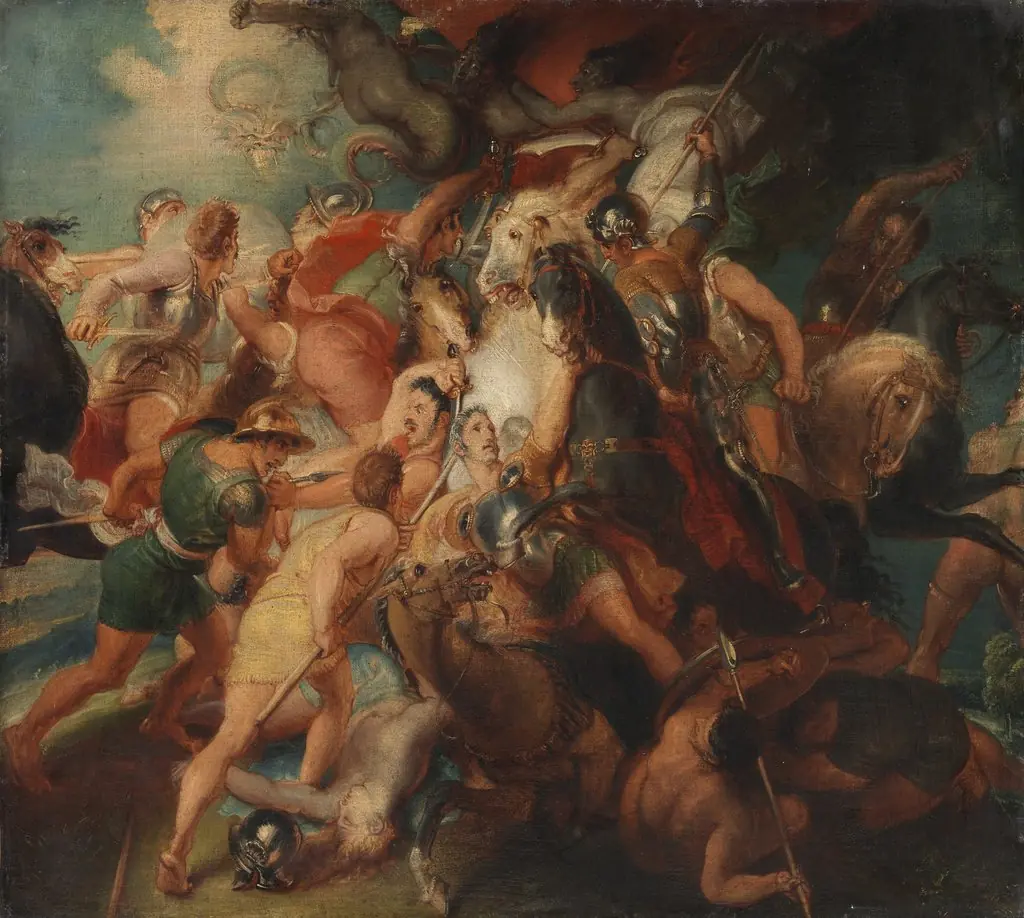 The Horrors of War, Sketch for Burghley House Mural
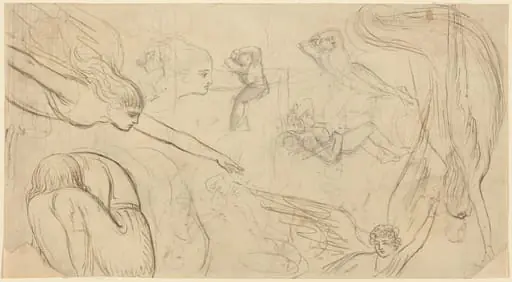 Sheet of Studies with Angels and Cowering Figures (Illustration for Macklin's Bible?)
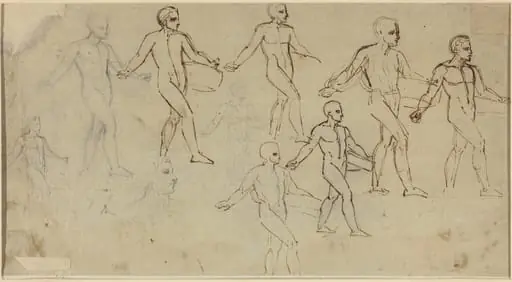 Studies of a Sower (Illustration for Thomson's _Seasons_)
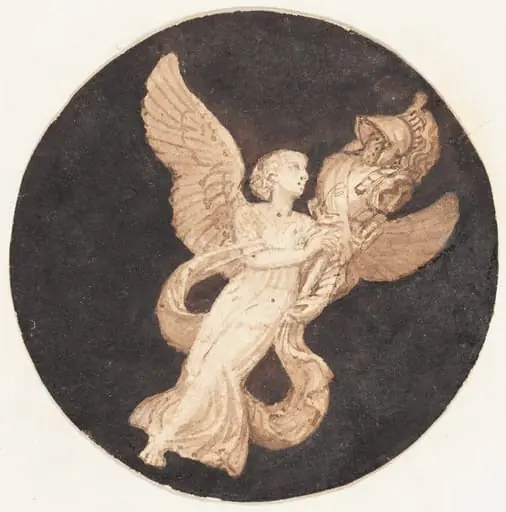 Vignette for a Title Page: "Winged Victory"
![Design for a Book Illustration of Circe and Odysseus [recto], by Thomas Stothard](https://artifactworldgallery.com/img/thomas-stothard--design-for-a-book-illustration-of-circe-and-odysseus-recto--5bd59a6f73de4838-w320.webp) Design for a Book Illustration of Circe and Odysseus [recto]
Design for a Book Illustration of Circe and Odysseus [recto]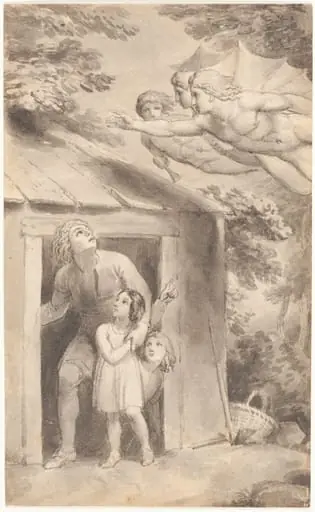 Peter and His Children Visited by Three Flying Figures
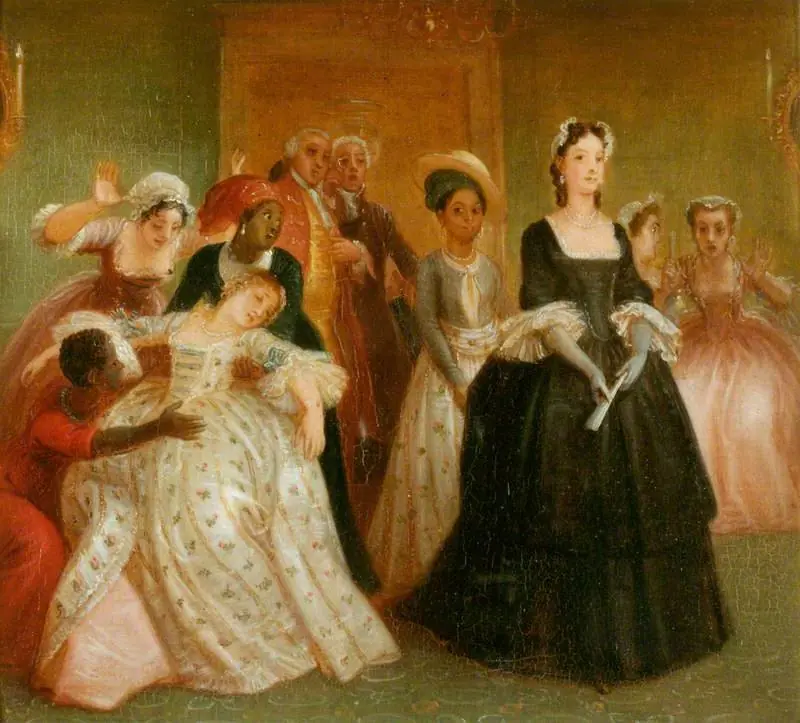 Brunetta and Phillis (Richard Steel, 'The Spectator', no.80)
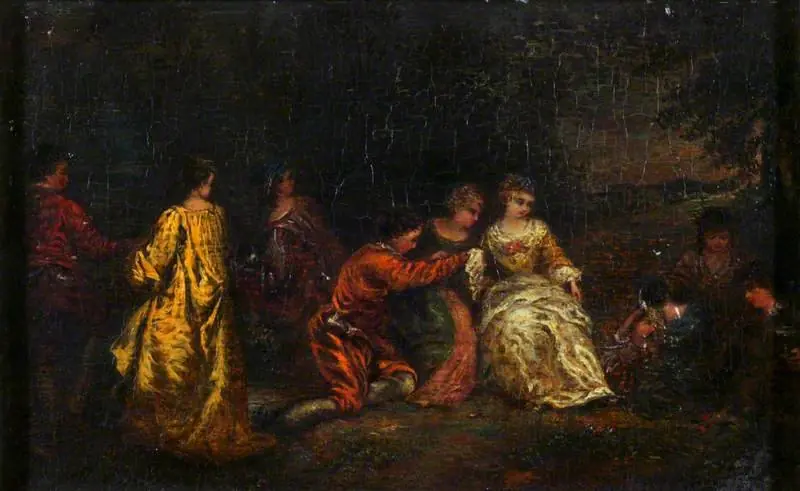 Fête champêtre
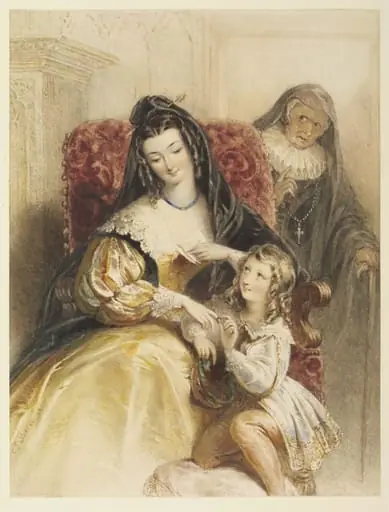 The Topaz
 Interior cu familie aristocratică
 Ferdinand, Ariel, Prospero and Miranda (from William Shakespeare's 'The Tempest')
 Constance and Arthur (from William Shakespeare's 'King John', Act III, Scene 1)
 The Duel (from Francis Beaumont and John Fletcher's 'The Humorous Lieutenant', Act III, Scene 3)
 The Letter