Artwork
Muhammad Ali Khan (1717/1718–1795), Nawab of Arcot
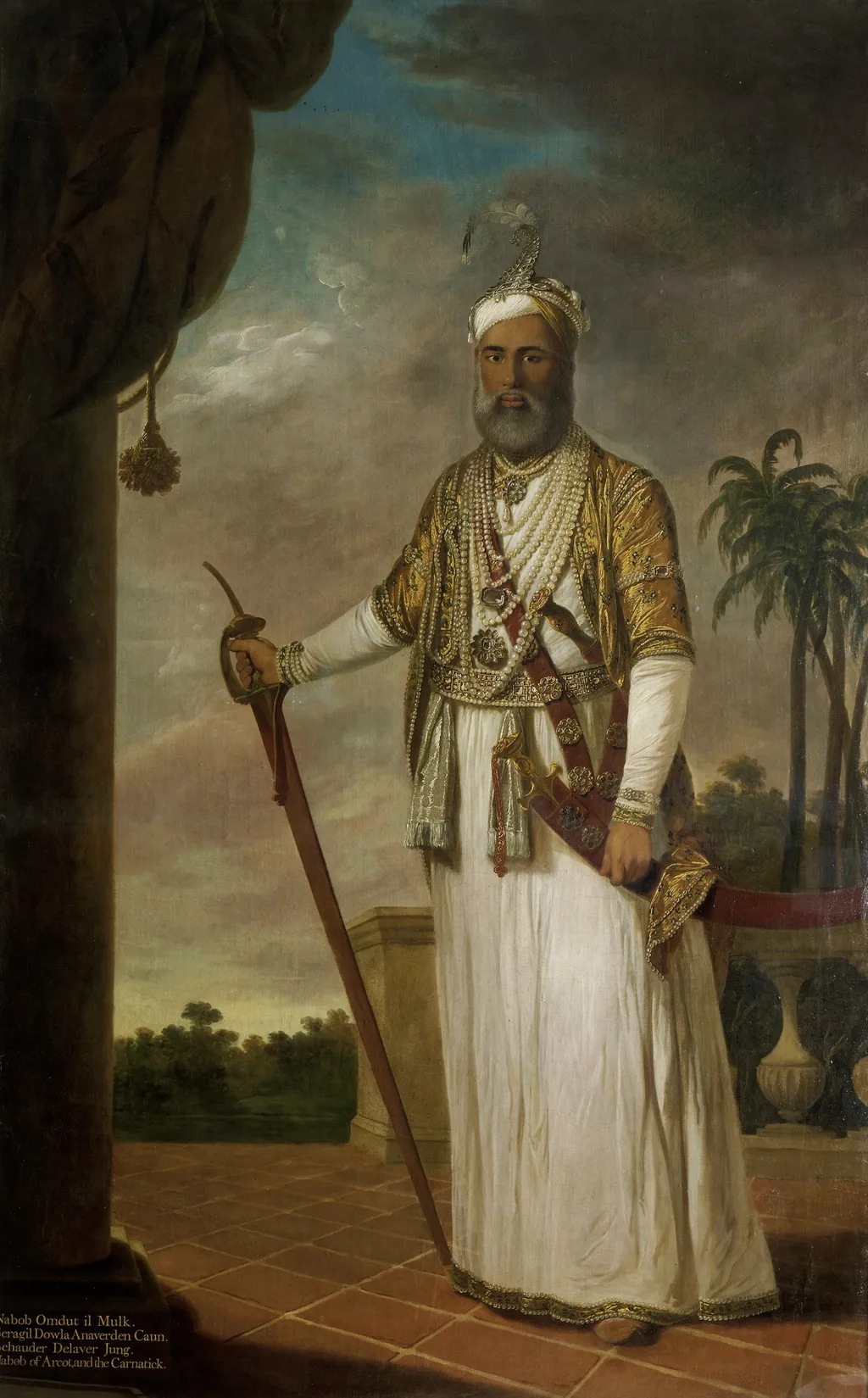
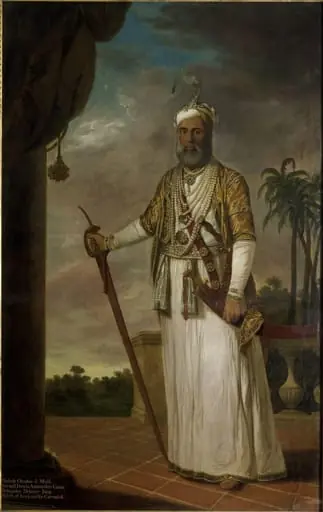
Muhammad Ali Khan (1717/1718–1795), Nawab of Arcot is an oil painting by Tilly Kettle. It dates from 1774 and is held in the collection of the Victoria and Albert Museum.
About this work
Overview
The painting is now held in the collection of the Victoria and Albert Museum.
Painted in 1774 by the English artist Tilly Kettle, this oil portrait captures Muhammad Ali Khan Wallajah, the Nawab of Arcot, during the height of British colonial presence in South India. Kettle, among the first British painters to establish a practice in the region, produced this work as part of a broader effort to document local elites through Western artistic conventions. The painting is now held in the collection of the Victoria and Albert Museum.
Subject & Meaning
The Nawab is depicted standing in a cultivated courtyard, dressed in fine white robes and a gold-embroidered jacket, symbols of his political and social authority. His grip on an ornate sword reinforces his role as a ruler, while the turban and layered garments reflect Mughal-influenced courtly dress. The composition avoids overt symbolism, instead conveying status through material detail and composed posture, aligning with both Indian aristocratic traditions and European portraiture norms of the time.
Technique & Style
Kettle employed rich, saturated pigments and meticulous brushwork to render textures of fabric, metal, and foliage. The lighting is even and naturalistic, avoiding dramatic contrasts, which reflects his academic training. Background elements—distant trees and a soft, overcast sky—are rendered with loose brushstrokes, creating depth without distracting from the central figure. The precision in embroidery and weaponry suggests close observation and a desire to document material culture accurately.
History & Provenance
Commissioned during Kettle’s time in Madras, the portrait was likely intended to affirm the Nawab’s prestige among British officials and possibly for diplomatic exchange. It remained in British hands after Kettle’s departure from India and entered the Victoria and Albert Museum’s collection in the 19th century. Its preservation reflects its value as both a colonial artifact and a record of Indo-British interaction in the late 18th century.
Context
At the time of its creation, the Nawab of Arcot was a key ally of the British East India Company, navigating complex alliances amid regional power struggles. Portraits like this served as visual diplomacy, bridging European expectations of rulership with Indian courtly traditions. Kettle’s presence in India marked a shift in colonial visual culture, where local elites were increasingly depicted through Western artistic frameworks, often to legitimize British influence.
Legacy
This portrait stands as an early example of cross-cultural representation in colonial India, illustrating how Indian rulers were visually framed for both local and foreign audiences. It influenced later British artists working in the subcontinent and remains a reference point for understanding how power, identity, and aesthetics intersected during the early phase of British imperial engagement in South India.
Own this work as a print
Artist & collection
Artist
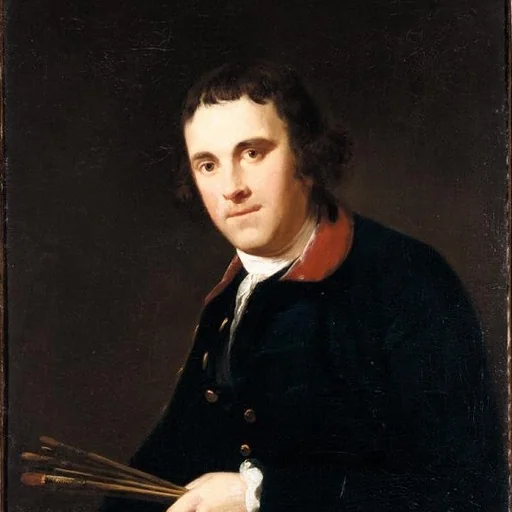
Tilly Kettle (1735 – 1786) was an English painter who specialised in portrait painting. He was the first British painter to operate in Colonial India.

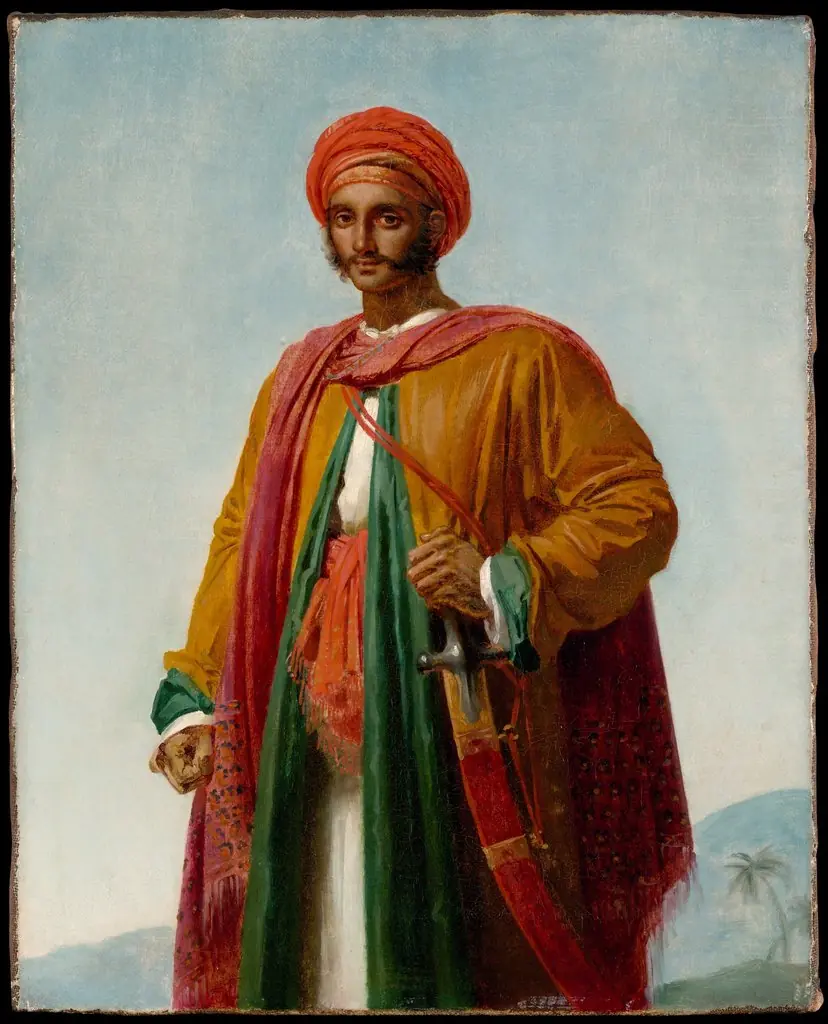 Study for "Portrait of an Indian"
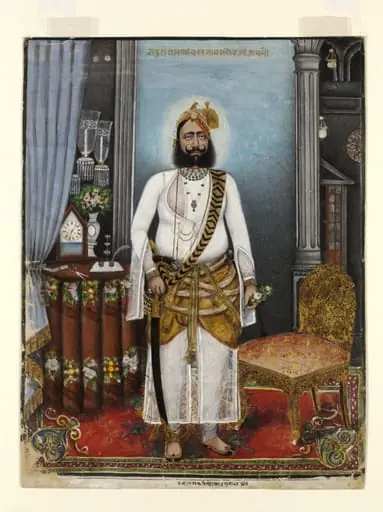 Portrait of Thakur Raja Bakhtawar Singh, standing in a European-style interior.
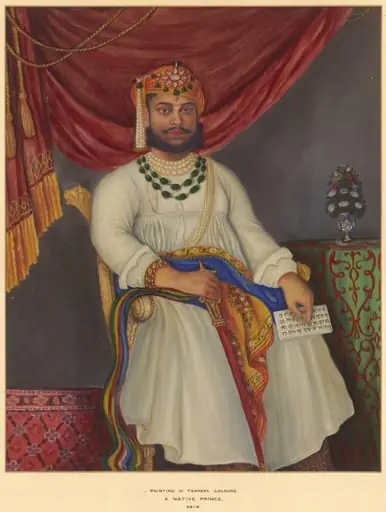 Portrait of Tukoji II, the Maharaja Holkar of Indore, seated under a looped crimson curtain.
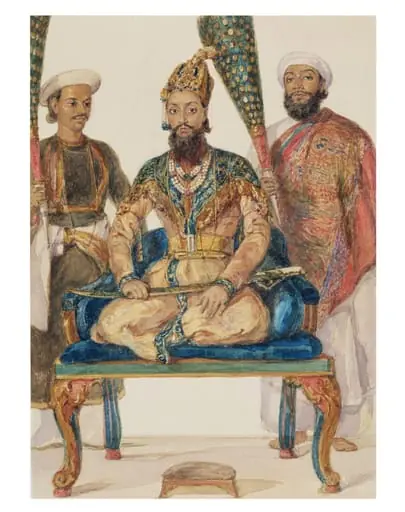 Prince Fakhr-ud Din Mirza
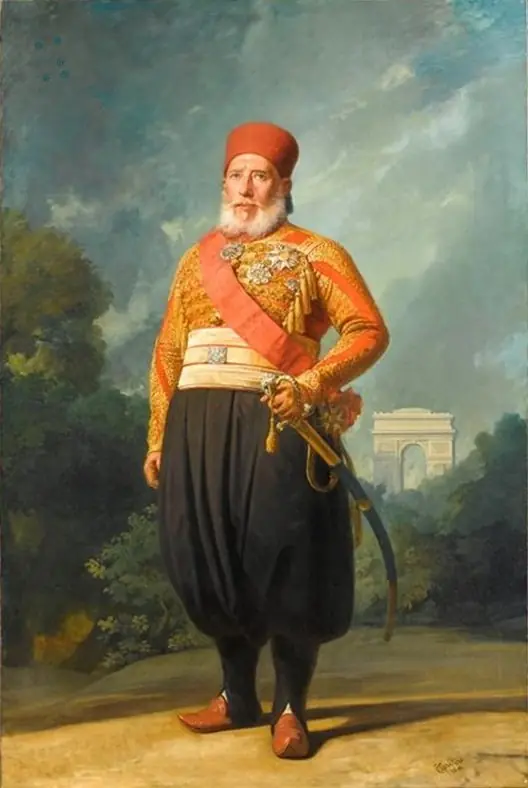 Portrait of Ibrahim Pasha of Egypt (1789–1848)
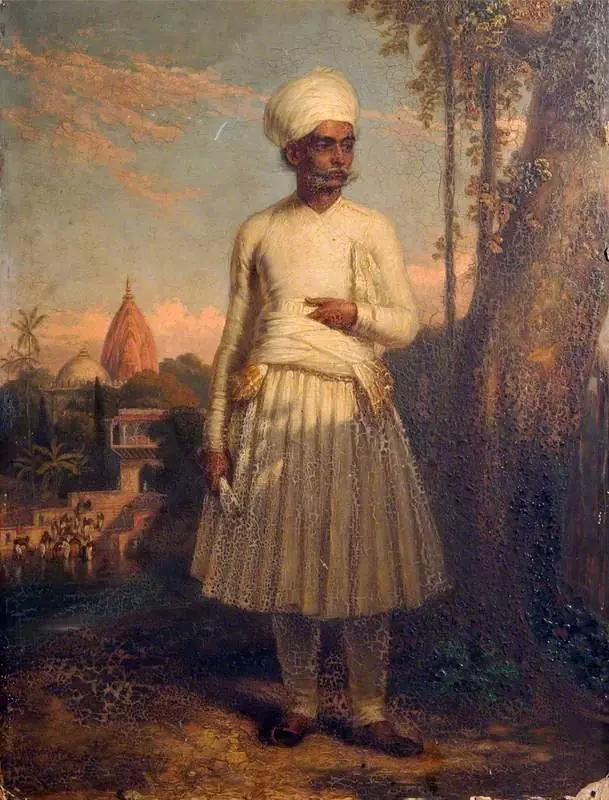 Samuldass Dessaye of Neriad in Guzerat
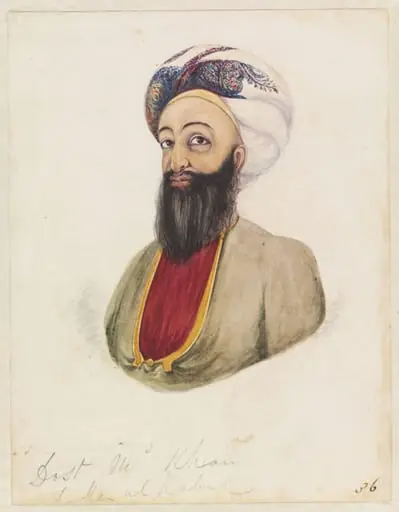 Dost Md Khan taken at Kabul