Artwork
Tissue of a human embryo
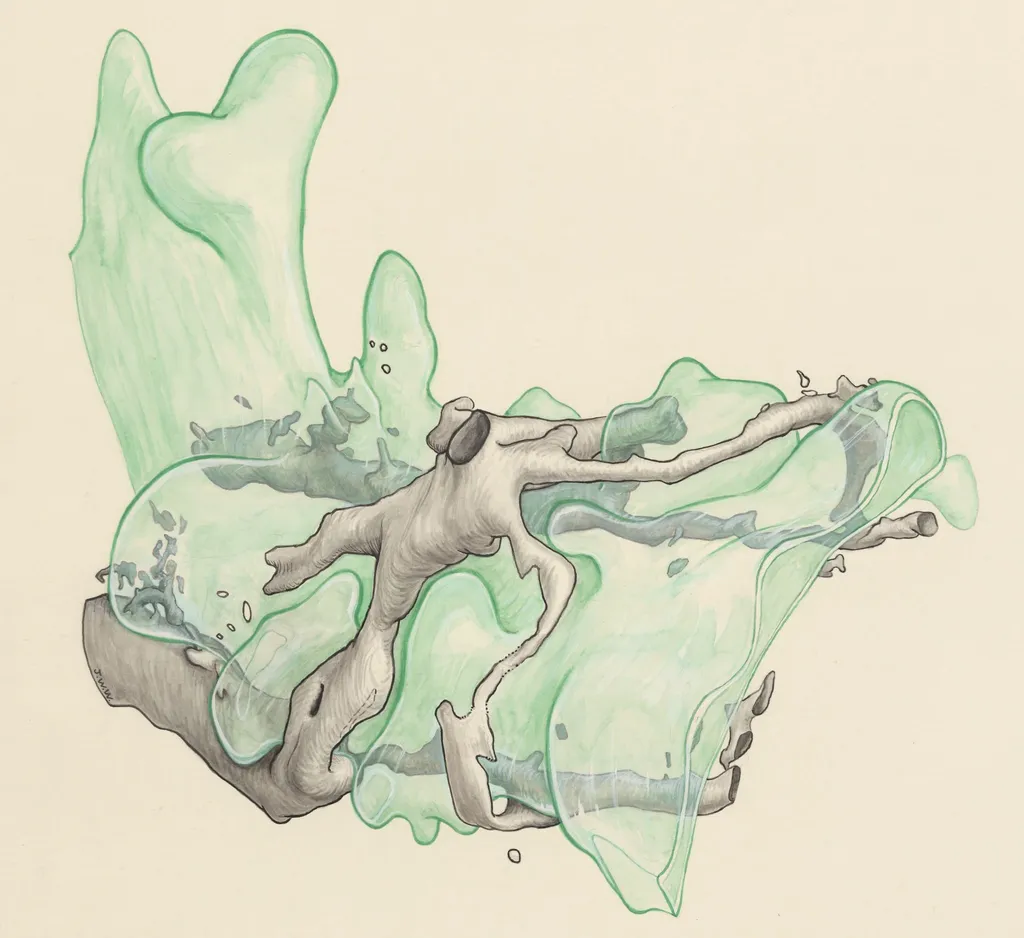
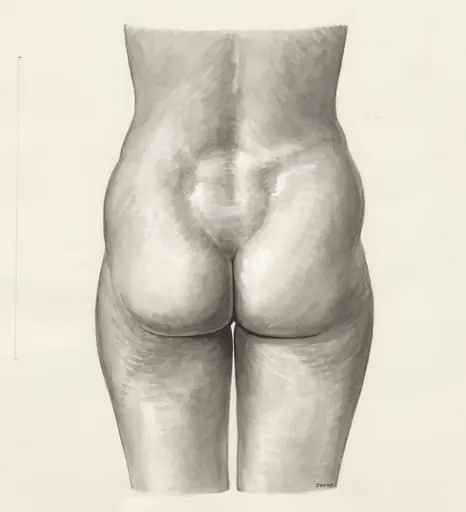
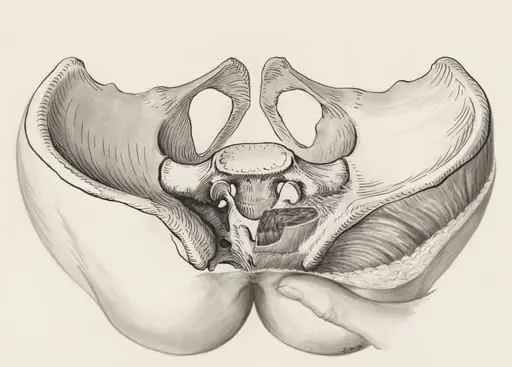
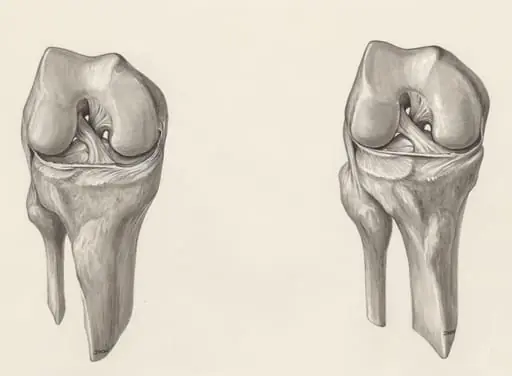
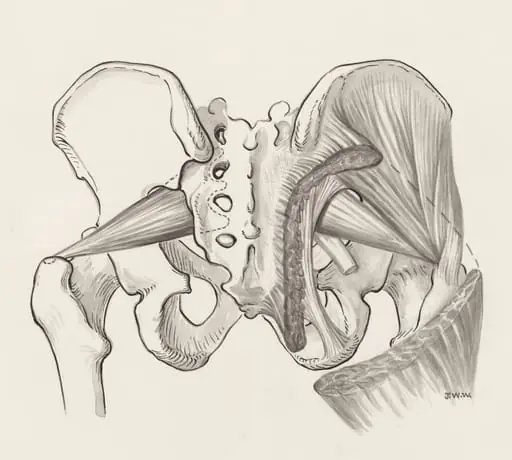
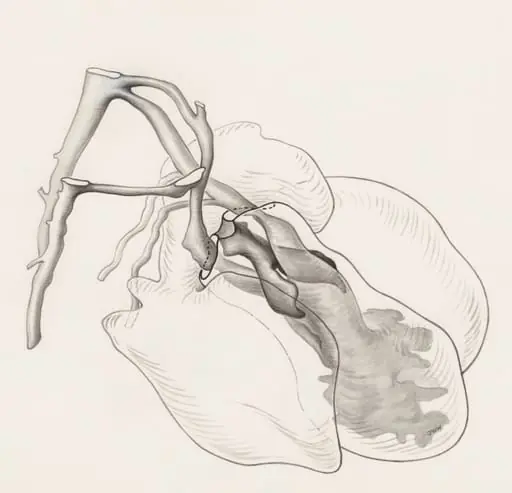
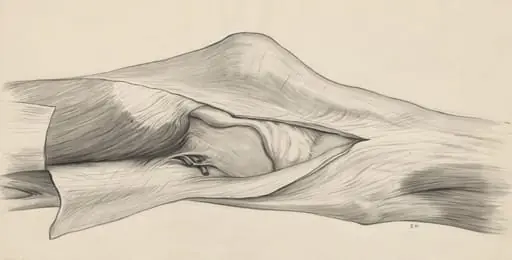
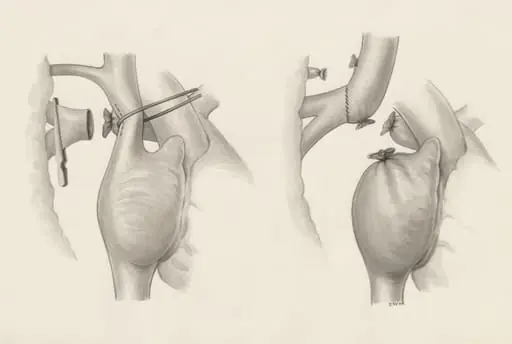
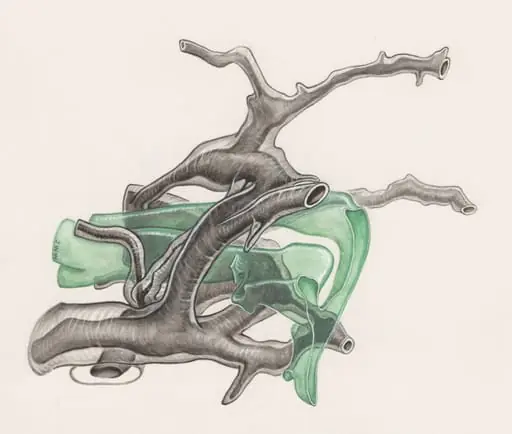
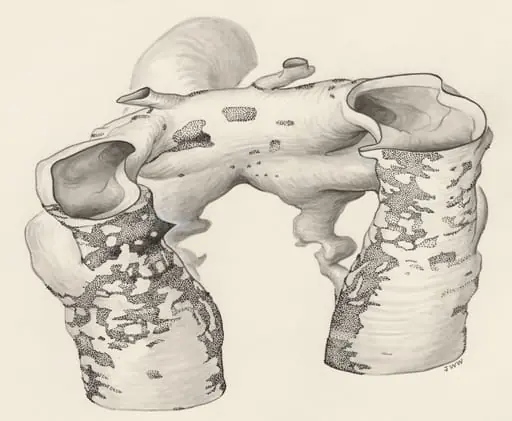
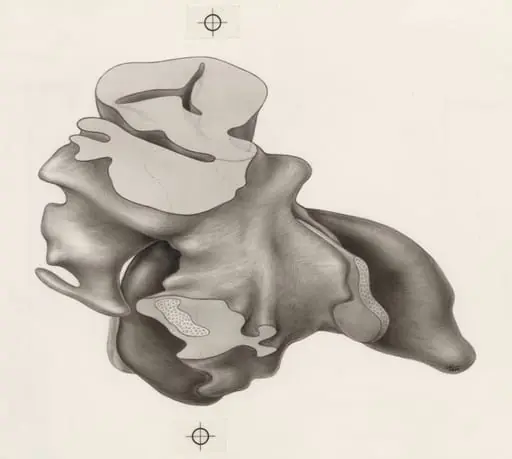
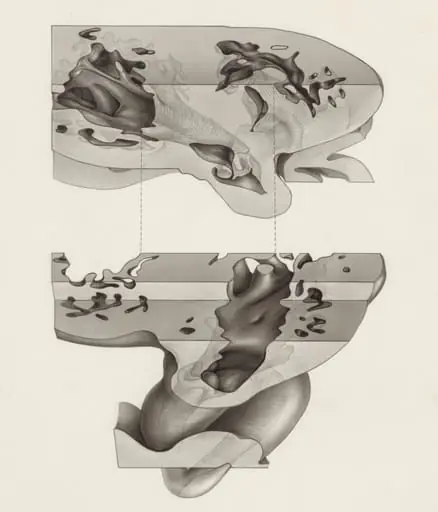
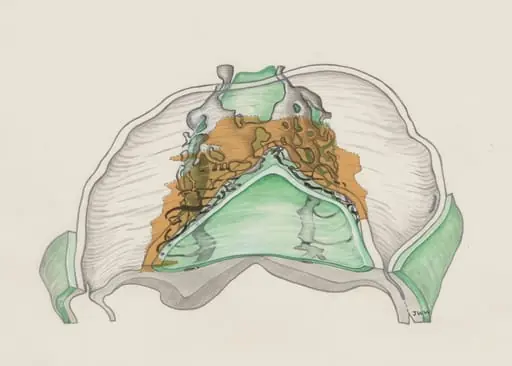
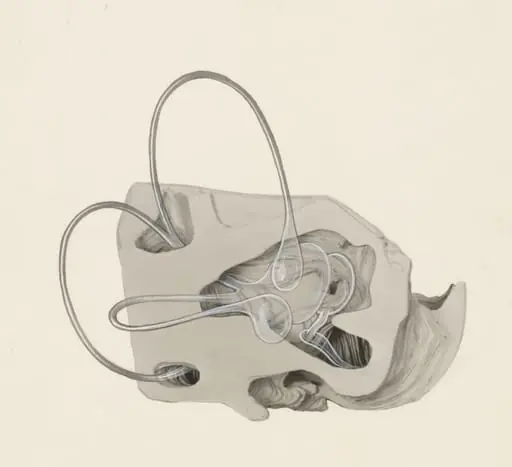
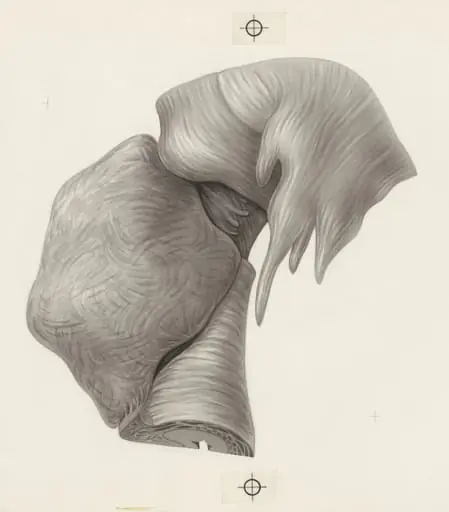
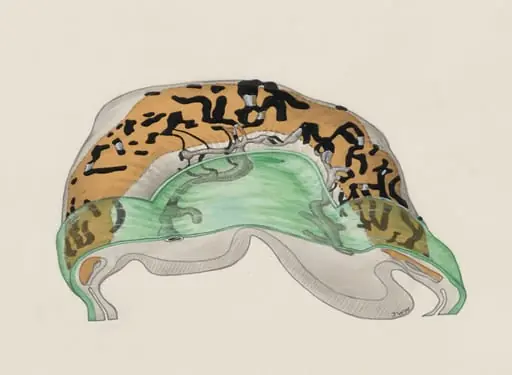
Tissue of a human embryo is a drawing by J Wetselaar-Whittaker. It dates from 1970 and is held in the collection of the Leiden University Libraries. This drawing depicts a human embryo rendered in monochrome brushwork, primarily using grey and subtle green tones.
About this work
Overview
This drawing depicts a human embryo rendered in monochrome brushwork, primarily using grey and subtle green tones. The composition isolates the embryo without contextual elements, focusing entirely on its form. The absence of background or supplementary details directs attention to anatomical precision, suggesting a purpose rooted in scientific observation rather than artistic embellishment.
Subject & Meaning
Its representation serves an educational or research function, capturing early developmental stages with minimal interpretation.
The subject is a developing human embryo, portrayed with clinical clarity. Its representation serves an educational or research function, capturing early developmental stages with minimal interpretation. The lack of ornamentation underscores its role as a visual record, intended for study rather than aesthetic contemplation, reflecting the intersection of biology and visual documentation in historical medical practice.
Technique & Style
The artist employed fine brushwork to build form through graded washes and controlled stippling. Grey tones establish volume, while faint green accents suggest tissue variation or moisture. Lines are deliberate but unobtrusive, avoiding heavy outlines. The technique prioritizes accuracy over expressiveness, using subtle tonal shifts to convey depth and structure without reliance on shading conventions common in fine art.
History & Provenance
The drawing likely originated in a 19th- or early 20th-century medical institution, where embryological study was advancing through direct observation. Its simple materials—ink and wash on paper—align with the practical needs of anatomical illustration before photographic reproduction became widespread. No documented provenance exists, but its style suggests use in teaching or publication within a scientific context.
Context
During the period when such drawings were made, embryology was emerging as a distinct field, reliant on meticulous visual records. Artists and scientists often collaborated to produce accurate depictions for textbooks and lectures. This piece reflects that tradition—its stripped-down aesthetic mirrors the era’s emphasis on empirical clarity, distinguishing it from more interpretive anatomical art of the time.
Legacy
Though unsigned and unattributed, the drawing contributes to a broader archive of scientific illustration that shaped medical education. Its restrained approach influenced later generations of anatomical draftsmen who valued precision over drama. Today, it stands as a quiet testament to the role of hand-drawn imagery in the advancement of biological understanding before digital imaging.
Artist & collection
Artist
This artist made precise studies of the body—drawings and sculptures that cut straight to the bones, muscles, and tissues.