Artwork
Omagiu familiei
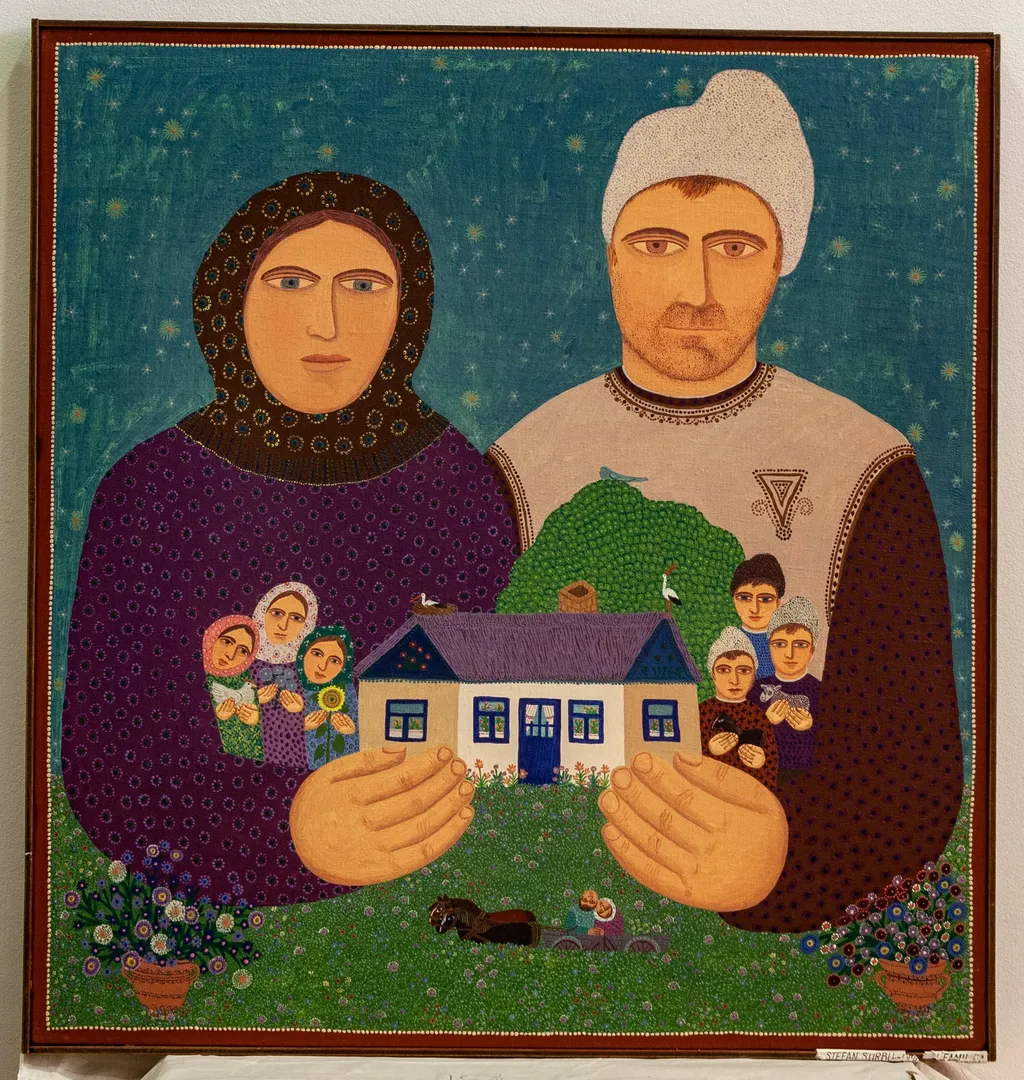
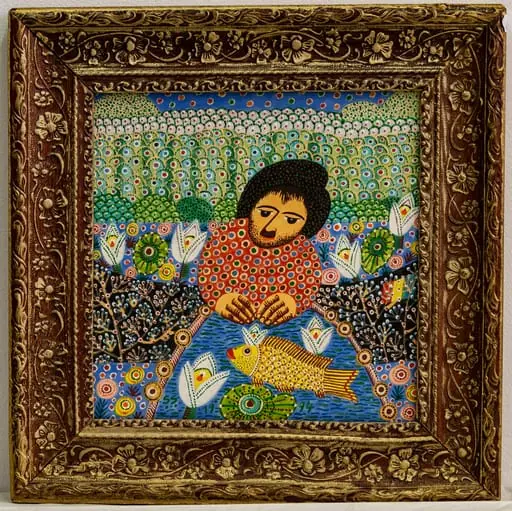
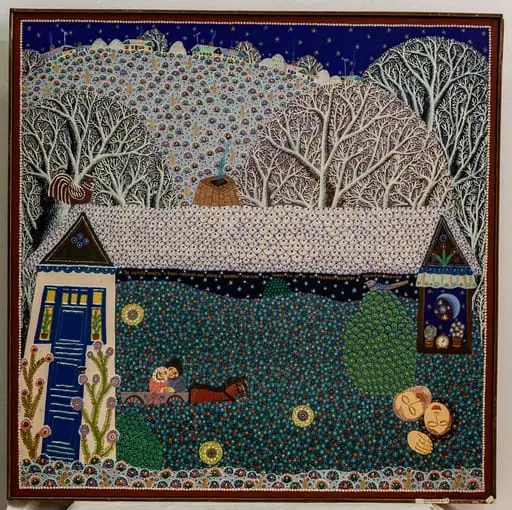
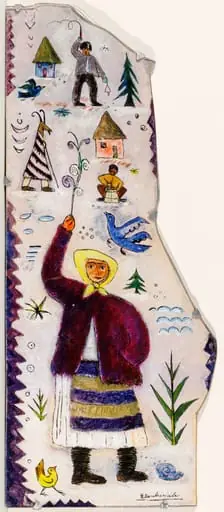
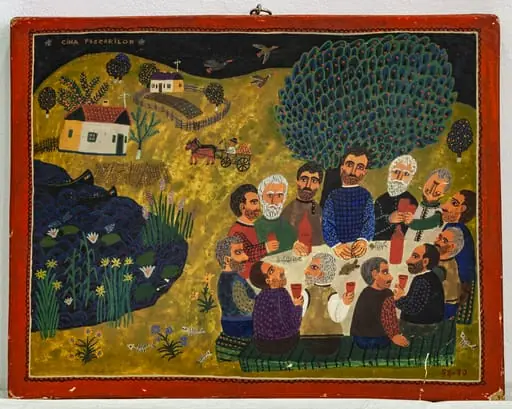
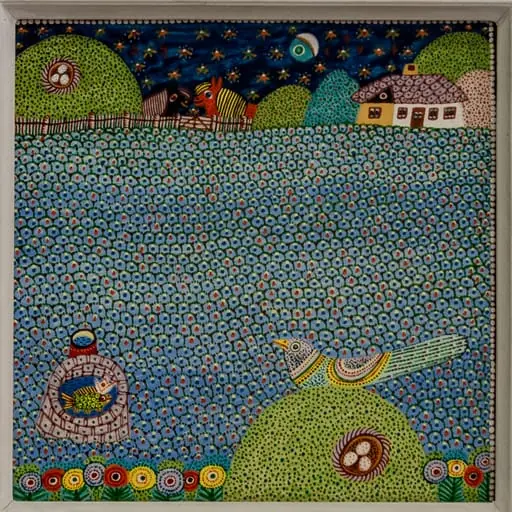
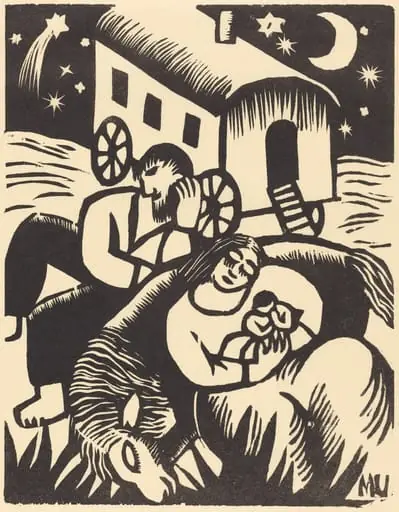
Omagiu familiei is a print by Știrbu Ștefan. It dates from 1976 and is held in the collection of the Gavrila Simion Eco-Museum Research Institute Tulcea.
About this work
Overview
It presents a stylized scene in which two figures hold aloft a miniature village, merging the human form with a depiction of domestic space.
Omagiu familiei, painted by Știrbu Ștefan in 1976, is a symbolic representation of familial connection to rural life. The work is part of the permanent collection at the Museum of Ethnography in Bucharest. It presents a stylized scene in which two figures hold aloft a miniature village, merging the human form with a depiction of domestic space. The composition avoids naturalism, favoring simplified shapes and unmodulated color.
Subject & Meaning
The painting portrays a man and woman as guardians of a small, idealized village, their outstretched hands forming a frame around the scene. The figures may represent ancestors or archetypal family members, their presence suggesting continuity between generations. The village below, with its bright doors and clustered figures, evokes communal life, while the night sky above implies a timeless, almost sacred dimension to domestic tradition.
Technique & Style
The artist employs flat, bold colors with no shading or gradation, creating a graphic, almost folk-art aesthetic. Forms are outlined clearly, and details like embroidery on the woman’s dress are rendered as patterns rather than textures. The background sky is a solid dark blue studded with small white dots, suggesting stars without perspective. This deliberate simplification emphasizes symbolic meaning over realism.
History & Provenance
Created in 1976 during a period of state-supported cultural preservation in Romania, the painting entered the collection of the Museum of Ethnography shortly after its completion. It was likely acquired as part of an effort to document and elevate vernacular artistic expression. No record of prior ownership or exhibition exists beyond its institutional acquisition.
Context
In mid-1970s Romania, rural life was increasingly idealized in official art as a source of national identity. Știrbu’s work aligns with this trend, though it avoids propaganda by focusing on intimate, personal symbolism. The painting reflects broader interest in folk motifs and traditional dress, but its composition is more personal and less documentary than state-sanctioned depictions of peasant life.
Legacy
Omagiu familiei remains a quiet example of postwar Romanian painting that bridges folk tradition and modernist simplification. It is not widely reproduced or studied outside institutional circles, but within the Museum of Ethnography, it serves as a touchstone for discussions on how domestic and ancestral memory are visually encoded in art.
Artist & collection
Artist
A Romanian printmaker, Ștefan Știrbu made linocuts and paintings that blend folklore scenes with everyday life.
Museum
Gavrila Simion Eco-Museum Research Institute Tulcea
Continue through works from the same source collection.