Artwork
În mină
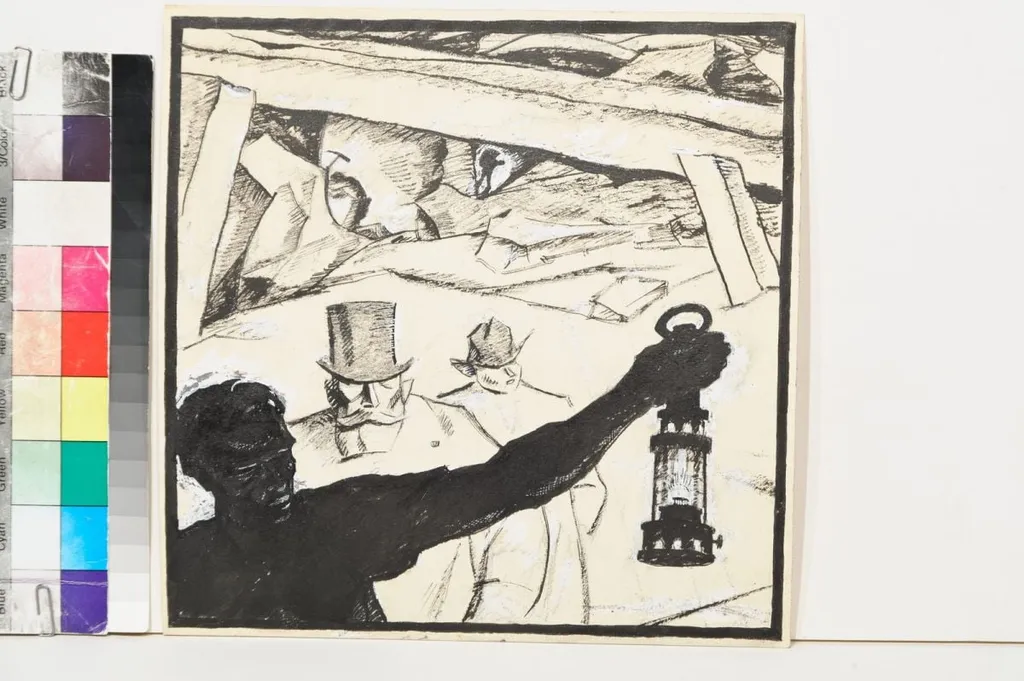
În mină is a drawing by Nicolae Tonitza. It dates from 1922 and is held in the collection of the National Museum of Art of Romania.
About this work
Overview
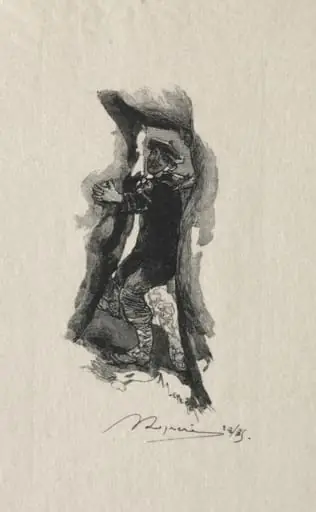
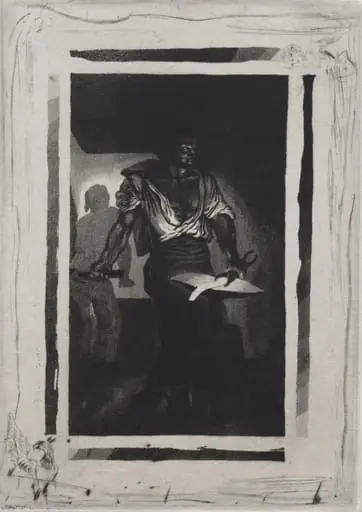
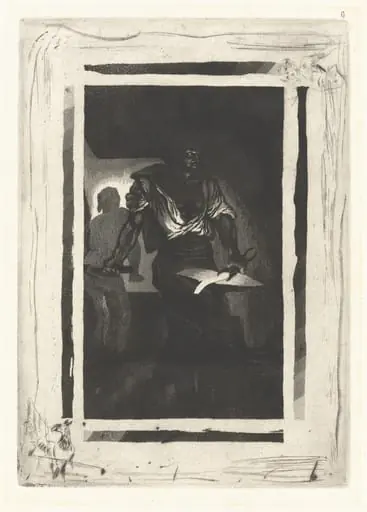
“În mină” is a 1922 drawing by Romanian painter Nicolae Tonitza. Executed as a monochrome image, the work portrays an interior space that suggests a mine or subterranean chamber, rendered with stark contrasts and a cramped composition that emphasizes confinement.
Subject & Meaning
The scene centers on a figure wearing a top hat who holds a lantern, its glow illuminating a cluster of weary individuals. The expressions and posture of the gathered figures convey fatigue and a sense of entrapment, hinting at the harsh conditions of labor in underground environments.
Technique & Style
Tonitza employs heavy, irregular black strokes to define shadows and structural elements, creating a texture that feels rough and urgent. Cross‑hatching builds depth, while the lantern’s light is rendered with lighter, more precise lines that break through the surrounding darkness, drawing attention to the faces below.
History & Provenance
The drawing was produced in the early post‑World War I period, a time when Tonitza explored social themes through sketchy, expressive media. Its exact exhibition history is not widely documented, and it remains part of the artist’s oeuvre that reflects his interest in the lives of ordinary workers.
Context
Created during a period of social upheaval in Romania, the work aligns with contemporary artistic concerns about industrialization and the plight of laborers. Tonitza’s choice of a stark, almost frantic visual language mirrors broader European trends toward expressionist depictions of human hardship.
Artist & collection

Artist
Nicolae Tonitza was a Romanian painter, engraver, lithographer, journalist and art critic. Drawing inspiration from Post-Impressionism and Expressionism, he had a major role in introducing modernist guidelines to local art.