Artwork
The Blacksmith
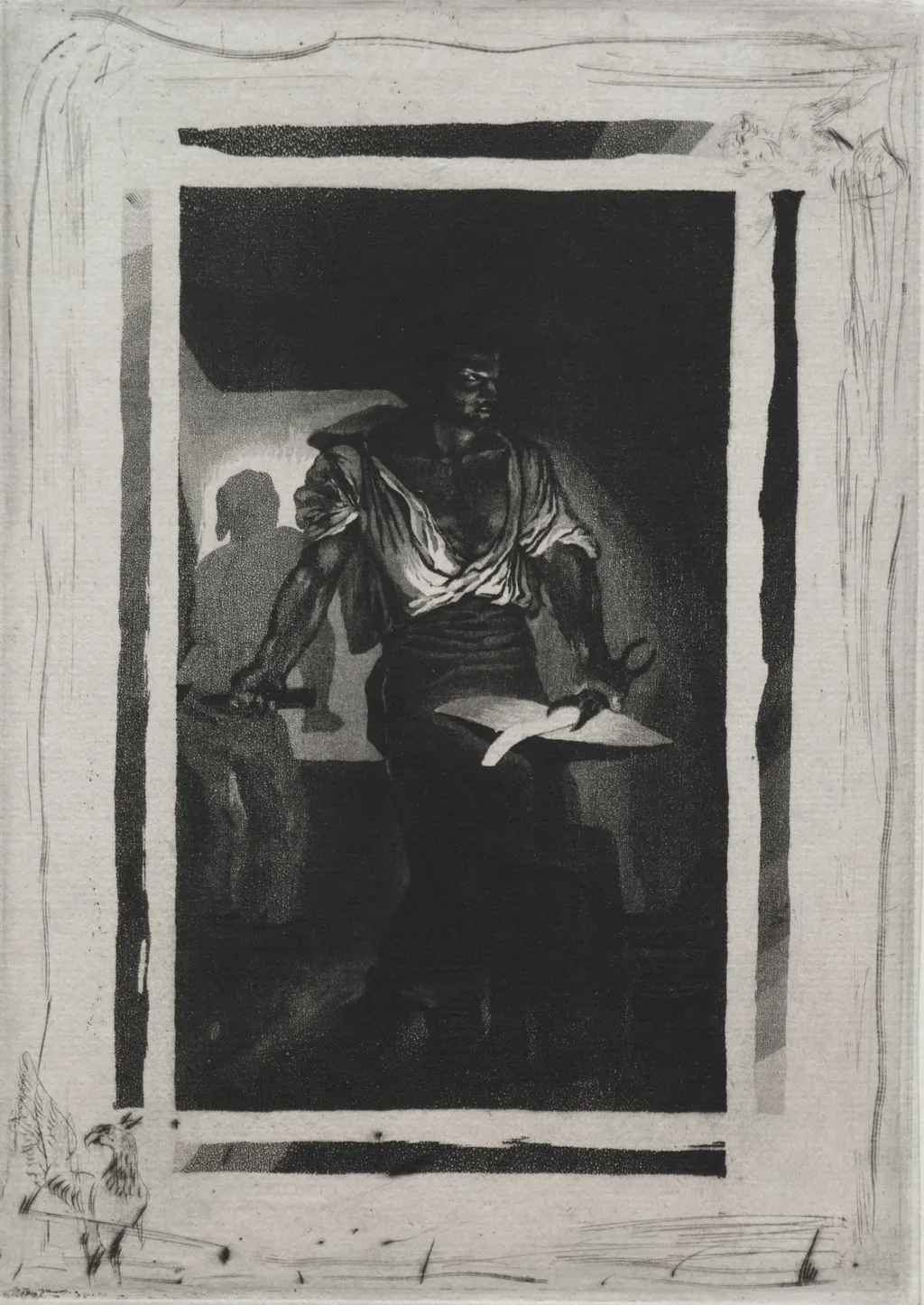
The Blacksmith is a print by the Romanticist artist Eugène Delacroix. It dates from 1833 and is held in the collection of the Cleveland Museum of Art.
About this work
Overview
Created in 1833, *The Blacksmith* is a print by Eugène Delacroix that captures a moment of physical labor with intense immediacy. Though often associated with oil paintings, Delacroix also worked in graphic media to explore dynamic compositions. This piece reflects his interest in human exertion and emotional weight, rendered through expressive line and tonal contrast rather than polished finish.
Subject & Meaning
The scene avoids idealization, instead emphasizing the raw, unglamorous reality of manual labor, aligned with Romanticism’s focus on authentic human experience.
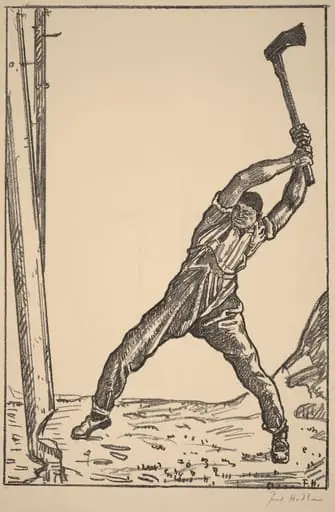
The image centers on a blacksmith engaged in his work, muscles taut, tools in hand, surrounded by the dim confines of a forge. A secondary figure lingers in shadow, suggesting observation or companionship, while the faint outline of a horse hints at the smith’s role in equine maintenance. The scene avoids idealization, instead emphasizing the raw, unglamorous reality of manual labor, aligned with Romanticism’s focus on authentic human experience.
Technique & Style
Delacroix employed bold chiaroscuro to isolate the blacksmith’s form against a darkened background, heightening the sense of physical presence. Loose, energetic strokes and unrefined edges convey urgency and motion, rejecting the smooth finish of Neoclassical tradition. His approach draws from the painterly freedom of Rubens and Venetian colorists, prioritizing emotional resonance over anatomical precision.
History & Provenance
The work entered the collection of the Cleveland Museum of Art, where it remains part of a broader holding of Delacroix’s graphic works. While not widely exhibited as a standalone piece, it contributes to scholarly understanding of his printmaking practice during the 1830s, a period when he increasingly turned to drawings and prints to test compositional ideas outside the constraints of large-scale painting.
Context
In the early 1830s, French artists were redefining subject matter beyond historical and mythological narratives. Delacroix turned to everyday labor as a source of dignity and drama, influenced by contemporary social changes and the rise of interest in the working class. *The Blacksmith* aligns with this shift, offering a visceral portrayal of industrial life without overt political commentary.
Legacy
Though less known than his major canvases, *The Blacksmith* exemplifies Delacroix’s commitment to expressive draftsmanship and emotional intensity in smaller formats. Its raw energy and focus on physicality influenced later artists exploring realism and the human condition, particularly those drawn to the expressive potential of print media in the 19th century.
Artist & collection
Artist
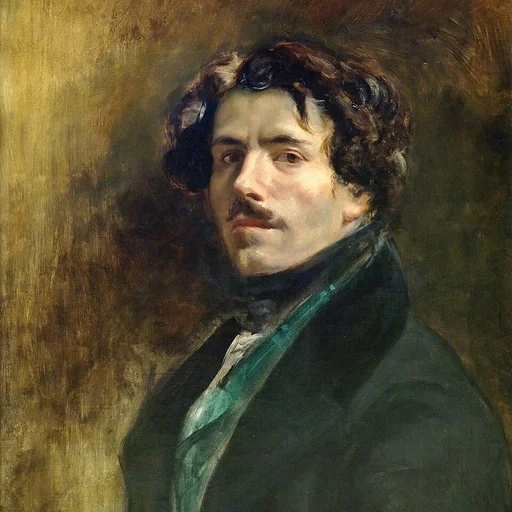
Ferdinand Victor Eugène Delacroix ( DEL-ə-krwah, -KRWAH; French: ; 26 April 1798 – 13 August 1863) was a French Romantic artist who was regarded as the leader of the French Romantic school.