Artwork
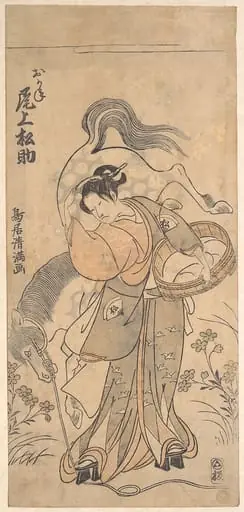
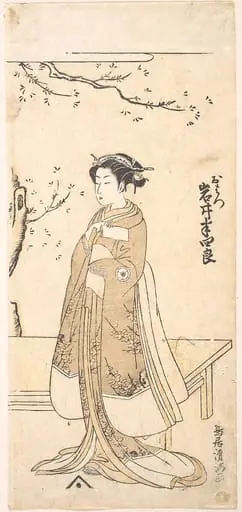
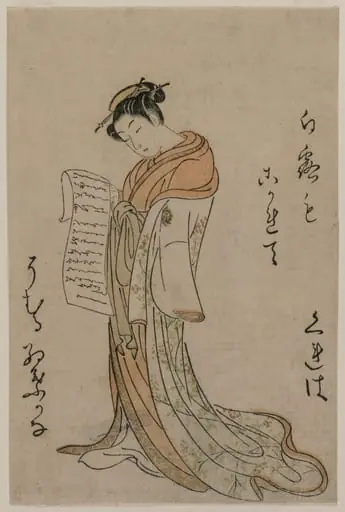
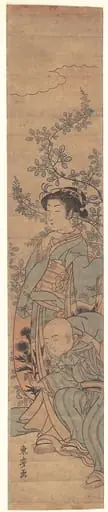
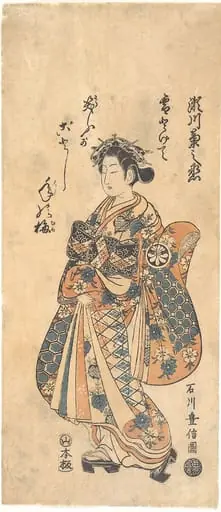
「二代目瀬川菊之丞図」|The Kabuki Actor Segawa Kikunojō II as a Woman Reading a Letter

「二代目瀬川菊之丞図」|The Kabuki Actor Segawa Kikunojō II as a Woman Reading a Letter is an ink print by the Romanticist artist Torii Kiyomitsu. It dates from 1764 and is held in the collection of the Metropolitan Museum of Art.
About this work
Overview
Created around 1764 by the Edo‑period printmaker Torii Kiyomitsu, this multicolored woodblock depicts the celebrated kabuki performer Segawa Kikunojō II in the guise of a woman reading a letter. The image is part of the Metropolitan Museum of Art’s collection and exemplifies the popular practice of portraying actors in stylized, narrative scenes.
Subject & Meaning
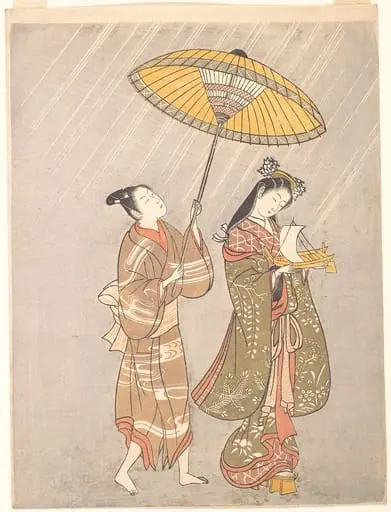
The figure is dressed in a dark, patterned kimono accented with gold and green floral motifs, holds a fan in one hand and a folded letter in the other, and wears a high coiffure secured with a comb and a feathered headdress. The accompanying Japanese poem reinforces a moment of quiet contemplation, suggesting themes of love, longing, or secret communication common in kabuki drama.
Technique & Style
Executed as a traditional ukiyo‑e woodblock, the print combines line work carved into separate blocks for each colour, allowing bright gold and green highlights to emerge against the muted background. Kiyomitsu’s precise rendering of fabric texture and decorative patterns reflects his reputation for detailed, elegant designs within the Torii school’s theatrical repertoire.
History & Provenance
The print entered the Metropolitan Museum of Art’s holdings through acquisition in the early twentieth century, joining a broader collection of Japanese prints that illustrate the commercial and artistic networks of Edo‑period publishing. Its attribution to Kiyomitsu is supported by stylistic analysis and documented signatures typical of his workshop.
Context
During the mid‑eighteenth century, kabuki actors were frequently immortalized in prints that both advertised performances and catered to fans’ fascination with stage personas. Portraying an actor as a female character was a common convention, highlighting the fluidity of gender roles on the kabuki stage and the audience’s appetite for dramatic storytelling.
Artist & collection