Artwork
『祇園神輿洗 ねり物姿』「いろは歌の売」|“The Geisha To’e as a Vendor of Poems,” from the series Gion Festival Costume Parade (Gion mikoshi arai nerimono sugata)
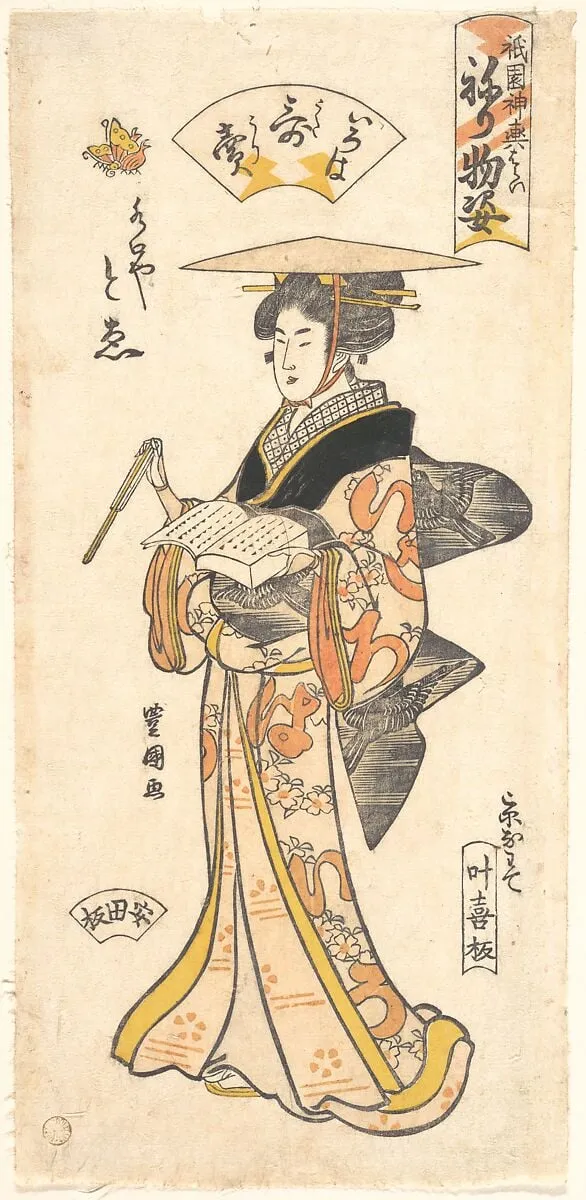
『祇園神輿洗 ねり物姿』「いろは歌の売」|“The Geisha To’e as a Vendor of Poems,” from the series Gion Festival Costume Parade (Gion mikoshi arai nerimono sugata) is an ink print by the Romanticist artist Utagawa Toyokuni I. It dates from 1795 and is held in the collection of the Metropolitan Museum of Art.
About this work
Overview
It portrays a woman dressed as a vendor of poetic verses, capturing a moment of performance during the festival’s costume procession.
Created around 1795 by Utagawa Toyokuni I, this woodblock print is part of a series depicting participants in Kyoto’s Gion Festival. It portrays a woman dressed as a vendor of poetic verses, capturing a moment of performance during the festival’s costume procession. The work is rendered in ink and color on paper, typical of ukiyo-e prints of the period, and is currently held in the collection of The Metropolitan Museum of Art.
Subject & Meaning
The figure represents To’e, a geisha adopting the role of a street vendor selling 'iroha' poems—traditional Japanese verses using all syllables of the kana alphabet. Her costume blends theatricality with commerce, suggesting the blending of art and everyday life during festival celebrations. The scroll she holds likely contains these verses, transforming poetry into a tangible, marketable object within the festive atmosphere.
Technique & Style
Toyokuni employed bold outlines and flat areas of vivid color—black, orange, and yellow—to define the kimono’s floral and leaf patterns. The wide hat bears an inscription, adding narrative context. Subtle cross-hatching suggests texture and shadow, particularly in the folds of fabric and the brim of the hat. The composition centers the figure against a plain background, focusing attention on her elaborate attire and gesture.
History & Provenance
The print belongs to a small series documenting festival attire, a popular subject in late 18th-century Edo-period printmaking. While specific early ownership records are sparse, the work entered The Metropolitan Museum of Art’s collection through established channels of Japanese art acquisition in the 20th century, reflecting broader Western interest in ukiyo-e during that era.
Context
The Gion Festival, one of Japan’s oldest and most elaborate celebrations, featured processions of elaborately dressed participants. Print series like this one catered to urban audiences fascinated by theatrical costumes and public spectacle. By depicting a geisha as a poet-vendor, Toyokuni tapped into contemporary themes of performance, commerce, and cultural tradition in Edo society.
Legacy
This print exemplifies the genre of festival-themed ukiyo-e, which helped preserve visual records of Edo-period customs. Though not among Toyokuni’s most widely reproduced works, it remains a valuable example of how printmakers documented social performance and costume, influencing later artists and contributing to the global appreciation of Japanese woodblock printing.
Artist & collection

Artist
Toyokuni was a born showman who made sure the energy of Edo’s kabuki stage never faded on paper.

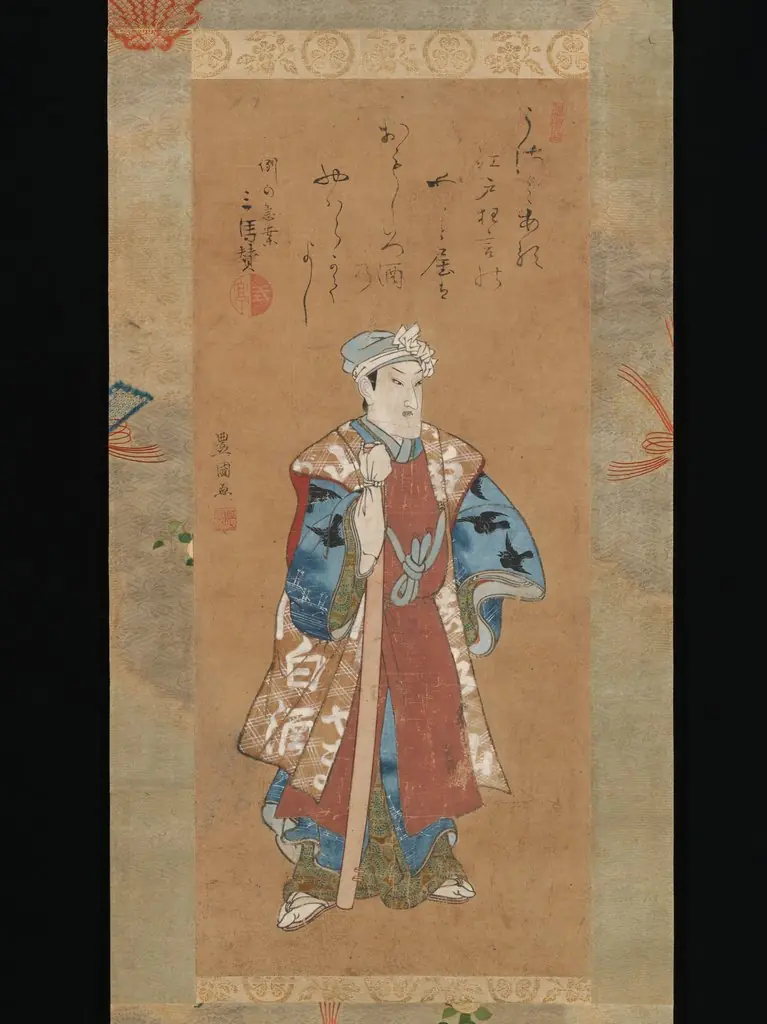 Bandō Mitsugorō II as Shinbei in the Kabuki Play "Sukeroku"
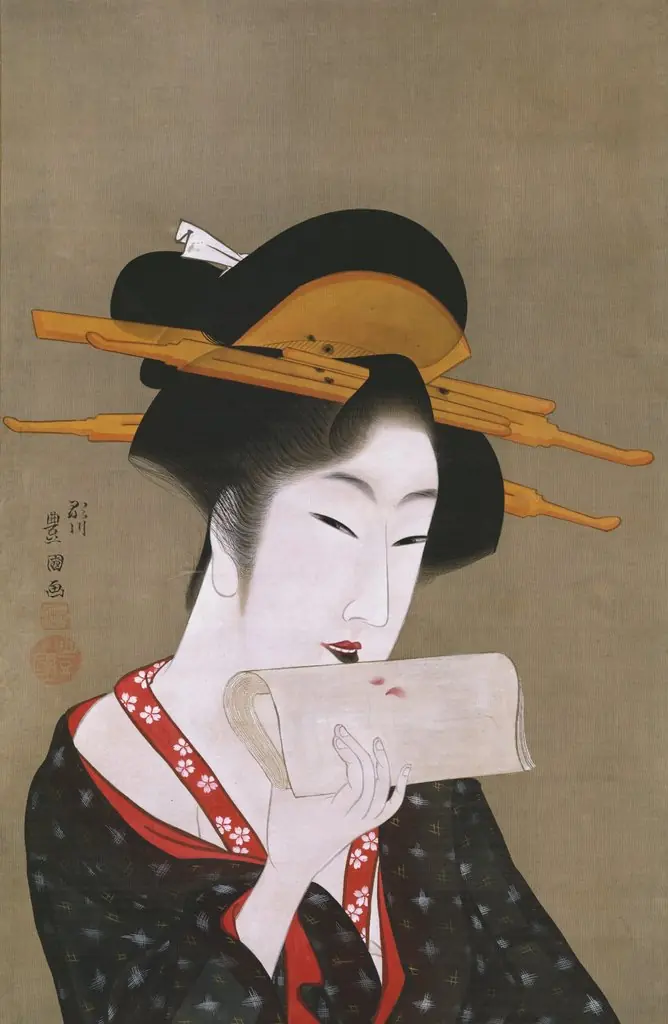 Beauty Blotting Her Lip Rouge
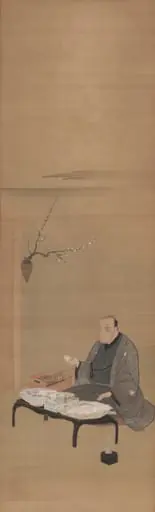 Portrait of Kinokuniya Bunzaemon
 Untitled
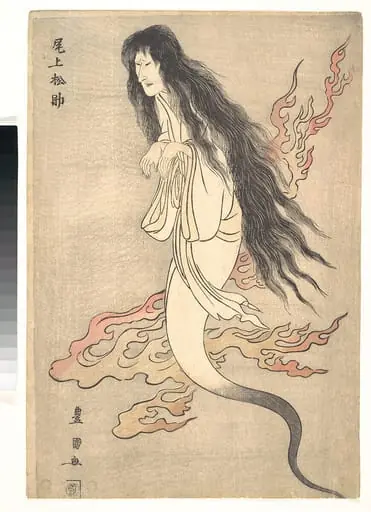 Tokaido Yotsuya Kaidan|Onoe Matsusuke as the Ghost of the Murdered Wife Oiwa, in "A Tale of Horror from the Yotsuya Station on the Tokaido Road"
 Untitled
 Untitled
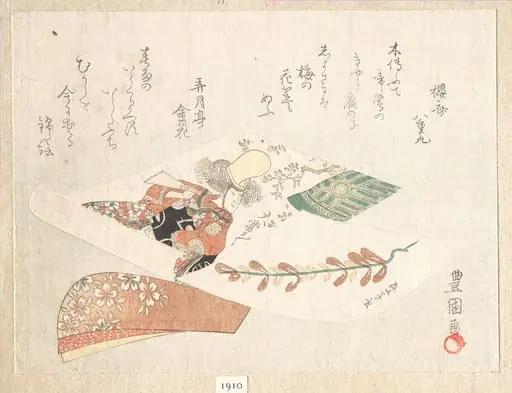 娘道成寺図の錦絵|Print of a Kabuki Dancer from the Maiden of the Dōjōji Temple (Musume Dōjōji)
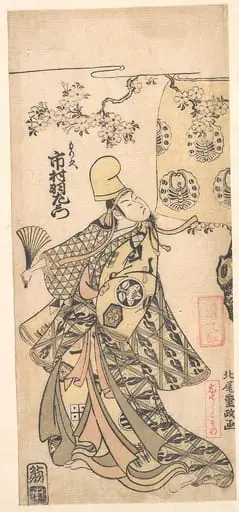 Untitled
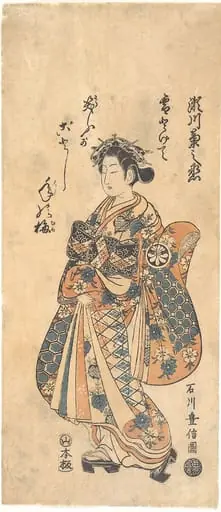 Untitled
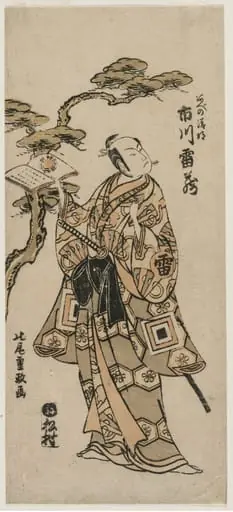 Ichikawa Raizo as Abe no Seimei
 Untitled
 Untitled
 青楼美人合|The Courtesans, from the Series, "Seiro Bijin Awase Carver End Shigoro" (sic.)
 Untitled
 Untitled
 Untitled
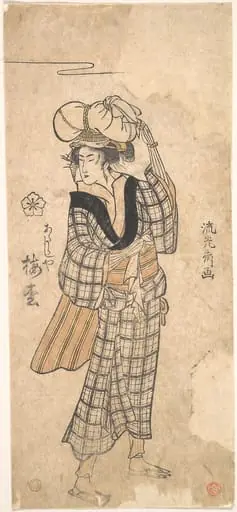 「あたらしや梅松」|The Courtesan Umematsu of the Atarashiya Brothel Costumed as an Ohara Maiden
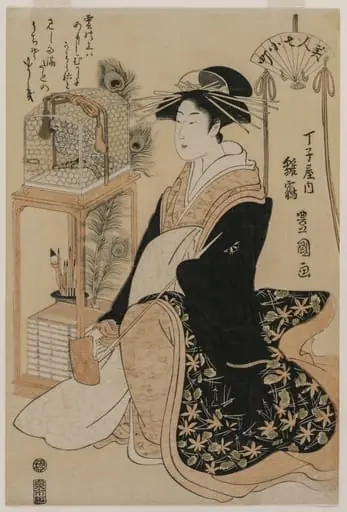 Hinazura of Chōjiya from the series Beauties as the Seven Komachi
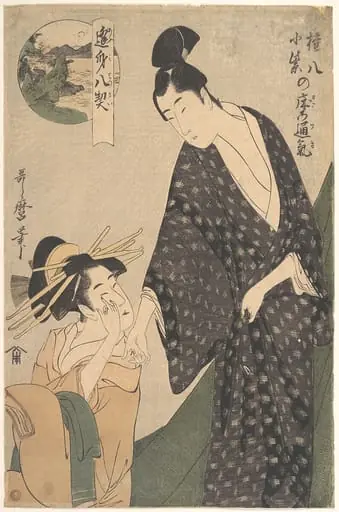 逢身八契 権八小紫の床の通気|Gonpachi ni Komurasaki no Toko no Tsuki