Artwork
Untitled
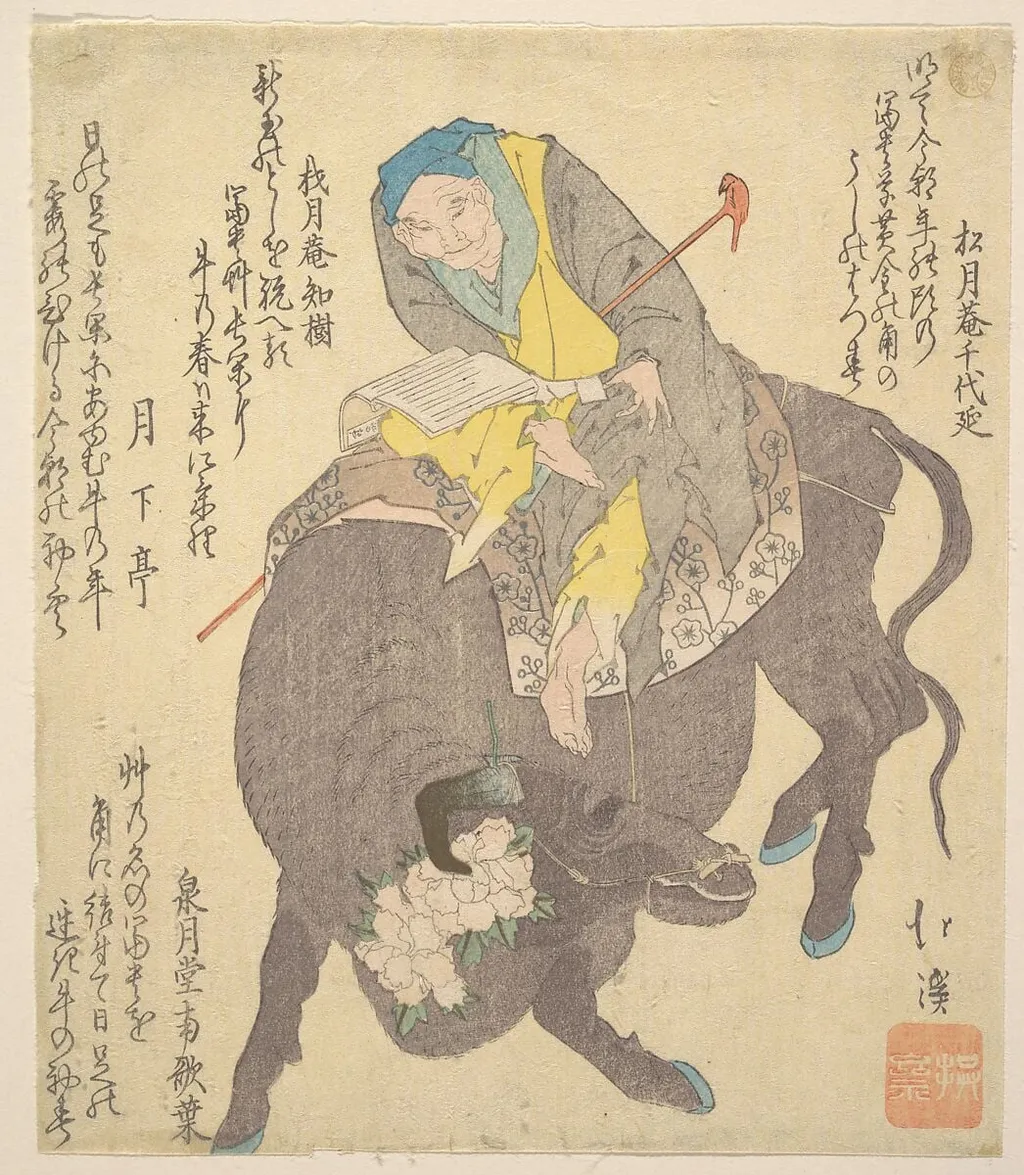
Untitled is an ink print by the Romanticist artist Totoya Hokkei. It dates from 1820 and is held in the collection of the Metropolitan Museum of Art.
About this work
Overview
The work is part of The Metropolitan Museum of Art’s print collection, reflecting the playful spirit of early 19th-century Japanese printmaking.
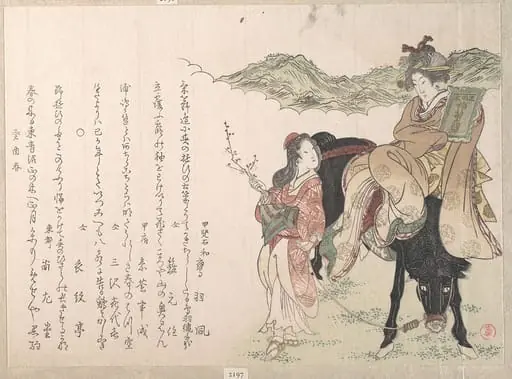
This woodblock print, created around 1820 by Totoya Hokkei, belongs to the surimono genre—privately commissioned prints often produced for literary or seasonal occasions. Executed in ink and color on paper, it features a whimsical scene rendered with vivid hues and strong outlines. The work is part of The Metropolitan Museum of Art’s print collection, reflecting the playful spirit of early 19th-century Japanese printmaking.
Subject & Meaning
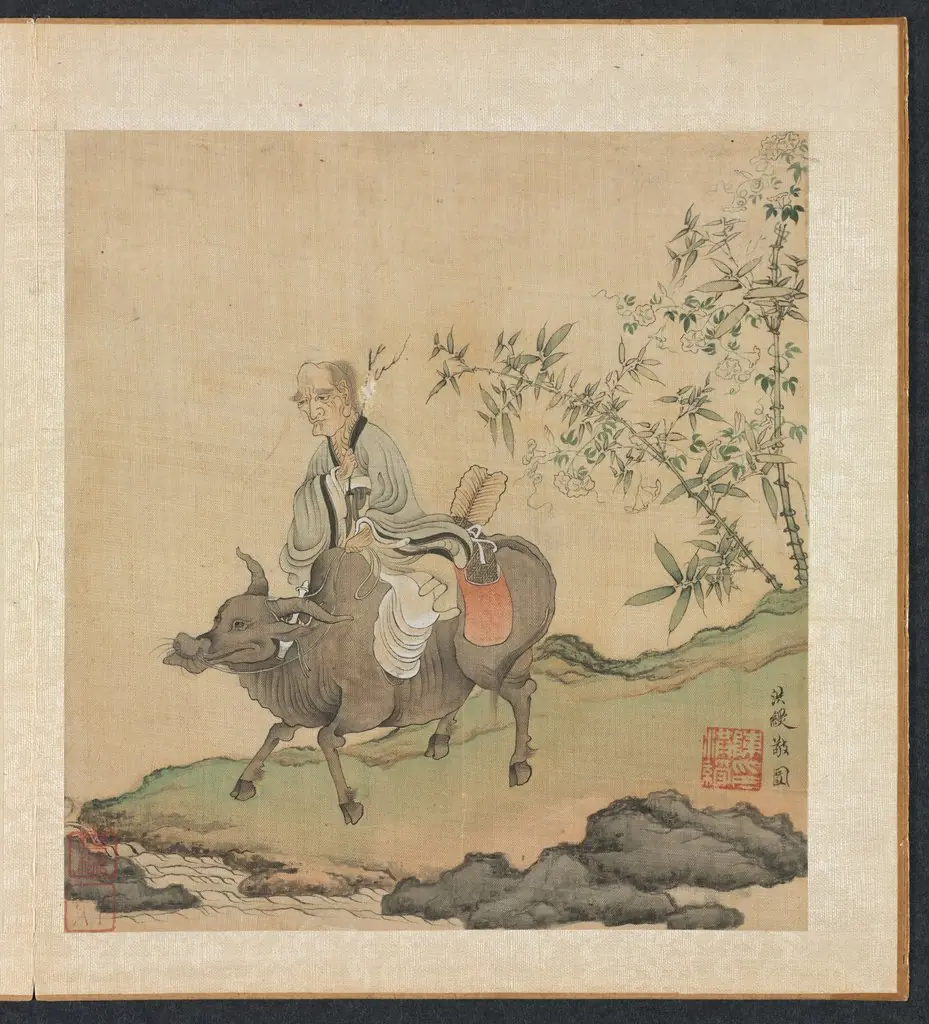
A figure rides a buffalo sideways, engrossed in a book while holding a staff, defying conventional expectations of balance and decorum. The rider’s attire—blue headscarf, floral yellow robe, and blue shoes—contrasts with the animal’s quiet demeanor. A basket of flowers hangs from the buffalo’s side, suggesting a journey or ritual. The scene’s absurdity, combined with surrounding Japanese text, hints at a humorous or satirical poem, typical of surimono’s literary playfulness.
Technique & Style
Hokkei employed the surimono technique, using fine woodblocks to layer ink and color with precision. Bold outlines define forms, while saturated pigments—especially the yellow robe and blue garments—create visual energy. The composition avoids naturalism, favoring stylized exaggeration: the rider’s posture, the buffalo’s stance, and the dense calligraphy along the borders all contribute to a dynamic, theatrical effect characteristic of Hokkei’s inventive approach.
History & Provenance
Produced circa 1820, the print was likely commissioned by a literary group or private patron, as was common with surimono. These prints were not sold publicly but circulated among elites who appreciated their wit and craftsmanship. The work entered The Metropolitan Museum of Art’s collection through documented acquisitions of Japanese prints in the 20th century, preserving its place in the history of Edo-period print culture.
Context
Surimono emerged in the late 18th century as elite alternatives to mass-produced ukiyo-e, often celebrating poetry, seasonal themes, or insider humor. Hokkei, known for his eccentric compositions, contributed to this niche with works blending visual wit and literary allusion. This print reflects a culture where art, literature, and satire intersected, appealing to a refined audience familiar with classical allusions and wordplay.
Legacy
Though not widely known outside specialist circles, Hokkei’s prints, including this one, exemplify the creative freedom within surimono production. His willingness to subvert norms—such as depicting a reader on a buffalo—expanded the expressive range of Japanese printmaking. Today, such works are valued for their insight into Edo-period intellectual culture and the quiet rebellion of humor in art.
Artist & collection
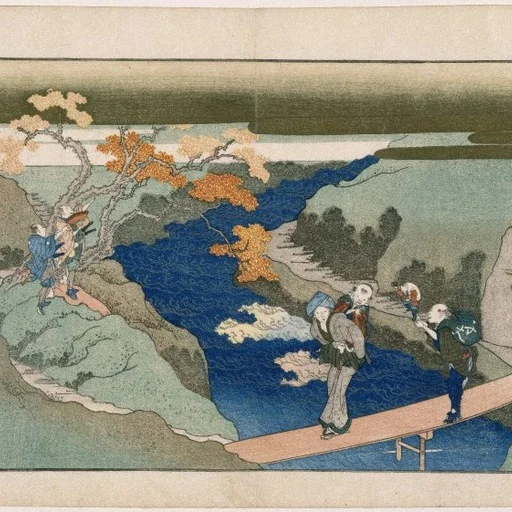

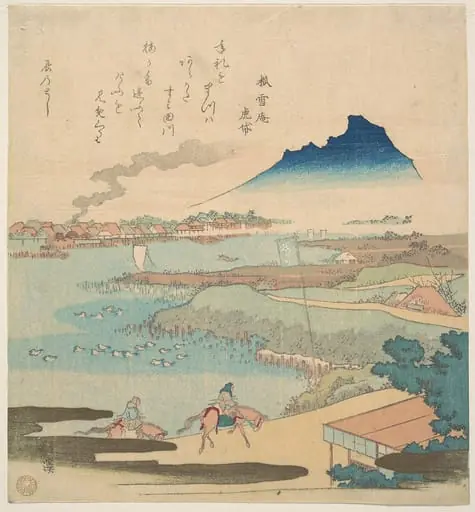 Sumidagawa|Sumida River
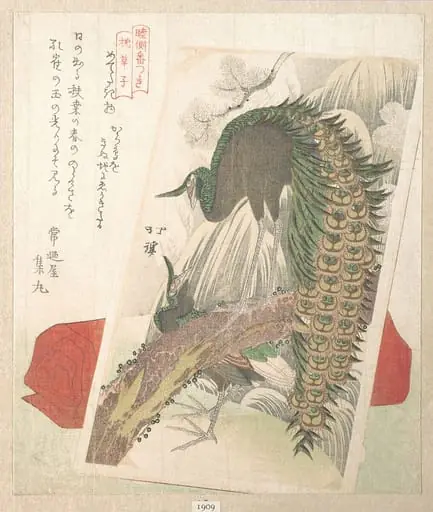 松・滝に孔雀図と緋毛氈|Painting of Peacocks, Pines, a Waterfall, and a Roll of Red Fabric
 Untitled
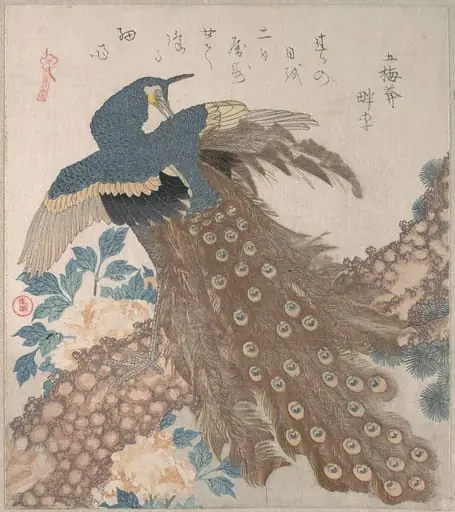 「三ひらの内」松・牡丹に孔雀|Peacock on Pine Tree and Peonies, from the series Three Sheets (Mihira no uchi)
 Untitled
 Untitled
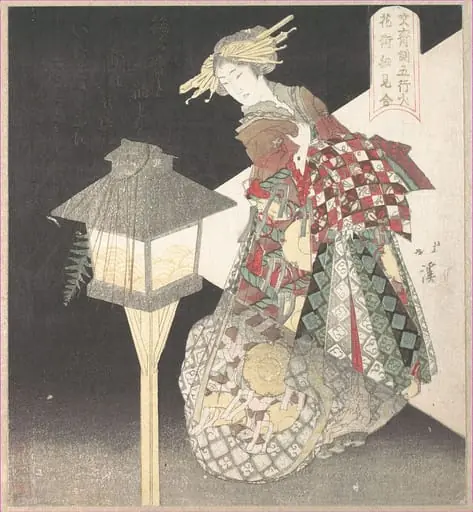 「文齊側五行火 花街細見合」|Courtesan by a Lantern, “Fire,” from the series Five Elements for the Bunsai Poetry Group, a Guide to the Yoshiwara Pleasure Quarters
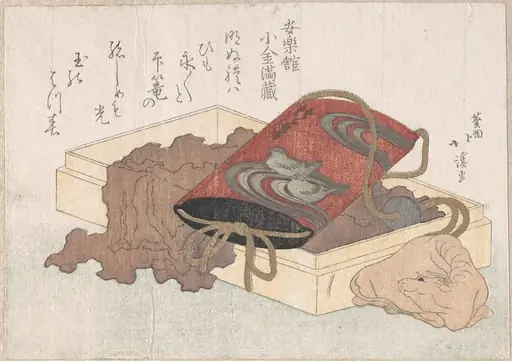 印籠と牛根付『春雨集』 摺物帖|Lacquer Inrō with Waterbirds and Ox-shaped Netsuke in a BoxFrom the Spring Rain Collection (Harusame shū), vol. 3