Artwork
Prospectus Programme de l'Oeuvre
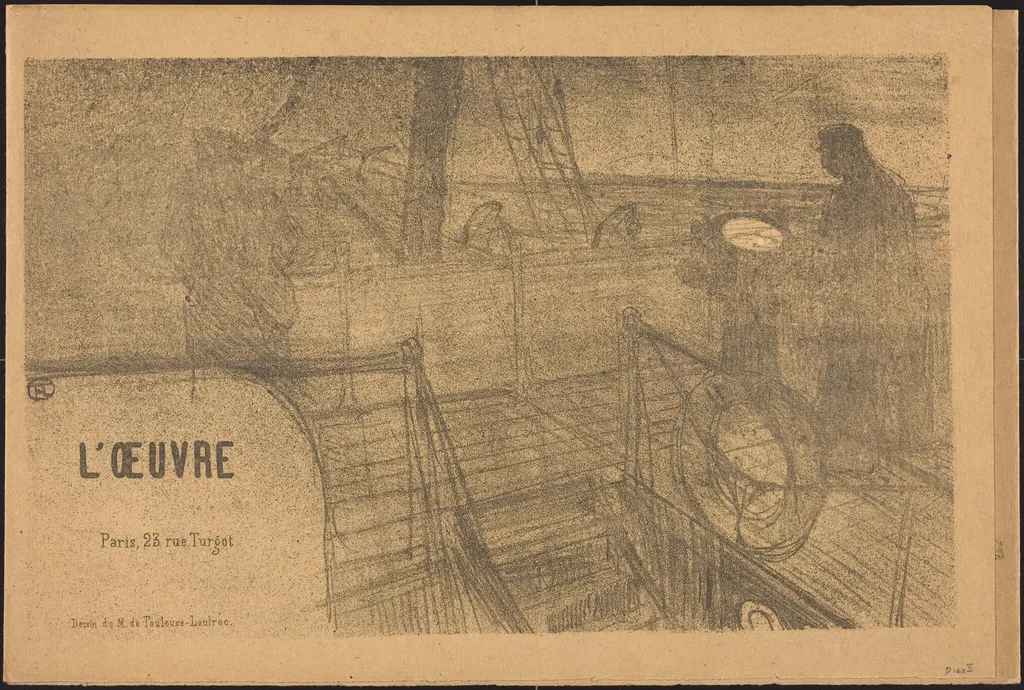
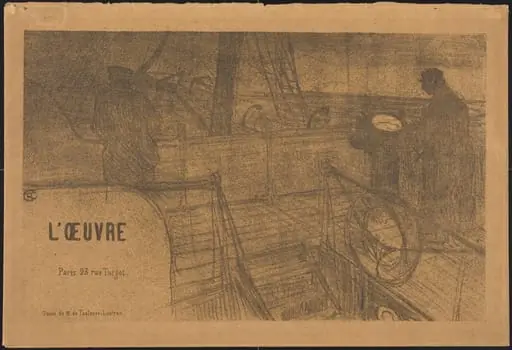
Prospectus Programme de l'Oeuvre is an ink print by the Impressionist artist Henri de Toulouse-Lautrec. It dates from 1895 and is held in the collection of the National Gallery of Art. The object is a three‑folded prospectus produced in 1895, comprising a cover lithograph and five additional prints.
About this work
It’s part of a set of prints made in 1895, where artists experimented with bold, raw styles.
This image shows a folded sheet with a black-and-white drawing of a dimly lit room. The walls are covered in swirling lines and shapes that look like tangled wires or pipes. A single lightbulb hangs from the ceiling, casting a faint glow over the chaotic scene. The text at the bottom reads *"L'Œuvre"* and lists an address in Paris.
The drawing is rough and sketchy, almost like a quick sketch rather than a polished work. It’s part of a set of prints made in 1895, where artists experimented with bold, raw styles.
If you like this style, check out lithography to see how artists create prints like this.
Overview
The object is a three‑folded prospectus produced in 1895, comprising a cover lithograph and five additional prints. The cover was executed by Henri de Toulouse‑Lautrec, while the interior sheets feature works by Charles Doudelet, Maurice Denis, Félix Vallotton, Édouard Vuillard, and Antonio de la Gandara. Each print is presented on a single sheet folded into thirds, creating a compact, multi‑artist pamphlet.
Subject & Meaning
The prospectus serves as a promotional booklet, likely announcing an artistic or theatrical event, as suggested by the title *L’Œuvre* and the inclusion of a Paris address. The front cover’s lithograph, rendered in Toulouse‑Lautrec’s characteristic line work, evokes the nightlife and cabaret atmosphere that defined his oeuvre, while the interior images range from figurative to abstract motifs, reflecting a collective visual identity.
Technique & Style
The publication showcases a variety of printmaking processes: a lithographic cover by Toulouse‑Lautrec, woodcuts or wood engravings by Doudelet, Denis, and Vallotton, and additional lithographs by Vuillard and de la Gandara. The prints are executed in black and white, with bold, sketch‑like lines and stark contrasts, exemplifying the late‑nineteenth‑century interest in raw, expressive graphic gestures.
History & Provenance
Issued in 1895, the prospectus was assembled as part of a collaborative project among several contemporary French artists. Its original distribution likely targeted patrons and participants of Parisian cultural circles. The folded sheet has survived in museum collections, where it is catalogued as a printed ephemera reflecting the networking practices of the period’s avant‑garde.
Context
The late 1800s saw a surge in interdisciplinary collaborations among painters, printmakers, and designers, especially in Paris. Artists such as Toulouse‑Lautrec, Vuillard, and Vallotton were active in the burgeoning print market, using affordable media to reach wider audiences. This prospectus embodies that spirit, uniting diverse graphic techniques within a single, portable format that could circulate among the city’s artistic community.
Artist & collection
Artist
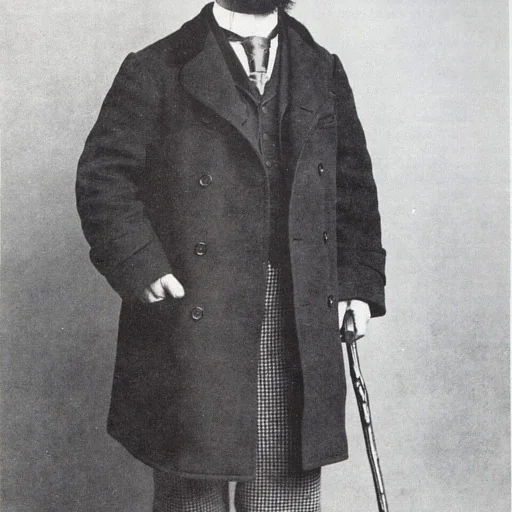
Comte Henri Marie Raymond de Toulouse-Lautrec-Montfa (24 November 1864 – 9 September 1901), known as Toulouse-Lautrec (French: ), was a French painter, printmaker, draughtsman, caricaturist, and illustrator.

 Landing in England
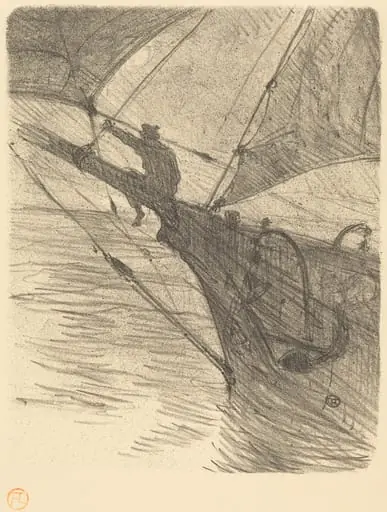 Oceano Nox
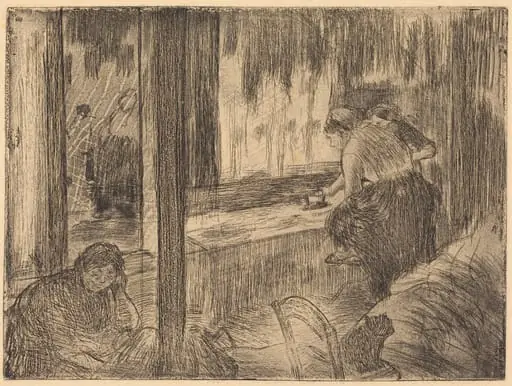 The Laundresses (Les blanchisseuses (La repassage))
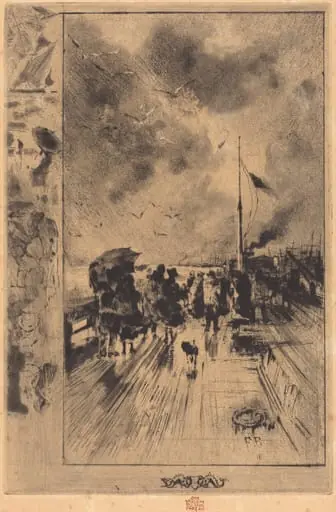 Une Jetée en Angleterre (A Pier in England)
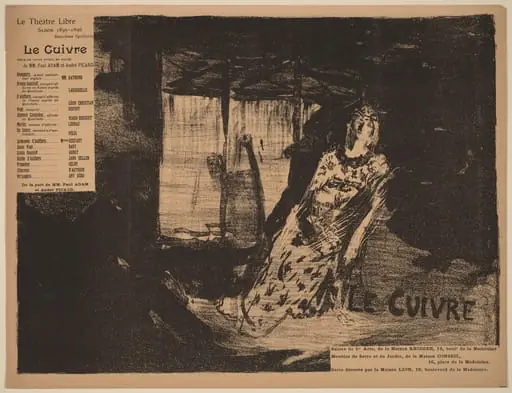 Le Cuivre
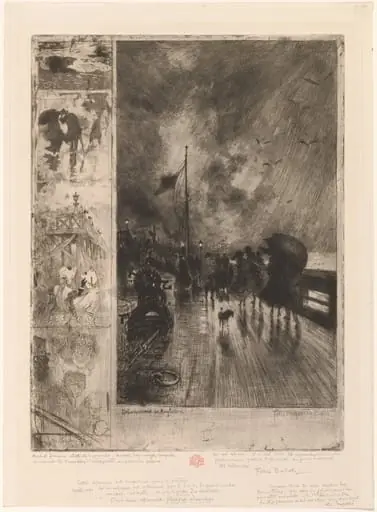
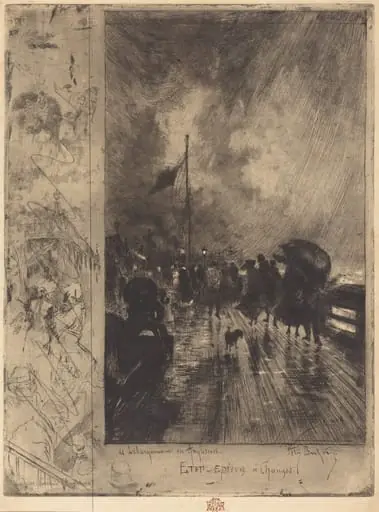 Un Débarquement en Angleterre (Landing in England)
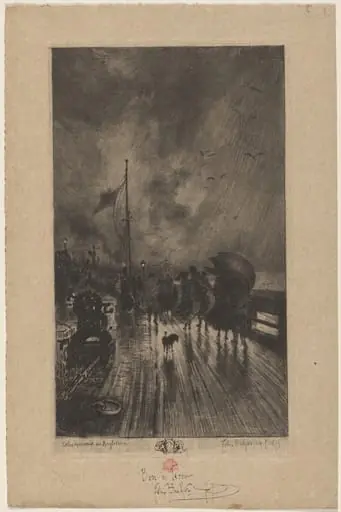 Un Débarquement en Angleterre (Landing in England)
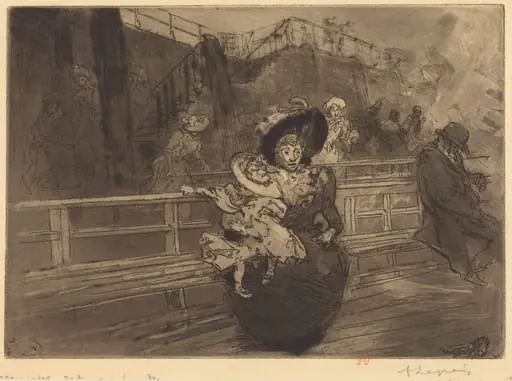 Departure for Greenwich (Depart pour Greenwich)
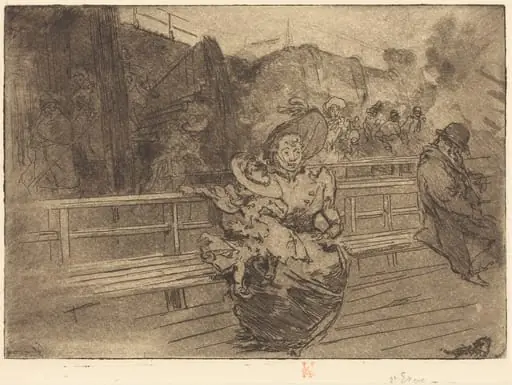 Departure for Greenwich (Depart pour Greenwich)
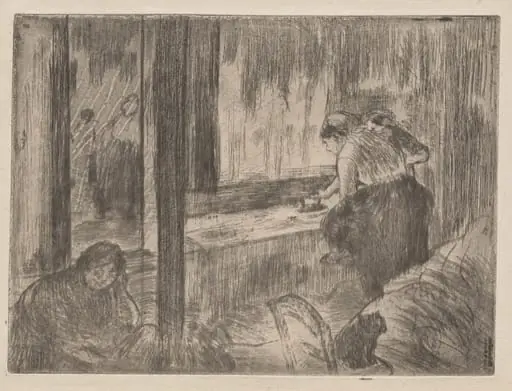 The Laundresses
 Montmarte
 Prospectus Programme de l'Oeuvre