Artwork
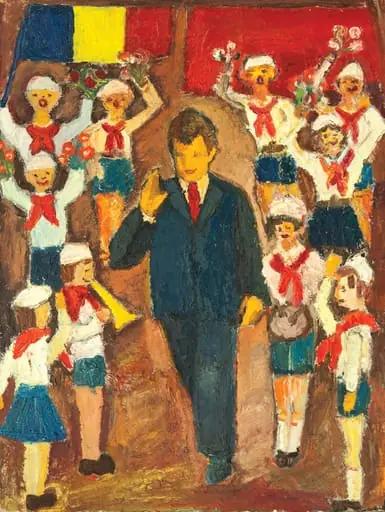
Tablou, ulei pe pânză, „Moment de sărbătoare bihoreană”, semnat în partea dreaptă jos T. Goga. Nicolae Ceaușescu este prezentat în mijolocul oamenilor muncii, bărbați si femei îl înconjoară, pionierii îi oferă flori în semn de bun venit. Oferit de Comitetul Județean de Partid Bihor, 22 ianuarie 1978.
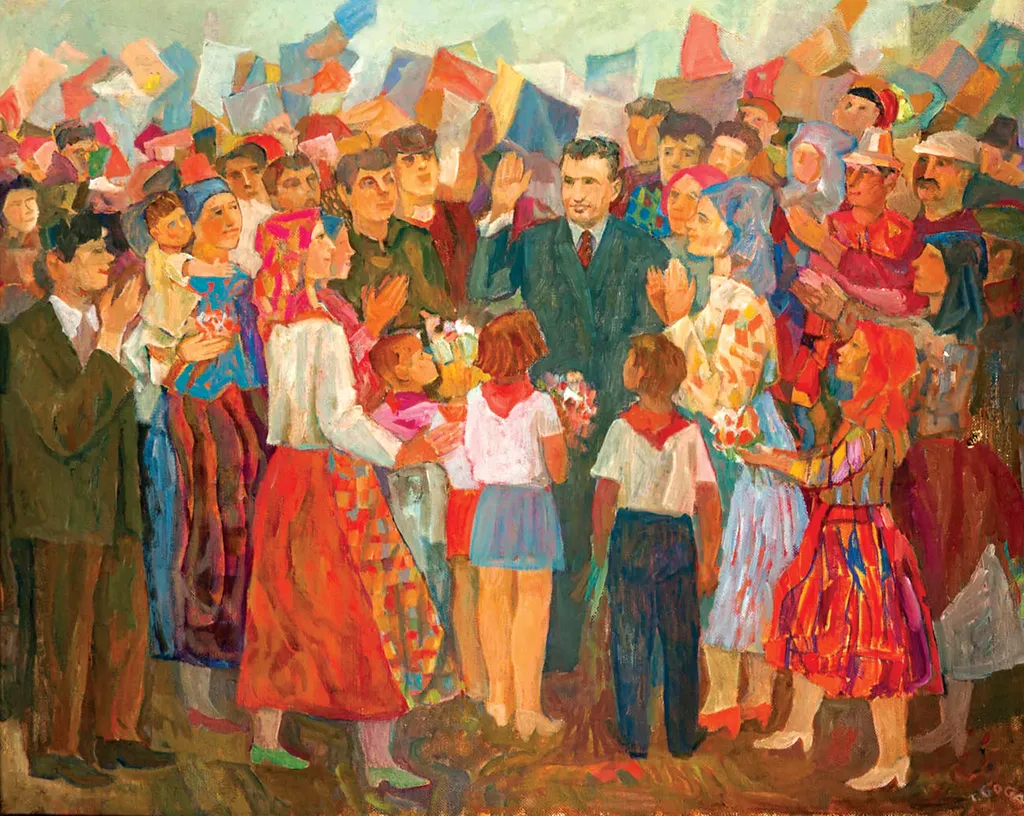
Tablou, ulei pe pânză, „Moment de sărbătoare bihoreană”, semnat în partea dreaptă jos T. Goga. Nicolae Ceaușescu este prezentat în mijolocul oamenilor muncii, bărbați si femei îl înconjoară, pionierii îi oferă flori în semn de bun venit. Oferit de Comitetul Județean de Partid Bihor, 22 ianuarie 1978. is a print by Traian Goga. It is held in the collection of the National Museum of Romanian History.
About this work
Overview
The work was presented to state authorities in January 1978 by the Bihor County Party Committee, reflecting its official function as a ceremonial gift.
This oil on canvas painting, signed by Traian Goga, depicts a public celebration in Bihor County, Romania. The scene centers on a man in a dark suit, surrounded by a dense crowd of workers, children, and townspeople. The composition emphasizes collective participation, with children offering flowers and the central figure clapping. The work was presented to state authorities in January 1978 by the Bihor County Party Committee, reflecting its official function as a ceremonial gift.
Subject & Meaning
The painting portrays a staged moment of popular allegiance, with the central figure—identified as Nicolae Ceaușescu—receiving symbolic gestures from citizens. Children presenting flowers and workers surrounding him reinforce themes of unity and loyalty. The scene is not a documented event but an idealized representation designed to convey harmony between leadership and the working class, consistent with state-sponsored visual propaganda of the era.
Technique & Style
Goga employed bold, saturated colors—reds, blues, and yellows—to create visual energy and emotional intensity. Brushstrokes are thick and expressive, giving the figures a slightly rough, unrefined texture that contrasts with the swirling, abstract background. The composition is crowded and frontal, minimizing depth to focus attention on the central figure and the ritual of flower-giving, enhancing the ceremonial tone.
History & Provenance
Commissioned by the Bihor County Party Committee, the painting was presented to Nicolae Ceaușescu on January 22, 1978, as part of a broader effort to cultivate personal cult imagery. Its origin lies within the institutional art production system of communist Romania, where artists were expected to produce works glorifying state leaders. The painting’s subsequent location after 1989 remains undocumented in public records.
Context
Created during the height of Ceaușescu’s cult of personality, the painting reflects the regime’s use of art to manufacture consent. Similar imagery appeared in public spaces, newspapers, and state exhibitions, portraying leaders as benevolent figures embraced by the masses. Artists like Goga operated within strict ideological parameters, producing works that prioritized symbolic conformity over individual expression.
Legacy
The painting stands as a documented artifact of Romania’s communist-era visual culture, illustrating how art was mobilized for political messaging. While not widely exhibited after 1989, it remains a reference point for studies on state-sponsored imagery and the intersection of art and authoritarianism. Its existence underscores the role of regional artists in sustaining national propaganda frameworks.
Artist & collection
Artist

 Tablou, ulei pe pânză, „Moment de sărbătoare bihoreană”, semnat T. Goga în partea dreaptă jos. Nicolae Ceaușescu este reprezentat în mijlocul oamenilor munci și al tinerilor din județul Bihor care-l întâmpină cu flori și aplauze. Comandat de Comitetul Județean de Partid Bihor,oferit lui Nicolae Ceaușescu în ianuarie 1978.
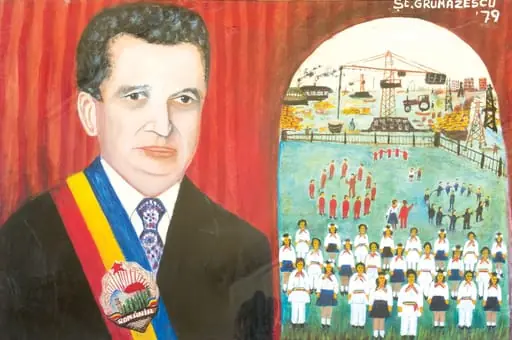 Tablou, ulei pe pânză, Nicolae Ceaușescu și copii, semnat și datat în partea dreaptă sus Șt. Grumăzescu, 1979. Nicolae Ceaușescu este prezentat în partea stângă urmărind o festivitate - pionieri, copii dansând în horă. Maniera de realizare a tabloului este una naivă. Oferit de Ștefan Grumăzescu din București.
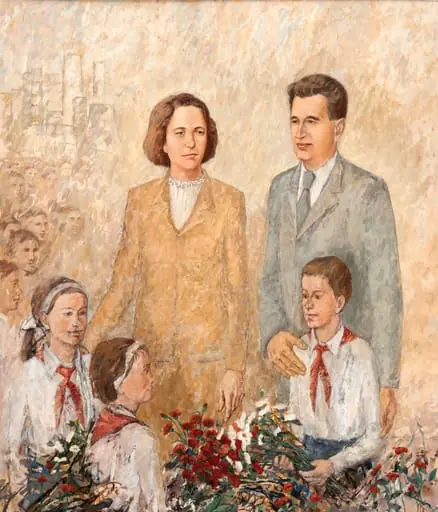 Tablou ulei pe pânză, „Omagiu”, semnat M.B, I.Ș. (atribuit Mircea Bejgu, Ion Șincă), datat 1984 în partea dreaptă jos. Elena și Nicolae Ceaușescu alături de pionieri. Comandat și oferit de Comitetul Județean de Partid Argeș (1984).
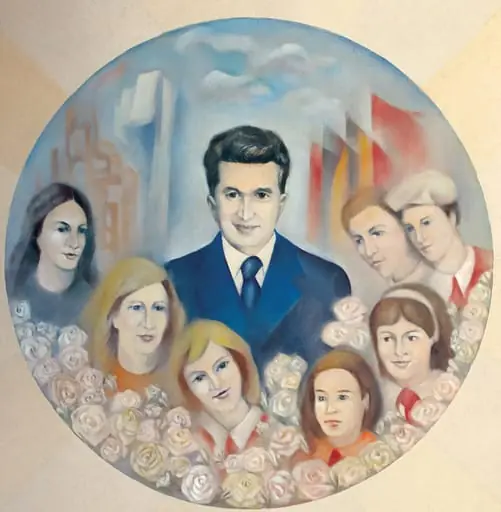 Tablou ulei pe pânză, „Nicolae Ceaușescu”, nesemnat, atribuit lui Ion Pantilie, nedatat. Nicolae Ceaușescu este reprezentat în mijlocul copiilor și tinerilor. Comandat și oferit de Comitetul Județean de Partid Argeș (1988).
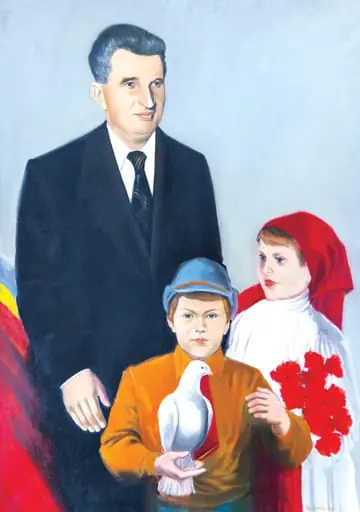 Tablou, ulei pe pânză, „Mesajul României”, semnat Nicolae Costachi în partea dreaptă jos și datat 1984. Nicolae Ceaușescu alături de doi copii, o fată îmbrăcată în costum popular ținând în mâini un buchet de garoafe roșii și un băiat în uniformă de șoim al patriei cu un porumbel alb în palma dreaptă. Comandat și oferit de Comitetul Județean de Partid Bistrița Năsăud (1985).
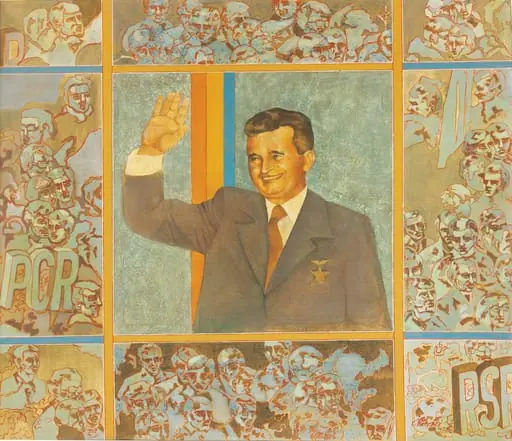 Tablou, ulei pe pânză, „Portret Nicolae Ceaușescu”, semnat în partea dreaptă jos C.Macavei și datat 1978. Tablou împărțit în mai multe registre, în plan central Nicolae Ceaușescu salutând oamenii muncii din celelalte registre. Comandat și oferit de Comitetul Județean de Partid Ilfov, 23 ianuarie 1978.
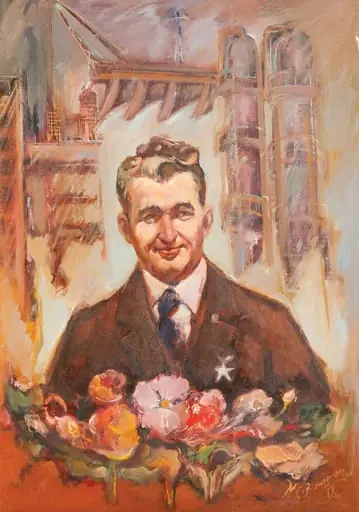 Tablou, ulei pe pânză, „Portret Nicolae Ceaușescu”, semnat C. Radovan și datat în partea dreaptă jos 1978. Nicolae Ceaușescu este reprezentat înt-o atitudine jovială, în piept are însemnul ”Erou al Republicii Socialiste România”. Pe fundal realizări ale regimului comunist. Oferit de Comitetul Județean de Partid Timiș, 22 ianuarie 1978.
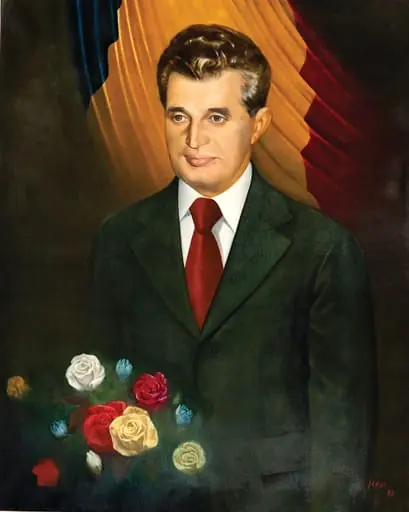 Tablou ulei pe pânză, portret Nicolae Ceaușescu semnat Ispas și datat în partea dreaptă jos. Este prezentat într-o postură solemnă cu un buchet de trandafiri, în spatele său tricolorul. Culorile drapelului se regăsesc și în coloritul trandafirilor. Comandat de Comitetul Județean de Partid Alba (1983).
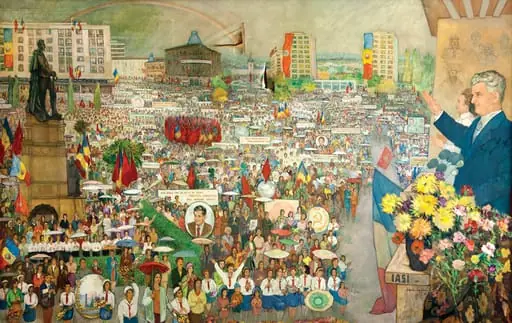 Tablou ”Mitingul din Piața Unirii din Iași de la 15 septembrie 1980”, semnat Costache Agafiței și datat în partea dreaptă jos. Tabloul îi înfățișază pe Elena și pe Nicolae Ceaușescu la balcon salutând mulțimea adunată în Piața Unirii din Iași. Comandat de Comitetul Județean de Partid Iași și dăruit soților Ceaușescu în octombrie 1981.
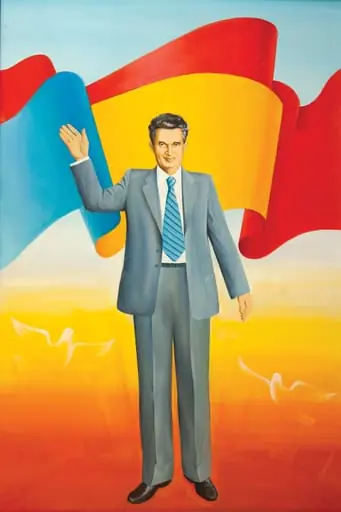 Tablou „ Ceaușescu Pace”, semnat M. Ceacîru și datat dreapta jos. Tabloul îl prezintă pe Nicolae Ceaușescu salutând, în spatele său flutură tricolorul și stegul PCR, în stânga și în dreapta sa doi porumbei albi în zbor.Comandat de Comitetul Județean de Partid Neamț (1989)
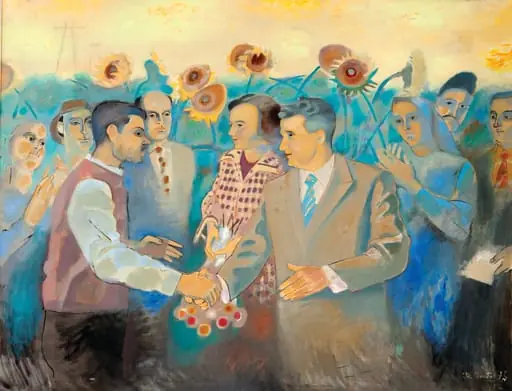 Tablou ”Amiază în câmpia ilfoveană” semnat și datat de autor în dreapta jos ”Ilie Ciortea 78”. Tabloul îi reprezintă pe soții Ceaușescu întâlnindu-se cu oamenii muncii în mijlocul uni lan de floarea soarelui. Comandat de Comitetul Județean de Partid Ilfov și facut cadou cu ocazia zilei de naștere (ianuarie 1978).
 Tablou „Nicolae Ceaușescu, prietenul copiilor” semnat Popescu Simona, Dan Simona eleve în clasa a VII-a. Nicolae Ceaușescu reprezentat în mijlocul pionierilor într-un cadru festiv. Pe verso o însemnare “Casa pionierilor Urziceni”. Oferit de pionerii din Urziceni, ianuarie 1978,