Artwork
Tablou, ulei pe pânză, „Mesajul României”, semnat Nicolae Costachi în partea dreaptă jos și datat 1984. Nicolae Ceaușescu alături de doi copii, o fată îmbrăcată în costum popular ținând în mâini un buchet de garoafe roșii și un băiat în uniformă de șoim al patriei cu un porumbel alb în palma dreaptă. Comandat și oferit de Comitetul Județean de Partid Bistrița Năsăud (1985).
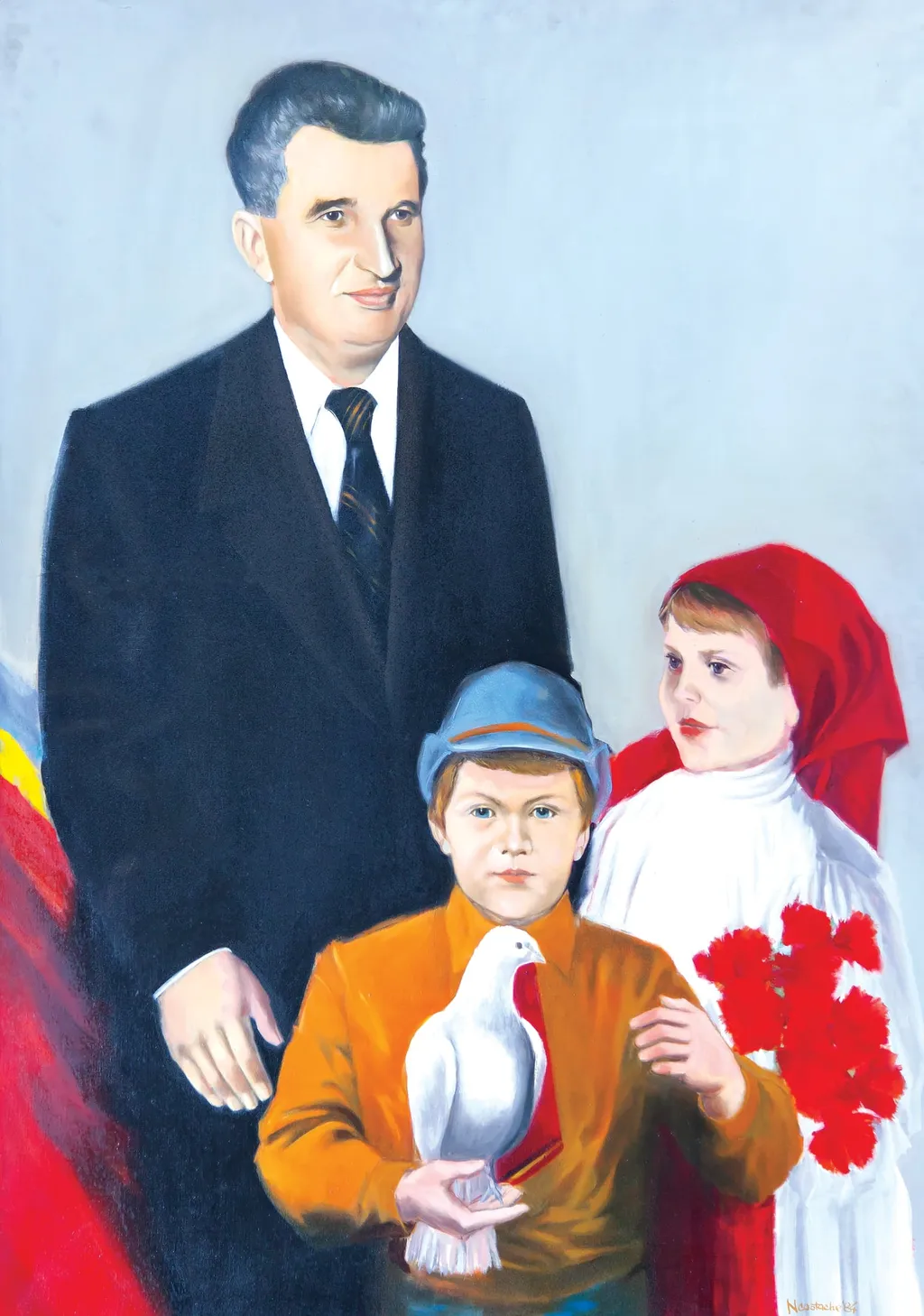
Tablou, ulei pe pânză, „Mesajul României”, semnat Nicolae Costachi în partea dreaptă jos și datat 1984. Nicolae Ceaușescu alături de doi copii, o fată îmbrăcată în costum popular ținând în mâini un buchet de garoafe roșii și un băiat în uniformă de șoim al patriei cu un porumbel alb în palma dreaptă. Comandat și oferit de Comitetul Județean de Partid Bistrița Năsăud (1985). is a print by Nicolae Costachi. It is held in the collection of the National Museum of Romanian History.
About this work
Overview
The oil on canvas titled “Mesajul României” was painted by Nicolae Costachi in 1984. It depicts Nicolae Ceaușescu standing beside two children—a girl in traditional folk attire holding a red carnation bouquet and a boy in a scout‑style uniform clutching a white dove. The composition is framed by Costachi’s signature in the lower right corner.
Subject & Meaning
The work presents the Romanian leader alongside symbols of national identity and youth. The girl’s folk costume and the boy’s patriotic uniform evoke cultural heritage and the state’s emphasis on collective values, while the dove suggests peace. Together they convey a narrative of leadership guiding the next generation.
Technique & Style
Costachi employs a realistic approach, rendering the figures with clear outlines and subdued lighting. The palette contrasts the dark suit of the adult with the bright orange of the boy’s jacket and the vivid reds of the girl’s dress, creating visual hierarchy. The brushwork is smooth, emphasizing formal representation over expressive abstraction.
History & Provenance
The painting was commissioned by the County Committee of the Party in Bistrița‑Năsăud and presented to the organization in 1985. It remained in the party’s collection during the late communist period, reflecting the era’s practice of producing official portraiture for political purposes.
Context
Created during the final years of Romania’s socialist regime, the piece aligns with state‑sponsored art that highlighted Ceaușescu’s role as a paternal figure. The inclusion of traditional and scouting motifs mirrors the regime’s promotion of folk culture and youth organizations as instruments of ideological education.
Artist & collection
Artist
Nicolae Costachi spent his days painting portraits for a living but never let the job dull his eye for the offbeat.

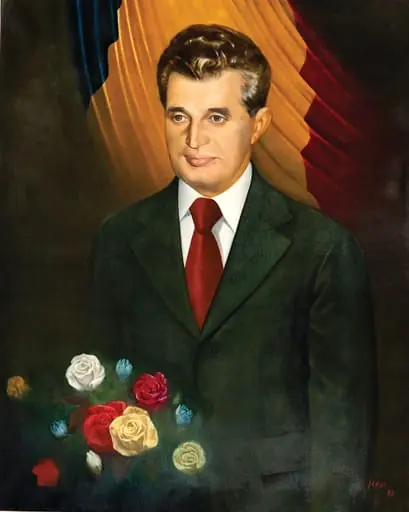 Tablou ulei pe pânză, portret Nicolae Ceaușescu semnat Ispas și datat în partea dreaptă jos. Este prezentat într-o postură solemnă cu un buchet de trandafiri, în spatele său tricolorul. Culorile drapelului se regăsesc și în coloritul trandafirilor. Comandat de Comitetul Județean de Partid Alba (1983).
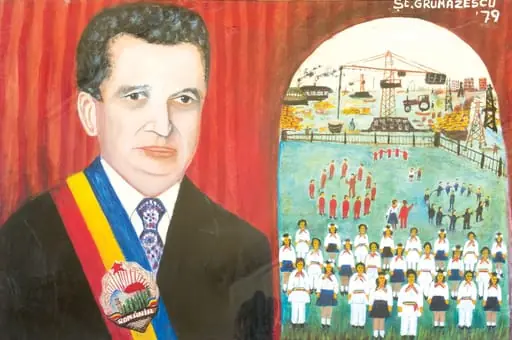 Tablou, ulei pe pânză, Nicolae Ceaușescu și copii, semnat și datat în partea dreaptă sus Șt. Grumăzescu, 1979. Nicolae Ceaușescu este prezentat în partea stângă urmărind o festivitate - pionieri, copii dansând în horă. Maniera de realizare a tabloului este una naivă. Oferit de Ștefan Grumăzescu din București.
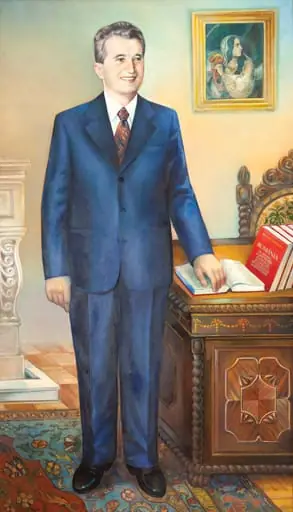 Tablou ulei pe pânză, portret Nicolae Ceaușescu, semnat în partea dreaptă jos Romulus Constantinescu, datat 1983. Nicolae Ceaușescu este reprezentat într-un costum albastru metalizat, stând în picioare lângă biroul său cu mâna pe unul din volumele lucrării ”România pe calea construirii societății socialiste multilateral dezvoltate”. Pe peretele din spatele său ”România Revoluționară” a lui C.D.Rosenthal. Comandat și oferit de Comitetul Județean de Partid Argeș (1983).
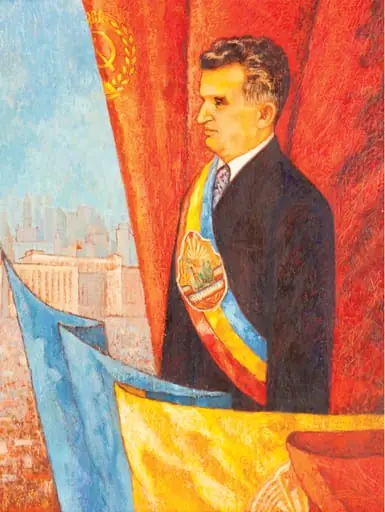 Tablou, ulei pe pânză, „Nicolae Ceaușescu, întâiul președinte al României”, semnat C.Aurel și datat 1974 în partea dreaptă jos. Nicolae Ceaușescu purtând banderolă tricoloră cu stema R.S.R., stând la balcon primind ovații din partea oamenilor muncii adunați într-o piață. În spatele său, steagul cu sigla PCR. Tablou oferit de către autor originar din Câmpina (Prahova), 19 august 1974.
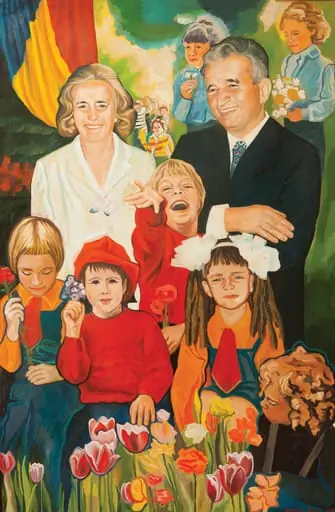 Tablou, ulei pe pânză, „Nicolae și Elena Ceaușescu în mijlocul unui grup de pioneri și șoimi ai patriei”, semant în partea dreaptă jos Cornelia Ionescu și datat 1981. Comandat și oferit de Consiliul Național al Pionerilor, 14.X.1981.
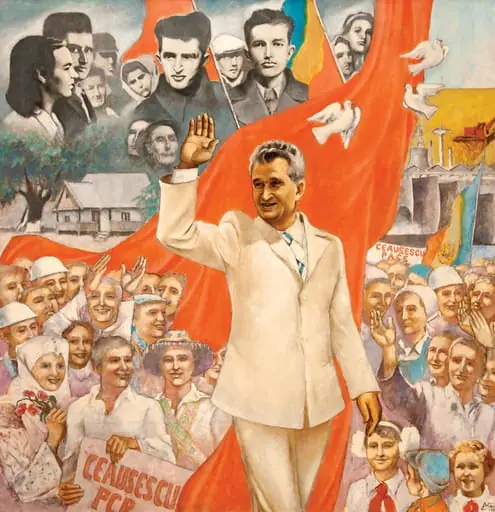 Tablou „Eroul României Socialiste” , semnat și datat în dreapta jos ”Constantin Nițescu 1988”. Comandat de Comitetul Județean de Partid Olt și oferit cadou lui Nicolae Ceaușescu la împlinirea vârstei de 70 de ani (ianuarie 1988).
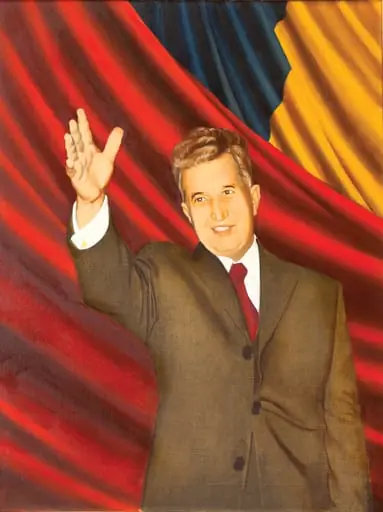 Tablou, ulei pe pânză, „Salutul președintelui”, atribuit lui Viorel Toma, nedatat. Nicolae Ceaușescu este reprezentat în centrul tabloului salutând, pe fundal steagul PCR și cel al RSR. Comandat și oferit de Comitetul Județean de Partid Timiș (1985).
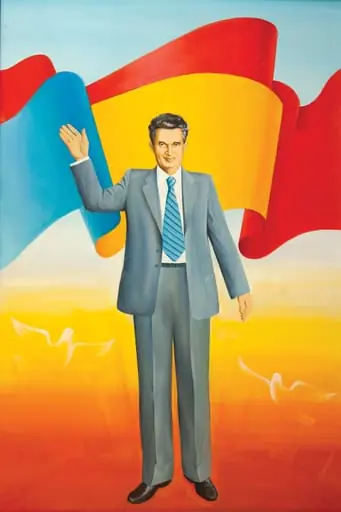 Tablou „ Ceaușescu Pace”, semnat M. Ceacîru și datat dreapta jos. Tabloul îl prezintă pe Nicolae Ceaușescu salutând, în spatele său flutură tricolorul și stegul PCR, în stânga și în dreapta sa doi porumbei albi în zbor.Comandat de Comitetul Județean de Partid Neamț (1989)
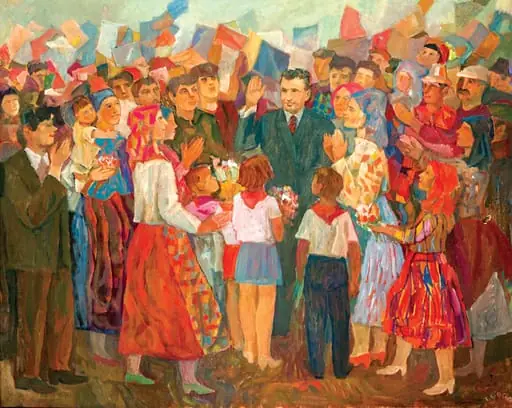 Tablou, ulei pe pânză, „Moment de sărbătoare bihoreană”, semnat în partea dreaptă jos T. Goga. Nicolae Ceaușescu este prezentat în mijolocul oamenilor muncii, bărbați si femei îl înconjoară, pionierii îi oferă flori în semn de bun venit. Oferit de Comitetul Județean de Partid Bihor, 22 ianuarie 1978.
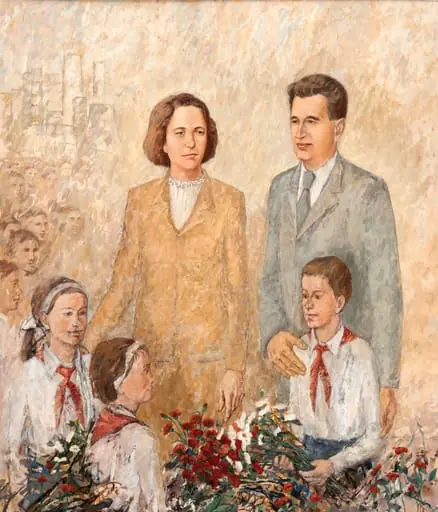 Tablou ulei pe pânză, „Omagiu”, semnat M.B, I.Ș. (atribuit Mircea Bejgu, Ion Șincă), datat 1984 în partea dreaptă jos. Elena și Nicolae Ceaușescu alături de pionieri. Comandat și oferit de Comitetul Județean de Partid Argeș (1984).
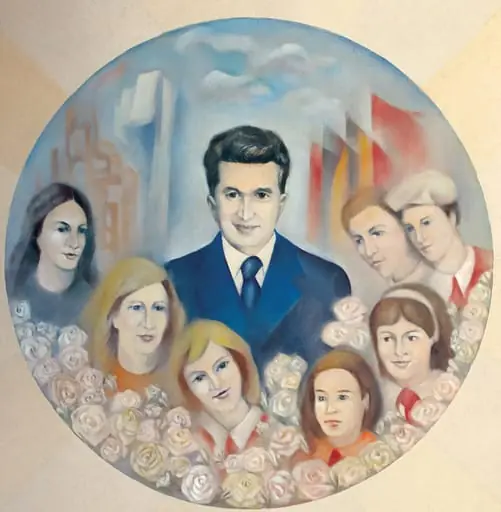 Tablou ulei pe pânză, „Nicolae Ceaușescu”, nesemnat, atribuit lui Ion Pantilie, nedatat. Nicolae Ceaușescu este reprezentat în mijlocul copiilor și tinerilor. Comandat și oferit de Comitetul Județean de Partid Argeș (1988).
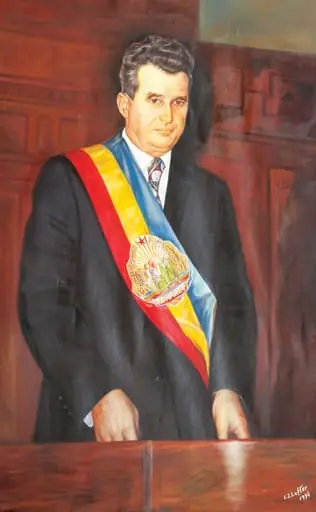 Tablou, ulei pe pânză, ”Portret Nicolae Ceaușescu”, semnat C.I. Lefter și datat 1974 în partea dreaptă jos. Reprezentat într-un cadru oficial în spatele unui pupitru, Nicolae Ceaușescu purtând eșarfa cu stema RSR. Oferit lu Nicolae Ceaușescu de Comitetul de Partid Sănătatea, cu ocazia zilei de naștere, ianuarie 1978.
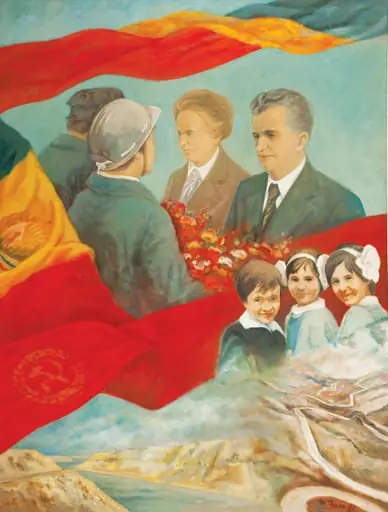 Tablou „Omagiul Președintelui Țării”, ulei pe pânză; semnat Gheorghe Pogan și datat în partea dreaptă jos. Tabloul îi prezintă pe soții Ceaușescu întâmpinați cu flori de două personaje masculine (un miner și un petrolist), învăluiți de tricolor și steagul PCR. În dreapta lui Nicolae Ceaușescu (dreapta tabloului) trei elevi. Partea de jos a tabloului este completată cu reprezentarea Transfăgărășanului și a Canalului Dunăre - Marea Neagră. Comandat și oferit de Comitetul Județean de Partid Hunedoara (1988).
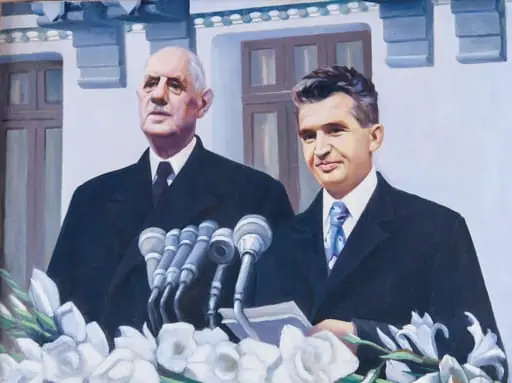 Tablou, ulei pe pânză, Nicolae Ceaușescu și Charles de Gaulle la o adunare populară în Piața Unirii din Craiova, nesemnat, nedatat. Tablou realizat în urma vizitei generalului du Gaulle în România din mai 1968. A fost prima vizită a unui conducător de stat din Occident în România după 1945. Oferit lui Nicolae Ceaușescu în 1973.
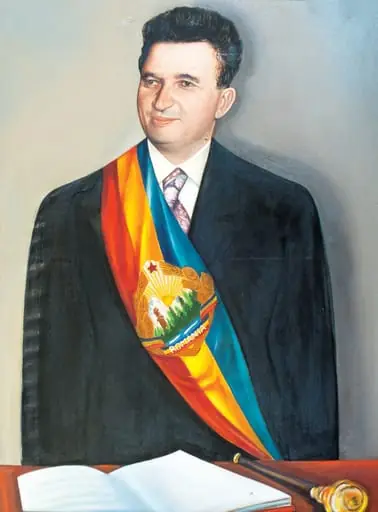 Tablou, ulei pe pânză, ”Portret Nicolae Ceaușescu”, nesemnat, atribui lui Nicolae Toma. Oferit de autor, cu ocazia zilei de naștere a lui Nicolae Ceaușescu, Ploiești, ianuarie 1978.
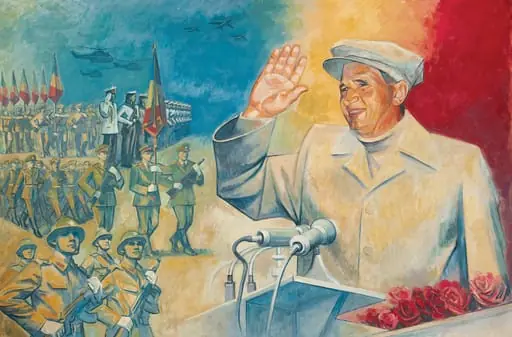 Tablou ulei pe pânză „Onor comandantului suprem”, semnat stânga jos în monogramă C.M., atribuit lui Maricel Chițac, nedatat. Tabloul îl prezintă pe ”comandantul suprem”, Nicolae Ceaușescu, la tribună primind onorul din partea aviației, trupelor de uscat și a marinei. Pe fundal tricolorul. Tablou comandat și oferit de Ministerul Apărării Naționale lui Nicolae Ceaușescu cu ocazia aniversării zilei de naștere (ianuarie 1989).