Artwork
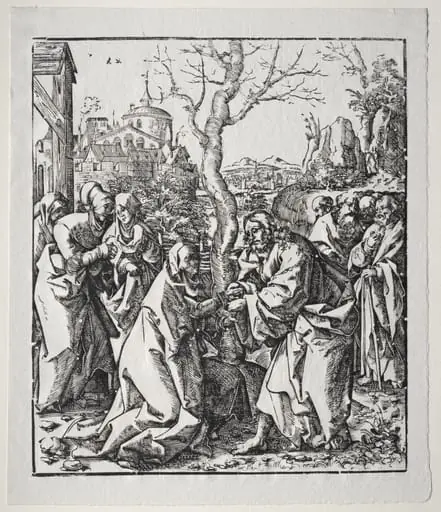
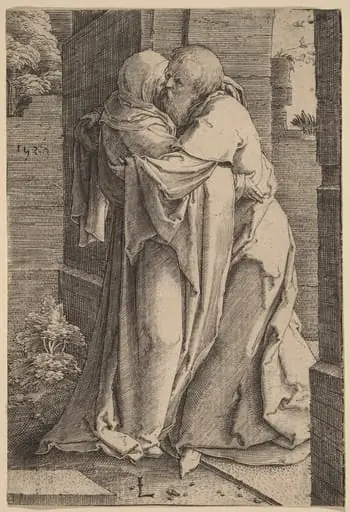
The Meeting of Joachim and Anna
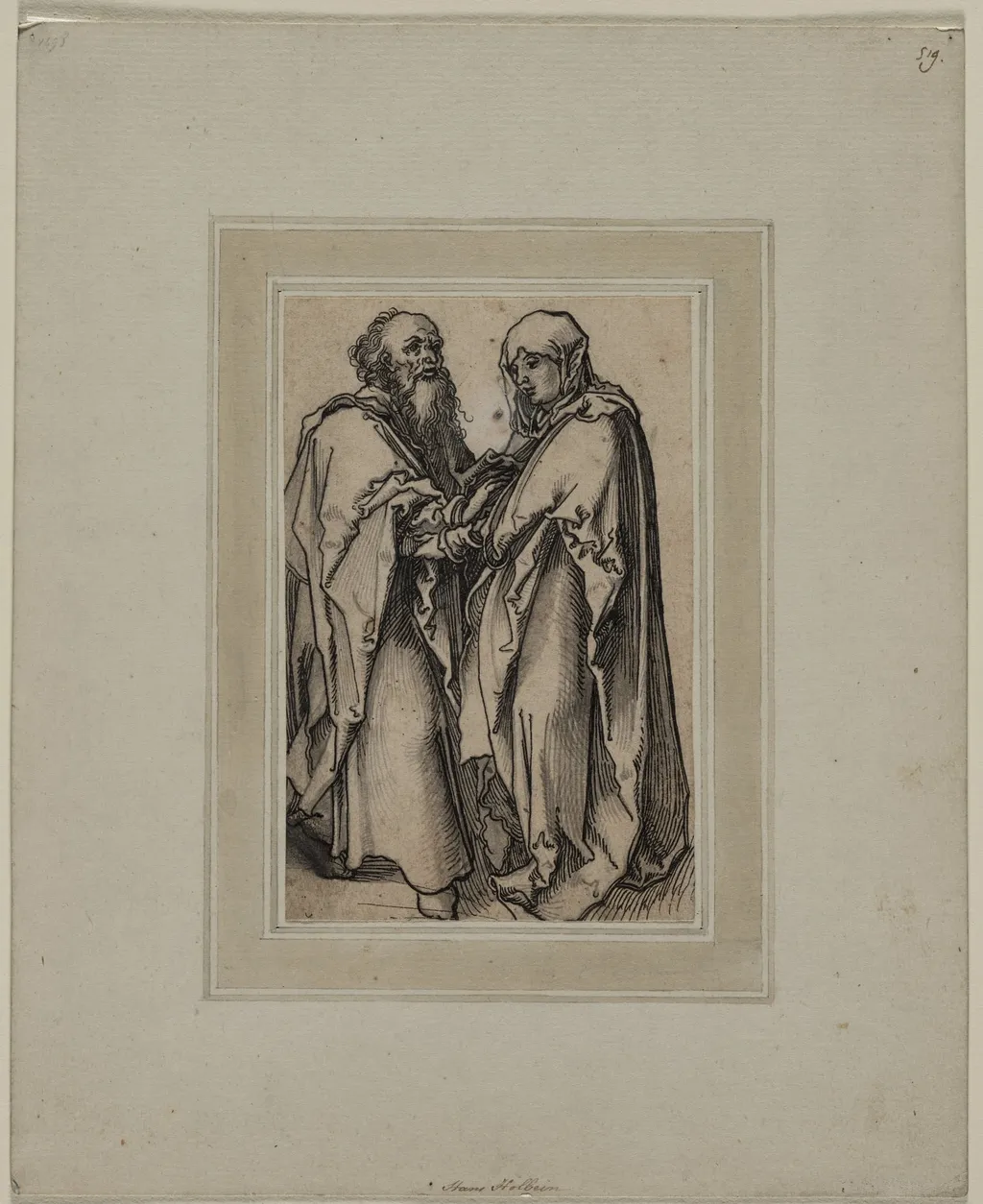
The Meeting of Joachim and Anna is a drawing by the Renaissance artist Wolf Traut. It dates from 1504 and is held in the collection of the Cleveland Museum of Art.
About this work
Overview
Created around 1504, this drawing by Wolf Traut depicts the biblical reunion of Joachim and Anna, the parents of the Virgin Mary. Executed in pen and ink with wash, it is part of the collection at The Cleveland Museum of Art. The work reflects the devotional art traditions of early sixteenth-century Germany, emphasizing quiet human emotion within a sacred narrative.
Subject & Meaning
The scene illustrates the moment Joachim and Anna, having been told they will conceive a child, embrace after years of barrenness. Their reunion, set in a secluded garden behind a low stone fence, conveys divine favor through personal tenderness rather than overt symbolism. The intimacy of the moment underscores themes of hope, patience, and divine intervention in late medieval piety.
Technique & Style
The handling shows awareness of northern European draftsmanship, though without the pronounced sfumato of Italian Renaissance painting.
Traut employs fine pen lines and subtle ink washes to model form and suggest depth. The figures are rendered with restrained detail, their garments defined by flowing contours rather than elaborate ornamentation. The background trees and fence are lightly sketched, creating a sense of spatial enclosure without distraction. The handling shows awareness of northern European draftsmanship, though without the pronounced sfumato of Italian Renaissance painting.
History & Provenance
The drawing entered the Cleveland Museum of Art’s collection in the twentieth century, its earlier provenance largely undocumented. It is one of few surviving works by Wolf Traut, a lesser-known artist active in southern Germany during the transition from late Gothic to early Renaissance styles. Its preservation suggests it may have been part of a private devotional collection.
Context
In early 1500s Germany, scenes from the lives of Mary’s parents were popular in religious art, especially in regions influenced by the Devotio Moderna. These narratives emphasized personal piety and emotional connection to sacred figures. Traut’s drawing aligns with this trend, offering a contemplative image suited for private meditation rather than public worship.
Legacy
As a rare surviving example of Traut’s draftsmanship, the drawing contributes to understanding the range of devotional imagery produced outside major artistic centers. It reflects how biblical stories were adapted into intimate, human-scale compositions, bridging medieval symbolism and emerging Renaissance naturalism without fully embracing either.
Artist & collection

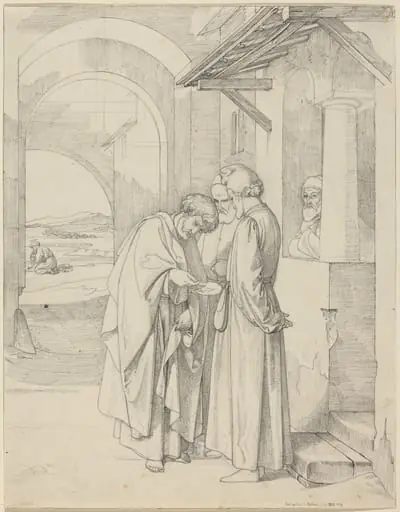 Peter Paying the Temple Tax
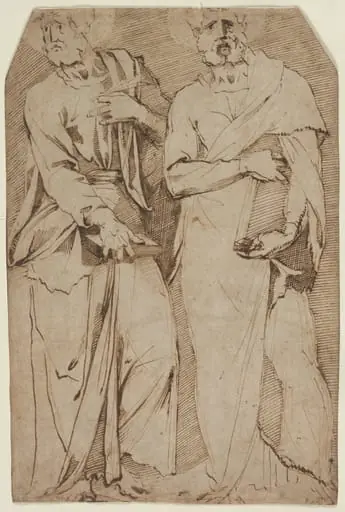 Two Standing Saints
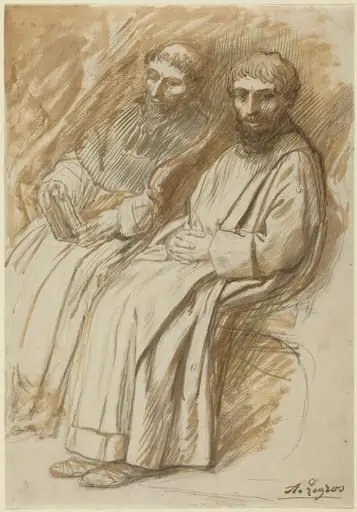 Two Monks Seated in a Church
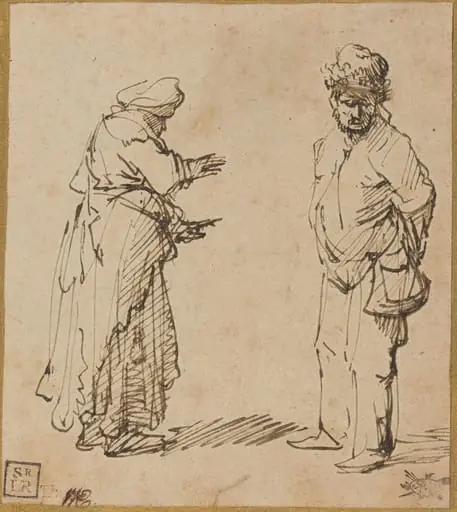 Beggar Man and Woman
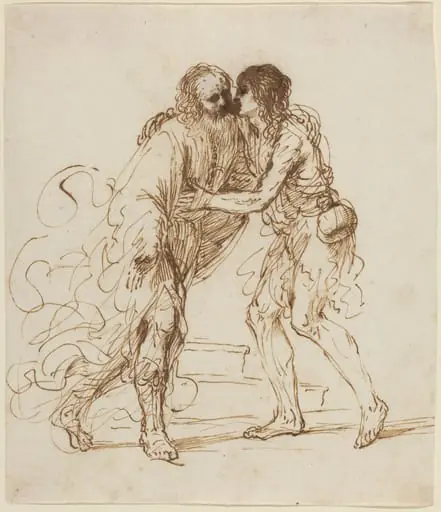 The Return of the Prodigal Son
 Recto: Three monks; verso: Slight sketch of a woman reclining, above: The lower portion of another figure
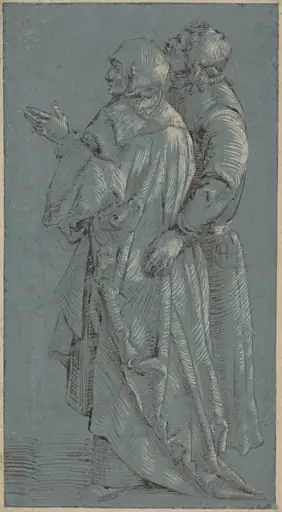 The Virgin and Saint John
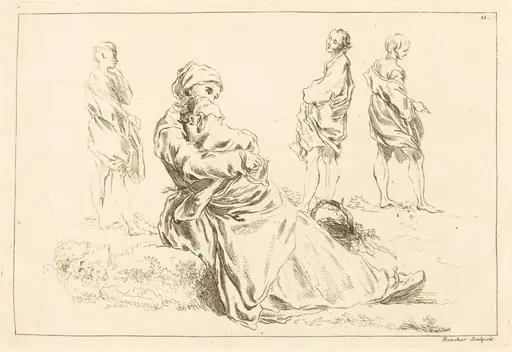 Figure Studies including Seated Mother and Child
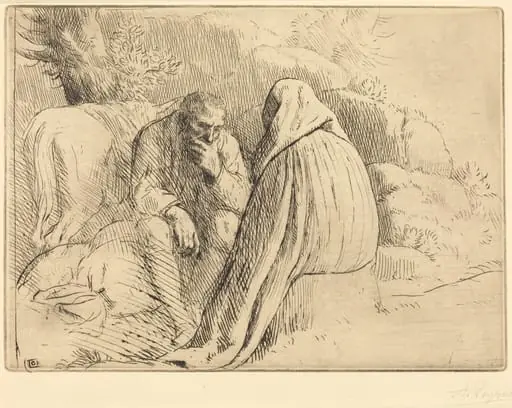 Bohemien Encampment (Campement de bohemiens)
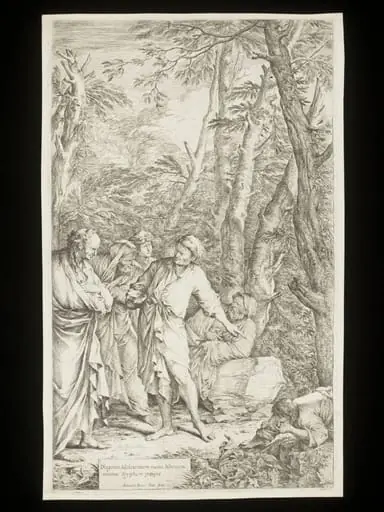 Diogenes Casting Away his Bowl
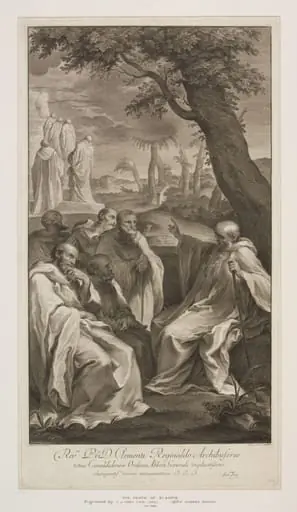 The Death of St. Anne
 Saint Joachim Embracing Saint Anna