Artwork
Drifting in a Boat
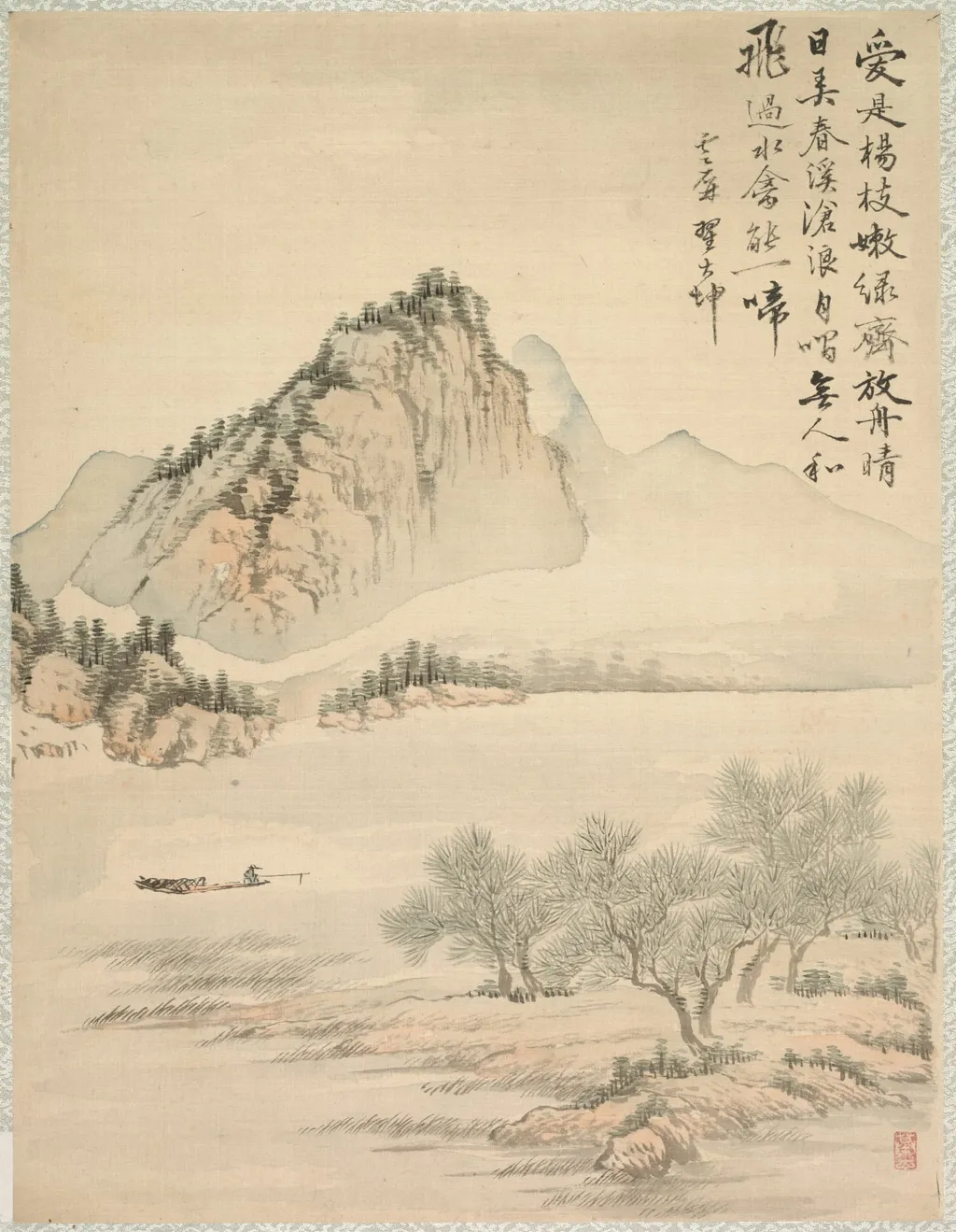
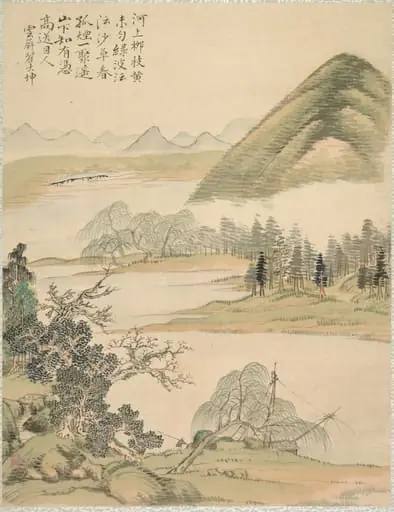
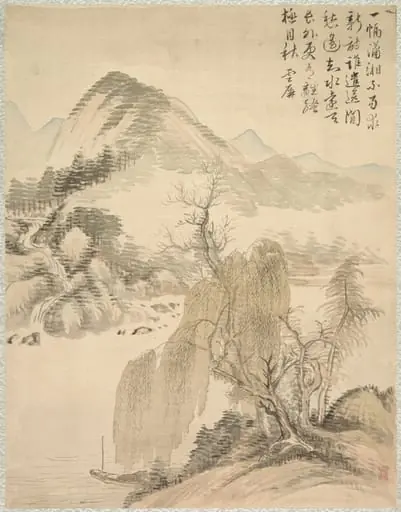
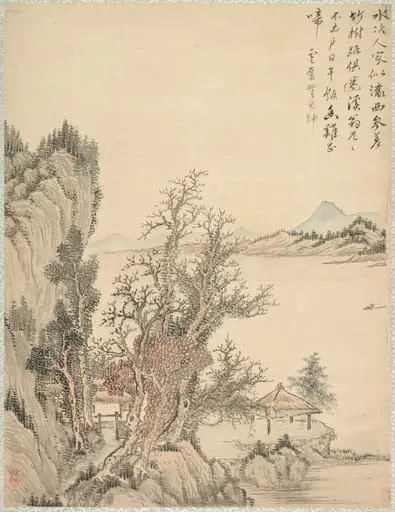
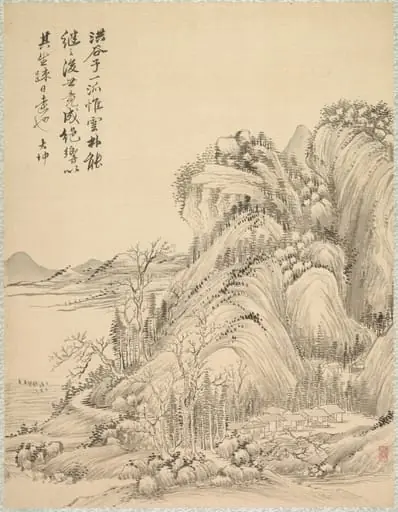
Drifting in a Boat is a work on paper by the Romanticist artist Tsubaki Chinzan. It dates from 1847 and is held in the collection of the Cleveland Museum of Art.
About this work
Chinzan didn’t just paint the landscape—he also copied the writing on the original.
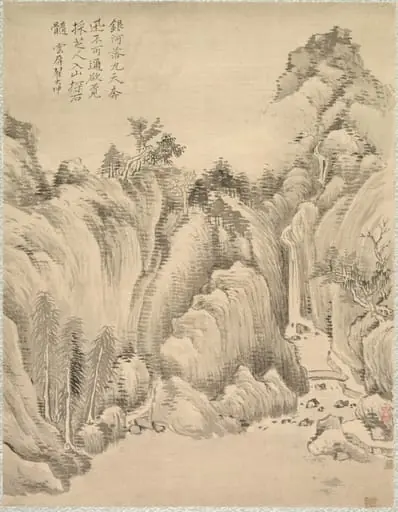
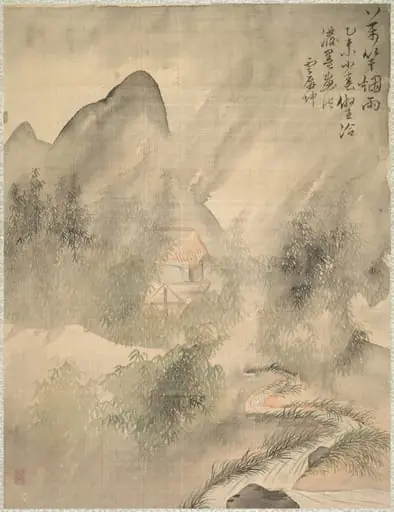
A small boat glides across dark water under a pale, cloudy sky. Two figures sit inside, one holding an oar, the other looking ahead. Trees and reeds frame the scene, their details soft and loose.
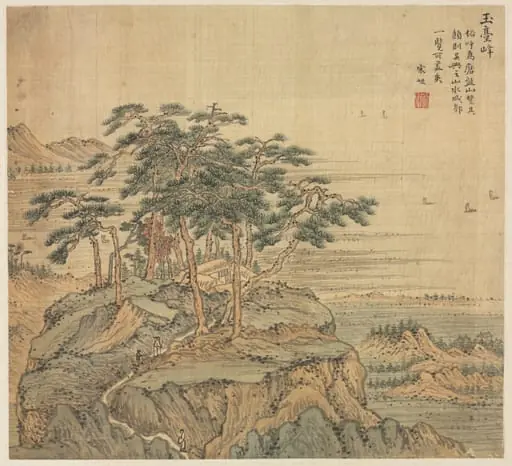
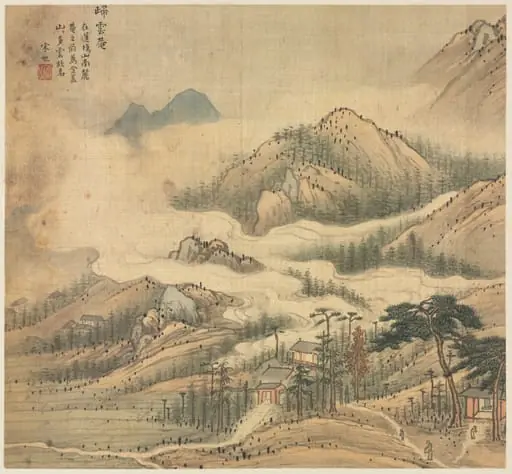
This painting copies the style of an older Chinese artist, Zhai Dakun. Chinzan didn’t just paint the landscape—he also copied the writing on the original. It’s like a quiet conversation between artists across time and distance.
If you like this quiet, thoughtful style, look up *japan, edo period (1615–1868)*.
Overview
Drifting in a Boat is a landscape painting from the portfolio of Tsubaki Chinzan, characterized by a serene depiction of a boat with two figures gliding across dark water under a cloudy sky, set amidst soft, loosely detailed trees and reeds.
Subject & Meaning
The painting's tranquil scene conveys a sense of calm contemplation, with the figures engaged in gentle activity, evoking a mood of peaceful coexistence with nature.
Technique & Style
Executed in a style emulating the old master Zhai Dakun, the work features soft, loose brushstrokes and muted tones, blending Japanese interpretation with Chinese artistic heritage.
History & Provenance
Tsubaki Chinzan created this piece as part of an album where he not only replicated Zhai Dakun's (active 1730–1804) landscapes but also transcribed the original inscriptions, paying homage across temporal and cultural boundaries.
Context
This work reflects the Edo period's (1615–1868) cultural exchange and admiration for Chinese art, with Chinzan's approach exemplifying the era's artistic dialogues between Japan and China.
Own this work as a print
Artist & collection

Artist
Tsubaki Chinzan, originally Tasuku was a Japanese painter in the nanga style. His other art names include Hekiin Sambō, Kyūan (休庵), Shikyūan (四休庵) and Takukadō (琢華堂).