Artwork
Dwelling by the Shore
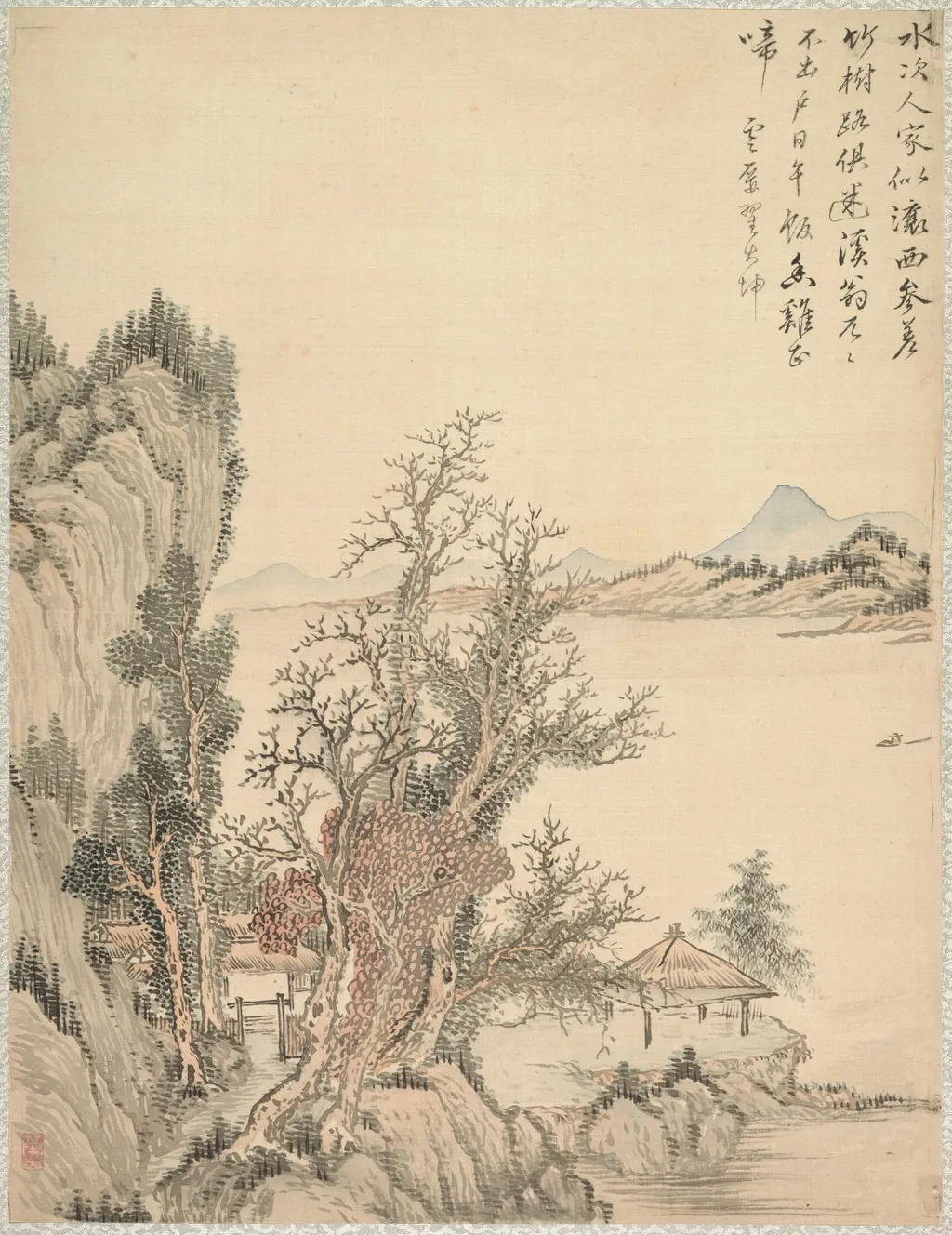
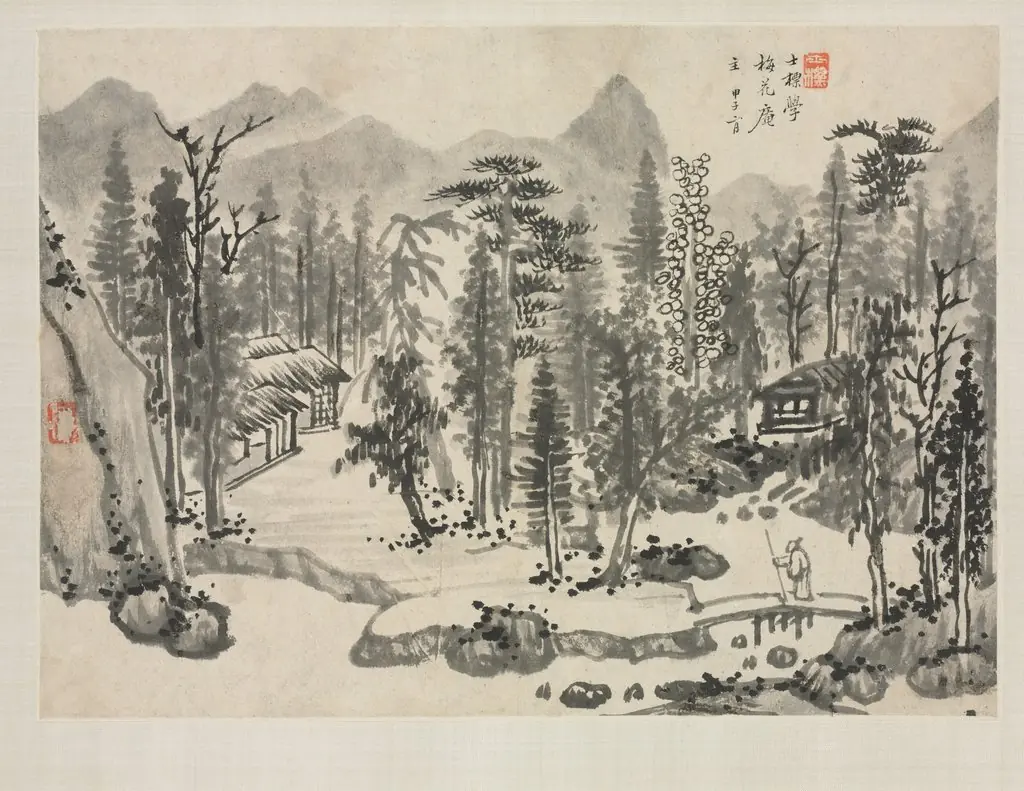
Dwelling by the Shore is a work on paper by the Romanticist artist Tsubaki Chinzan. It dates from 1847 and is held in the collection of the Cleveland Museum of Art.
About this work
He copied it from an 18th-century Chinese artist named Zhai Dakun, right down to the old poem brushed in the corner.
You see a quiet house tucked between pine trees and a rocky shore, mist curling over the water.
Chinzan didn’t paint this from life. He copied it from an 18th-century Chinese artist named Zhai Dakun, right down to the old poem brushed in the corner. It’s like a whisper across centuries—Japanese hands mimicking Chinese ink, both looking back even further.
To see how ink can travel, look up *Japan, Edo period (1615–1868)*.
Overview
Dwelling by the Shore is one of a series of ink landscapes in a portfolio by Japanese artist Tsubaki Chinzan, created during the Edo period. Each image in the album reinterprets compositions originally produced by the Chinese painter Zhai Dakun, who worked in the mid-18th century. Chinzan meticulously replicated not only the visual forms but also the calligraphic inscriptions, preserving the textual elements as integral to the work’s structure.
Subject & Meaning
The scene depicts a solitary dwelling nestled among pine trees along a rocky shoreline, shrouded in mist that softens the boundary between land and water. Rather than conveying a specific place or personal experience, the image functions as a meditative echo of earlier Chinese traditions. The inclusion of a classical poem reinforces its role as a literary-visual artifact, inviting contemplation of continuity and reverence for inherited aesthetic forms.
Technique & Style
Chinzan employed traditional ink wash techniques, using graded tones and controlled brushwork to suggest depth and atmosphere. His rendering of pine foliage and rock formations follows Zhai Dakun’s compositional logic, with careful attention to spatial recession and textual integration. The calligraphy, copied verbatim, is not an afterthought but a structural component, aligning with the Chinese literati ideal where image and text coexist as equal expressions.
History & Provenance
The portfolio was produced in Japan during the late 18th or early 19th century, a time when Chinese painting models were widely studied and emulated by Japanese artists. Chinzan’s copies were not intended as forgeries but as acts of scholarly engagement. The album likely circulated among collectors and scholars who valued the transmission of Chinese artistic lineage through Japanese hands, preserving a cultural dialogue across borders.
Context
During the Edo period, Japanese artists increasingly turned to Chinese painting manuals and albums as sources of authority and refinement. Zhai Dakun’s works, though relatively obscure in China, were accessible in Japan through printed reproductions and imported originals. Chinzan’s engagement with his style reflects a broader trend: the reinterpretation of Chinese models as a means of cultivating artistic legitimacy within Japan’s own scholarly circles.
Legacy
Chinzan’s portfolio stands as a quiet testament to cross-cultural artistic transmission. Rather than asserting originality, it demonstrates how artistic knowledge was preserved and recontextualized across generations and geographies. The work contributes to a larger understanding of Edo-period aesthetics, where emulation was not imitation but a form of dialogue with the past.
Own this work as a print
Artist & collection

Artist
Tsubaki Chinzan, originally Tasuku was a Japanese painter in the nanga style. His other art names include Hekiin Sambō, Kyūan (休庵), Shikyūan (四休庵) and Takukadō (琢華堂).

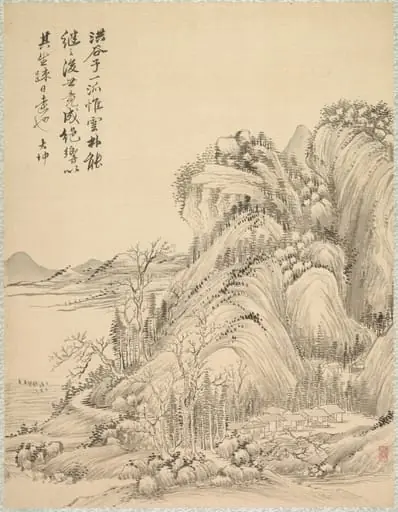 Dwellings beneath Folded Hills
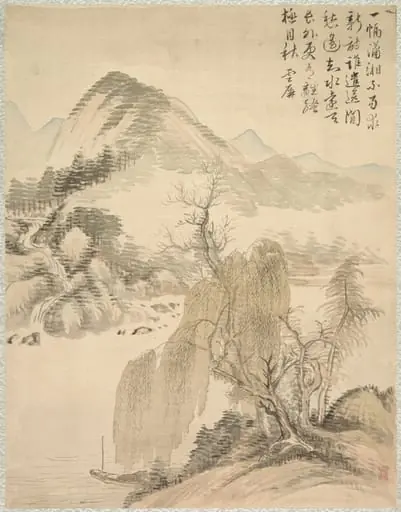 Willow and Waterfall
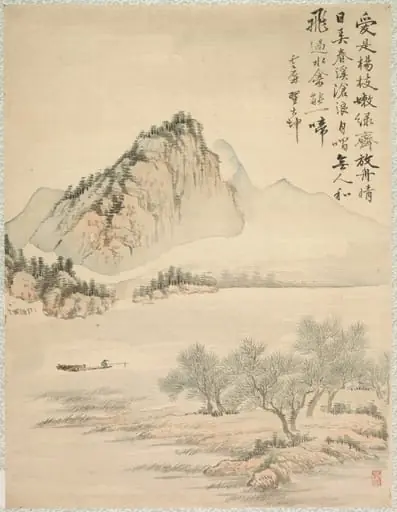 Drifting in a Boat
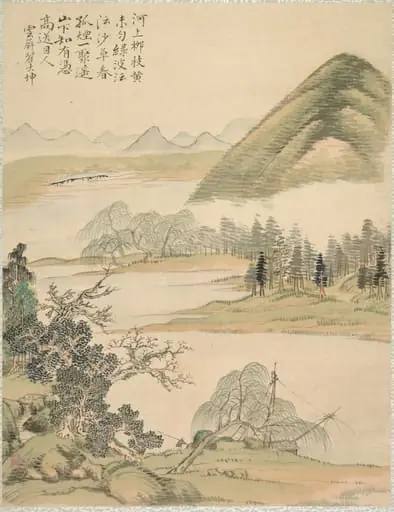 Willow Branches in Spring
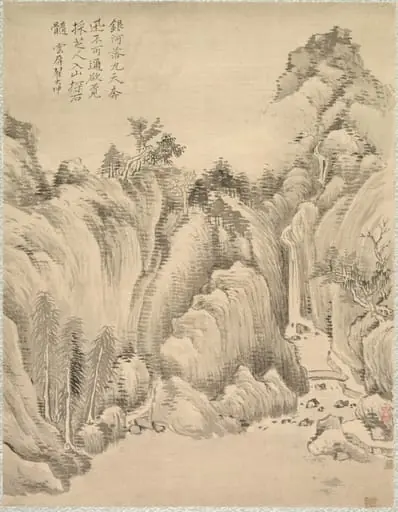 Waterfall and Rocks
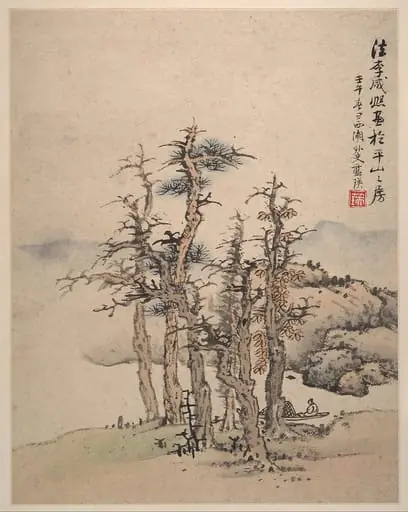 明 藍瑛 仿宋元山水圖 冊|Landscapes after Song and Yuan masters
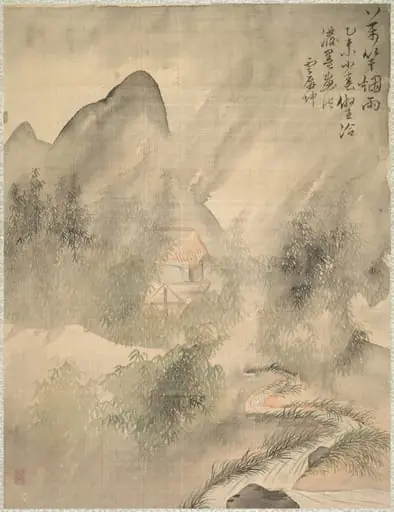 Ten Thousand Bamboos in the Mist and Rain
 Landscape Album in Various Styles: Landscape after Wu Zhen
 Landscape Album in Various Styles: Landscape after Wu Zhen