Artwork
騎兵体歩兵体大調練之図|Illustration of Cavalry, Infantry and Soldiers Retreating (Kiheitai, hoheitai, daichōren no zu)
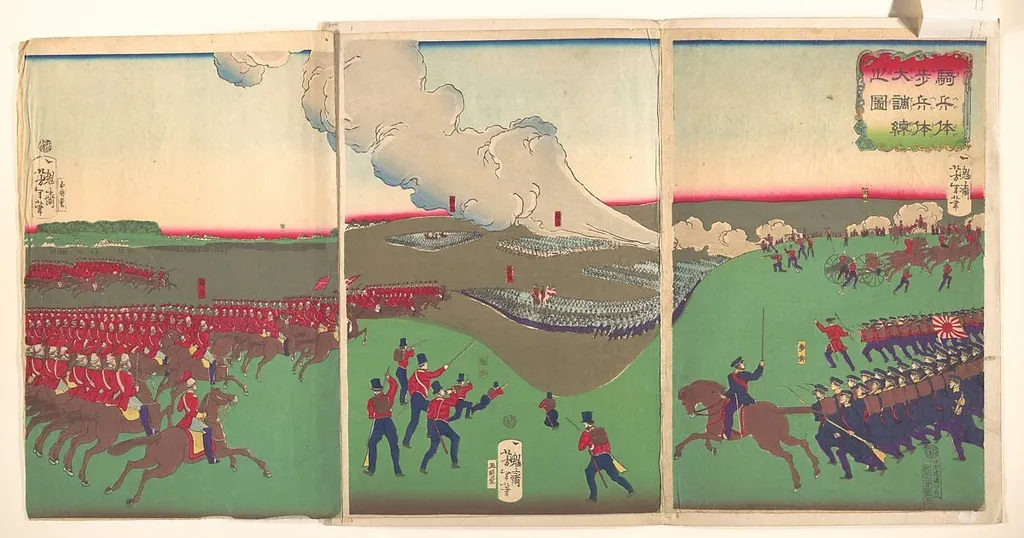
騎兵体歩兵体大調練之図|Illustration of Cavalry, Infantry and Soldiers Retreating (Kiheitai, hoheitai, daichōren no zu) is an ink print by the Impressionist artist Yoshitoshi. It dates from 8 and is held in the collection of the Metropolitan Museum of Art.
About this work
Overview
This triptych woodblock print by Tsukioka Yoshitoshi captures a military exercise involving cavalry, infantry, and retreating troops.
This triptych woodblock print by Tsukioka Yoshitoshi captures a military exercise involving cavalry, infantry, and retreating troops. Created in 1877, it consists of three panels rendered in ink and color on paper. The work is part of the collection at The Metropolitan Museum of Art and exemplifies Yoshitoshi’s engagement with contemporary military reforms during Japan’s rapid modernization in the Meiji era.
Subject & Meaning
The scene portrays a coordinated drill of newly organized imperial forces, reflecting Japan’s transition from feudal armies to Western-style military units. The left panel shows mounted troops advancing, the center depicts dense smoke and red-uniformed infantry, and the right reveals blue-clad soldiers withdrawing with a horse-drawn vehicle. The composition suggests tactical movement rather than combat, emphasizing discipline amid chaos.
Technique & Style
Yoshitoshi employed fine linework and muted earth tones—grays, browns, and subdued reds—to convey the grit of battlefield conditions. Details in uniforms, harnesses, and facial expressions are meticulously rendered, enhancing realism. The use of perspective and layered figures creates depth, while the absence of bright colors reinforces the somber, chaotic atmosphere of the drill.
History & Provenance
Produced in 1877, the print was likely commissioned to document the Imperial Japanese Army’s modernization efforts following the Satsuma Rebellion. It circulated as part of a series illustrating military reforms. The Metropolitan Museum of Art acquired the triptych in the 20th century, preserving it as a rare visual record of Japan’s early modern military training.
Context
During the Meiji period, Japan dismantled its samurai class and adopted European military models. This print reflects state-sponsored efforts to visualize and legitimize the new army’s structure. Yoshitoshi, once known for ghost stories and historical dramas, turned to contemporary subjects, aligning his art with national transformation and public interest in military progress.
Legacy
The triptych stands as a significant example of Yoshitoshi’s shift toward documentary realism in his later years. It contributes to the historical record of Japan’s military modernization and illustrates how ukiyo-e adapted to new themes beyond traditional subjects. Its restrained palette and compositional complexity influenced later generations of printmakers documenting social change.
Artist & collection
Artist
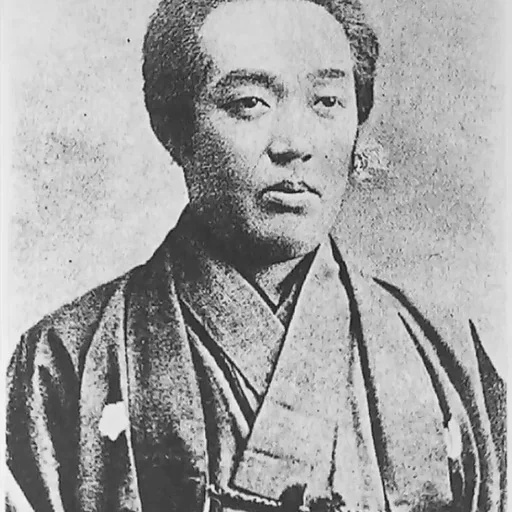
Tsukioka Yoshitoshi (Japanese: 月岡芳年; also named Taiso Yoshitoshi 大蘇芳年; 30 April 1839 – 9 June 1892) was a Japanese printmaker.

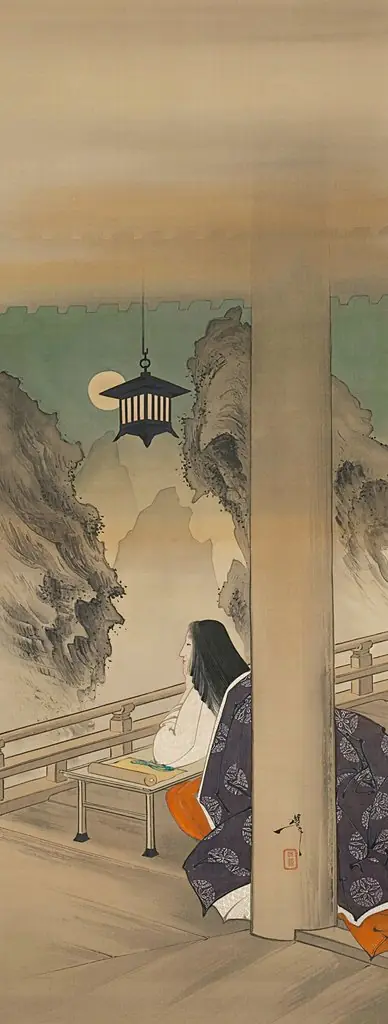 Murasaki Shikibu at Ishiyamadera Temple, based on the print “The Moon at Ishiyama,” from the series One Hundred Aspects of the Moon (Tsuki hyakushi: Ishiyama no tsuki)
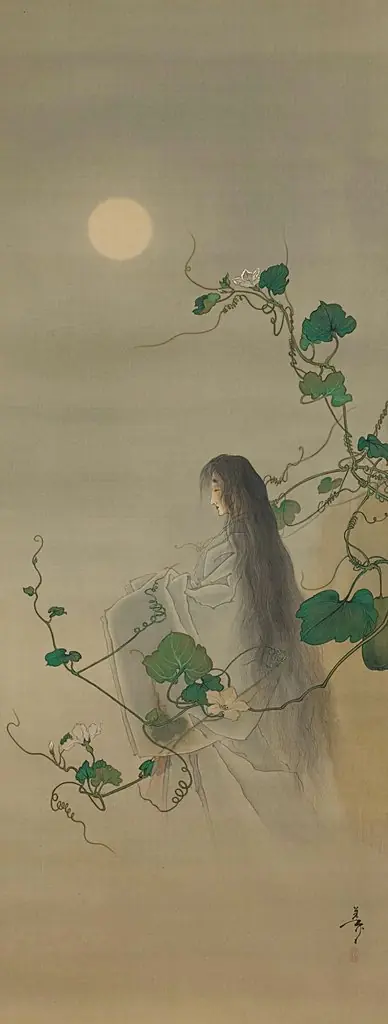 The Spirit of the Deceased Yūgao Entwined in Moonflower Vines, based on the print “The Lady of the Evening Faces,” from the series One Hundred Aspects of the Moon (Tsuki hyakushi: Genji Yūgao no maki)
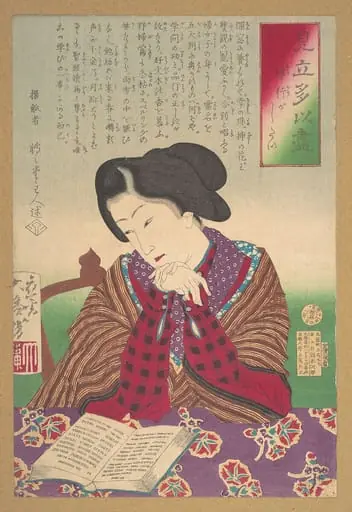 見立多以尽 - 洋行がしたい|Collection of Desires, Wish for Foreign Travel (Mitate Tai zukushi-yōkō ga shitai)
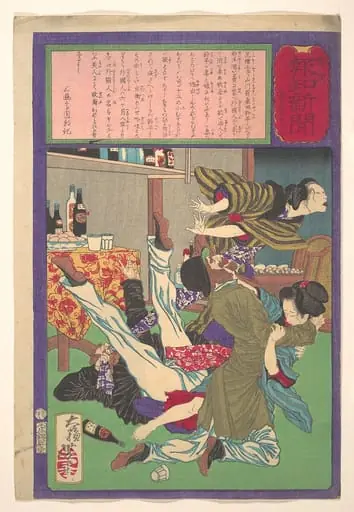 郵便報知新聞 645号|Postal Hōchi Newspaper no. 645, Englishman raping a wine shopkeeper's daughter (Yūbin Hōchi shinbun, roppyaku yonjū gogō)
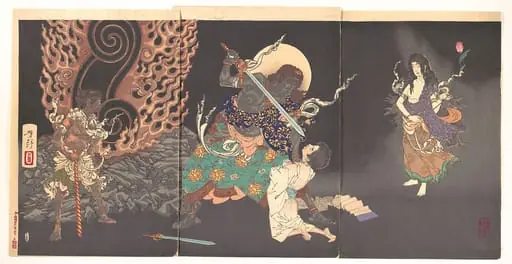 月岡芳年筆 不動明王∙祐天上人図|Fudō Myōō Threatening a Novice
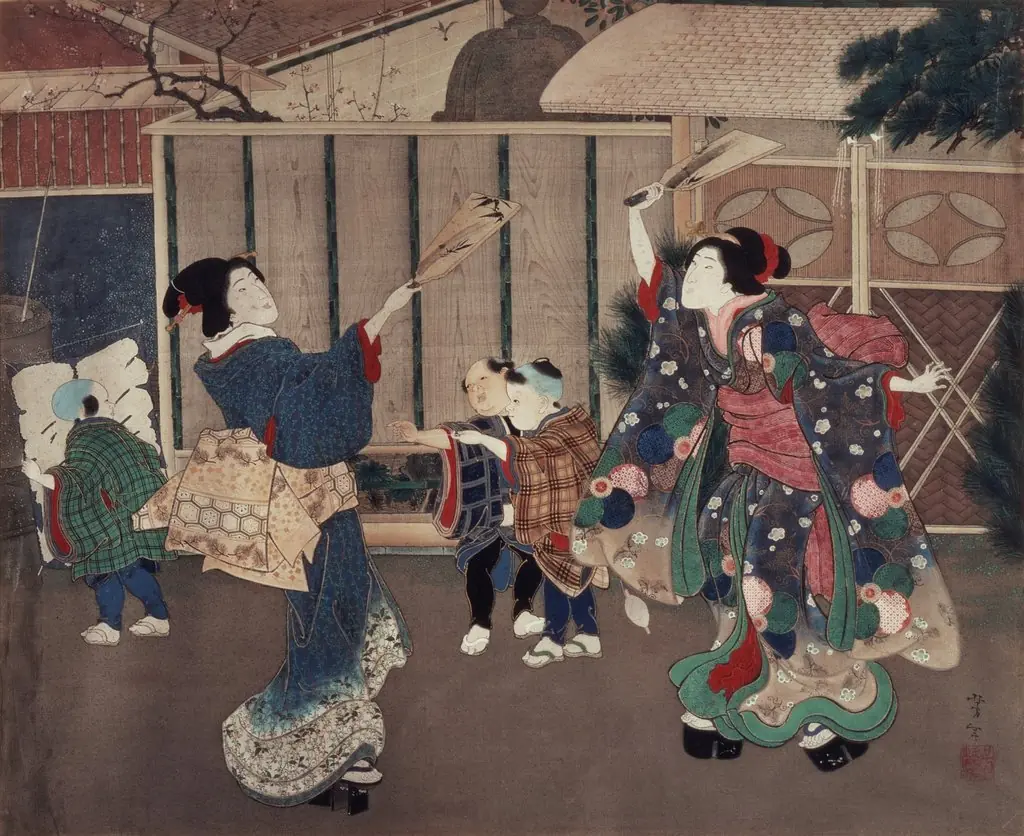 January: Celebrating the New Year
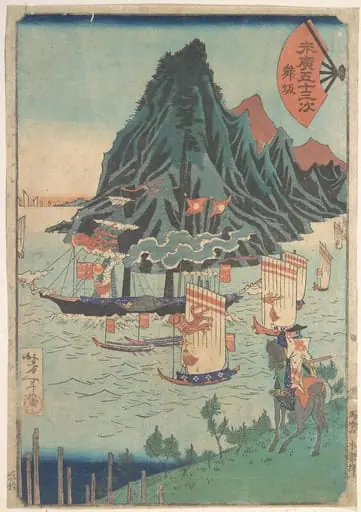 Untitled
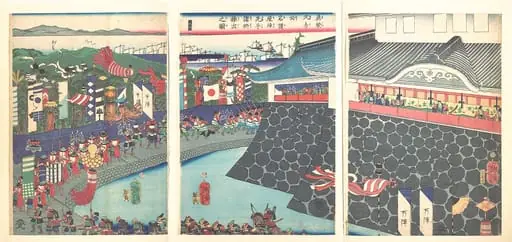 真柴秀吉公名護屋陣先手諸将繰出之図|Hideyoshi and His Troops Leaving Nagoya Camp (Mashiba Hideyoshi kō nagoya jin saki te no shoshō kuridashi no zu)
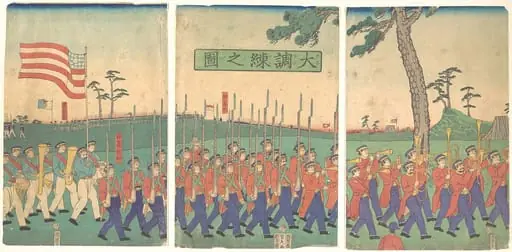 Uchoren no zu|Great Military Drill
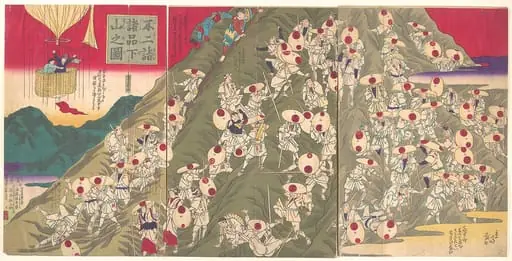 不二詣諸品下山之図|View of the Descent from a Mountain by Many from Pilgrimage to Mt. Fuji (Fuji mōde shoshina gesan no zu)
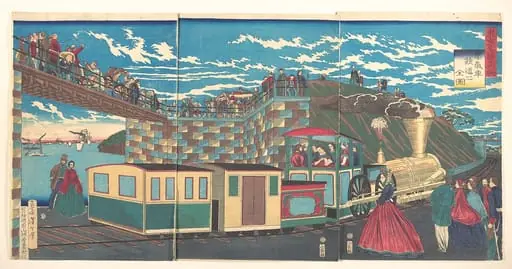 東京名勝高輪 蒸気車鉄道之全図|Illustration of Steam Locomotive Tracks at Takanawa, from the series Famous Places in Tokyo (Tōkyō meishō Takanawa-jōki kikansha no zen zu)
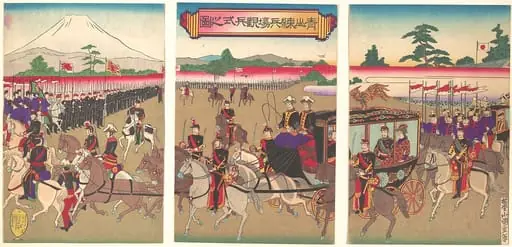 Untitled
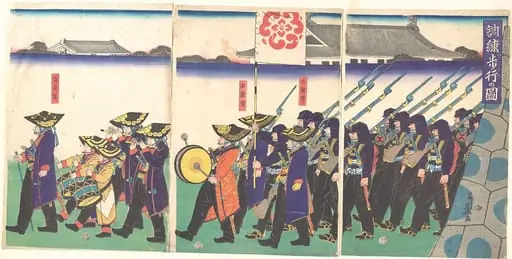 Untitled
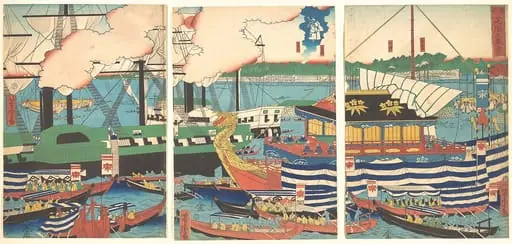 東都芝浦之風景|View of Shibaura, from the series Eastern Capital (Tōto, Shibaura no fūkei)