Artwork
What Is It? (Che c'è?)
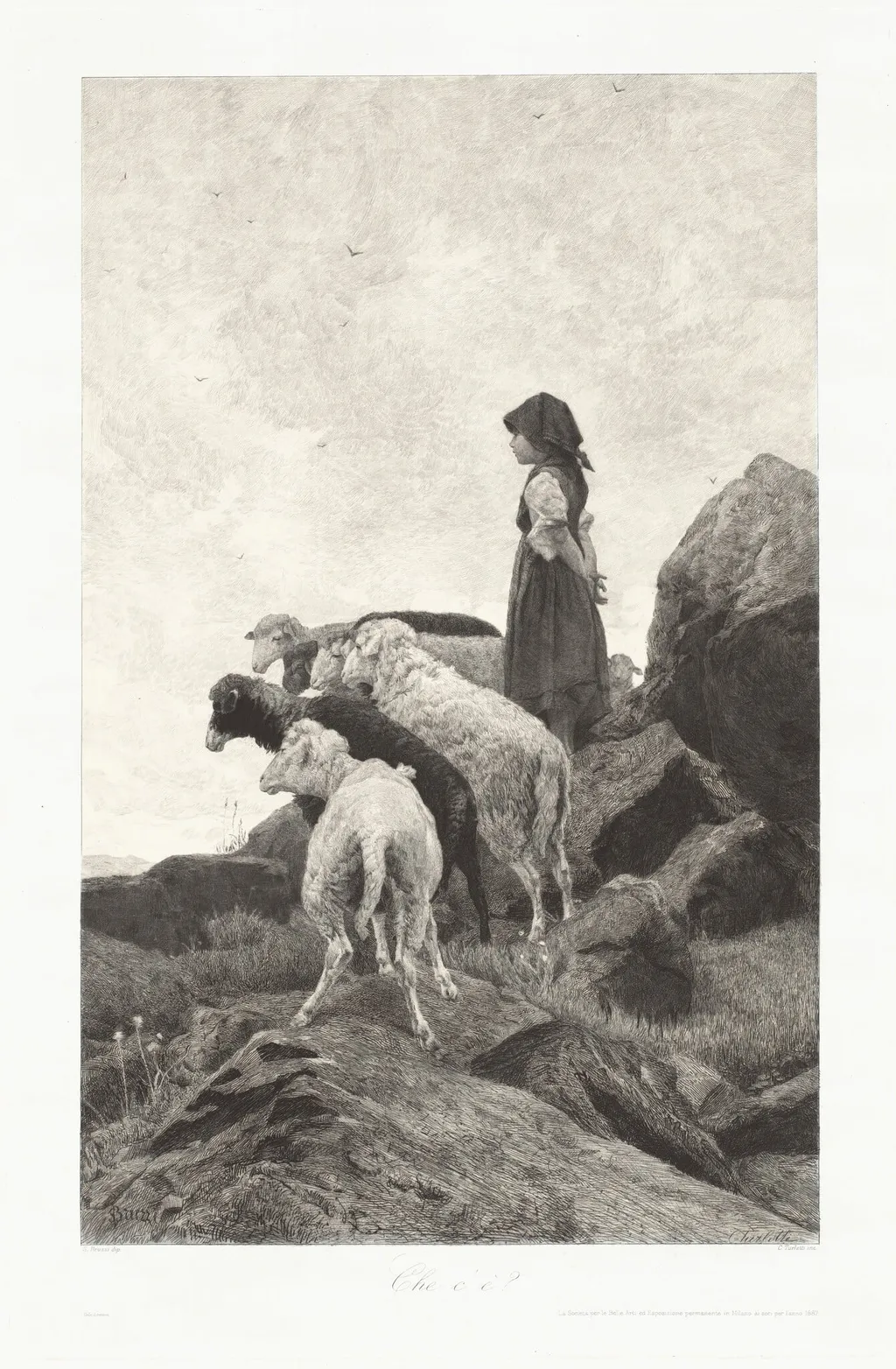
What Is It? (Che c'è?) is an ink print by the Impressionist artist Celestino Turletti. It dates from 1887 and is held in the collection of the National Gallery of Art. Created in 1887, “What Is It?
About this work
Overview
Created in 1887, “What Is It? (Che c’è?)” is an etching on chine collé by Italian printmaker Celestino Turletti. The work presents a modest rural scene that has been part of the National Gallery of Art’s collection in Washington, D.C., where it is displayed among the museum’s nineteenth‑century prints.
Subject & Meaning
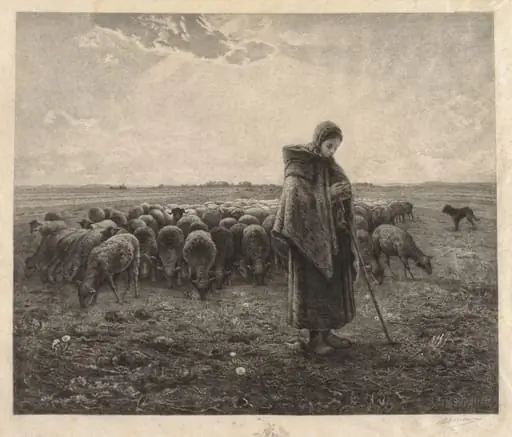
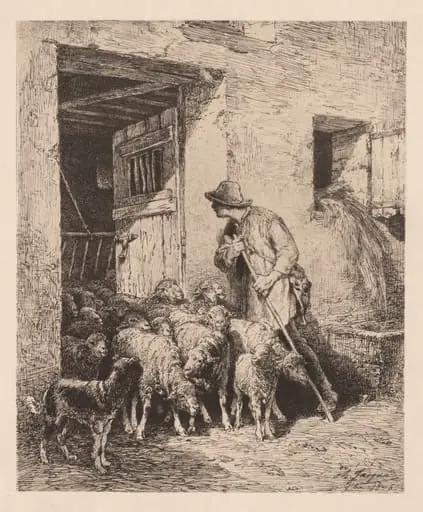
The composition centers on a young girl in a dark dress and headscarf, standing atop a rocky rise. She is surrounded by a flock of white sheep with black faces, while a light sky above is traversed by a few birds. The image suggests a quiet moment of pastoral life, emphasizing the relationship between the child and the herd.
Technique & Style
Turletti employed etching on a chine collé support, a method that combines a thin paper backing with a heavier, smooth surface. This technique allows fine lines to convey the texture of stone and wool, creating depth and a tactile quality. The careful rendering of the hill’s crags and the sheep’s fleece reflects a realistic approach typical of late‑nineteenth‑century Italian printmaking.
History & Provenance
The print was produced in the late 1880s, a period when Turletti was active in the Italian art scene, focusing on genre subjects. It entered the National Gallery of Art’s collection through acquisition (or donation) in the twentieth century, joining a broader assemblage of European prints that illustrate the era’s technical experimentation.
Artist & collection


![Notizie del mondo [News of the World], by Celestino Turletti](https://artifactworldgallery.com/img/celestino-turletti--notizie-del-mondo-news-of-the-world--b48fac7a46801f7d-w320.webp)
![Un mattino di settembre [A September Morning], by Celestino Turletti](https://artifactworldgallery.com/img/celestino-turletti--un-mattino-di-settembre-a-september-morning--cdd7bafaa96677e1-w320.webp)