Artwork
Morpeth
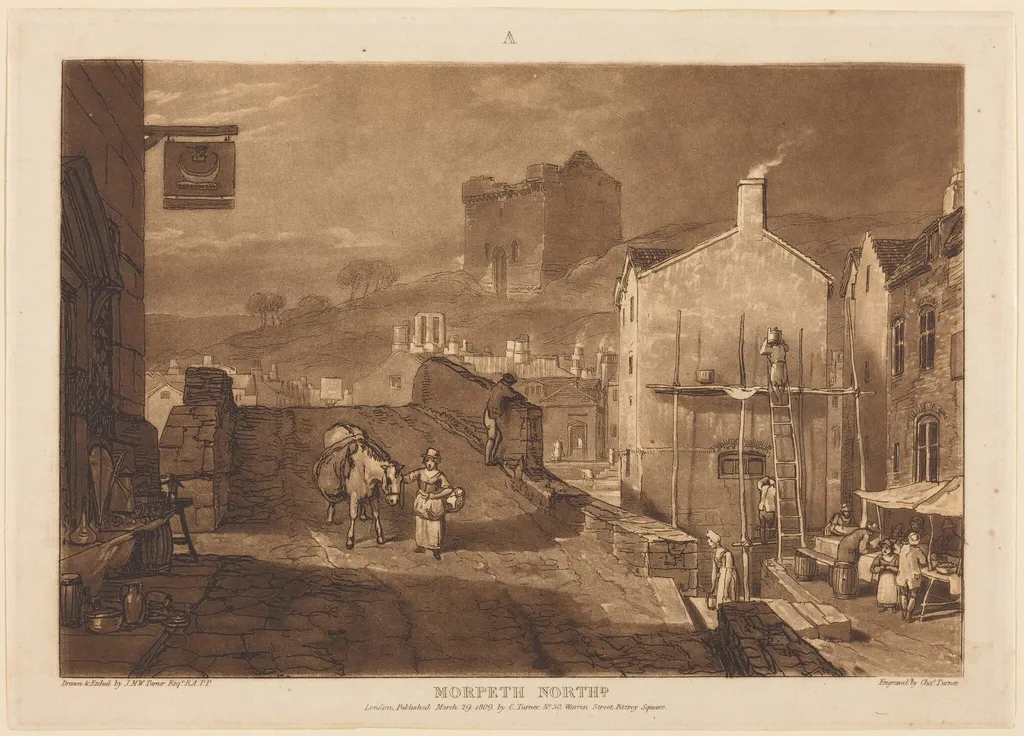
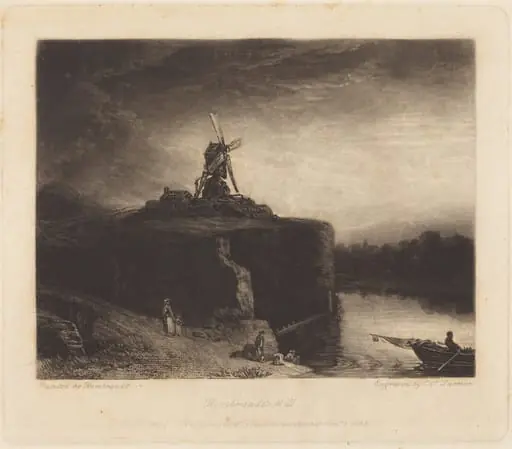
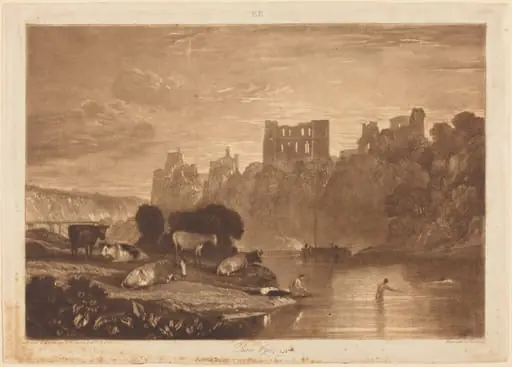
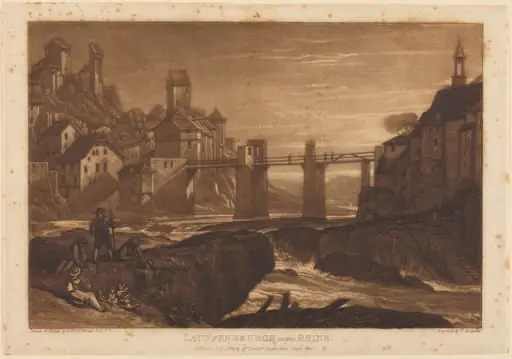
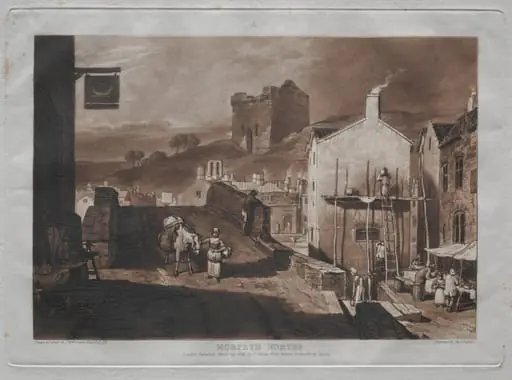
Morpeth is an ink print by the Romanticist artist Charles Turner. It dates from 1809 and is held in the collection of the National Gallery of Art.
About this work
Overview
It captures a quiet moment in the Northumberland town of the same name, rendered with careful attention to texture and atmosphere.
Created in 1809 by English engraver Charles Turner, *Morpeth* is a print combining etching and mezzotint techniques. It captures a quiet moment in the Northumberland town of the same name, rendered with careful attention to texture and atmosphere. Turner, known for his precision in reproductive printmaking, produced this work during a period when topographical prints were valued for their documentary clarity and subtle tonal nuance.
Subject & Meaning
The scene portrays daily life in a modest English town: a woman guides a horse along a cobbled lane, while laborers attend to tasks on ladders and at worktables. Distant smoke from a factory hints at early industrial presence, contrasting with the medieval castle on the hill. The composition suggests a quiet transition—traditional rural rhythms intersecting with emerging modernity, without overt commentary.
Technique & Style
Turner employed mezzotint for its rich gradations of tone and etching for fine linear detail, allowing soft shadows and crisp architectural elements to coexist. The interplay of light and dark enhances spatial depth, giving the scene a tangible sense of place. This method, favored in early 19th-century British printmaking, prioritized realism over ornamentation, reflecting contemporary tastes for accurate depiction.
History & Provenance
Charles Turner, active in London’s print trade, was closely associated with J.M.W. Turner, assisting on plates for the *Liber Studiorum*. *Morpeth* likely originated as part of a series documenting British landscapes, though it was not included in that project. Its survival in institutional collections suggests early recognition of its technical skill and regional significance.
Context
In 1809, Britain was undergoing economic and social shifts, with rural towns like Morpeth caught between tradition and industrial change. Topographical prints such as this served both as records and as commodities for a growing middle class interested in local identity. The inclusion of a factory, however faint, signals awareness of broader transformations beyond picturesque idealism.
Legacy
Though not widely exhibited today, *Morpeth* exemplifies the quiet rigor of British printmaking in the early 1800s. It reflects a generation of engravers who valued observational accuracy and technical mastery over dramatic flair. The work remains a reference point for understanding how ordinary places were documented before the rise of photography.
Artist & collection
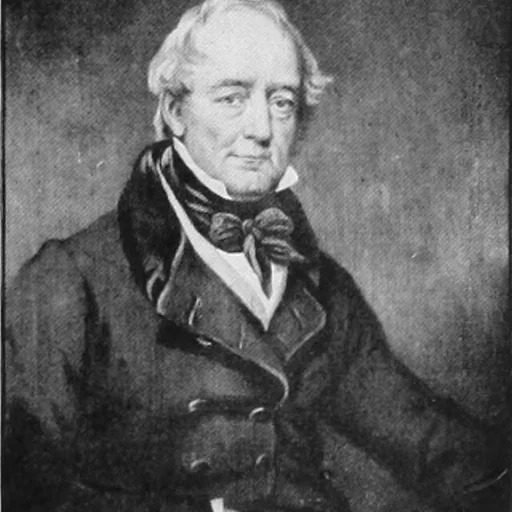
Artist
Charles Turner (31 August 1774 – 1 August 1857) was an English engraver and draughtsman who specialised in portraiture. He collaborated with J. M. W. Turner (to whom he was not related) on the early plates of the same's Liber Studiorum.