Artwork
Babylon
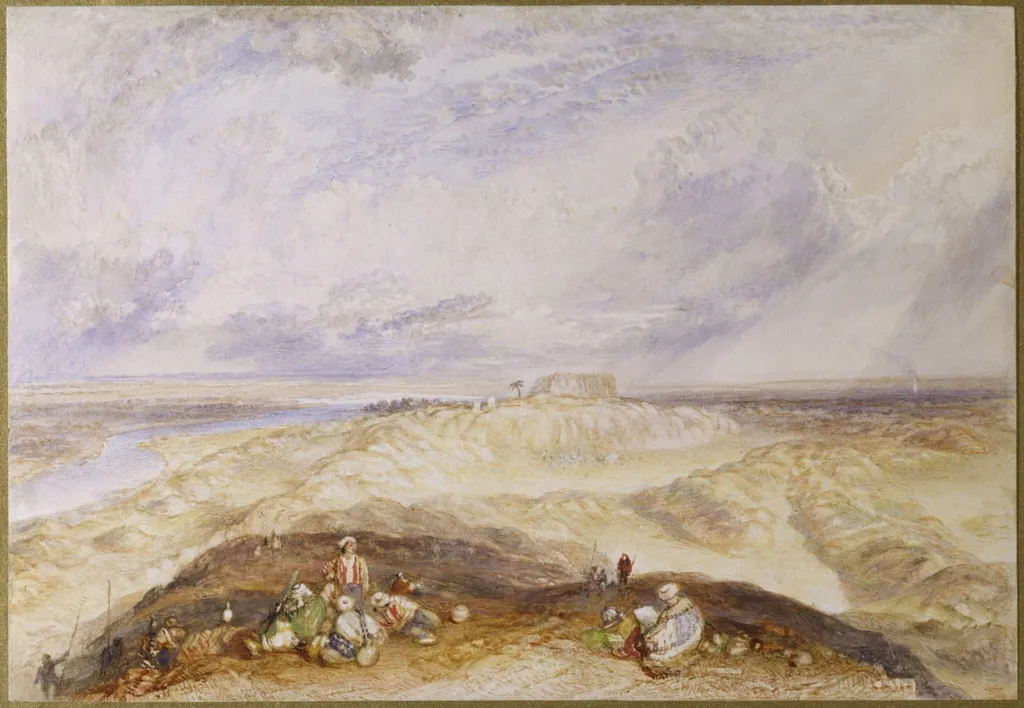
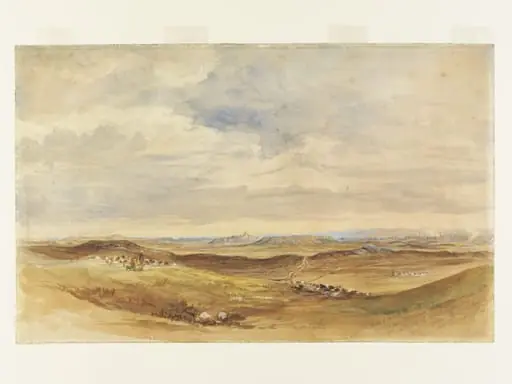
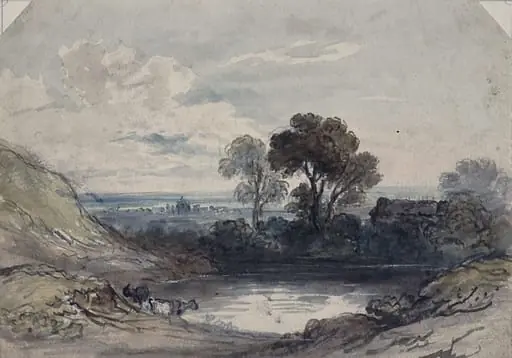
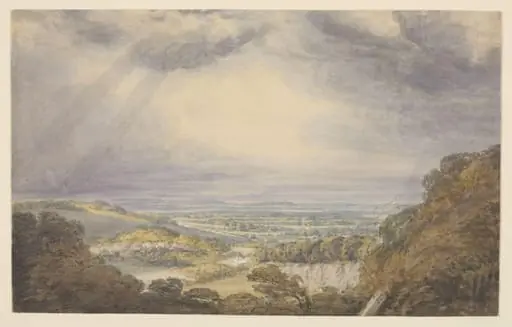
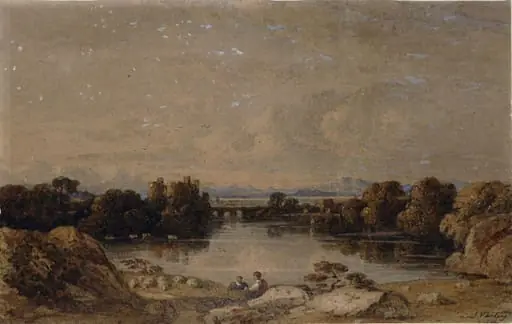
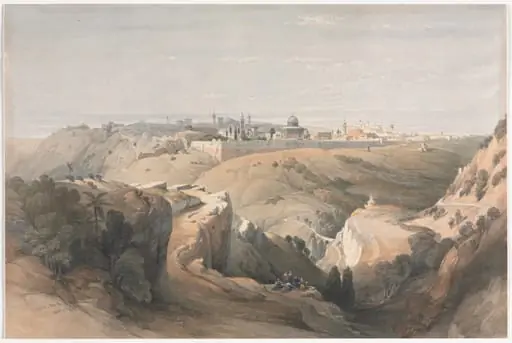
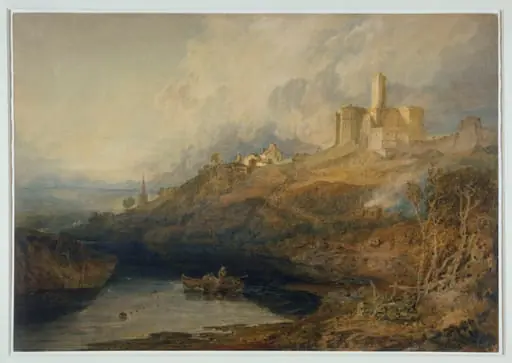
Babylon is a watercolor work on paper by the Romanticist artist Joseph Mallord William Turner. It dates from 1800 and is held in the collection of the Victoria and Albert Museum.
About this work
Overview
This watercolour depicts a desolate, sun‑bathed terrain beyond the ancient city of Babylon, its crumbling stonework rendered in muted, golden tones.
This watercolour depicts a desolate, sun‑bathed terrain beyond the ancient city of Babylon, its crumbling stonework rendered in muted, golden tones. The composition presents a tranquil, almost dreamlike atmosphere, with a warm sky that softens the harshness of the ruins. Though the scene suggests a distant, historical landscape, the overall effect is one of quiet contemplation rather than dramatic narrative.
Subject & Meaning
The work portrays the remnants of Babylon’s architecture, emphasizing the passage of time and the fragility of human achievement. By focusing on the weathered stones against a luminous horizon, the artist invites reflection on the transience of empire and the enduring presence of memory within a fading physical world.
Technique & Style
Executed in watercolour, the piece employs a delicate layering of translucent washes that create a hazy, atmospheric quality. Soft edges and subtle gradations of light echo the sfumato approach, allowing forms to dissolve into the surrounding air and lending the ruins an ethereal, almost imagined character.
History & Provenance
The image originates from a drawing by Sir Robert Ker Porter (1777‑1842), a founding member of the Brothers—a collective of young British painters intent on reviving history painting. Turner later associated with this group. The watercolour served as the model for an engraving included in an illustrated Bible, extending its reach beyond the artist’s studio.
Artist & collection
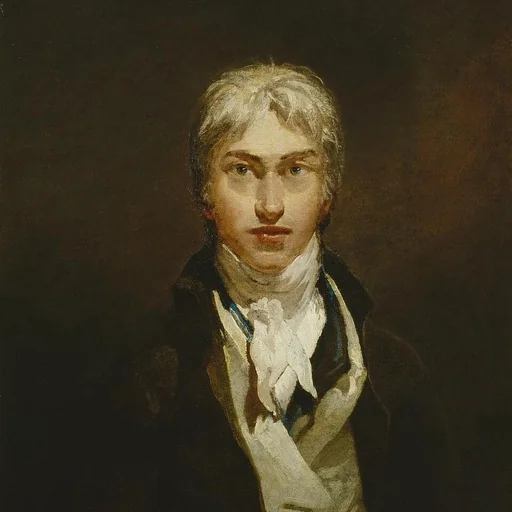
Artist
Joseph Mallord William Turner was born in 1775 at Maiden Lane, Covent Garden, where his father kept a barber and wig-making shop.