Artwork
Clinton Fire Company, No. 41
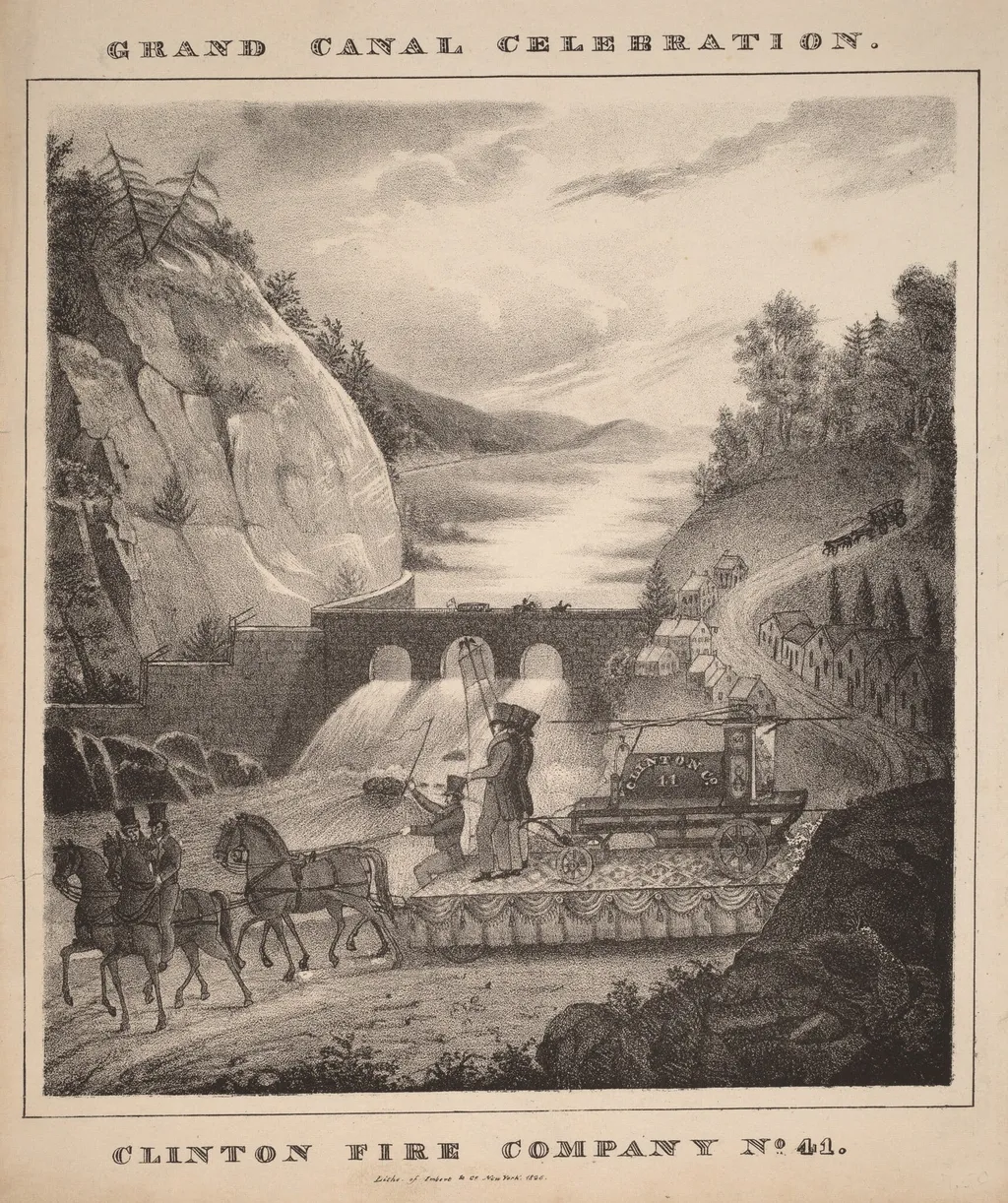
Clinton Fire Company, No. 41 is an ink print by the Romanticist artist William H. Tuthill. It dates from 1826 and is held in the collection of the National Gallery of Art. Created in 1826 by William H.
About this work
Overview
The scene centers on a fire engine wagon bearing the designation 'Clinton Fire Company No.
Created in 1826 by William H. Tuthill, this lithograph depicts a civic procession in Clinton, New York. The scene centers on a fire engine wagon bearing the designation 'Clinton Fire Company No. 41,' drawn by a horse and attended by a group of men in early 19th-century attire. The image is part of a broader celebration tied to the Grand Canal’s completion, capturing a moment of communal pride through the lens of a local volunteer fire unit.
Subject & Meaning
The print portrays a volunteer fire company participating in a public parade honoring the Grand Canal’s opening. The presence of the decorated engine, the raised bucket-pole, and the assembled townspeople suggest a ceremonial display of civic duty and local identity. Fire companies, often central to community life, were symbols of order and collective effort, making their inclusion in the celebration a statement of civic virtue.
Technique & Style
Executed in lithography, the print employs fine lines and tonal gradations to render textures of fabric, wood, and stone. The composition is balanced, with the wagon as the focal point and the landscape receding gently behind. Figures are arranged in loose groups, suggesting spontaneity rather than rigid formality. The medium allowed for multiple impressions, making the image accessible to a wider audience beyond elite patrons.
History & Provenance
The print was produced shortly after the completion of the Erie Canal’s western extension, a transformative infrastructure project for upstate New York. As a local artifact, it likely served as both commemorative keepsake and promotional material. Its survival suggests it was preserved by members of the fire company or town officials, offering rare visual documentation of grassroots civic culture in the early republic.
Context
In the 1820s, volunteer fire companies were more than emergency responders—they were social institutions tied to neighborhood pride and public ritual. The Grand Canal’s opening spurred widespread celebrations across New York, uniting commerce, infrastructure, and community identity. This print reflects how local organizations like Fire Company No. 41 became emblematic of broader regional progress and civic cohesion.
Legacy
As one of the few surviving visual records of a small-town fire company from this period, the lithograph provides insight into the material culture and social organization of antebellum America. It underscores the role of print media in documenting everyday civic life, preserving the image of ordinary citizens engaged in collective celebration rather than formal ceremony.
Artist & collection


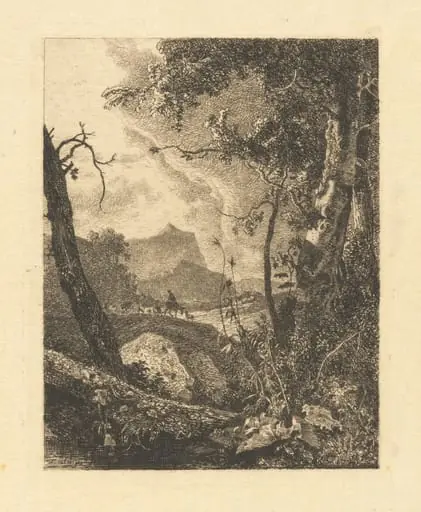 Italian Landscape
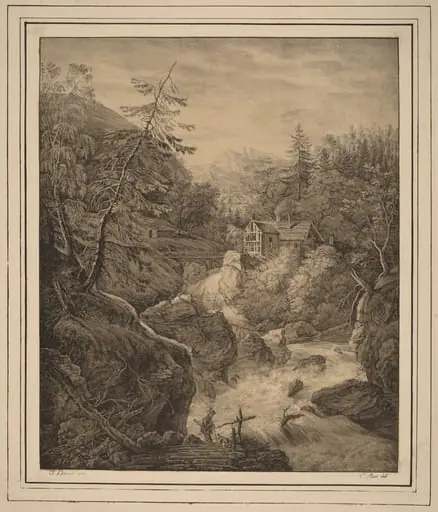 Waterfall
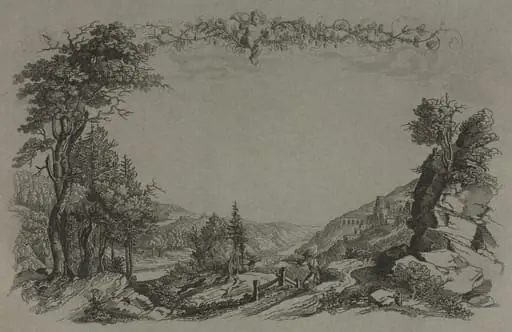 Six Views of Heidelberg Castle
 Six Views of Heidelberg Castle: Cover, Hunting Scene
 Landscape with Cows
 Moonlit Night (Mondnacht): pl. 4
 Intermezzo: Moonlit Night (Opus IV, 5)
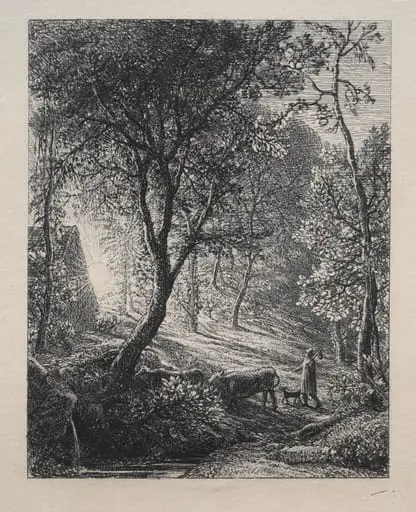 The Herdsman's Cottage
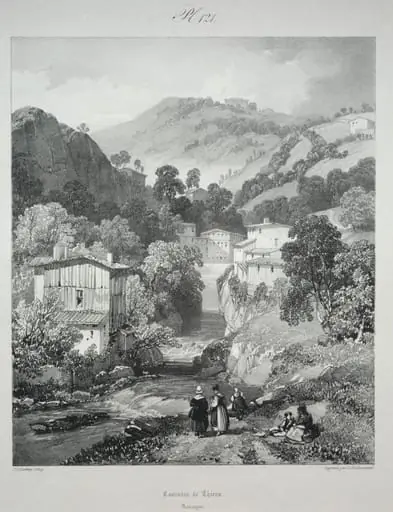 Voyages pittoresques et romantiques dans l'ancienne France. Auvergne: Cascades de Thiers
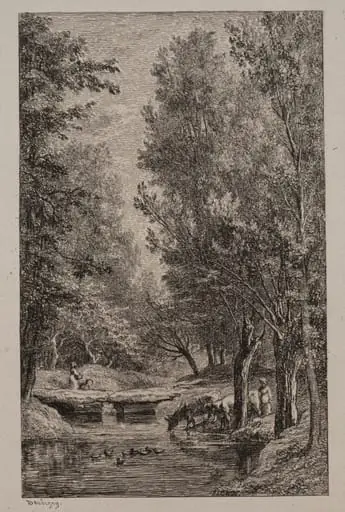 Brook in the Val Mondois
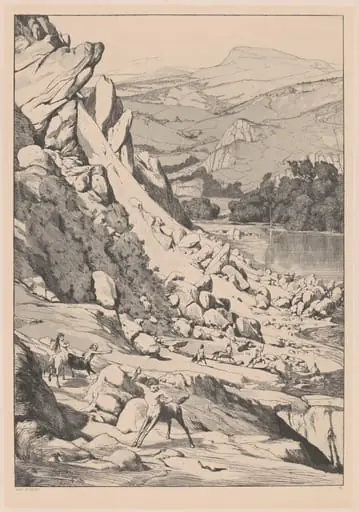 Landslide (Bergsturz)
 The Woman on the Hinny