Artwork
Early Spring at Damascus
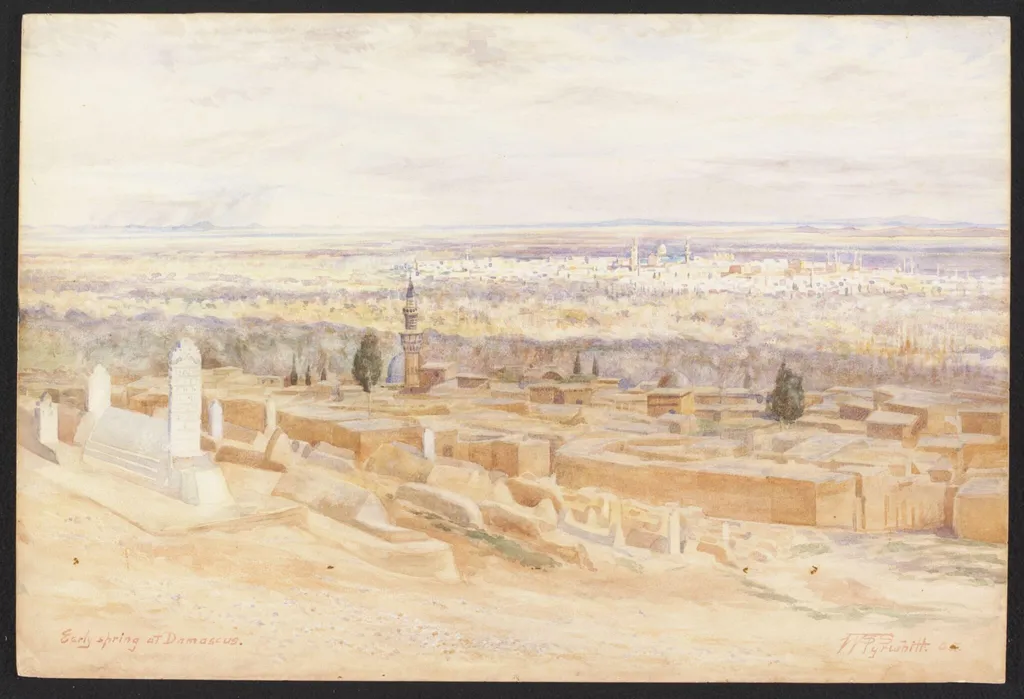
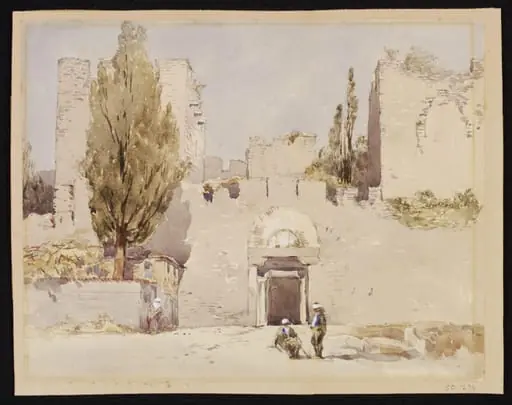
Early Spring at Damascus is a watercolor work on paper by the Impressionist artist Walter Spencer-Stanhope Tyrwhitt. It dates from 1905 and is held in the collection of the Victoria and Albert Museum.
About this work
Overview
Walter Spencer-Stanhope Tyrwhitt created this watercolour in 1905, capturing a quiet moment in Damascus during early spring. The work is part of the Victoria and Albert Museum’s collection and was originally produced as a preparatory study for publication. Its modest scale and restrained palette reflect its function as a documentary sketch rather than a finished exhibition piece.
Subject & Meaning
The composition suggests the quiet transition from winter to spring, with no human figures to disrupt the stillness.
The scene depicts a cluster of low stone buildings nestled among sparse trees, set against a pale desert sky. The composition suggests the quiet transition from winter to spring, with no human figures to disrupt the stillness. The focus on architecture and vegetation, rather than activity, conveys a sense of place rooted in observation rather than narrative, aligning with the travel literature of the era.
Technique & Style
Tyrwhitt employed a light, transparent watercolour technique, layering subtle washes of beige, ochre, and soft brown to suggest texture and depth. The brushwork is precise yet unobtrusive, with minimal detail in the buildings and delicate outlines for the trees. The muted palette and lack of strong contrast reflect a restrained, observational approach typical of topographical watercolours of the period.
History & Provenance
The watercolour was reproduced in D. S. Margoliouth’s 1907 travelogue, illustrating a passage on Damascus. It later entered the collection of Holder, a known collector of British watercolours. In February 1976, it was sold at Bonhams for thirty pounds alongside another work, indicating its status as a modestly valued item in the art market at the time before entering the V&A’s holdings.
Context
Tyrwhitt’s work emerged during a period when British artists and travellers documented the Middle East with increasing interest, often for scholarly or colonial purposes. His watercolour aligns with a tradition of topographical art that prioritized accuracy over romanticism, serving as visual evidence for publications and ethnographic study rather than personal expression.
Legacy
Though Tyrwhitt is not widely known today, this watercolour endures as a quiet record of early 20th-century Damascus, preserved for its historical and documentary value. Its inclusion in the V&A collection ensures its accessibility to researchers and those studying the intersection of art, travel, and cultural documentation in the late Ottoman period.
Artist & collection
Artist
Walter Spencer-Stanhope Tyrwhitt
Walter Spencer-Stanhope Tyrwhitt slipped off to Damascus around 1905, watercolours in hand, while most British folks that era were more likely to be found at the seaside.

 Grand Cairo
 Jerusalem from the Mount of Olives
 Jerusalem. Mount Moriah The Site Of The Temple now occupied by the Mosque of Omar
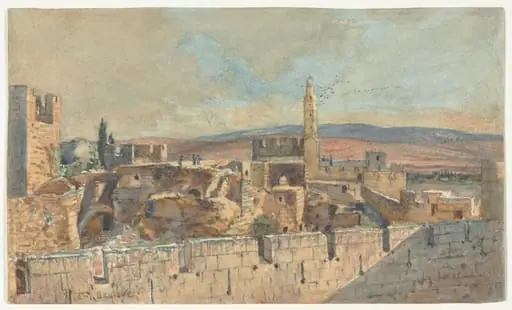 View of the Old City of Jerusalem
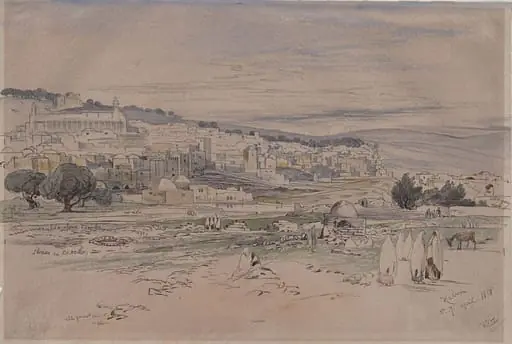 Hebron
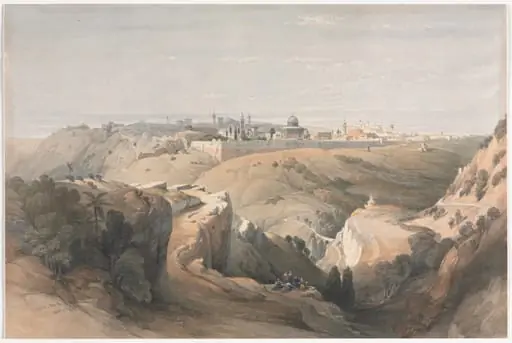 Jerusalem from the Mount of Olives
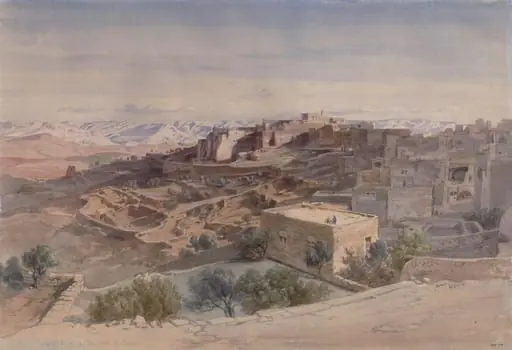 Bethlehem
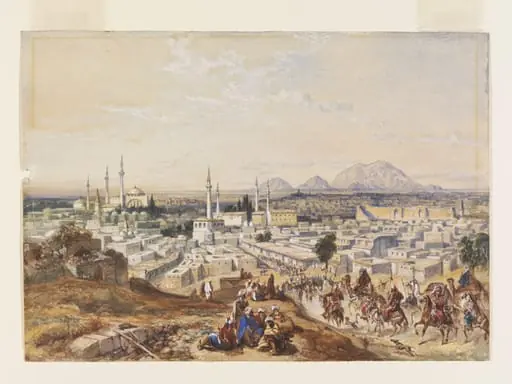 Iconium, Asia Minor
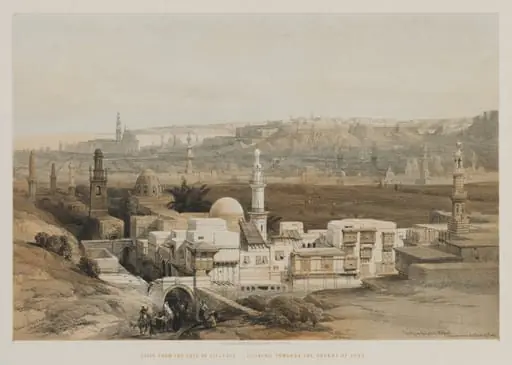 Egypt and Nubia, Volume III: Cairo from the Gate of Citzenib, Looking towards the Desert of Suez
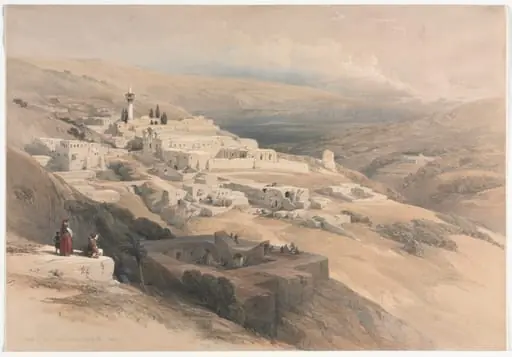 Convent of the Terra-Santa, Nazareth
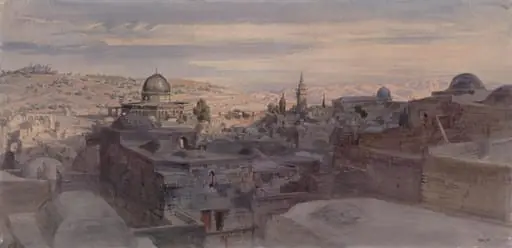 Jerusalem
 Entrance to the Cannon Gate (Top Kapisi) in Constantinople