Artwork
Worshipping Angels
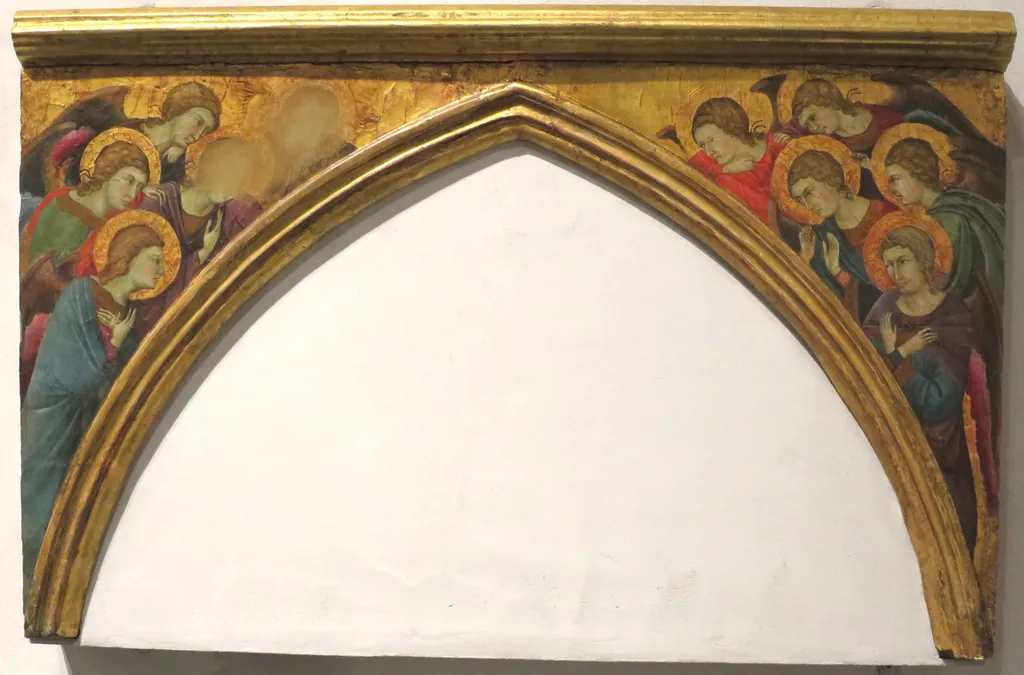
Worshipping Angels is a tempera painting by the Byzantine icon painting artist Ugolino di Nerio. It dates from 1325 and is held in the collection of the Los Angeles County Museum of Art.
About this work
Overview
Created in 1325 by Ugolino di Nerio, this tempera painting depicts a group of angels in reverent posture before a golden arch. Active in both Siena and Florence during the early 14th century, Ugolino was influenced by Duccio’s style and helped transmit Sienese aesthetic principles to Florentine religious art. The work is now part of the Los Angeles County Museum of Art’s collection.
Subject & Meaning
The painting portrays angels in prayer, their hands clasped in devotion, arranged symmetrically around a central gold arch. This composition reflects a devotional theme common in medieval Christian art, emphasizing celestial worship and the presence of divine order. The angels serve as intermediaries between the earthly and the sacred, reinforcing liturgical ideals of reverence.
Technique & Style
Executed in tempera on panel, the work employs fine brushwork and layered pigments to achieve subtle tonal transitions and delicate texture.
Executed in tempera on panel, the work employs fine brushwork and layered pigments to achieve subtle tonal transitions and delicate texture. The gold background, typical of Byzantine traditions, enhances the spiritual atmosphere, while the angels’ colorful robes and gilded halos add rhythmic variation. The figures are stylized, with elongated forms and restrained gestures characteristic of early Sienese painting.
History & Provenance
Ugolino di Nerio produced this panel during a period of active collaboration between Sienese and Florentine workshops, likely for a church or private chapel. Its movement to the United States occurred in the 20th century, and it entered LACMA’s collection through documented acquisition. No earlier ownership records are publicly detailed beyond its attribution to Ugolino’s documented activity between 1317 and 1327.
Context
This work emerged during a time when Italian painters were refining religious imagery beyond rigid Byzantine models, yet retained their symbolic language. Ugolino’s adaptation of Duccio’s softer modeling and spatial awareness reflects a transitional phase in Italian art, where emotional expression began to emerge within traditional frameworks of iconography.
Legacy
Though Ugolino di Nerio’s oeuvre is limited, his contributions helped bridge Sienese and Florentine traditions in early 14th-century painting. *Worshipping Angels* exemplifies the devotional intensity and technical precision of minor masters who sustained the visual language of sacred art before the full rise of naturalism in the Renaissance.
Artist & collection
Artist
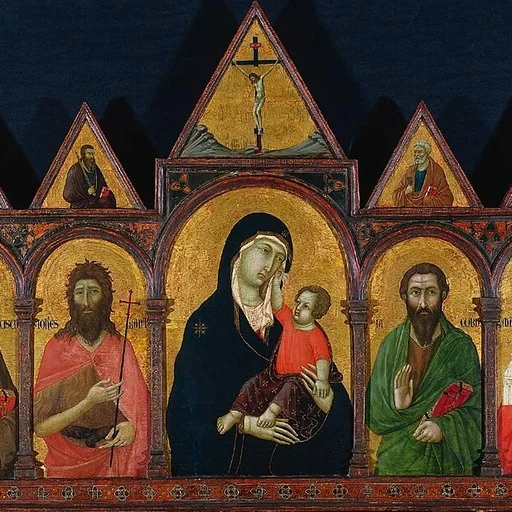
Ugolino di Nerio (1280? – 1349) was an Italian painter active in his native city of Siena and in Florence between the years 1317 and 1327. He was a follower of Duccio di Buoninsegna, from whose Maestà some of his…

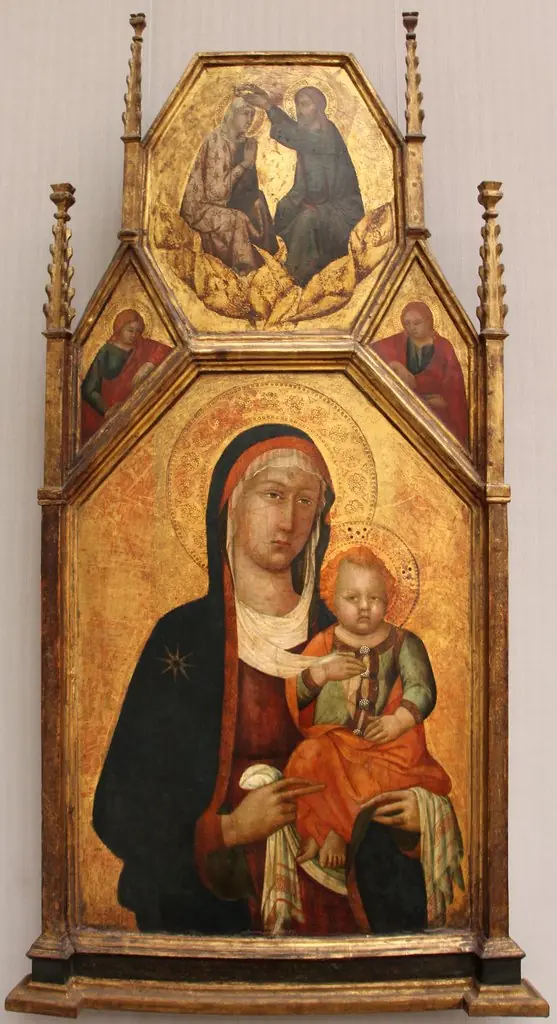 Maria mit dem Kind
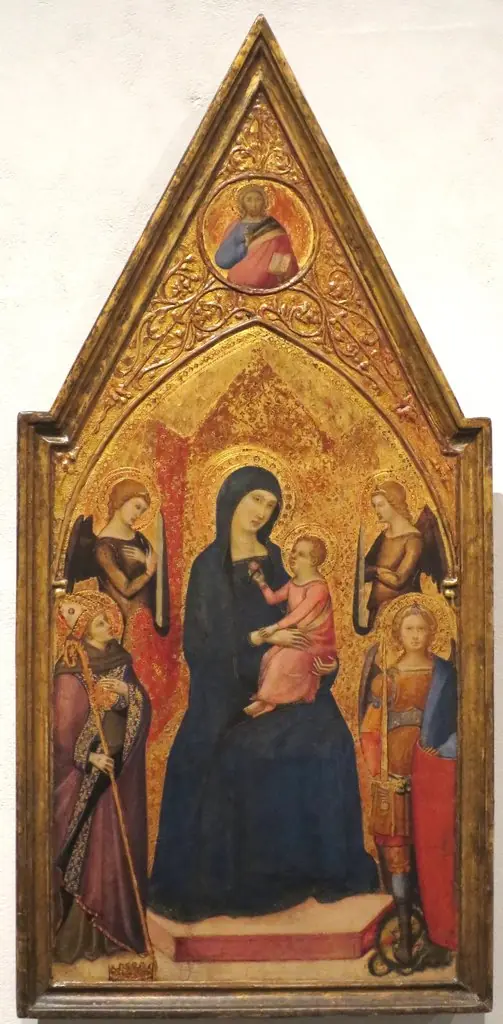 Virgin and Child with Sts. Louis of Toulouse and Michael
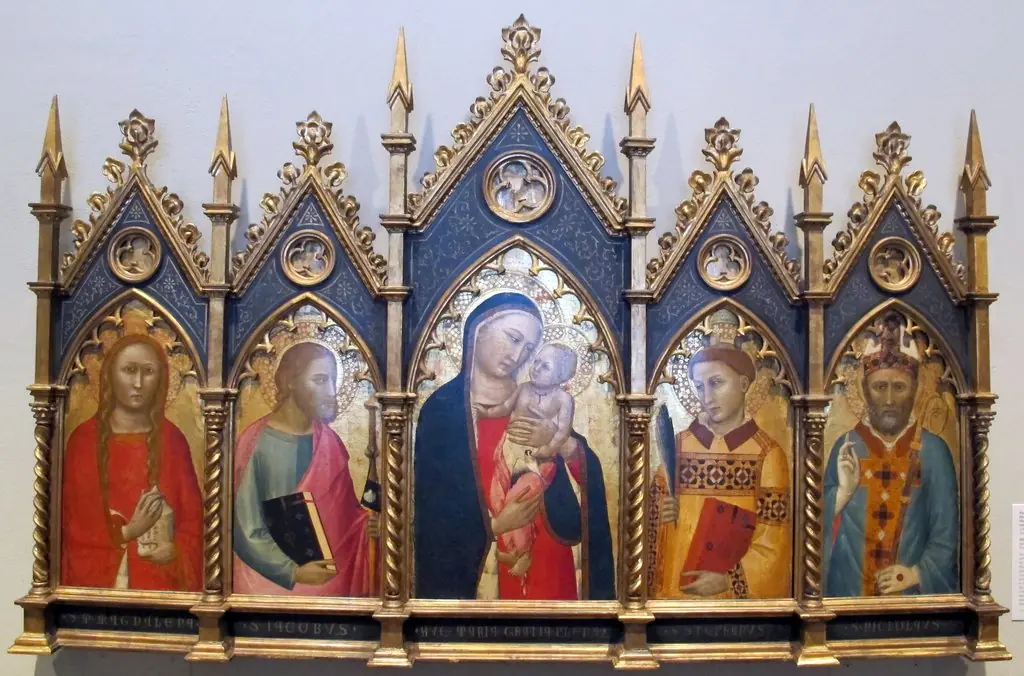 Virgin and Child, with Saints Mary Magdalene, James Major, Stephen, and a Bishop Saint
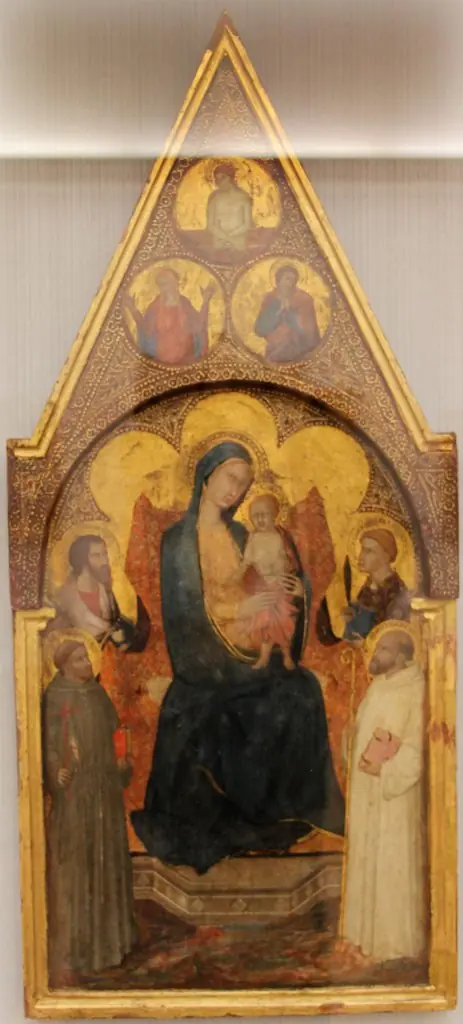 Thronende Maria mit dem Kind und vier Heiligen
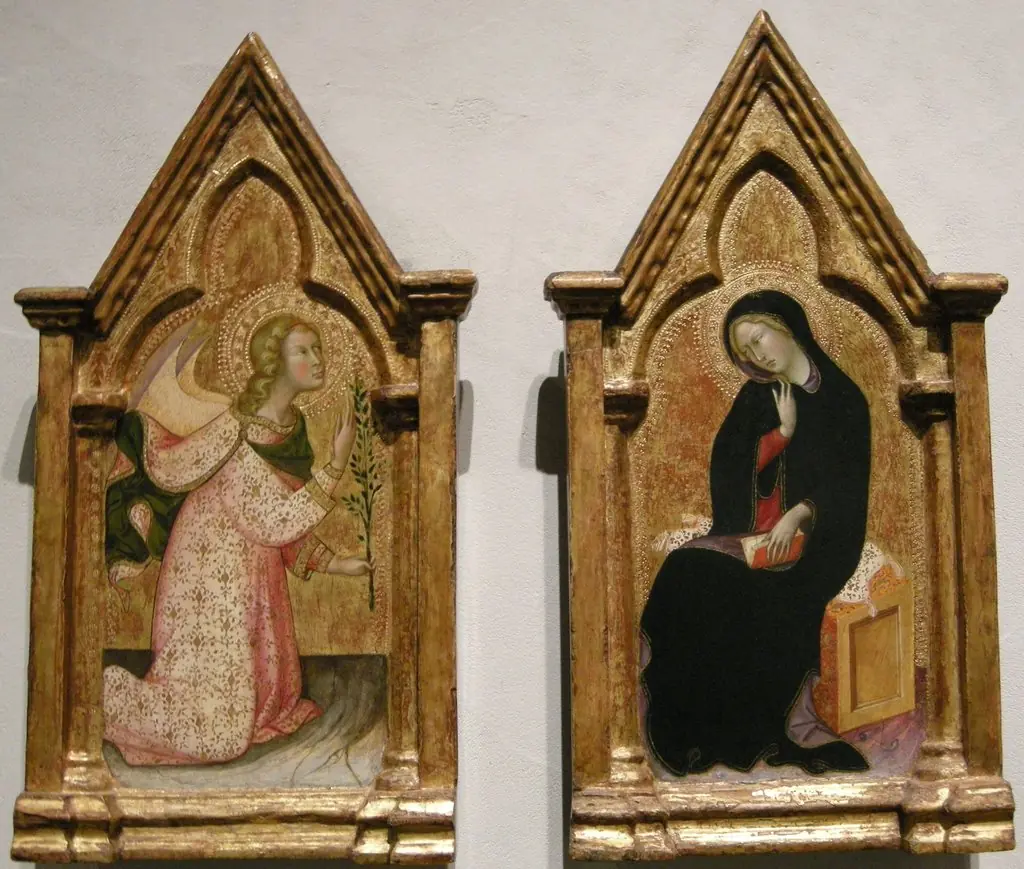 Untitled
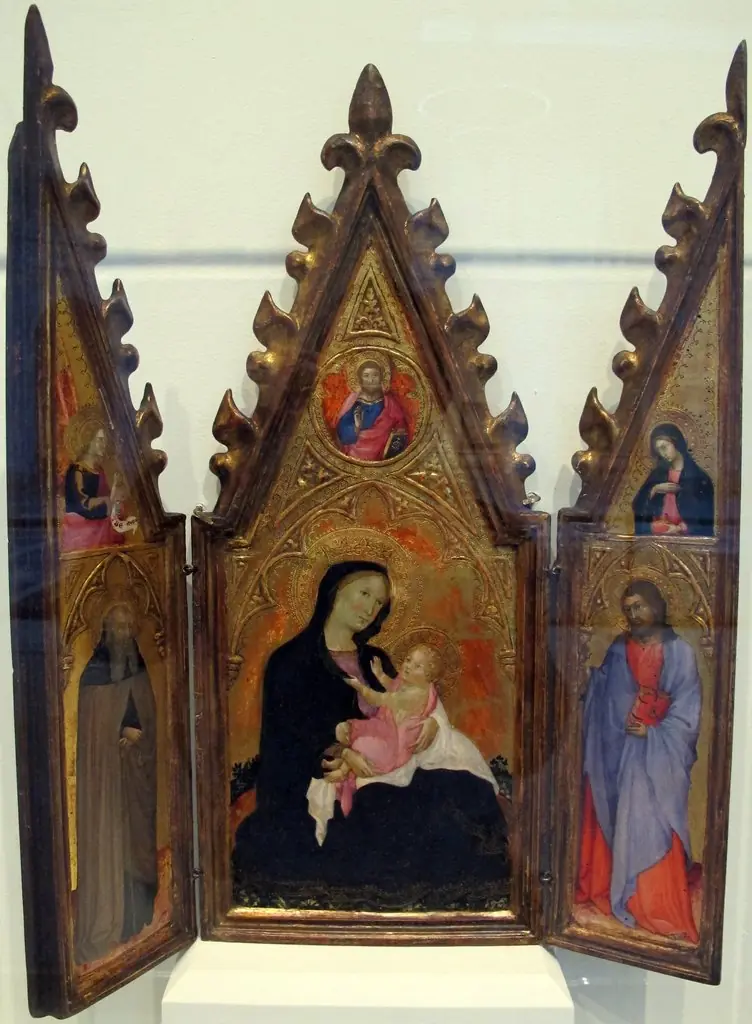 trittico con madonna dell'umiltà, ss. antonio abate jacopo
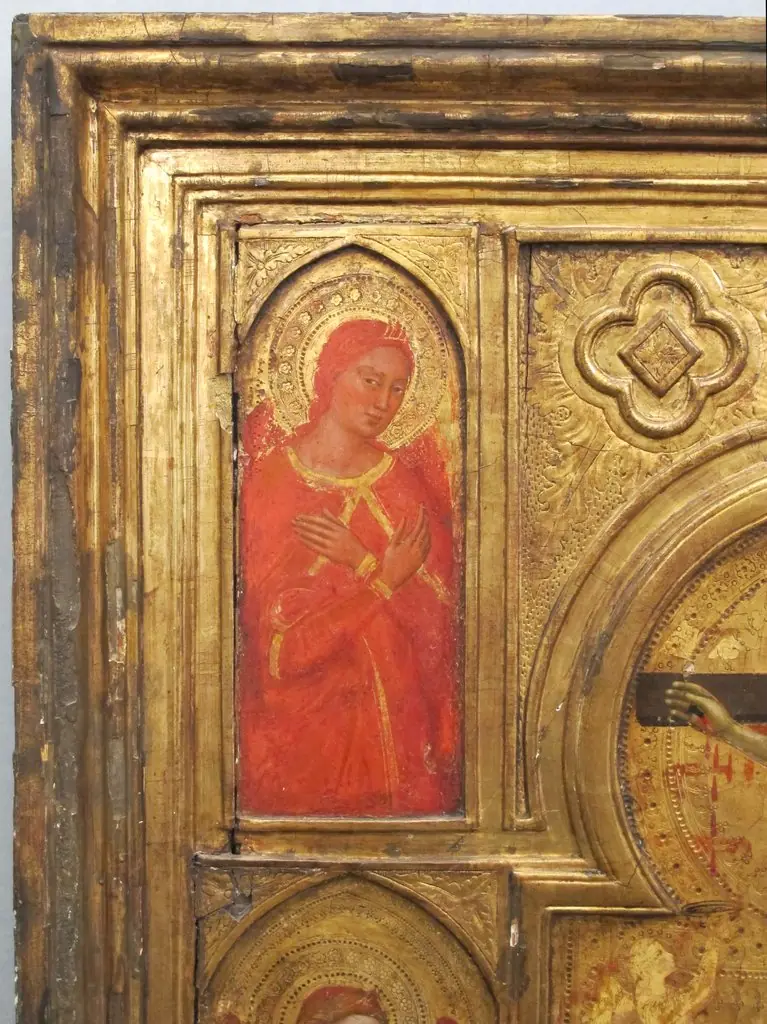 Six Angels
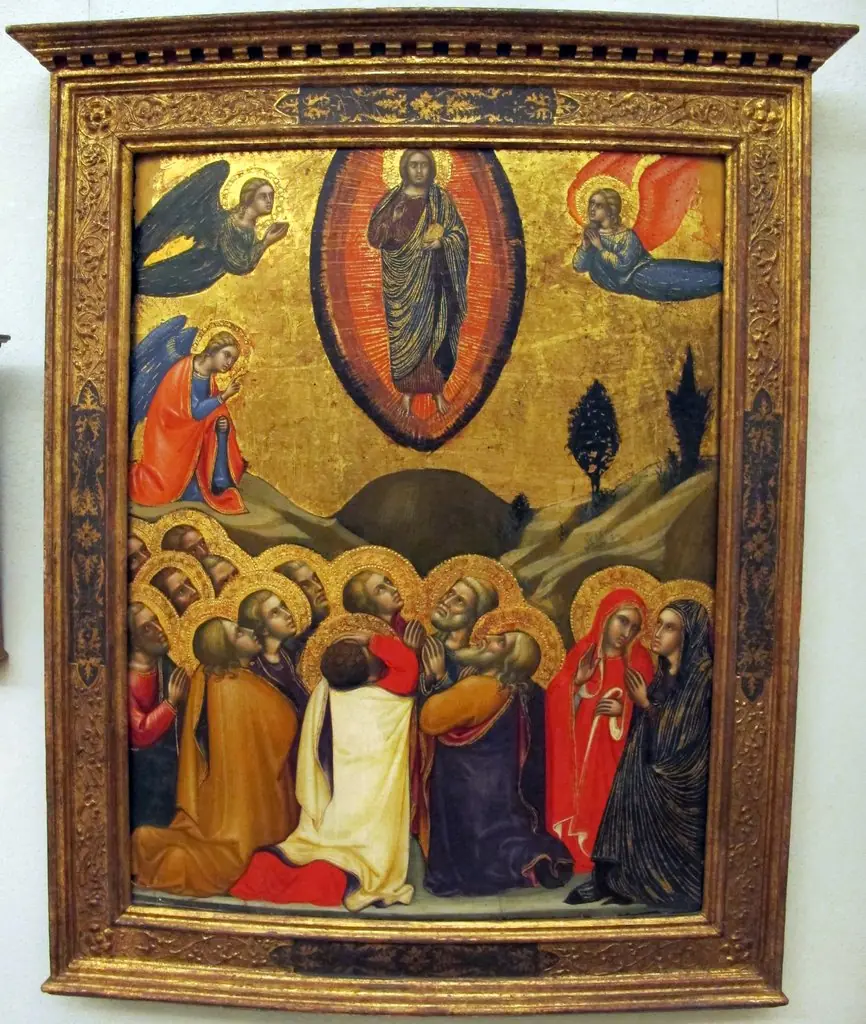 ascensione
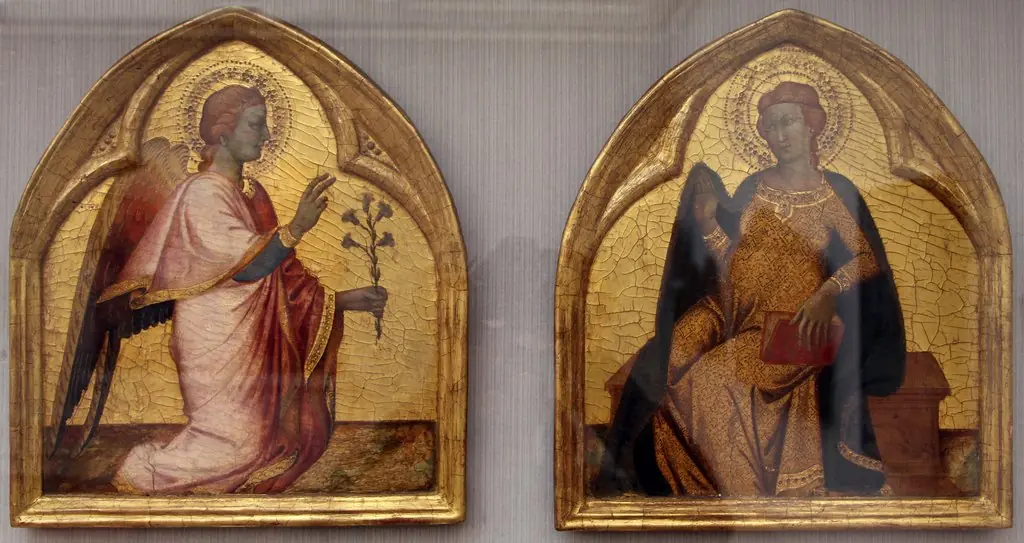 Angel of the Annunciation
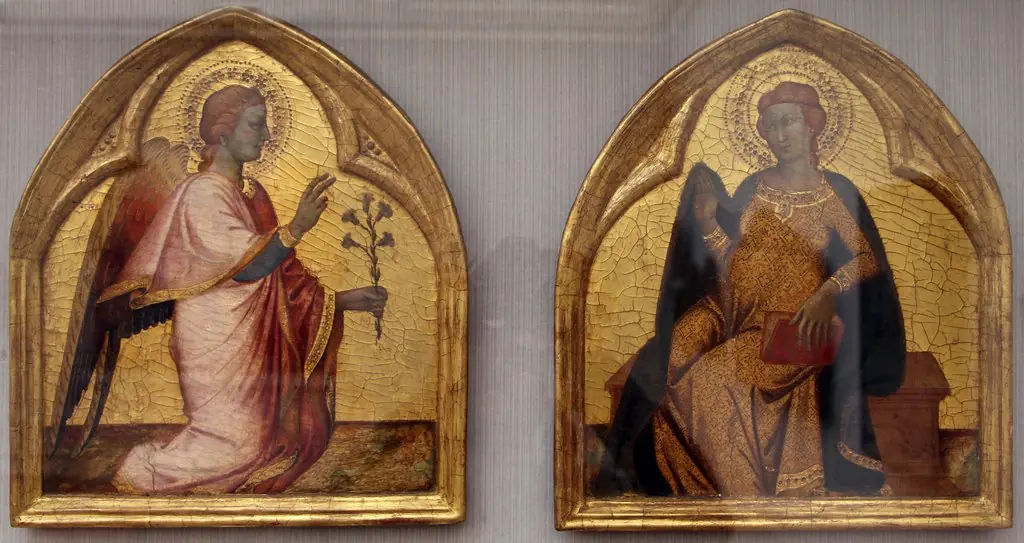 Mary of the Annunciation
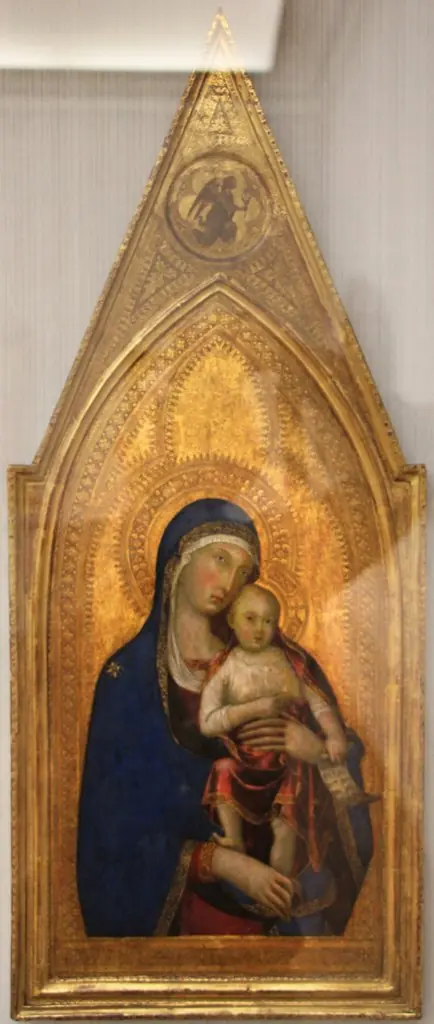 Maria mit dem Kind
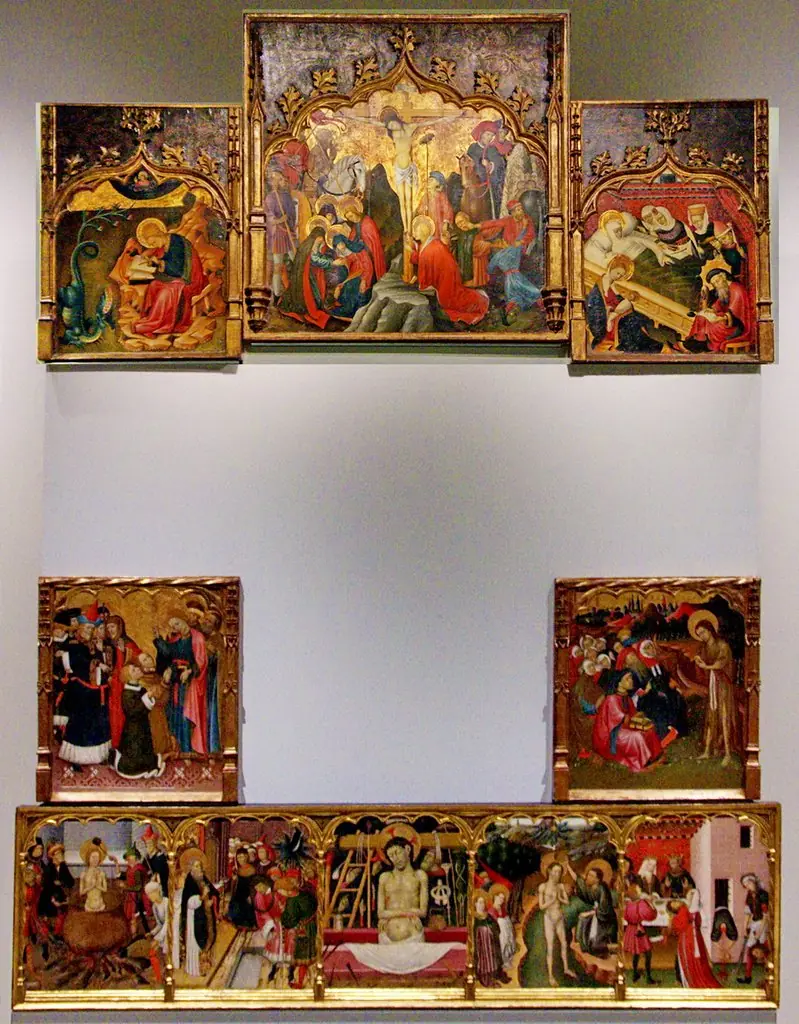 Altarpiece of the Saints John