Artwork
Aiolos, Personification of Wind
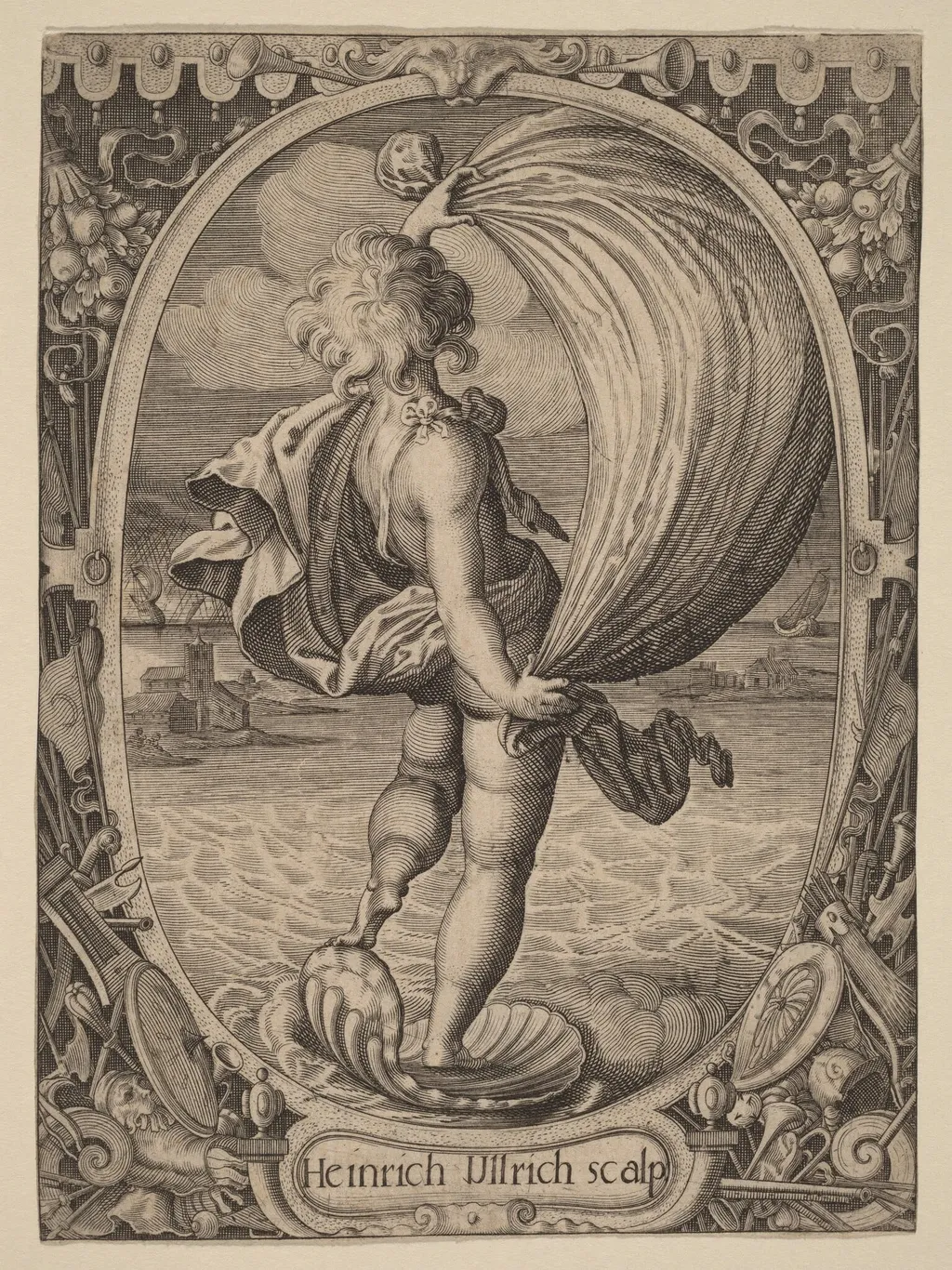
Aiolos, Personification of Wind is an ink print by the Renaissance artist Heinrich Ulrich. It dates from 1596 and is held in the collection of the National Gallery of Art.
About this work
Overview
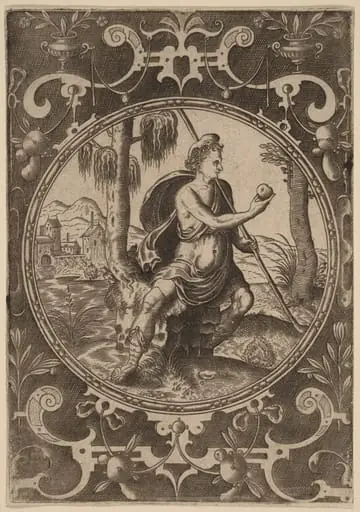
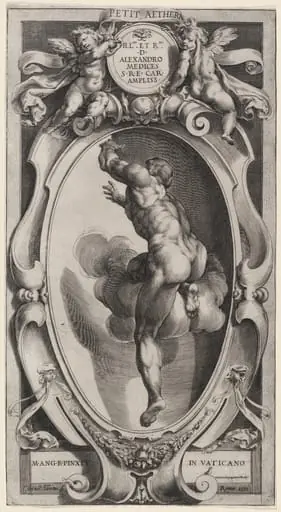
Heinrich Ulrich’s 1596 engraving, titled Aiolos, Personification of Wind, depicts a classical figure embodying the gusts of air. Rendered on laid paper, the print presents a dynamic composition in which the central figure stands upon a shell, clutching a globe, while a billowing drapery trails behind him, suggesting the invisible force he represents.
Subject & Meaning
The work personifies the mythic wind deity Aiolos, traditionally associated with the control of breezes. By placing the figure on a shell and holding a globe, Ulrich links the element of wind to both maritime travel and the wider world, underscoring the pervasive influence of air on navigation and geography.
Technique & Style
Ulrich employs fine cross‑hatching to model forms and convey depth, especially in the turbulent folds of the fabric and the rippling water. The contrast of dense lines against lighter areas creates a sense of movement, while the crisp delineation of ships and distant architecture adds spatial complexity to the scene.
History & Provenance
Created in the late sixteenth century, the engraving reflects the Renaissance fascination with classical allegory and scientific curiosity. It survives on laid paper, a common support for prints of the period, and has been documented in several European collections of early modern graphic art.
Context
During the 1590s, artists frequently merged mythological subjects with contemporary themes such as exploration and trade. Ulrich’s depiction of Aiolos aligns with this trend, integrating symbols of global commerce—the globe and seafaring vessels—into a traditional allegorical framework.
Artist & collection