Artwork
Saturn
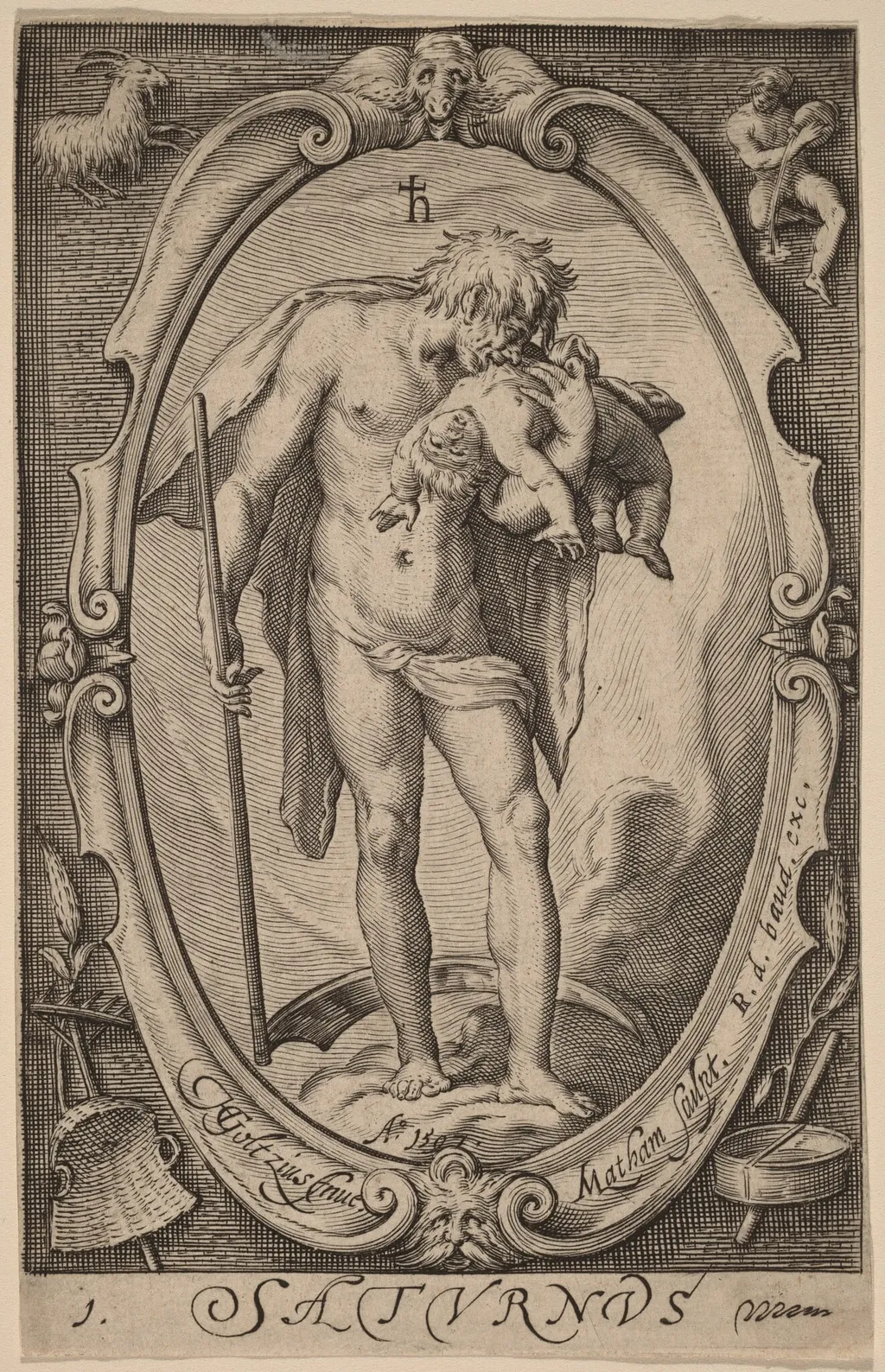
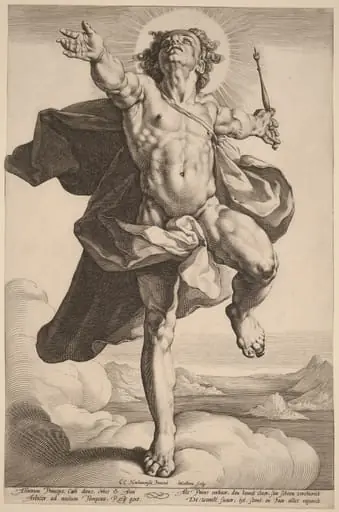
Saturn is an ink print by the Renaissance artist Jacob Matham. It dates from 1597 and is held in the collection of the National Gallery of Art.
About this work
Overview
Rendered in fine linear detail on paper, the work belongs to the Northern Renaissance tradition of mythological prints.
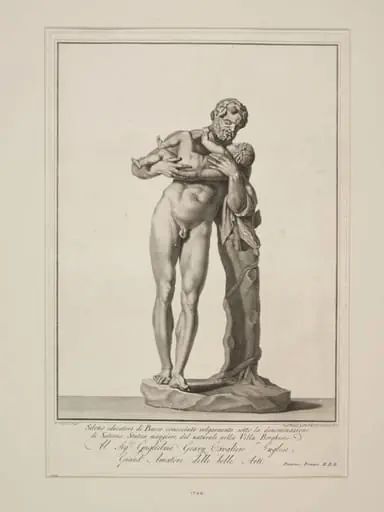
Created in 1597 by Jacob Matham, this engraving depicts a solitary male figure holding a scythe and an infant. Rendered in fine linear detail on paper, the work belongs to the Northern Renaissance tradition of mythological prints. The composition centers on a nude, bearded man with draped loincloth, set against a shadowed, minimally defined background that heightens the figure’s isolation and symbolic weight.
Subject & Meaning
The figure is understood as Saturn, the Roman god of time and agriculture, often conflated with the Greek Cronus. His scythe references the harvesting of time, while the infant in his arms alludes to the myth of devouring his children to prevent their rise—a metaphor for time’s inevitable consumption of all things. The pose, contemplative and heavy, suggests both authority and fatalism, reinforcing the cyclical, inescapable nature of temporal power.
Technique & Style
Matham employed precise engraving tools to carve fine, controlled lines into a metal plate, producing sharp contrasts between light and dark. The figure’s musculature and drapery are rendered with subtle gradations, while the background remains sparse, using faint, directional strokes to imply depth without distraction. This restrained approach reflects the Northern Renaissance emphasis on clarity, intellectual symbolism, and technical mastery over theatricality.
History & Provenance
The print was made during Matham’s early career, likely in Haarlem, where he worked under the influence of his stepfather, Hendrick Goltzius. It was part of a broader wave of mythological engravings circulating among educated collectors in the late 16th century. No definitive early ownership records survive, but its stylistic alignment with Goltzius’s circle suggests it was produced for a humanist audience familiar with classical allegory.
Context
In late 16th-century Northern Europe, classical mythology was frequently reinterpreted through a moral or philosophical lens. Saturn’s dual role as a destructive and generative force resonated with contemporary anxieties about time, mortality, and divine order. Engravings like this served as visual meditations, bridging humanist scholarship and popular iconography in an era of religious upheaval and intellectual renewal.
Legacy
Matham’s engraving contributed to the enduring visual language of Saturn in early modern art, influencing later depictions of time as a grim, paternal figure. Though not widely reproduced, its restrained symbolism and technical precision mark it as a thoughtful example of Northern Renaissance printmaking, valued for its intellectual depth rather than popular appeal.
Artist & collection