Artwork
Moon
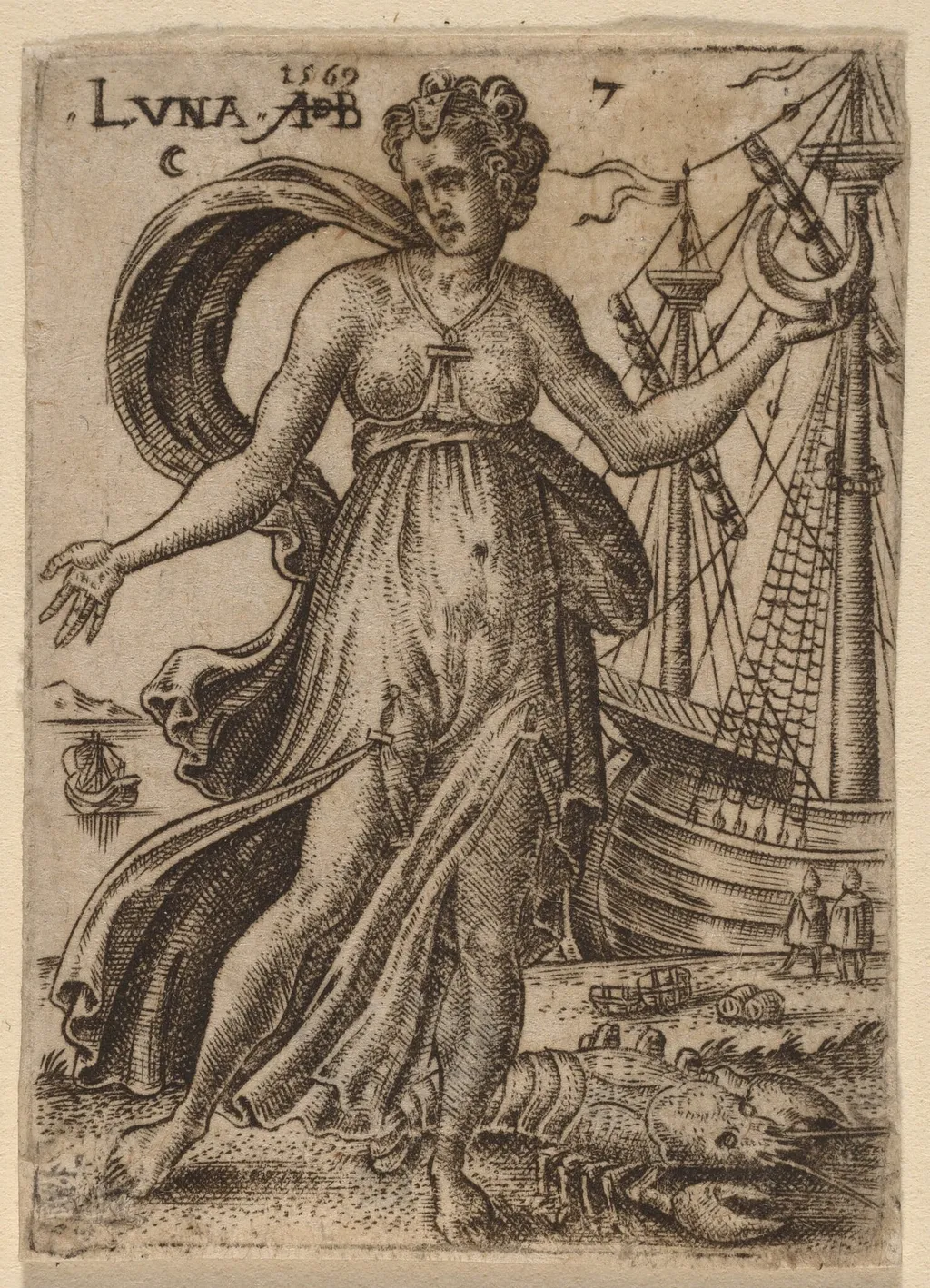
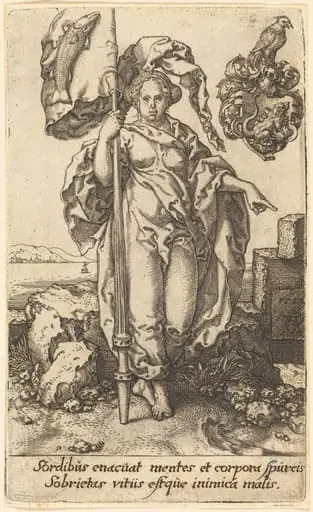
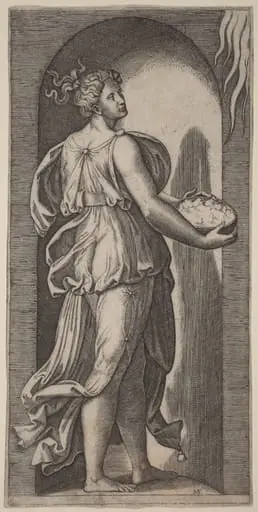
Moon is an ink print by the Renaissance artist Abraham de Bruyn. It dates from 1569 and is held in the collection of the National Gallery of Art.
About this work
Overview
Abraham de Bruyn's 1569 print, Moon, is an etching and engraving on laid paper, depicting a serene yet powerful female figure associated with lunar themes.
Subject & Meaning
The subject, labeled 'Luna' at the top, is a woman with flowing hair and a long dress, holding a ship and a horn-like object. Her calm, authoritative pose, with one arm raised, suggests guidance or control over the maritime scene behind her, featuring a small boat and a larger ship near shore.
Technique & Style
The print showcases de Bruyn's use of etching and engraving techniques, which allowed for the creation of sharp, detailed lines. Etching involves corroding metal plates with acid to create designs, while engraving uses direct carving, combining here to achieve intricate, high-contrast imagery.
History & Provenance
Created in 1569, specific details about the print's provenance and historical context of creation are not provided in the available information.
Context
The work reflects Renaissance interests in classical mythology and allegory, with 'Luna' referencing the Roman moon goddess. The nautical elements may symbolize the moon's influence on tides.
Legacy
While specific legacy details of 'Moon' are not provided, de Bruyn's works contributed to the development of Northern European printmaking in the 16th century.
Artist & collection