Artwork
Hermes
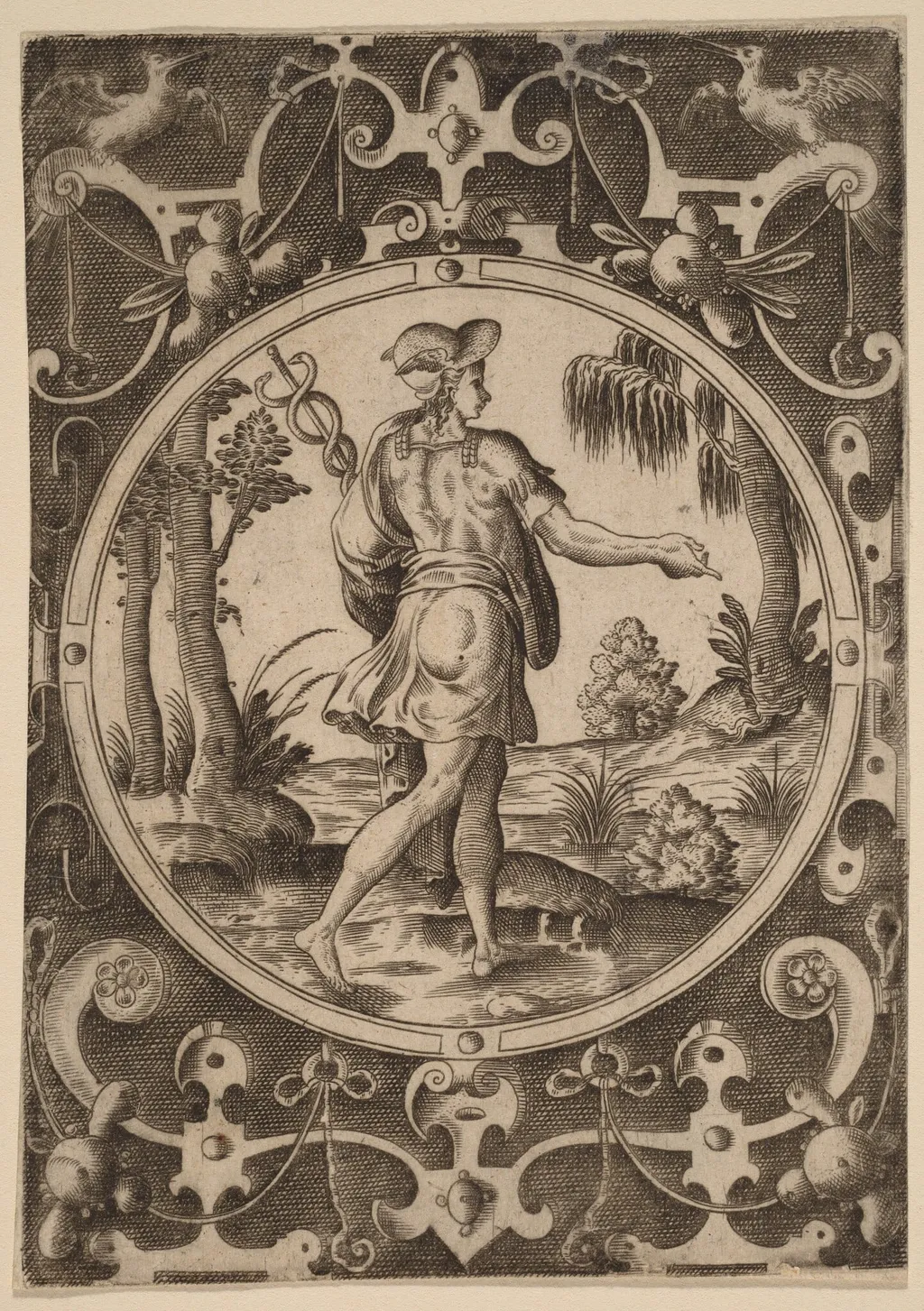
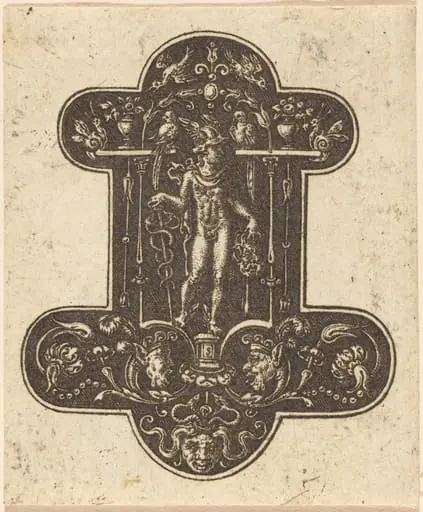
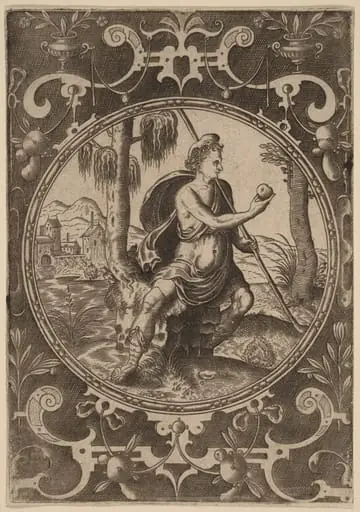
Hermes is an ink print by the Renaissance artist Netherlandish 16th Century. It dates from 1564 and is held in the collection of the National Gallery of Art.
About this work
Overview
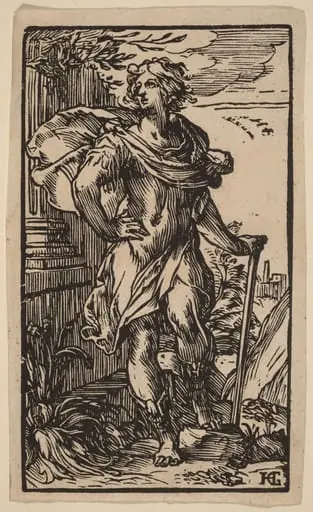
The work titled *Hermes* is an engraving executed on laid paper, presenting a monochrome image of a nude male figure crowned with a winged cap. He stands upon a craggy shoreline, clutching a staff in one hand while extending the other forward. The surrounding composition includes modest vegetation—a small tree and assorted foliage—framed by ornamental swirls that occupy the background.
Subject & Meaning
The central figure represents the Greek messenger god Hermes, identifiable by his winged headdress and caduceus‑like staff. His forward‑pointing gesture suggests movement and the transmission of messages, while the rugged coast may allude to his role as a guide for travelers and souls. The inclusion of natural elements reinforces his connection to the liminal spaces between the mortal and divine.
Technique & Style
The image is rendered through fine engraving, a process in which the artist incises lines into a metal plate that are then transferred onto paper. Cross‑hatching—overlapping sets of parallel lines—creates tonal variation, giving the figure volume and the surrounding landscape a sense of depth. The decorative swirls function as a patterned border, typical of early modern print design.
History & Provenance
Created as a print, the piece was likely produced for distribution rather than as a unique artwork. While specific details of its date, workshop, or ownership are not recorded in the supplied information, the use of laid paper and the engraving technique place it within the broader tradition of European printmaking that flourished from the 16th to 18th centuries.
Artist & collection

Artist
This artist carved scenes with fine lines, mostly religious and mythological ones.