Artwork
Untitled
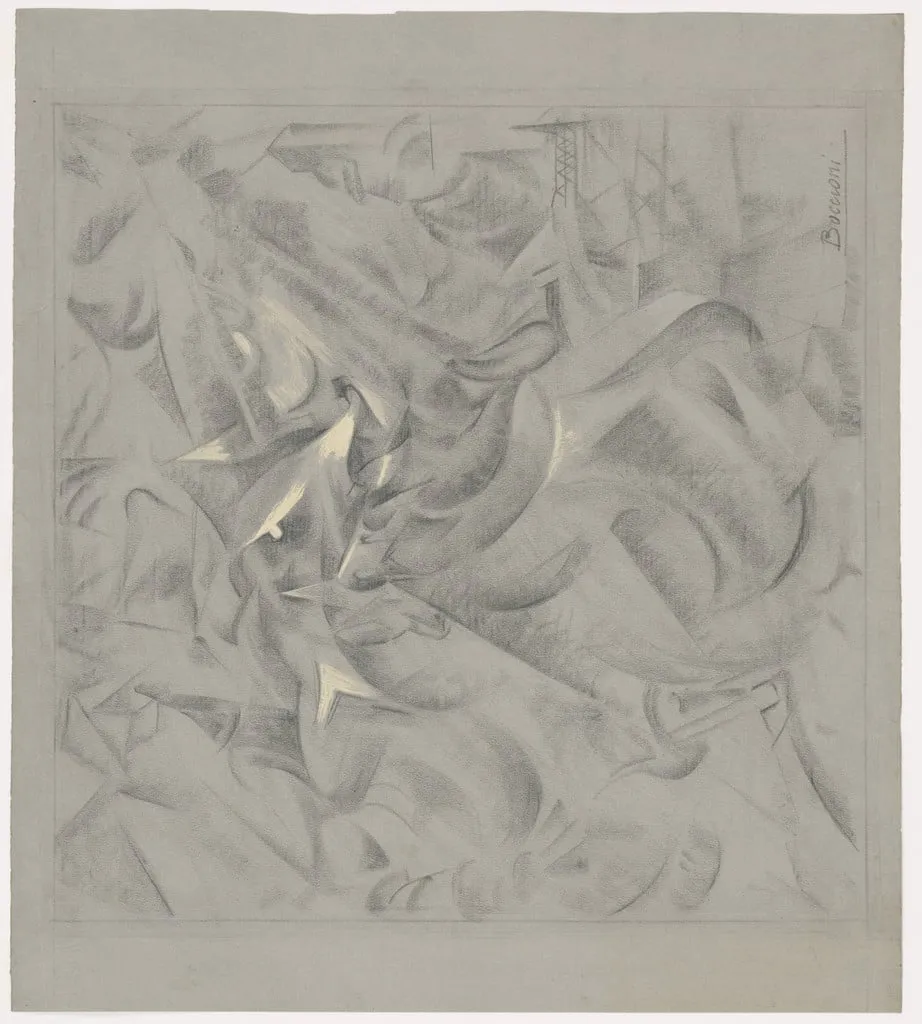
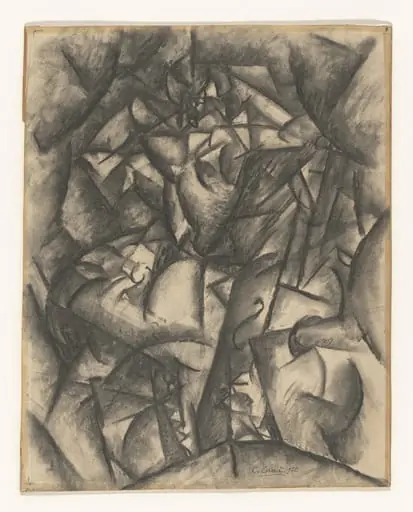
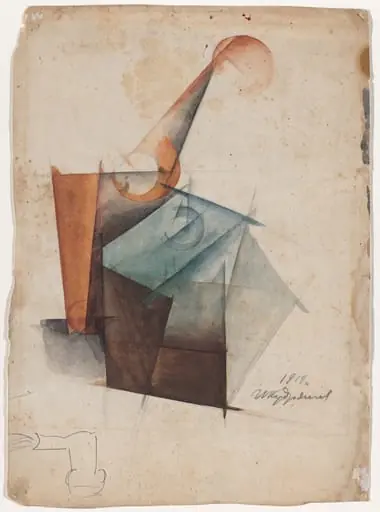
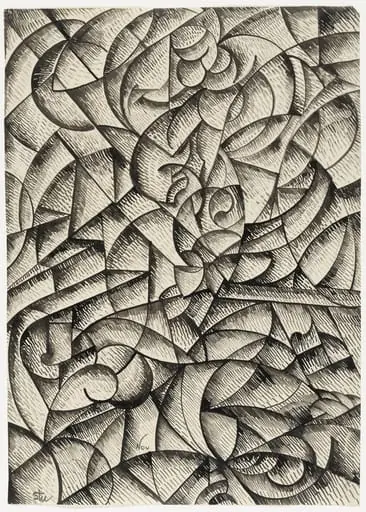
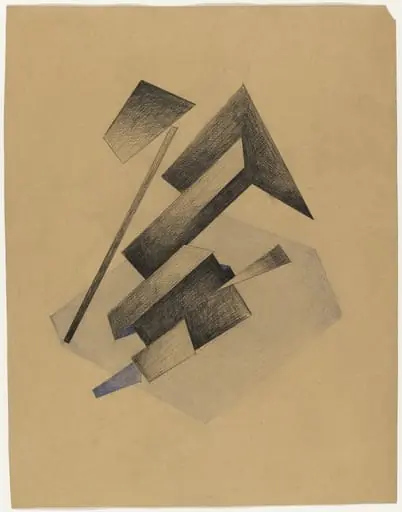
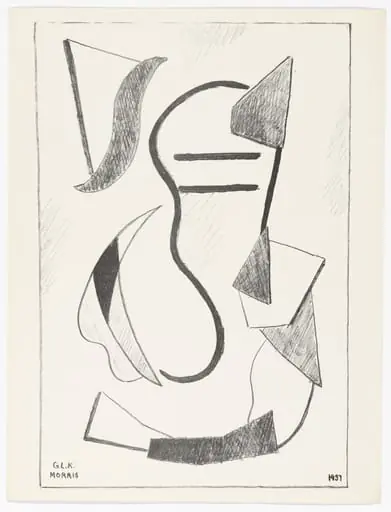
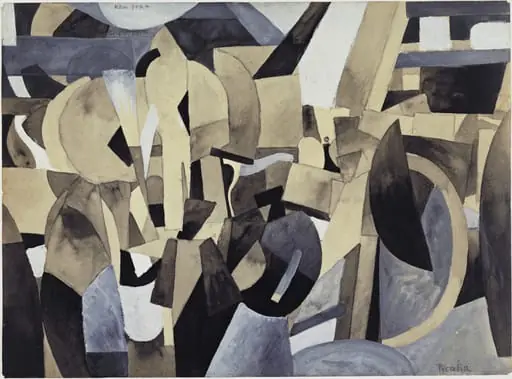
Untitled is a gouache drawing by Umberto Boccioni. It dates from 1912 and is held in the collection of the Museum of Modern Art.
About this work
Overview
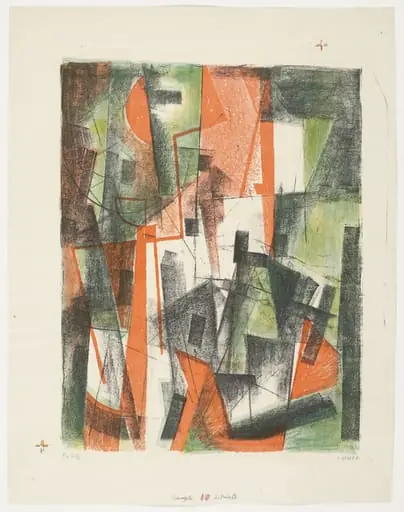
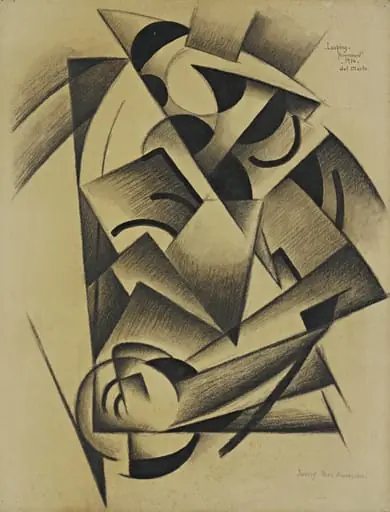
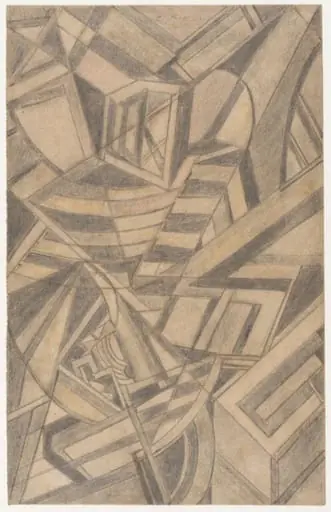
This drawing, executed in pencil and gouache on paper, dates to 1912 and is attributed to Umberto Boccioni. It resides in the collection of The Museum of Modern Art. Unlike finished paintings, the work retains the immediacy of a study, capturing motion through layered, unstable forms. The medium’s opacity allows for both transparency and boldness, contributing to its sense of unresolved energy.
Subject & Meaning
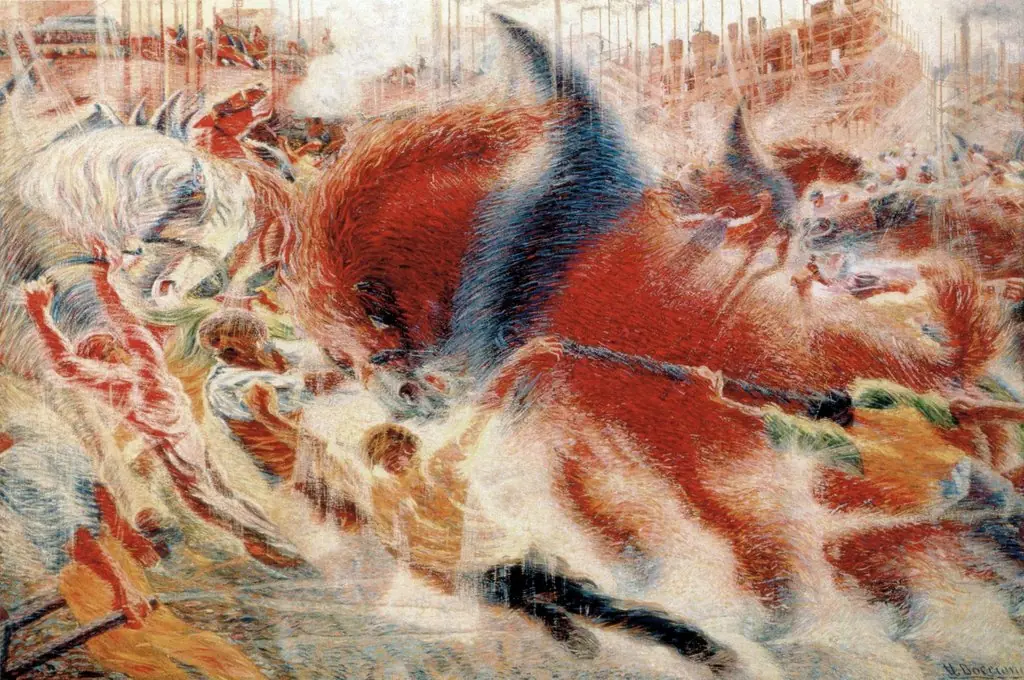
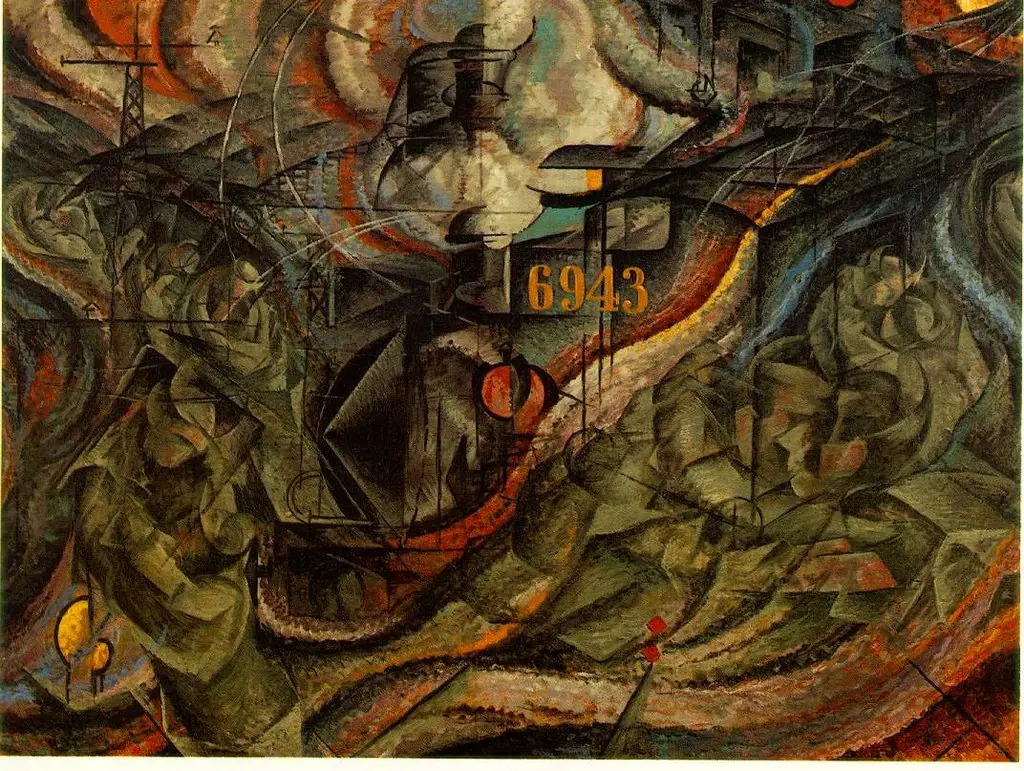
No identifiable figures or narrative are present. Instead, the composition suggests a collapse of form into pure dynamism—shapes blur between organic and mechanical, hinting at limbs, animals, or fragments of urban life. The absence of clear subject matter reflects Boccioni’s interest in expressing movement itself, rather than depicting static objects or scenes.
Technique & Style
Rapid, overlapping strokes in pencil and gouache create a sense of agitation. The gouache, applied thinly in places and more densely in others, produces areas of muted glow against a gray wash. Lines are provisional, never fully resolved, as if the artist was recording motion as it occurred. The lack of defined contours reinforces the instability of form central to Futurist aesthetics.
History & Provenance
Created during Boccioni’s most active Futurist period, the work likely emerged from his experiments with capturing motion in two dimensions.
Created during Boccioni’s most active Futurist period, the work likely emerged from his experiments with capturing motion in two dimensions. It entered The Museum of Modern Art’s collection in the mid-20th century, among early acquisitions of Italian avant-garde works. Its status as a drawing, rather than a painting, underscores its role as a process-oriented artifact rather than a final statement.
Context
Made in the wake of Boccioni’s 1911 manifesto on Futurist painting, this piece aligns with the movement’s rejection of stillness and tradition. Contemporary scientific studies of motion and the rise of industrial speed influenced his approach. Here, the chaos of lines and forms mirrors the perceived disorder of modern life, rejecting classical composition in favor of visceral dynamism.
Legacy
Though less known than his sculptures or larger canvases, this drawing exemplifies Boccioni’s commitment to translating movement into visual language. It influenced later abstract and expressionist practices that prioritized gesture over representation. Its raw, unfinished quality continues to be studied as a key example of how Futurism translated theoretical ideals into intimate, experimental works.
Artist & collection

Artist
Umberto Boccioni was an influential Italian painter and sculptor. He helped shape the revolutionary aesthetic of the Futurism movement as one of its principal figures. Despite his short life, his approach to the…

![Mia madre che lavora [My Mother Working], by Umberto Boccioni](https://artifactworldgallery.com/img/umberto-boccioni--mia-madre-che-lavora-my-mother-working--ce84f1205dd9eec1-w320.webp)
![Woman Reading [Donna che legge], by Umberto Boccioni](https://artifactworldgallery.com/img/umberto-boccioni--woman-reading-donna-che-legge--d9496ecdedc4f414-w320.webp)
![Periphery [Periferia], by Umberto Boccioni](https://artifactworldgallery.com/img/umberto-boccioni--periphery-periferia--ea91379039261e85-w320.webp)