Artwork
Untitled
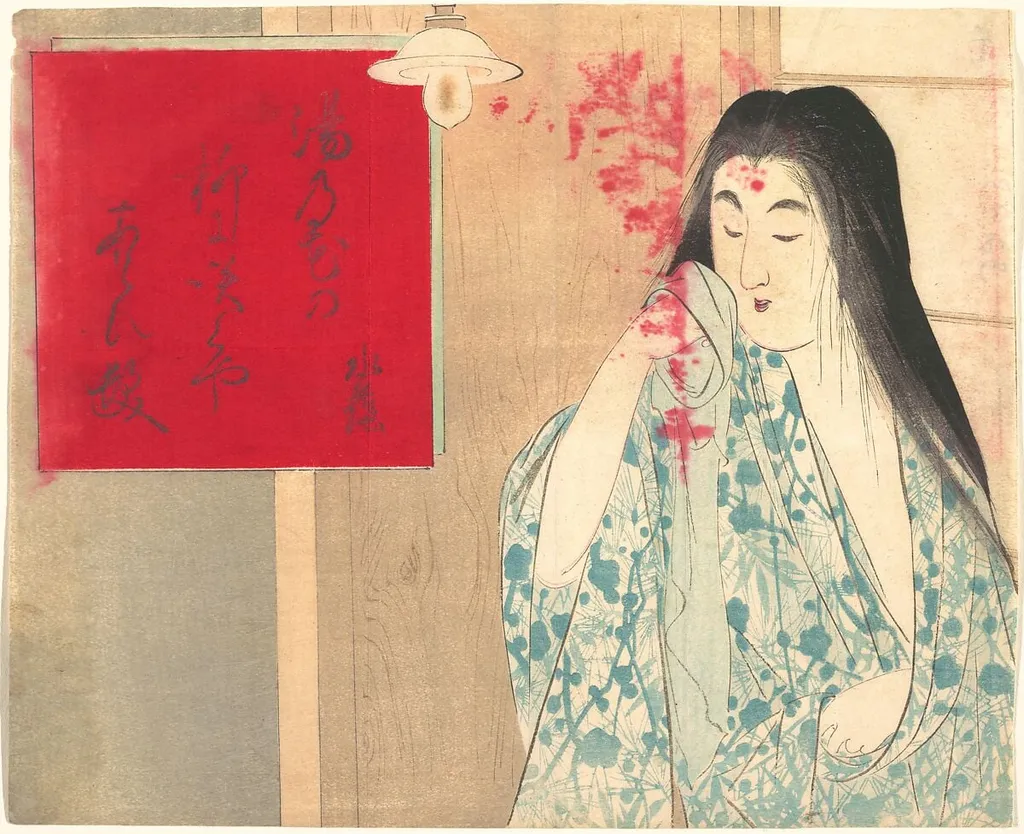
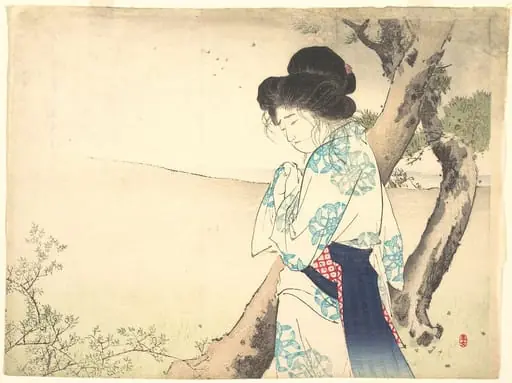
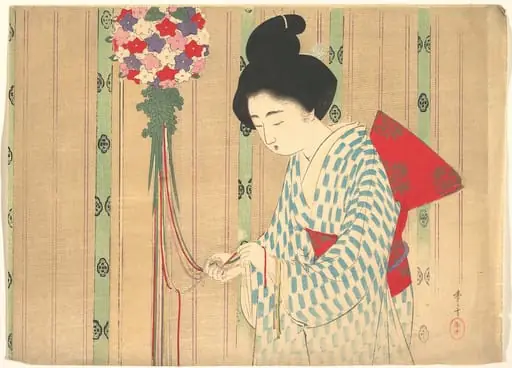
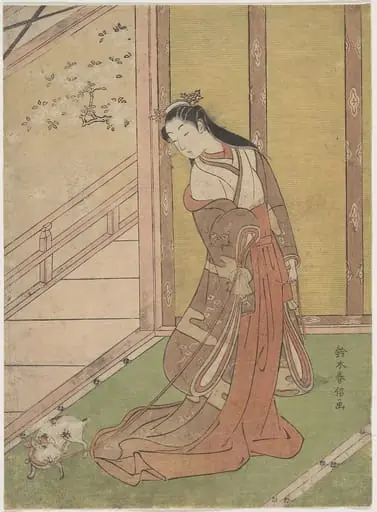
Untitled is an ink print by the Impressionist artist Unknown. It dates from 1906 and is held in the collection of the Metropolitan Museum of Art. This woodblock print on paper depicts a solitary woman in a light blue kimono adorned with floral motifs.
About this work
Overview
The composition conveys quiet introspection through restrained color and balanced forms, characteristic of early 20th-century Japanese printmaking.
This woodblock print on paper depicts a solitary woman in a light blue kimono adorned with floral motifs. She stands before a plain wooden wall, her right hand gently raised near her face. Above her, a white lantern hangs beside a red rectangular panel bearing Japanese script. The composition conveys quiet introspection through restrained color and balanced forms, characteristic of early 20th-century Japanese printmaking.
Subject & Meaning
The figure’s poised gesture and stillness suggest inward reflection, possibly evoking themes of solitude or quiet ritual. The red panel with text may reference a sign, poem, or personal inscription, anchoring the scene in a specific cultural context. The lantern, a traditional symbol of guidance or remembrance, adds a layer of temporal or spiritual resonance without overt narrative.
Technique & Style
The print employs fine woodblock carving to render delicate lines in the kimono’s floral pattern and soft gradations in the woman’s hair. Ink and color are applied with subtle tonal variation, avoiding bold contrasts. The flat planes of color and emphasis on surface detail reflect the influence of ukiyo-e traditions, while the intimate scale and mood align with modernist sensibilities of the era.
History & Provenance
Created during the early 1900s, this work emerged from a period when Japanese artists were redefining printmaking beyond commercial subjects. Though its exact origin and maker remain unverified, its style places it within the broader context of shin-hanga, a movement that revived traditional techniques for contemporary audiences, often emphasizing mood over spectacle.
Context
While sometimes misattributed to Western movements like Impressionism, this print belongs to Japan’s shin-hanga tradition, which sought to preserve handcrafted print methods amid industrialization. Its quiet composition contrasts with the dynamism of urban scenes common in Western modernism, instead reflecting Japanese aesthetic values of restraint, nature, and transient beauty.
Legacy
This print contributes to a body of work that helped sustain Japanese woodblock printing into the modern age. It exemplifies how traditional forms were adapted to express personal, contemplative themes rather than popular narratives. Its quiet presence continues to inform contemporary understandings of print as a medium for subtle emotional expression.
Artist & collection

 Domestic Scene
 Giacomo and Cardinal Marco, investing Andrea, Abbot of San Zeno, with his Benefice
 The Nymph of Fontainebleau
 Portrait of a Woman
 Madonna and Child with Saints in the Enclosed Garden
 Venus and Minerva
 Family Group of Four on Sofa
 Wall painting from Room H of the Villa of P. Fannius Synistor at Boscoreale
 Untitled
 Untitled
 Untitled
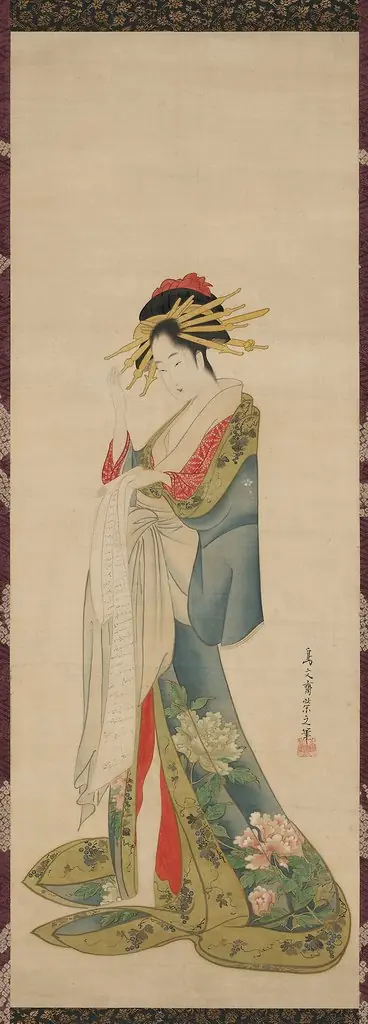 A Courtesan Reading a Letter
 Untitled
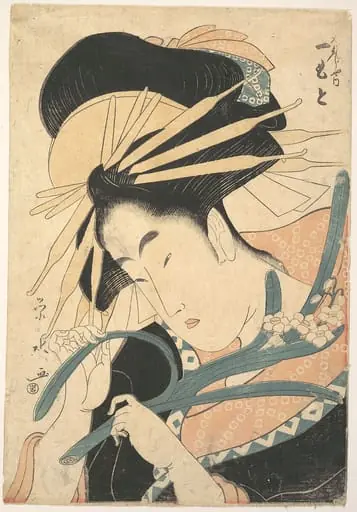 Untitled
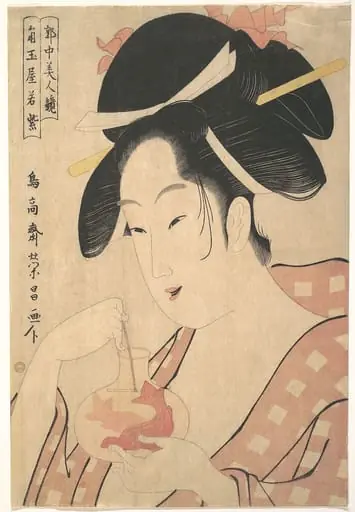
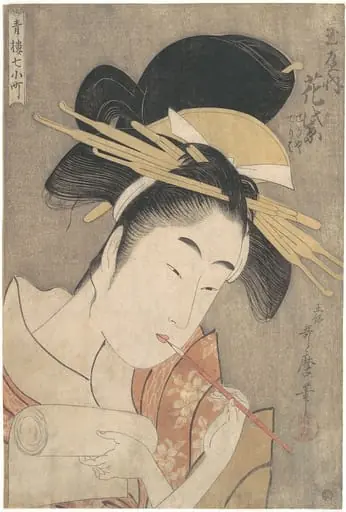 『青楼七小町』 「玉屋内花紫」|“Hanamurasaki of the Tamaya,” from the series Seven Komachi of the Pleasure Quarters (Seirō Nana Komachi)
 Untitled
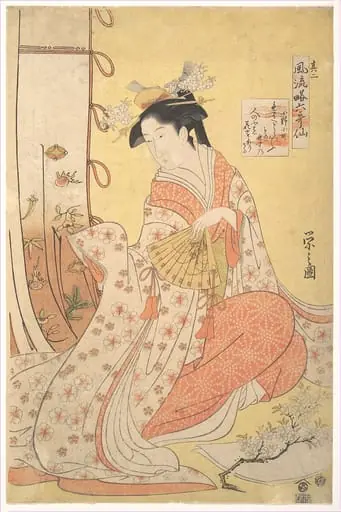 鳥文斎栄之画 「風流略六哥仙 其の二」小野小町|Ono no Komachi: Number Two (Sono ni), from the series Stylish Parodies of the Six Poetic Immortals (Fūryū yatsushi rokkasen)
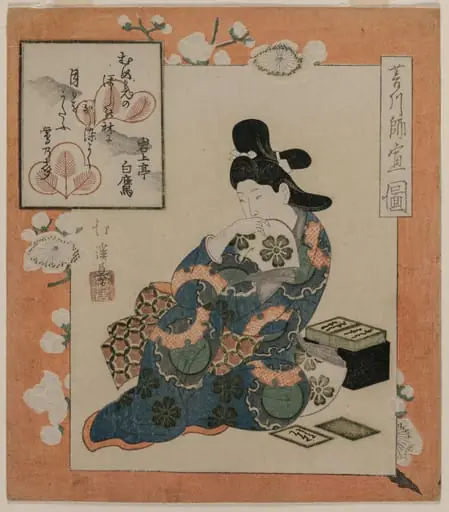 A Picture by Hishikawa Moronobu: Woman with a Set of Poem Cards
 Untitled
 Untitled