Artwork
Ambrogio Spinola
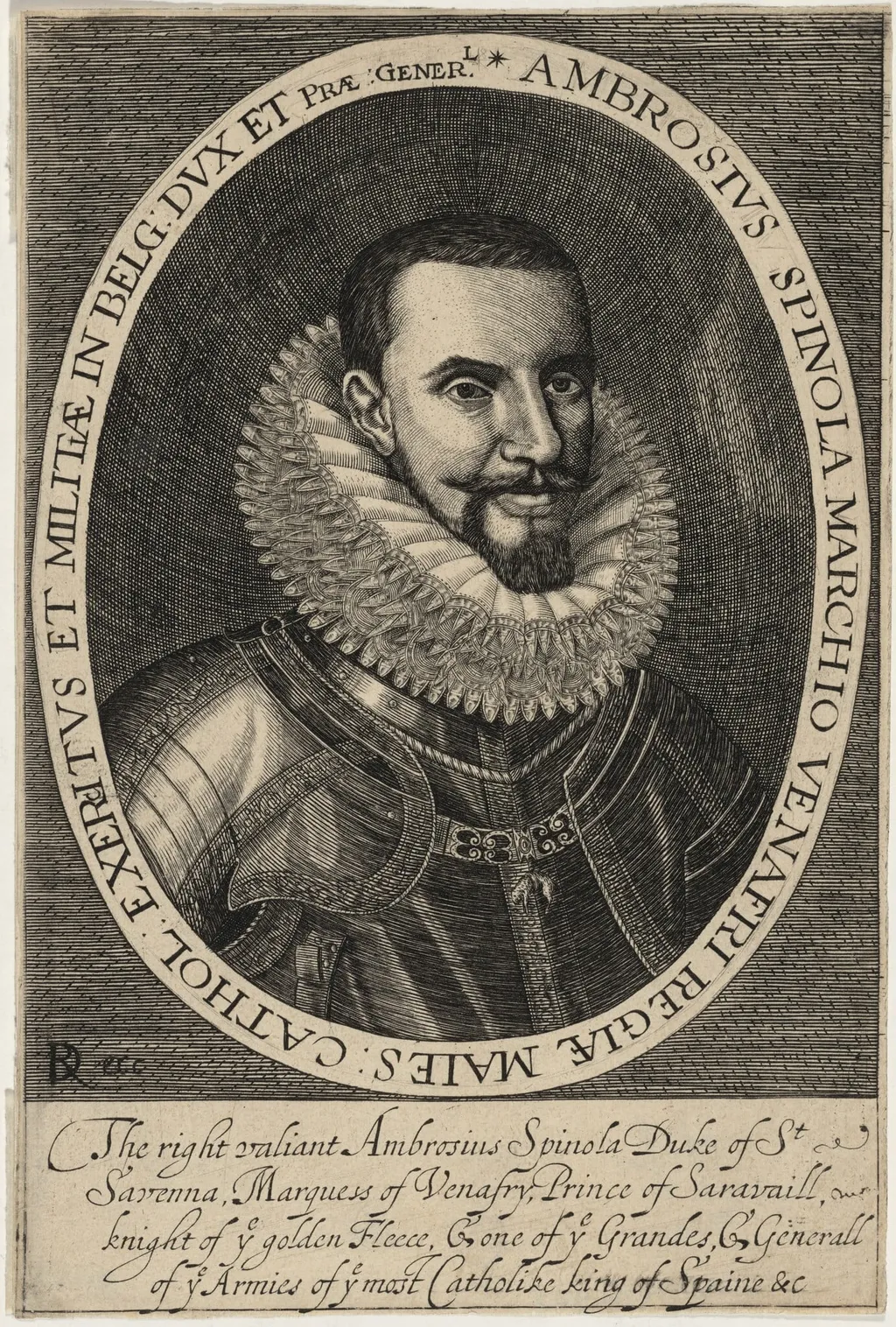
Ambrogio Spinola is an ink print by the Romanticist artist Unknown 19th Century. It dates from 1850 and is held in the collection of the National Gallery of Art.
About this work
Overview
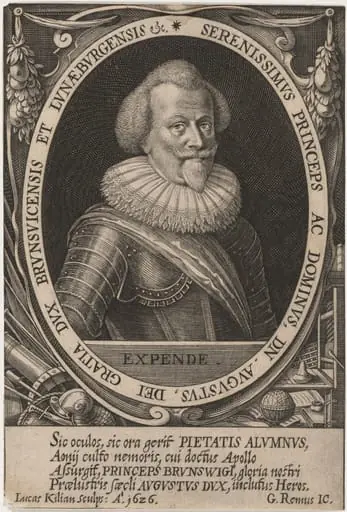
This black-and-white engraving depicts Ambrogio Spinola, a prominent military leader of the early 17th century.
This black-and-white engraving depicts Ambrogio Spinola, a prominent military leader of the early 17th century. Rendered in fine linear detail, the portrait presents him in formal attire against a plain background. Latin inscriptions encircle the image, functioning as a decorative border while identifying his titles. The absence of a named artist and the restrained composition suggest a production rooted in contemporary portraiture conventions rather than individual artistic expression.
Subject & Meaning
Ambrogio Spinola is portrayed as a nobleman and commander, his stern gaze and elaborate ruff conveying authority and dignity. The chain across his chest likely signifies an order of chivalry, reinforcing his status. The Latin titles surrounding the image serve not merely as decoration but as a formal declaration of his rank and achievements, aligning the portrait with the tradition of using visual symbols to assert social and political identity.
Technique & Style
Executed as an engraving, the image relies on incised lines on a metal plate to create tonal variation and texture. The fine, controlled strokes define the folds of the ruff, the sheen of the coat, and the chain’s metallic surface. The style is precise and restrained, typical of Northern European printmaking of the period. The plain background focuses attention entirely on the figure, emphasizing clarity over atmospheric depth.
History & Provenance
The print likely originated in the early 1600s, during Spinola’s military prominence in the Spanish Netherlands. Though the engraver remains unidentified, such portraits were commonly produced for distribution among elites and military circles. Its survival suggests it was valued as a record of status, possibly commissioned or circulated by Spinola’s associates to affirm his reputation across Europe.
Context
This portrait reflects the broader use of engraved likenesses in early modern Europe to disseminate the images of powerful figures. Unlike painted portraits, engravings could be reproduced and shared widely, making them tools of political communication. Spinola’s depiction aligns with similar prints of Habsburg commanders, reinforcing a visual language of authority tied to service, lineage, and imperial loyalty.
Legacy
Though not attributed to a renowned artist, the engraving endures as a documentary artifact of Spinola’s public persona. It contributes to the visual archive of early modern military leadership, illustrating how print media shaped perceptions of power. Its formal simplicity and textual framing offer insight into the conventions of elite representation before the rise of photographic portraiture.
Artist & collection

Artist