Artwork
Christiana Lotharingia (Christine de Lorraine)
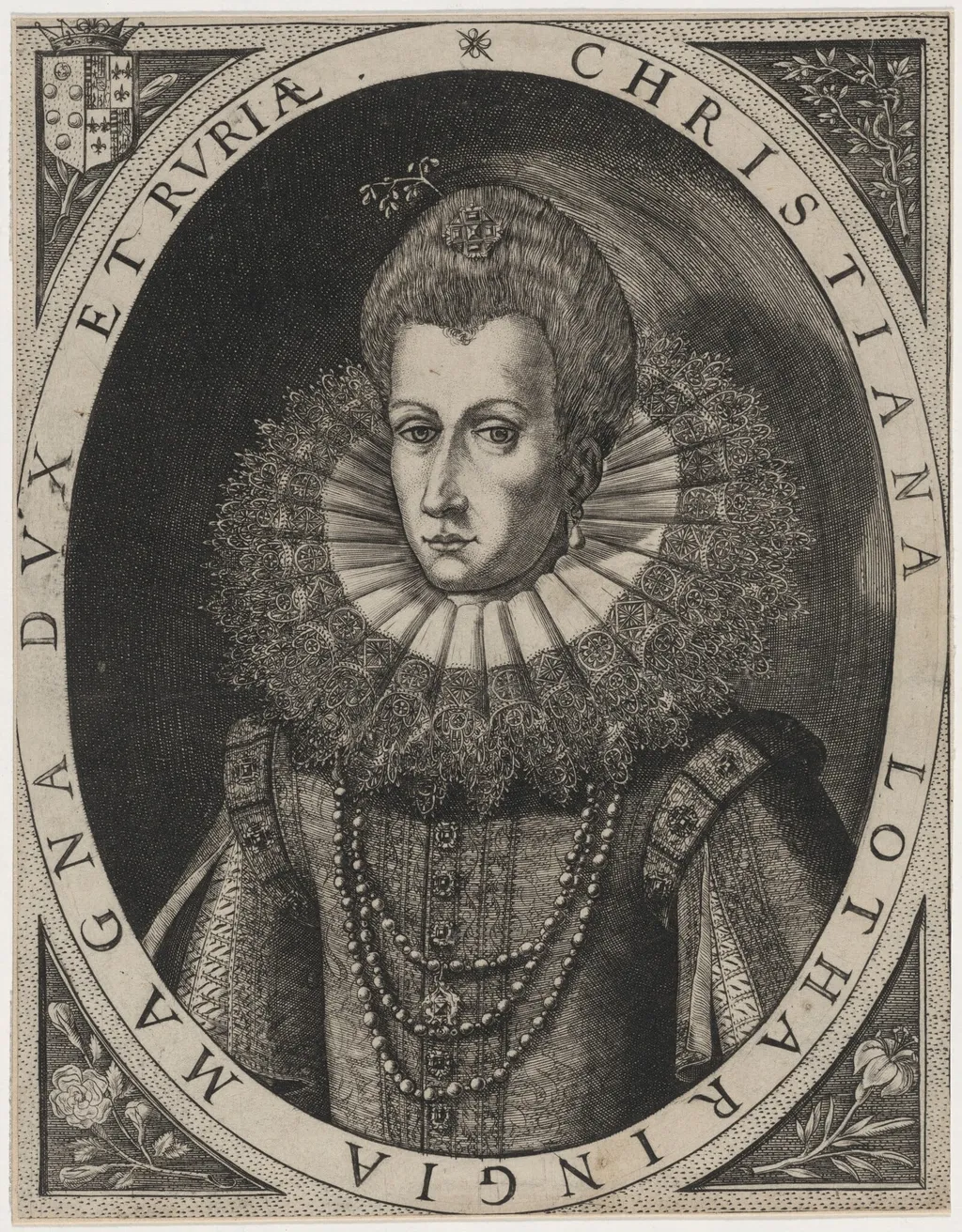
Christiana Lotharingia (Christine de Lorraine) is an ink print by the Romanticist artist Unknown 19th Century. It dates from 1850 and is held in the collection of the National Gallery of Art.
About this work
Overview
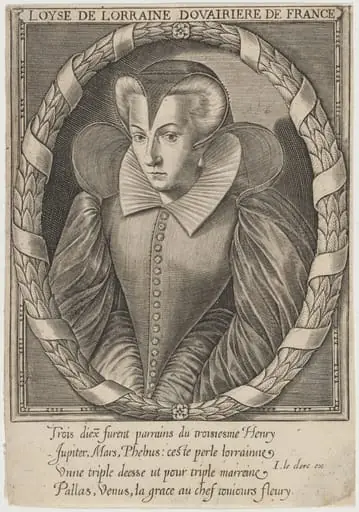
This black-and-white engraving depicts Christiana Lotharingia, also known as Christine de Lorraine, as a noblewoman of late 16th-century France.
This black-and-white engraving depicts Christiana Lotharingia, also known as Christine de Lorraine, as a noblewoman of late 16th-century France. Rendered in fine linear detail, the portrait emphasizes her status through elaborate dress and formal posture. The plain background focuses attention on her figure, while the surrounding inscriptions identify her by name and title. The work exemplifies the precision possible in engraved portraiture of the period.
Subject & Meaning
Christiana Lotharingia, Duchess of Lorraine, is portrayed with the dignity befitting her rank. The high collar, ruffled neckpiece, and pearl necklace signify wealth and refinement, while the headdress reflects contemporary aristocratic fashion. The Latin inscription 'Dux Lugduni'—Duke of Lyon—though historically inaccurate for a woman, likely refers to her husband’s territorial title, reinforcing her connection to power through marriage.
Technique & Style
The portrait is executed in engraving, using fine, intersecting lines to model form and texture. Cross-hatching creates subtle gradations of light and shadow, particularly in the folds of fabric and the contours of the face. The artist’s control over line weight and density achieves a sense of volume without color, relying entirely on the contrast of ink on paper and the precision of the burin tool.
History & Provenance
Created during the late 1500s, the print likely served as a reproductive portrait for circulation among elite circles. Such engravings were common tools for disseminating the likenesses of nobility before photography. While the original artist remains unconfirmed, the style aligns with Northern European printmakers active in France during the reign of Henry IV, when Christine was a prominent court figure.
Context
Christiana de Lorraine was a key figure in French political life through her marriage to Henry I, Duke of Lorraine, and later as mother to the Duke of Guise. Her image, circulated in prints, reinforced dynastic legitimacy and alliance networks. The formal, restrained style reflects the era’s preference for sober dignity over flamboyance, even among the highest nobility.
Legacy
This engraving contributes to a broader tradition of noble portraiture in print, where accuracy and status were prioritized over individual expression. It survives as a record of how aristocratic identity was visually codified in early modern Europe. Though not widely known today, such works were essential in shaping public perception of power and lineage during a time of shifting political alliances.
Artist & collection

Artist

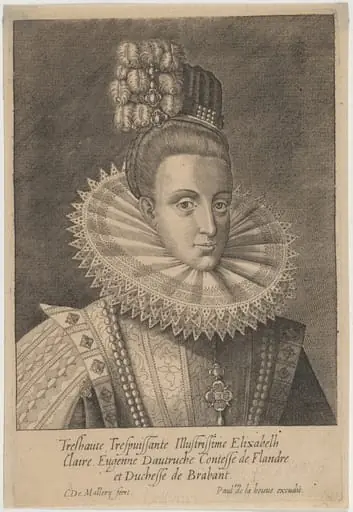 Isabella Clara Eugenie of Austria, Spain and Countess of Flanders
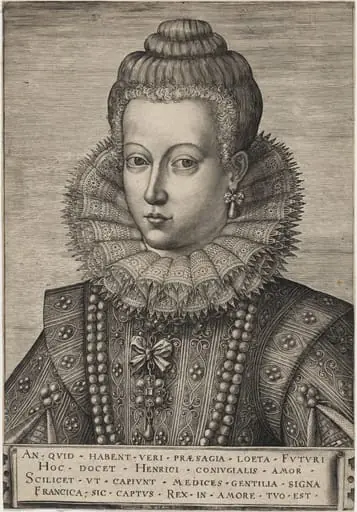 Maria de Medici
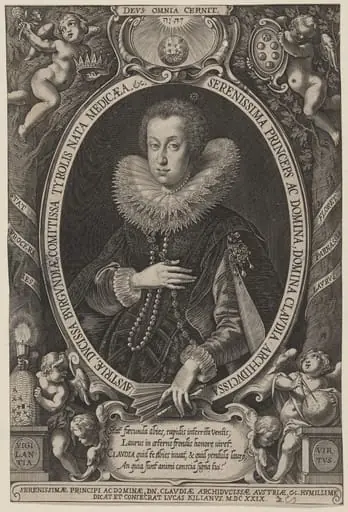 Claudia de Medici, Wife of Leopold of Austrian Tyrol
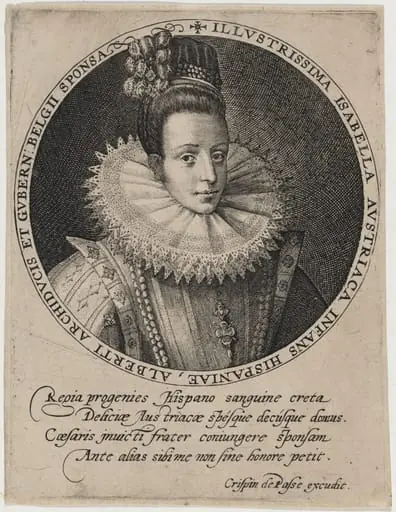 Isabella Clara Eugenia, Infanta
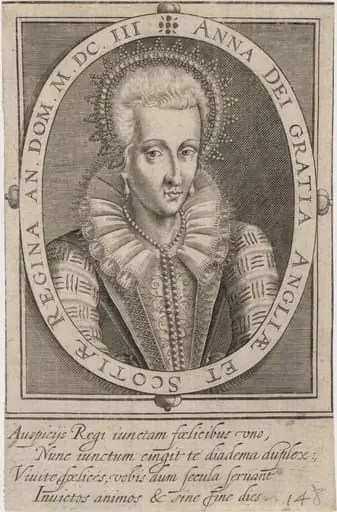 Anne of Denmark, Queen of James I
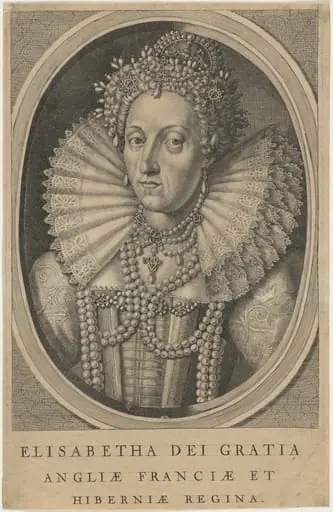 Queen Elizabeth
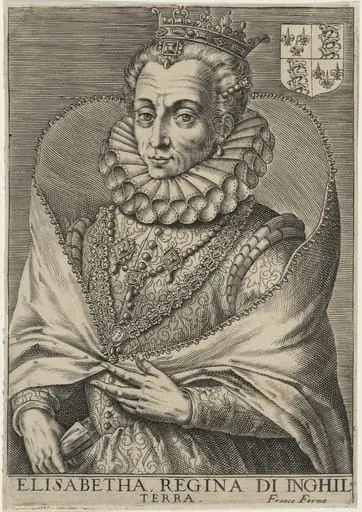 Queen Elizabeth
 Louise de Lorraine, Wife of Henry III
 Louise Juliana of Nassau, Electress Palatine
 Isabella Clara Eugenia, Infanta