Artwork
Title Page for M.C. Sarbievski, Lyricorum Libri IV
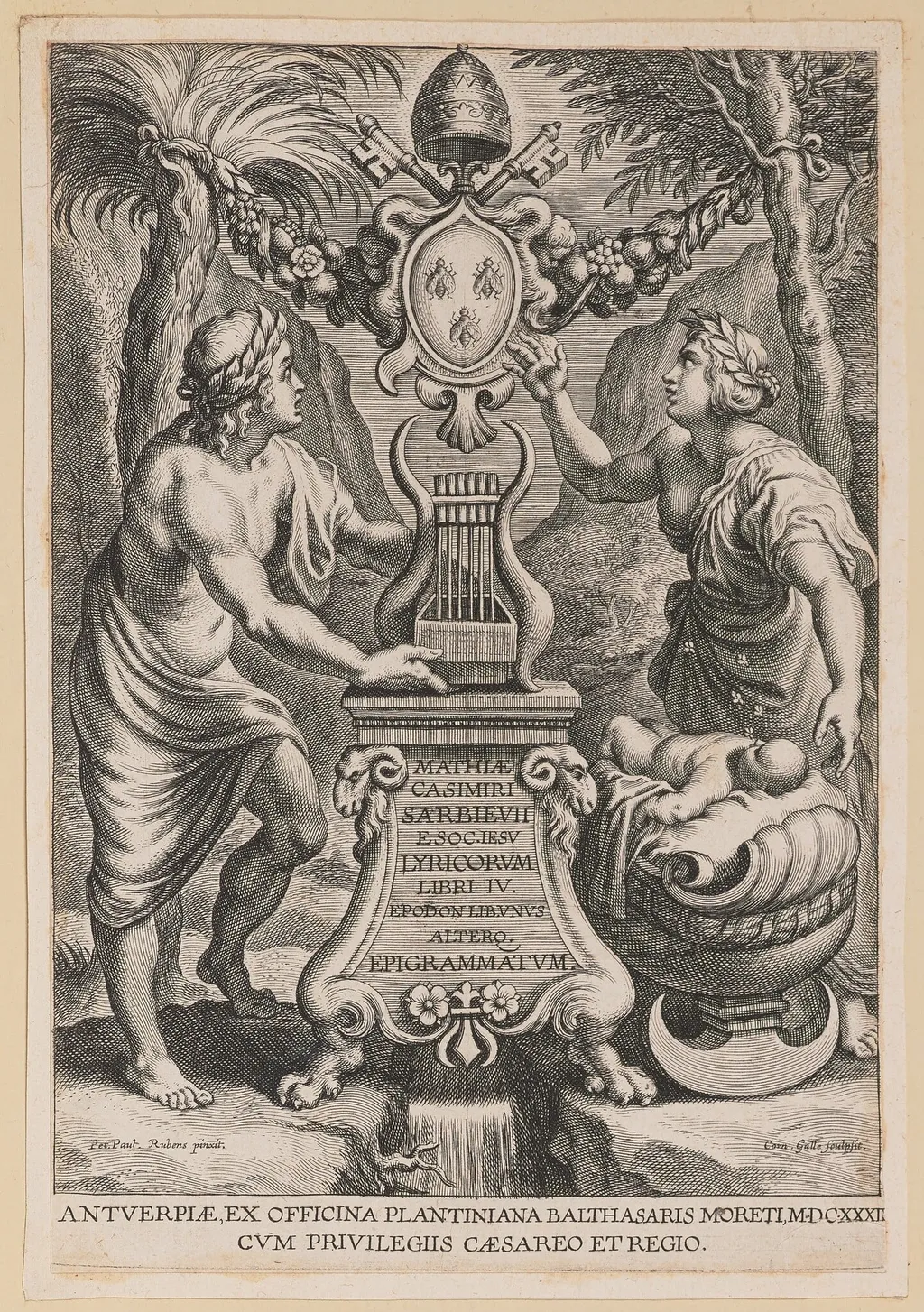
Title Page for M.C. Sarbievski, Lyricorum Libri IV is an ink print by the Baroque artist Cornelis Galle I. It dates from 1632 and is held in the collection of the National Gallery of Art. Created in 1632 by Cornelis Galle the Elder, this engraving serves as the title page for M.
About this work
Overview
The work blends literary function with decorative art, reflecting the intersection of print culture and humanist scholarship in early 17th-century Europe.
Created in 1632 by Cornelis Galle the Elder, this engraving serves as the title page for M.C. Sarbievski’s fourth book of lyrics. Executed in fine line on laid paper, it exemplifies Galle’s technical mastery developed through training under his father and exposure to Italian art. The work blends literary function with decorative art, reflecting the intersection of print culture and humanist scholarship in early 17th-century Europe.
Subject & Meaning
Two allegorical figures flank a central harp, symbolizing poetic inspiration. The male and female forms, dressed in classical robes, suggest harmony between reason and emotion, or perhaps the muses of lyric poetry. The harp, crowned and emblazoned with a shield, evokes authority and divine patronage. The natural backdrop implies poetry’s roots in the organic world, reinforcing the humanist ideal of art as a reflection of nature and intellect.
Technique & Style
Galle employed precise engraving techniques, using fine, controlled lines and dense cross-hatching to model form and texture. The intricate detailing of drapery, foliage, and the harp’s ornamentation demonstrates his command of tonal gradation. The composition balances symmetry with organic movement, characteristic of Baroque sensibilities, while maintaining the clarity and restraint typical of Flemish printmaking traditions.
History & Provenance
Cornelis Galle the Elder, born in Antwerp in 1576, inherited his father Philip’s workshop and expanded his practice through travel and collaboration. This plate was produced during his mature period, after his return from Rome, when he was active as both engraver and printseller. The work likely circulated among scholarly circles in the Southern Netherlands, accompanying Sarbievski’s Latin poetry, which was admired for its classical elegance.
Context
In the early 1600s, engraved title pages were essential to scholarly and literary publications, serving as visual declarations of content and prestige. Galle’s work aligns with a broader trend in the Low Countries of using classical imagery to elevate vernacular and Latin texts. His prints often illustrated works by poets and theologians, reinforcing the cultural value placed on humanist learning and the visual representation of intellectual ideals.
Legacy
Galle’s engraving contributed to the standardization of literary iconography in print culture. His precise technique influenced subsequent generations of engravers in Antwerp and beyond. Though the specific volume it adorned may be rare today, the stylistic approach of combining allegory with typographic function remained a model for book illustration well into the 18th century.
Artist & collection

Artist
Cornelis Galle the Elder (1576 – 29 March 1650), a younger son of Philip Galle, was born at Antwerp in 1576, and was taught engraving by his father.

 Vignette for the Title Page of Martinus Bonacina, Opera Omnia
 Title Page for Jean Boyvin, Le Siege de la Ville de Dole
 Title Page for Carolus Scribani, Politico-Christianus
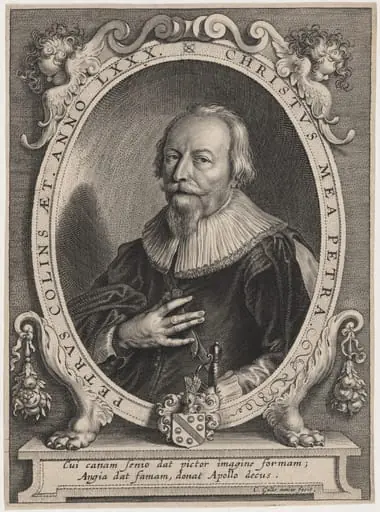 Petrus Collins
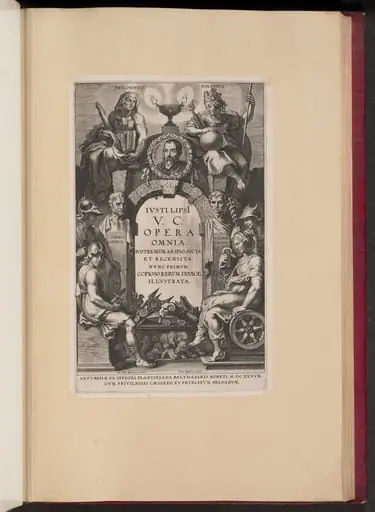 Title Page for Justus Lipsius, Opera Omnia, I
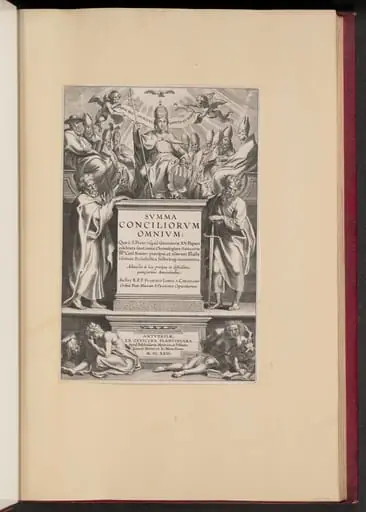 Title Page for F. Longo a Coriolano's "Svmma Conciliorvm Omnivm"
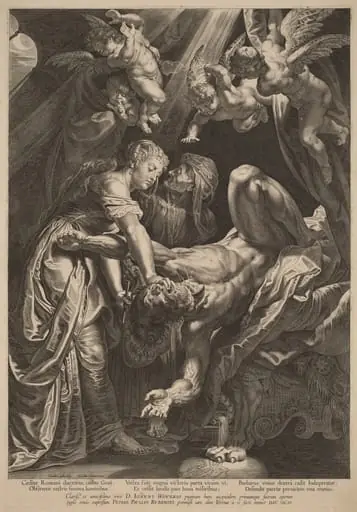 Judith Beheading Holofernes
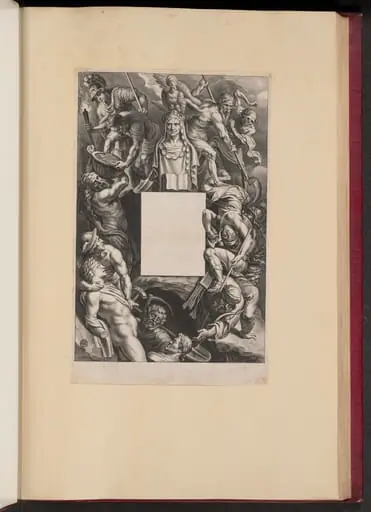 Title Page for Hubert Goltzius, Romanae et Graecae Antiqvitatis Monvmenta (Opera Omnia, I)
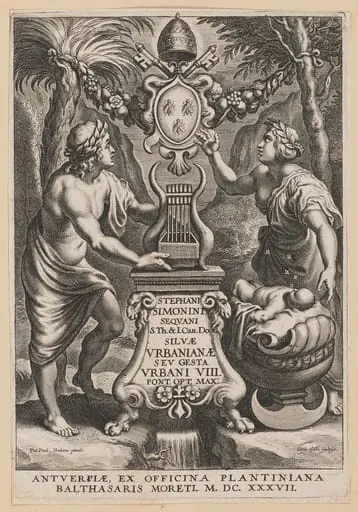 Title Page for Stephanus Simonini, Silvae Urbaninae
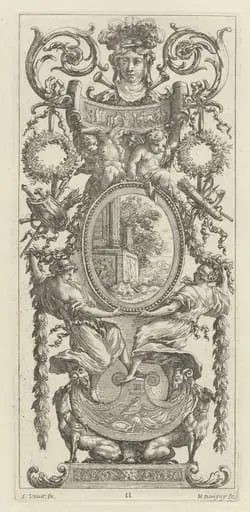 Ornamental Panel Surmounted with a Head Flanked by Foliage
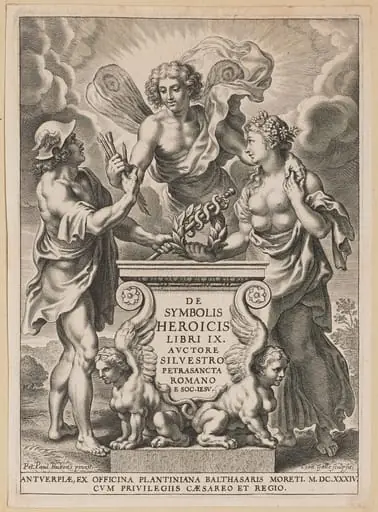 Title Page for Silvester Pietrasanta, De Symbolis Heroicis
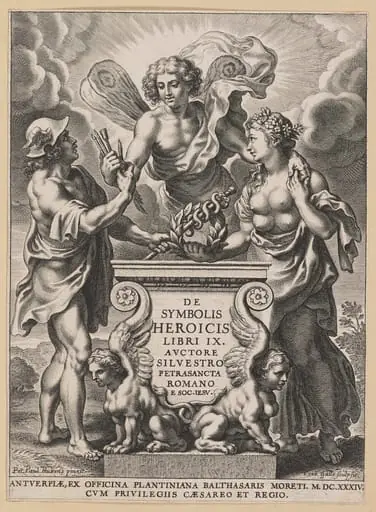 Title Page for Silvester Pietrasanta, De Symbolis Heroicis
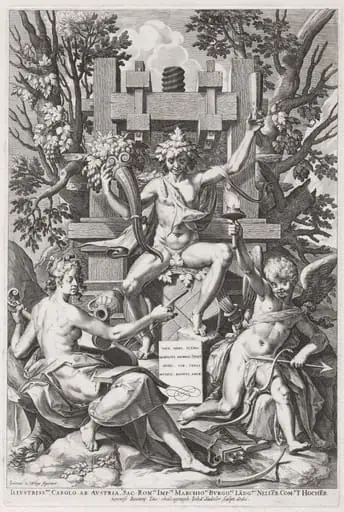 Bacchus Seated on a Barrel between Amor and Music
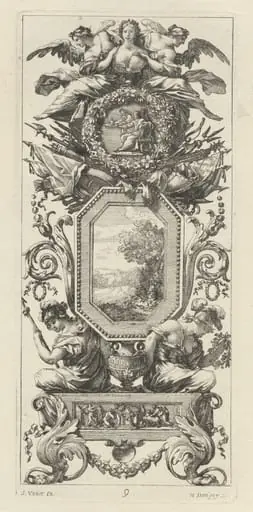 Ornamental Panel Surmounted with Two Figures Leaning on the Bust of a Woman
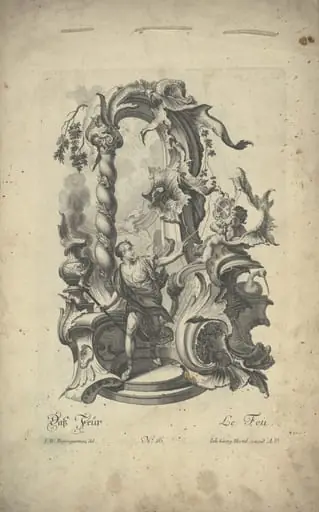 Das Feur
 H Beard Print Collection
 Title Page for Philomathi Musae Juveniles
 Title Page to Urbium Praecipuarum Totius Mundi