Artwork
Title Page for Stephanus Simonini, Silvae Urbaninae
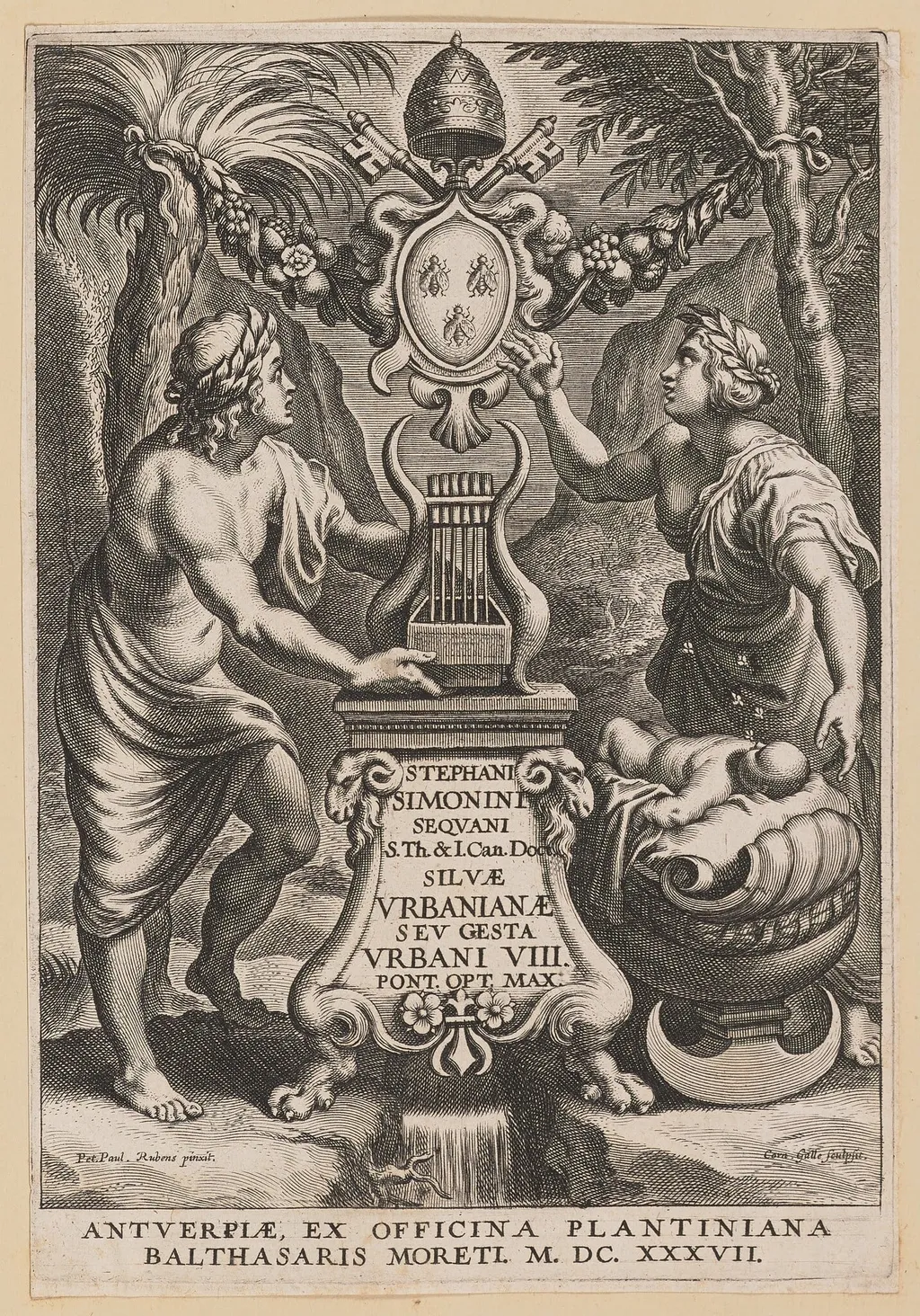
Title Page for Stephanus Simonini, Silvae Urbaninae is an ink print by the Baroque artist Cornelis Galle I. It dates from 1637 and is held in the collection of the National Gallery of Art.
About this work
Overview
Cornelis Galle the Elder, an Antwerp-based engraver trained by his father Philip, produced the title page for Stephanus Simonini’s *Silvae Urbaninae* in 1637.
Cornelis Galle the Elder, an Antwerp-based engraver trained by his father Philip, produced the title page for Stephanus Simonini’s *Silvae Urbaninae* in 1637. Executed in engraving on laid paper, the print reflects Galle’s technical precision and his role as both artist and printseller. The composition serves as an ornamental frontispiece, blending allegory with classical references to frame the literary content that follows.
Subject & Meaning
The scene centers on a monument topped with a lyre, symbolizing poetic inspiration. Flanking it are two allegorical figures: a male in a toga, evoking classical oratory, and a female holding a basket of fruit, representing abundance and the fruits of cultivated thought. Their upward gaze directs attention to the monument, suggesting reverence for poetry and the arts. Surrounding flora reinforces themes of growth, fertility, and the cultivated natural world.
Technique & Style
Galle employed fine, controlled engraving lines to render intricate textures in foliage, fabric, and stone. Cross-hatching builds depth and shadow, while delicate stippling defines the softness of fruit and petals. The composition is balanced yet richly detailed, with no element left undifferentiated. The use of light suggests a soft, diffused glow, enhancing the sense of a serene, idealized landscape without overt dramatic contrast.
History & Provenance
Created in 1637 for Simonini’s collection of Latin verse, the print was produced in Antwerp, where Galle maintained a workshop and publishing enterprise. As a leading engraver of his time, he often reproduced works by other artists, but this plate appears to be his original design. Its survival in collections today reflects its status as a well-crafted example of early 17th-century Northern European printmaking.
Context
In early 17th-century Antwerp, engraved title pages were essential to scholarly and literary publications, functioning as both decoration and intellectual framing. Galle’s work aligns with humanist traditions that linked classical imagery with contemporary poetry. The inclusion of allegorical figures and natural abundance reflects broader cultural ideals of the time, where art and literature were seen as cultivated expressions of civic and moral order.
Legacy
Galle’s title page exemplifies the high standard of Antwerp’s print culture during its golden age. While not widely reproduced in later centuries, it remains a representative work of its genre—demonstrating how engraving could elevate textual publication through visual symbolism and technical finesse. Its preservation offers insight into the collaborative ecosystem between writers, engravers, and publishers in early modern Europe.
Artist & collection

Artist
Cornelis Galle the Elder (1576 – 29 March 1650), a younger son of Philip Galle, was born at Antwerp in 1576, and was taught engraving by his father.

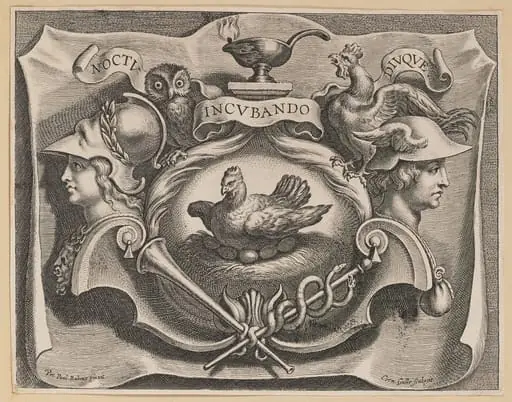 Vignette for the Title Page of Martinus Bonacina, Opera Omnia
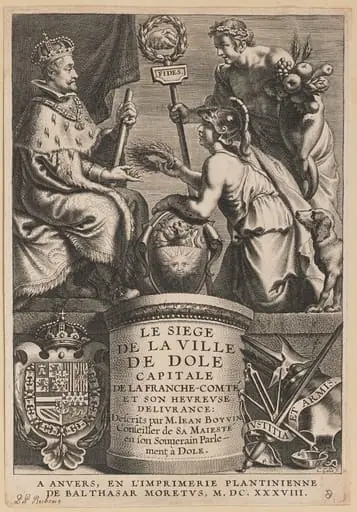 Title Page for Jean Boyvin, Le Siege de la Ville de Dole
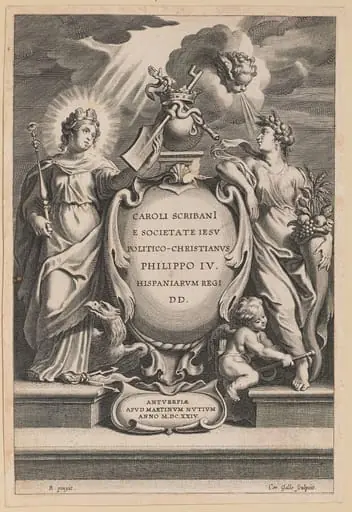 Title Page for Carolus Scribani, Politico-Christianus
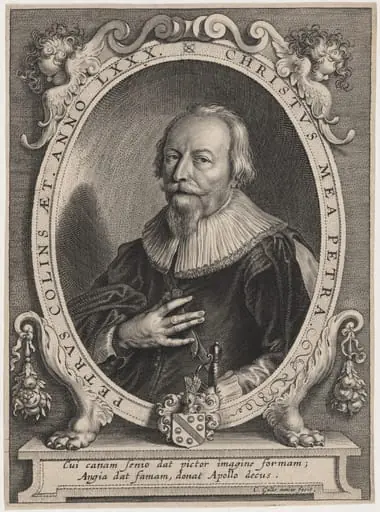 Petrus Collins
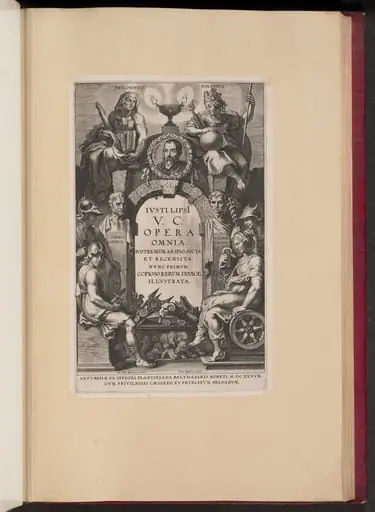 Title Page for Justus Lipsius, Opera Omnia, I
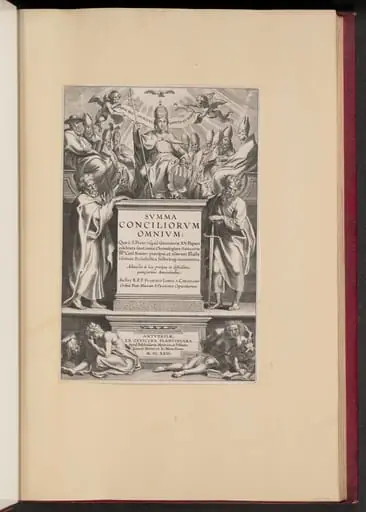 Title Page for F. Longo a Coriolano's "Svmma Conciliorvm Omnivm"
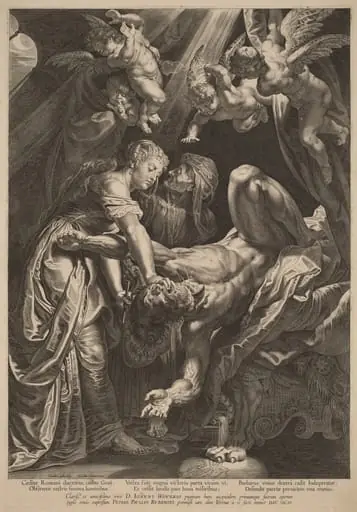 Judith Beheading Holofernes
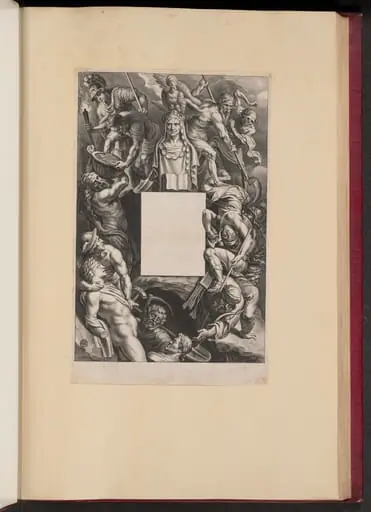 Title Page for Hubert Goltzius, Romanae et Graecae Antiqvitatis Monvmenta (Opera Omnia, I)
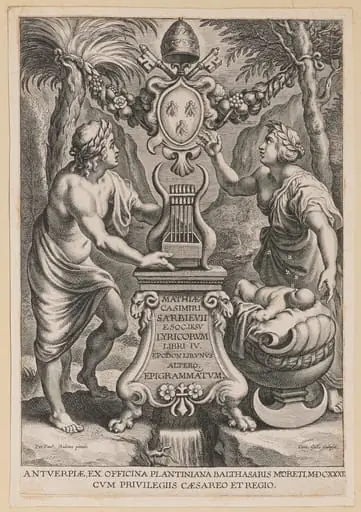 Title Page for M.C. Sarbievski, Lyricorum Libri IV
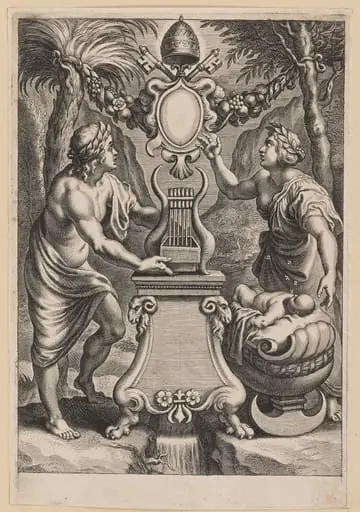 Title Page for M.C. Sarbievski, Lyricorum Libri IV
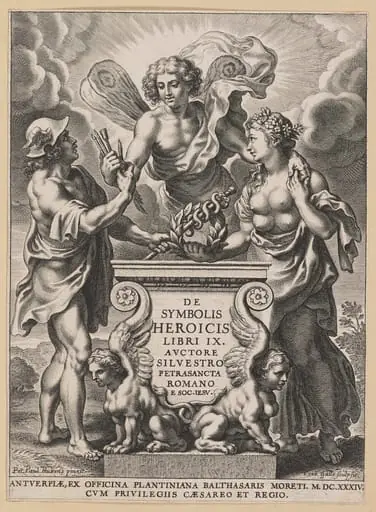 Title Page for Silvester Pietrasanta, De Symbolis Heroicis
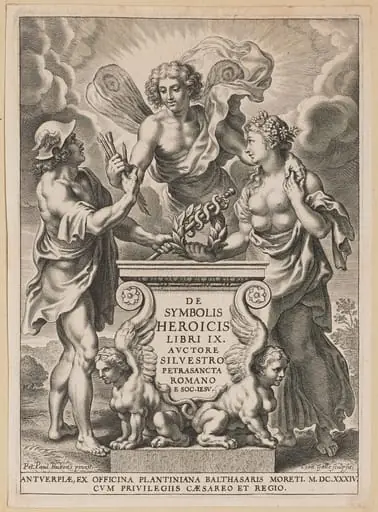 Title Page for Silvester Pietrasanta, De Symbolis Heroicis
 Ornamental Panel Surmounted with a Head Flanked by Foliage
 Ornamental Panel Surmounted with Two Figures Leaning on the Bust of a Woman
 H Beard Print Collection
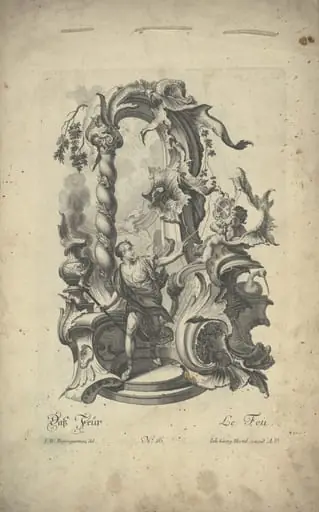 Das Feur
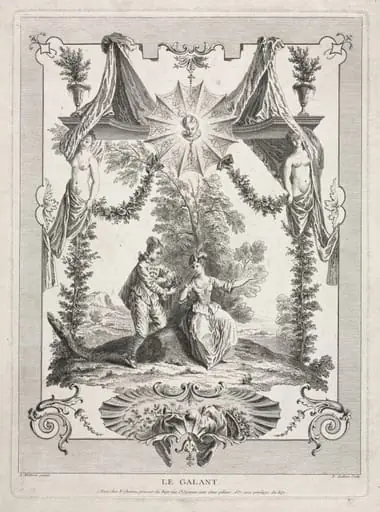 The Gallant
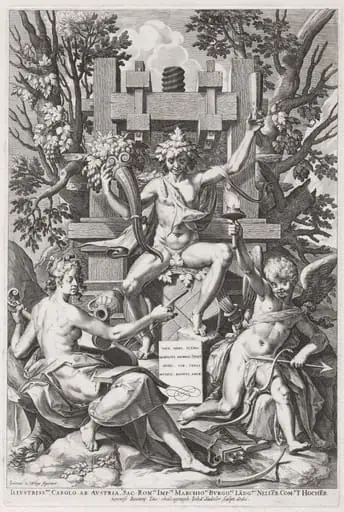 Bacchus Seated on a Barrel between Amor and Music
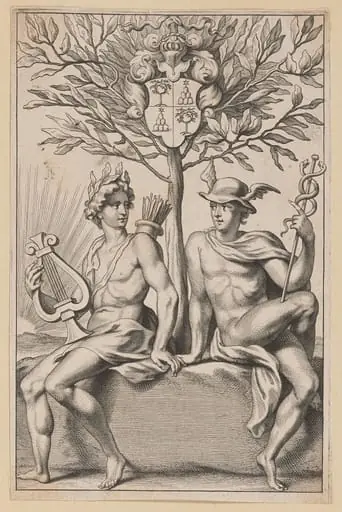 Title Page for Philomathi Musae Juveniles
 Law of War and Peace