Artwork
William III (?)
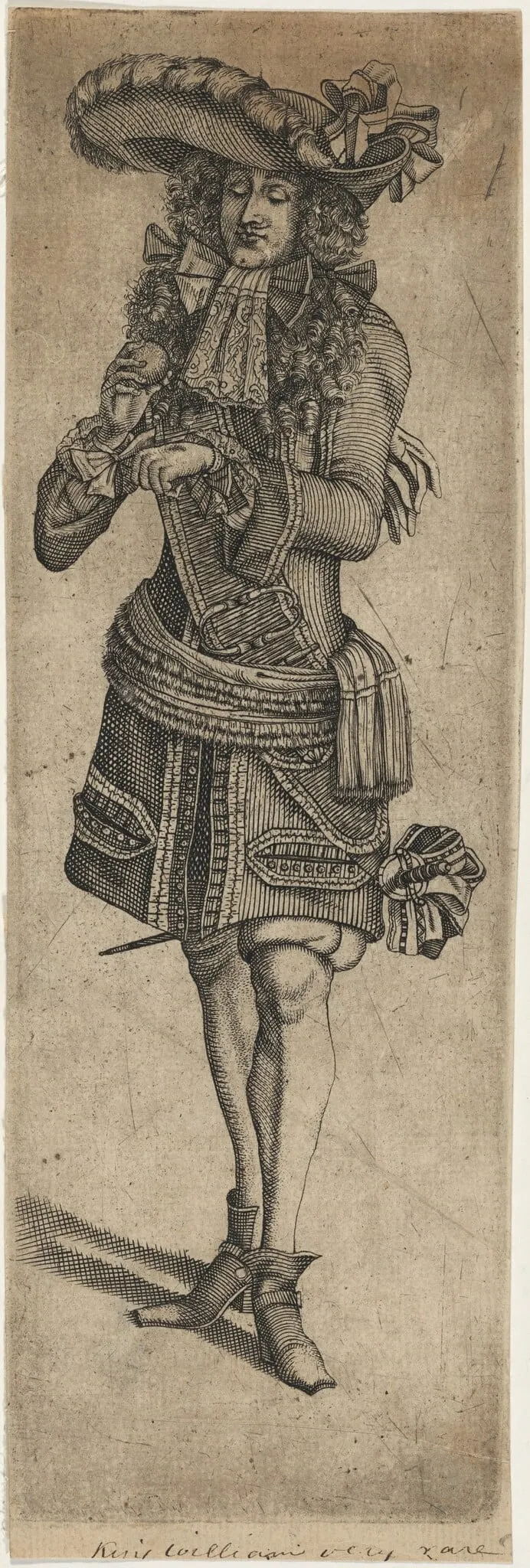
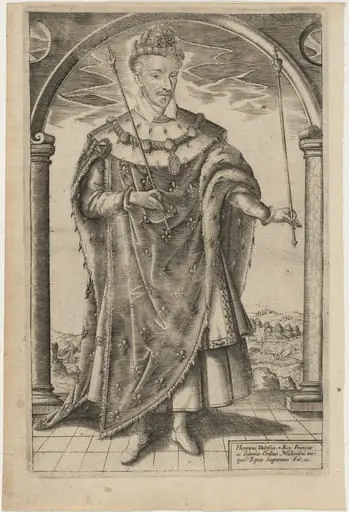
William III (?) is an ink print by the Romanticist artist Unknown 19th Century. It dates from 1850 and is held in the collection of the National Gallery of Art.
About this work
Overview
The style reflects a revival of historical dress in Victorian-era printmaking, where antiquated fashions were reimagined through contemporary technical methods.
This print combines engraving and etching techniques to depict a man in 17th-century attire, though the work itself likely dates to the 19th century. The figure stands in profile, rendered with fine, intricate lines that suggest texture and depth through controlled scratchwork. The style reflects a revival of historical dress in Victorian-era printmaking, where antiquated fashions were reimagined through contemporary technical methods.
Subject & Meaning
The figure is portrayed in formal courtly dress—floppy hat, ruffled collar, buttoned jacket, and tight breeches—suggesting aristocratic status. He holds a sword and adjusts a glove, a gesture implying readiness or decorum. While traditionally identified as William III, the attribution remains uncertain. The image functions more as a stylized archetype of noble masculinity than a precise portrait.
Technique & Style
The image is executed through a combination of engraving and etching, using fine, deliberate lines to build form and shadow. The scratchy, dense mark-making emphasizes fabric texture and surface detail, characteristic of 19th-century reproductive printmaking. This method allowed for high detail and tonal variation, mimicking the appearance of drawn studies while enabling mass reproduction.
History & Provenance
The print’s origin is unattributed, but its stylistic features align with mid-19th-century antiquarian prints that revived historical costumes for decorative or educational purposes. It likely circulated as a standalone image or in collections of historical figures, reflecting Victorian interest in past eras. No definitive record links it to a specific artist or publisher.
Context
During the 1800s, there was renewed fascination with 17th-century dress in art and literature, fueled by romanticized histories and theatrical revivals. Printmakers frequently reproduced such imagery, blending historical accuracy with aesthetic idealization. This work fits within a broader trend of using old costumes to evoke nobility, chivalry, or national identity in an age of industrial change.
Legacy
Though not widely recognized as a significant work, it exemplifies how 19th-century printmakers engaged with historical imagery through technical precision. Its survival in collections underscores the period’s appetite for visually rich, historically themed prints. It remains a quiet artifact of how past fashions were reinterpreted for modern audiences.
Artist & collection

Artist

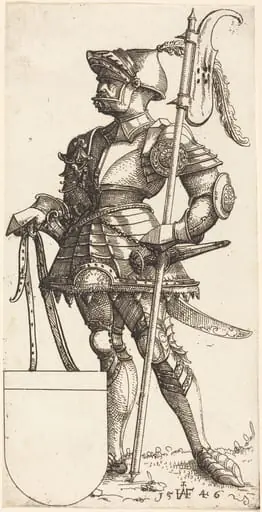 Christian II of Denmark
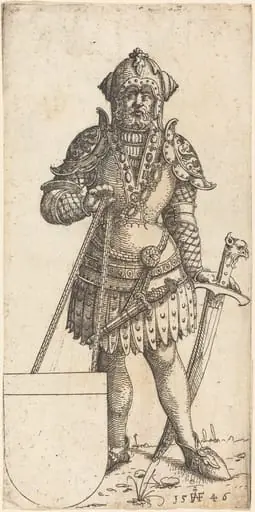 Ludwig II, King of Hungary
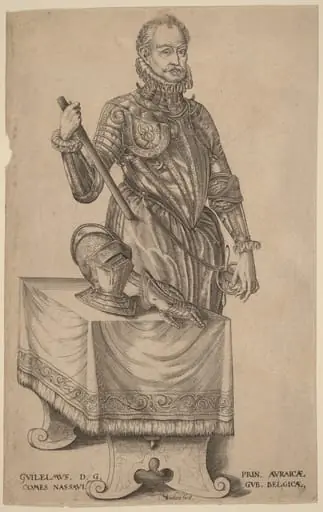 William of Nassau, Prince of Orange
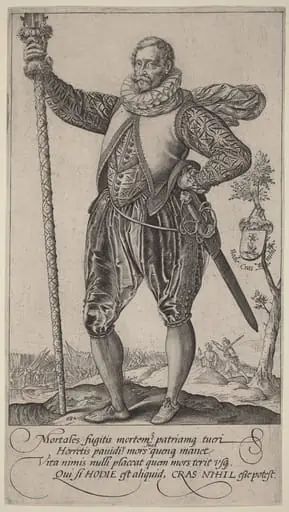 A Pike-Man Turned to the Left
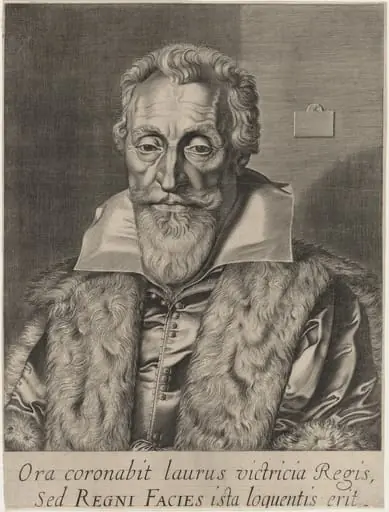
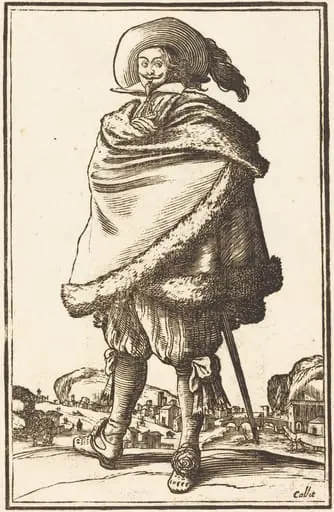 Noble Man Wrapped in a Mantle Trimmed with Fur
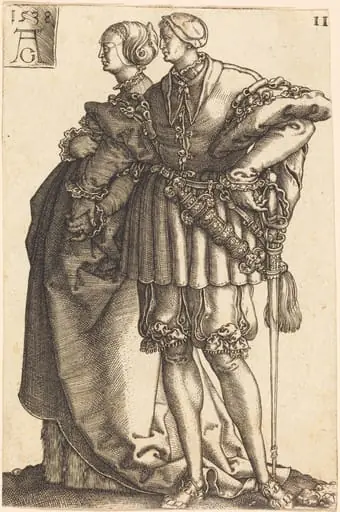 Large Wedding Dancers
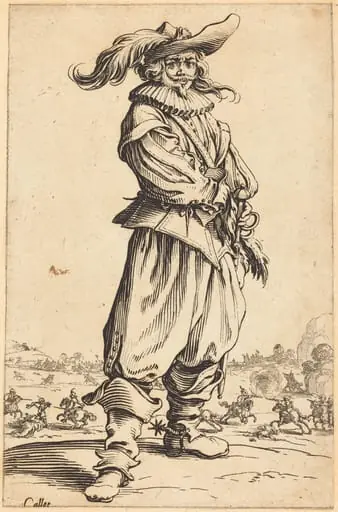 Soldier with Feathered Hat
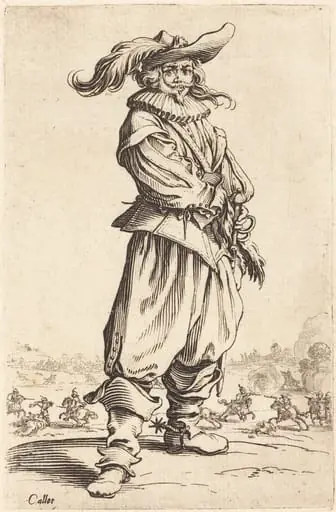 Soldier with Feathered Hat
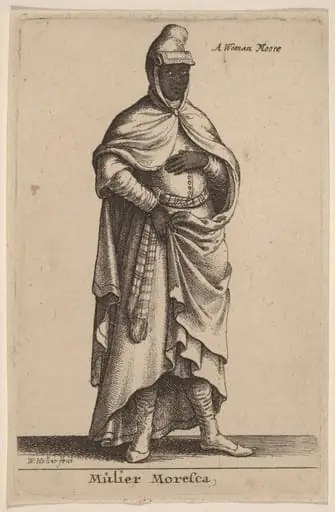 Mulier Moresca
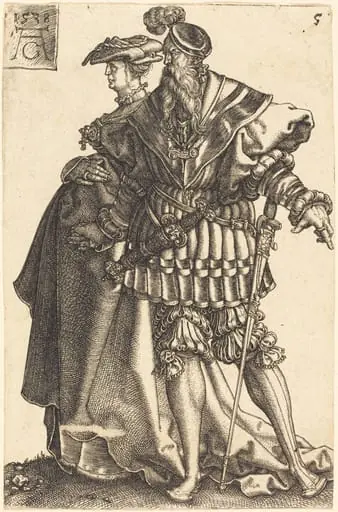 Large Wedding Dancers
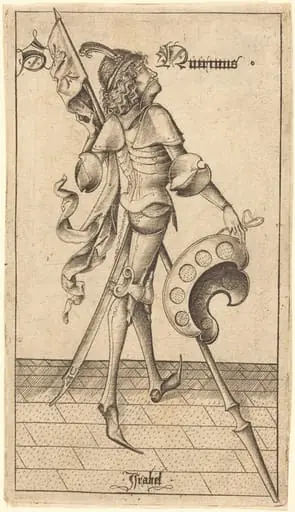 Saint Quirinus of Neuss
 Henry III of France