Artwork
Bhairava
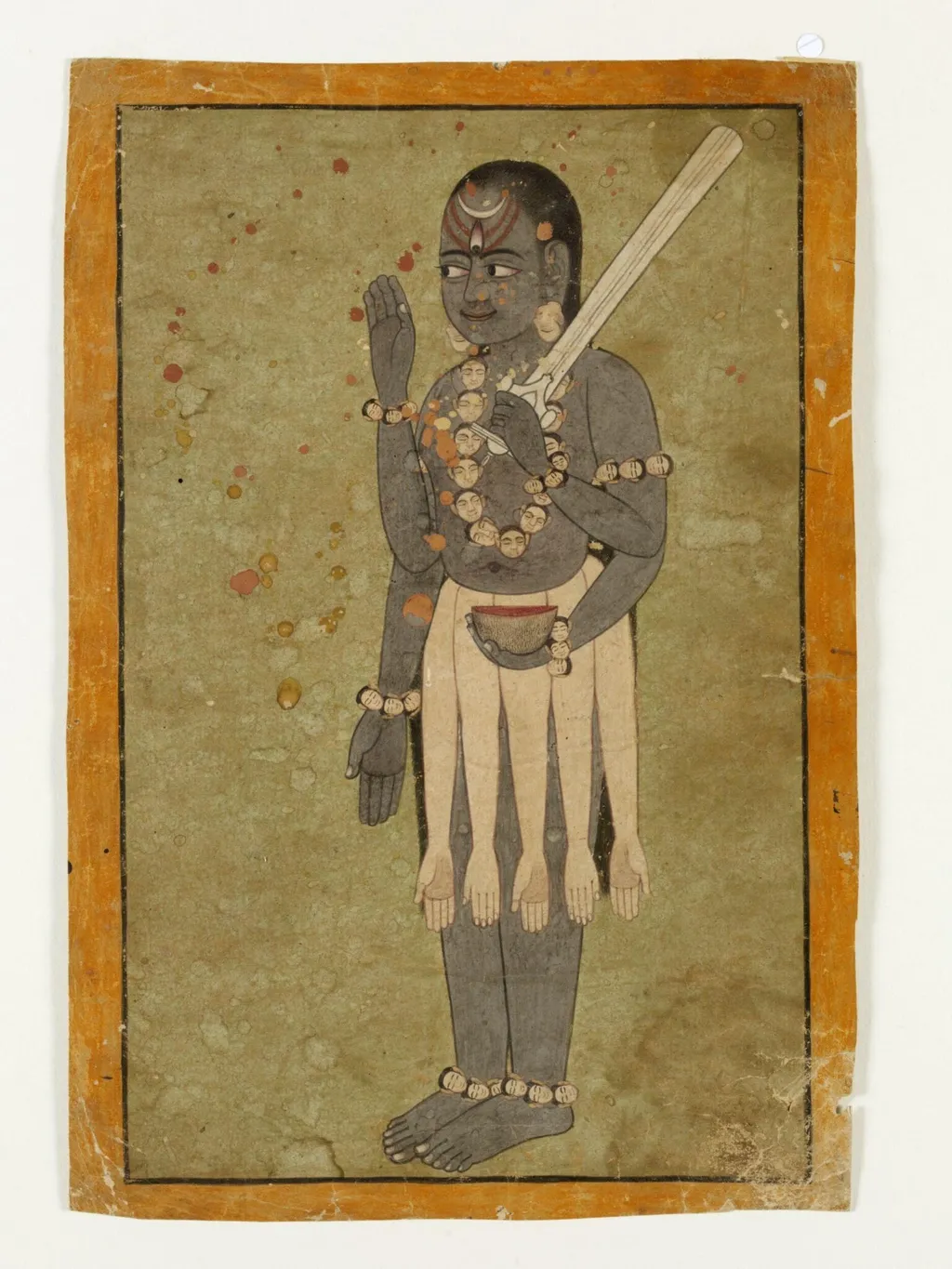
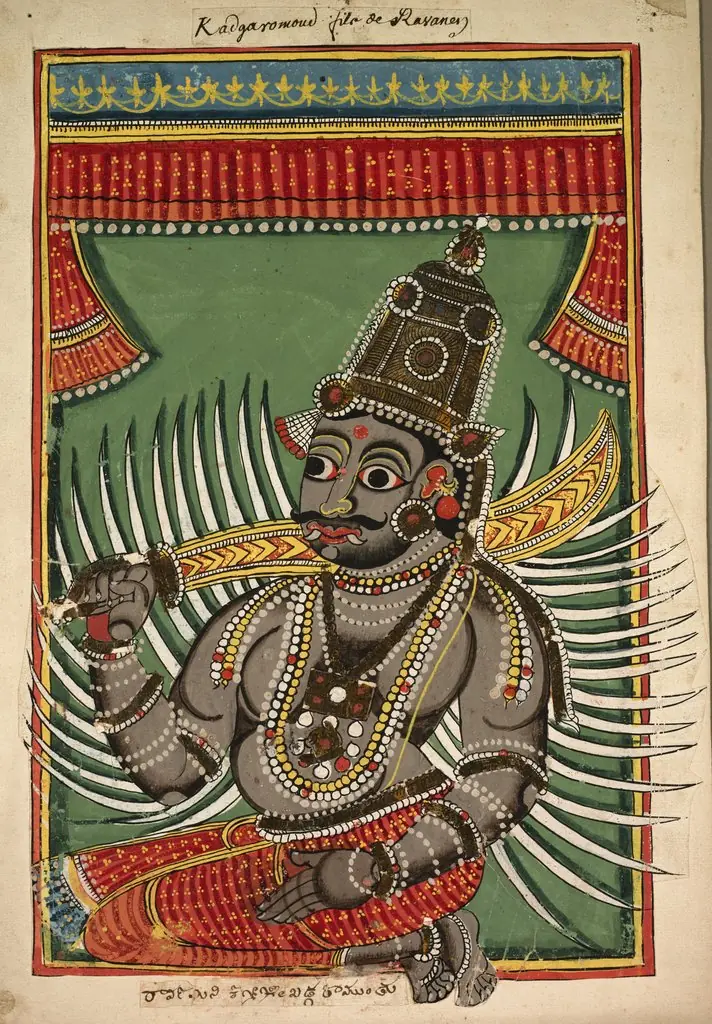
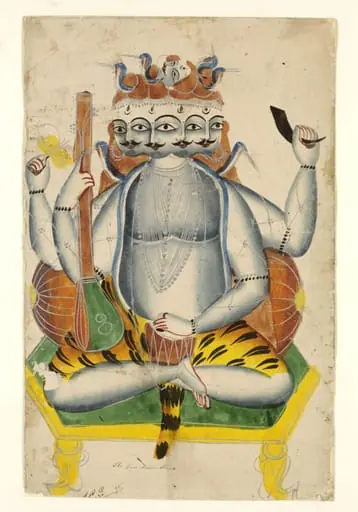
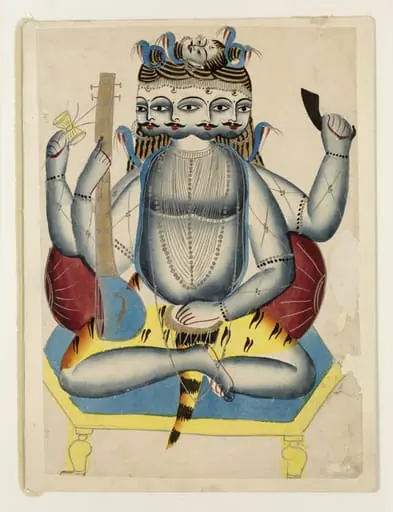
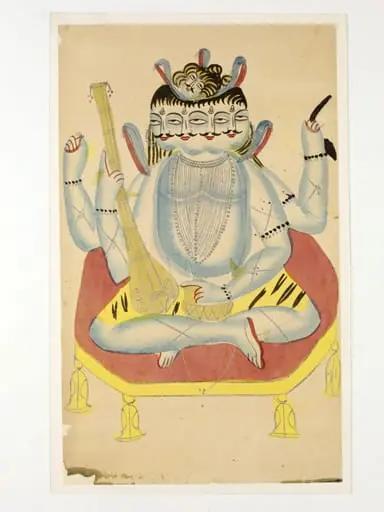
Bhairava is a paint painting by the Romanticist artist Unknown. It dates from 1800 and is held in the collection of the Victoria and Albert Museum.
About this work
Overview
This painting, created around 1800, depicts Bhairava, a form of the Hindu deity Shiva. Rendered in opaque watercolour on paper, the artwork showcases a complex figure with multiple arms and symbolic attributes.
Subject & Meaning
Bhairava is represented with four arms, holding a staff and a bowl, and adorned with a necklace and skirt made of human heads or arms. A third eye or crescent moon marks his forehead, signifying his divine and potentially fierce nature.
Technique & Style
The painting employs flat colors, primarily black, white, and red, without shading, characteristic of a traditional style. The use of opaque watercolour on paper is typical of certain regional Indian art traditions.
Context
The artwork's style and technique suggest it is part of a specific historical and cultural context, likely related to Indian art from the period around 1800.
Artist & collection

 Domestic Scene
 Giacomo and Cardinal Marco, investing Andrea, Abbot of San Zeno, with his Benefice
 The Nymph of Fontainebleau
 Portrait of a Woman
 Madonna and Child with Saints in the Enclosed Garden
 Venus and Minerva
 Family Group of Four on Sofa
 Wall painting from Room H of the Villa of P. Fannius Synistor at Boscoreale