Artwork
Bikhya and Chandrahasa
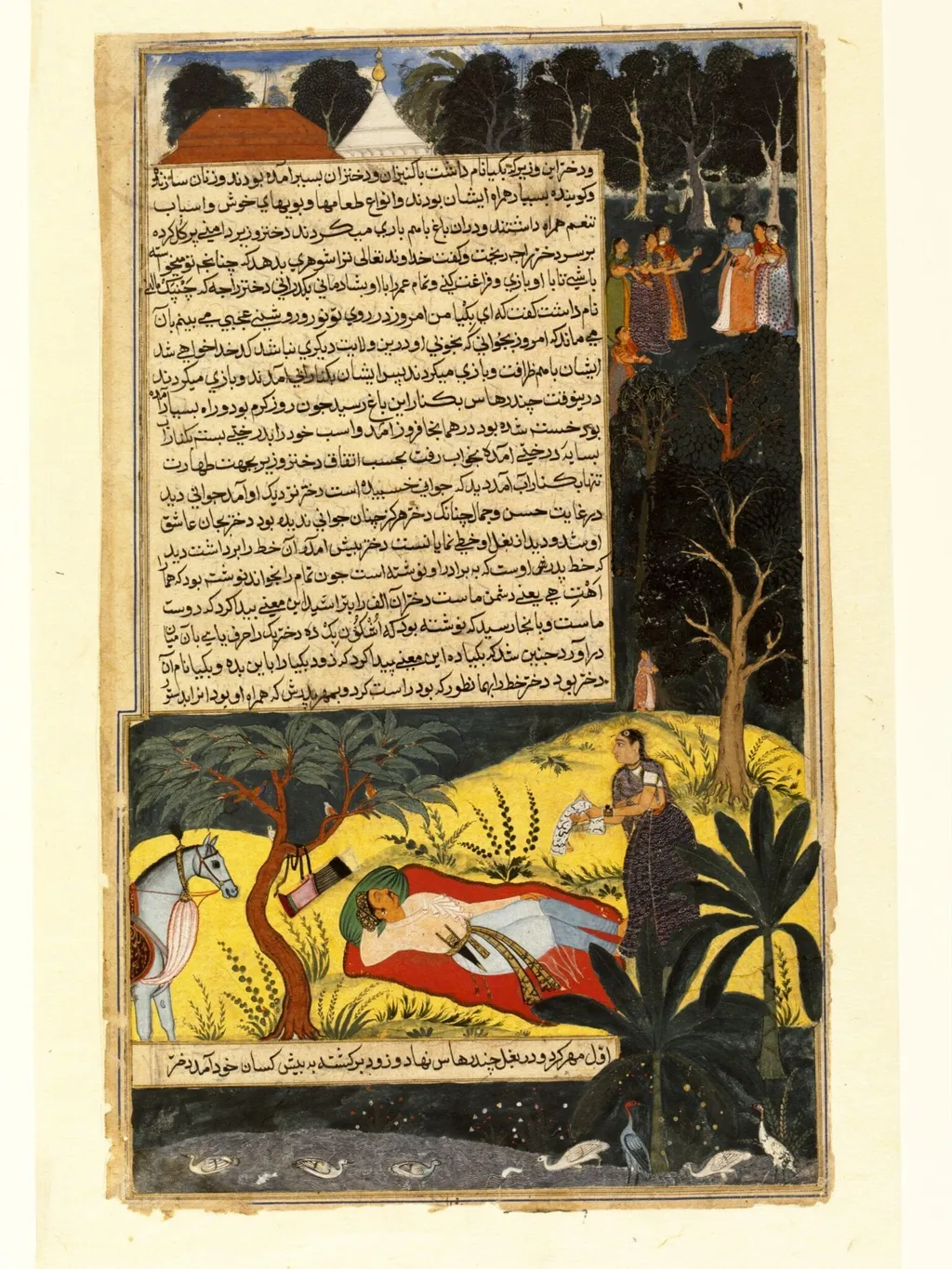
Bikhya and Chandrahasa is a paint painting by the Rococo painting artist Unknown. It dates from 1760 and is held in the collection of the Victoria and Albert Museum. This opaque watercolor painting on paper, dated to approximately 1760, illustrates a narrative moment from a South Asian literary tradition.
About this work
Overview
The work employs vivid pigments—yellows, greens, and reds—against a deep, muted background, enhancing the dramatic tension of the story depicted.
This opaque watercolor painting on paper, dated to approximately 1760, illustrates a narrative moment from a South Asian literary tradition. It presents two sequential scenes within a single frame, a common compositional strategy in regional manuscript illustration. The work employs vivid pigments—yellows, greens, and reds—against a deep, muted background, enhancing the dramatic tension of the story depicted.
Subject & Meaning
The scene portrays Bikhya, a woman who discovers Chandrahasa asleep beside a letter intended for his brother. The letter originally commands Chandrahasa’s death, but Bikhya rewrites it to instruct a marriage between them. The dual imagery captures both the act of discovery and the subsequent intervention, emphasizing agency, deception, and transformation as central themes in the tale.
Technique & Style
Executed in opaque watercolor on paper, the painting uses flat planes of saturated color and minimal perspective, typical of regional Indian miniature traditions. Figures are stylized with delicate linework and ornate textiles, while architectural elements and natural features are rendered symbolically rather than realistically. The script surrounding the image is in a local language, likely serving as a caption or narrative overlay.
History & Provenance
The work originates from a courtly atelier in northern or central India during the mid-18th century, a period when illustrated manuscripts of romantic and heroic tales were commissioned by local rulers. Its survival suggests it was part of a larger illustrated folio, though the full manuscript is now lost. The painting’s condition indicates careful handling, possibly within a private collection or royal library.
Context
This image belongs to a broader tradition of illustrated South Asian literature, where stories of love, betrayal, and moral choice were visually rendered for elite audiences. Unlike European Romanticism, its aesthetic is rooted in indigenous pictorial conventions, blending poetic narrative with courtly visual language. The emphasis on emotional turning points reflects a literary culture that valued moral complexity and personal agency.
Legacy
Though not widely known outside specialized collections, the painting exemplifies the sophistication of regional Indian manuscript painting in the 18th century. It preserves a lesser-known variant of a popular folk tale, offering insight into how stories were adapted visually and culturally. Its survival contributes to the understanding of non-Western narrative art beyond colonial or mainstream canon.
Artist & collection

 Domestic Scene
 Giacomo and Cardinal Marco, investing Andrea, Abbot of San Zeno, with his Benefice
 The Nymph of Fontainebleau
 Portrait of a Woman
 Madonna and Child with Saints in the Enclosed Garden
 Venus and Minerva
 Family Group of Four on Sofa
 Wall painting from Room H of the Villa of P. Fannius Synistor at Boscoreale
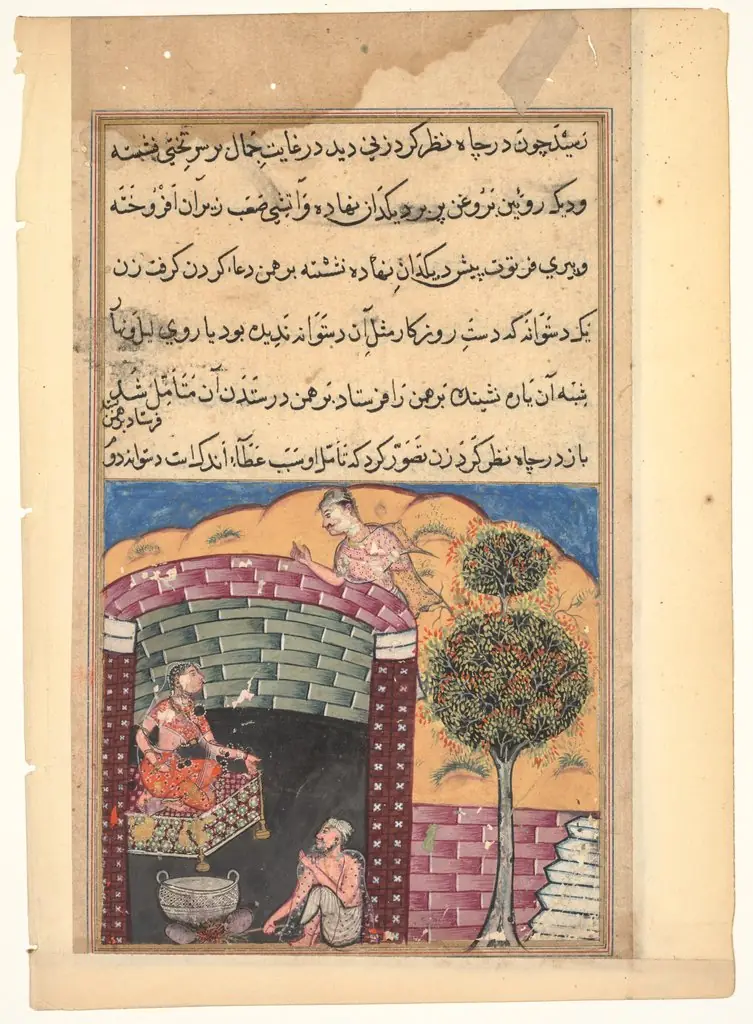 The Brahman gambler sees the daughter of the king of the jinns in a pit together with an old man and a cauldron of boiling oil, from a Tuti-nama (Tales of a Parrot: Seventh Night)
 The Brahman gambler sees the daughter of the king of the jinns in a pit together with an old man and a cauldron of boiling oil, from a Tuti-nama (Tales of a Parrot: Seventh Night)
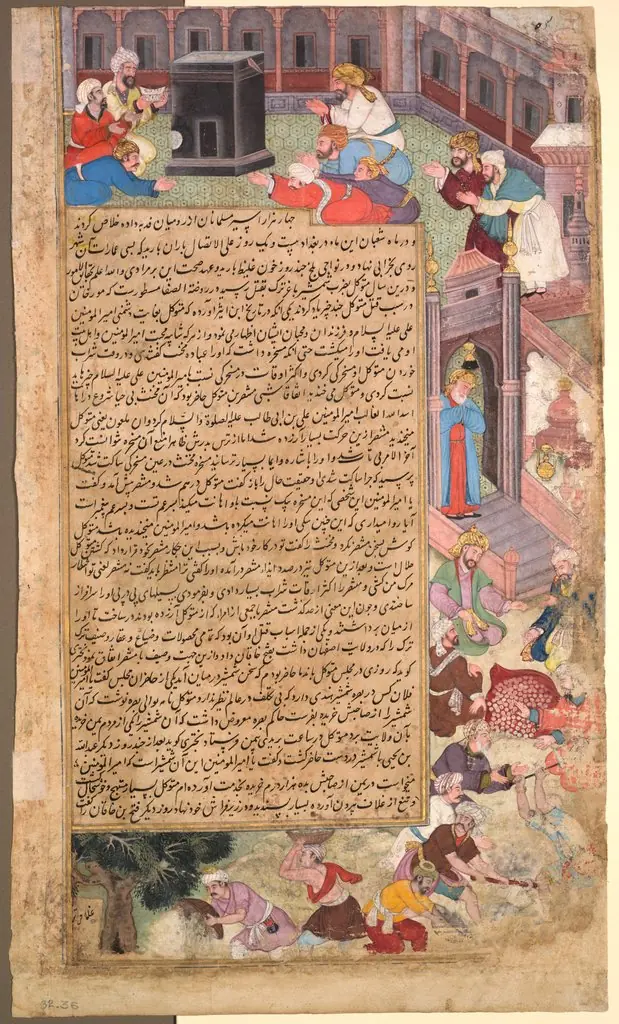 Page of disasters, from the Tarikh-i Alfi (History of a Thousand Years)
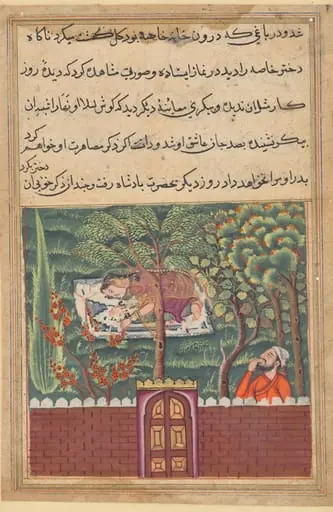 Khulasa, a vizier, sees the daughter of Khassa, another vizier, and covets her, from a Tuti-nama (Tales of a Parrot): Fifty-first Night
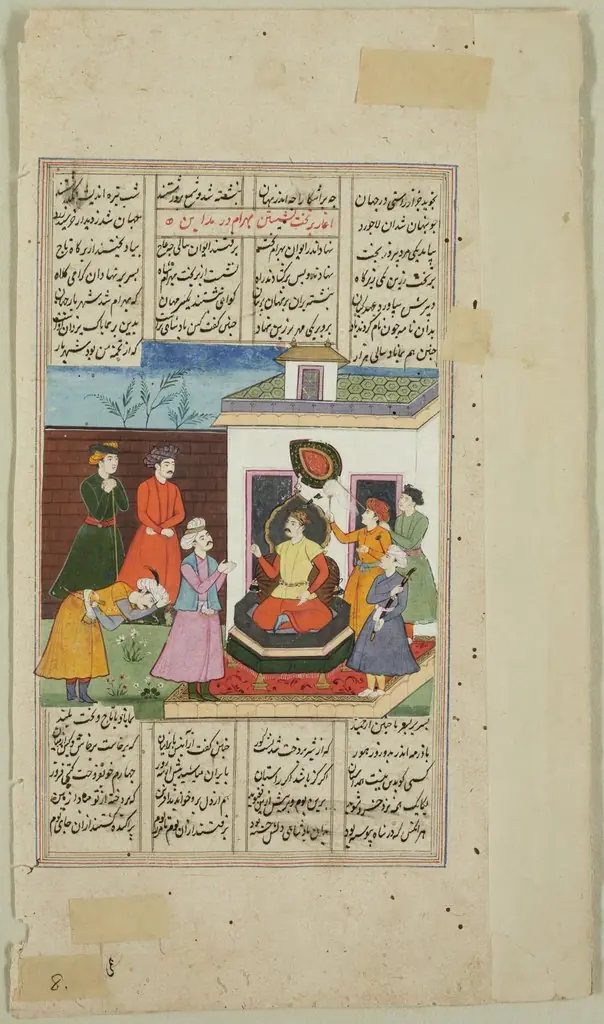 King Enthroned Outside and Standing Retainers
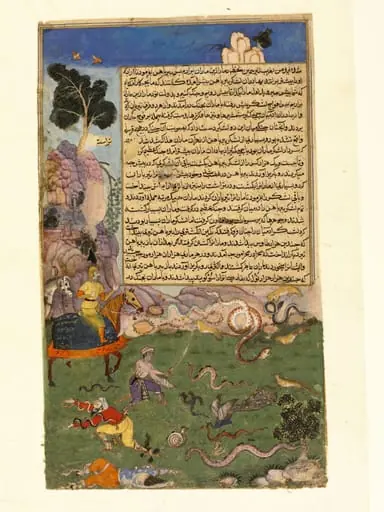 Vabhru-vahana
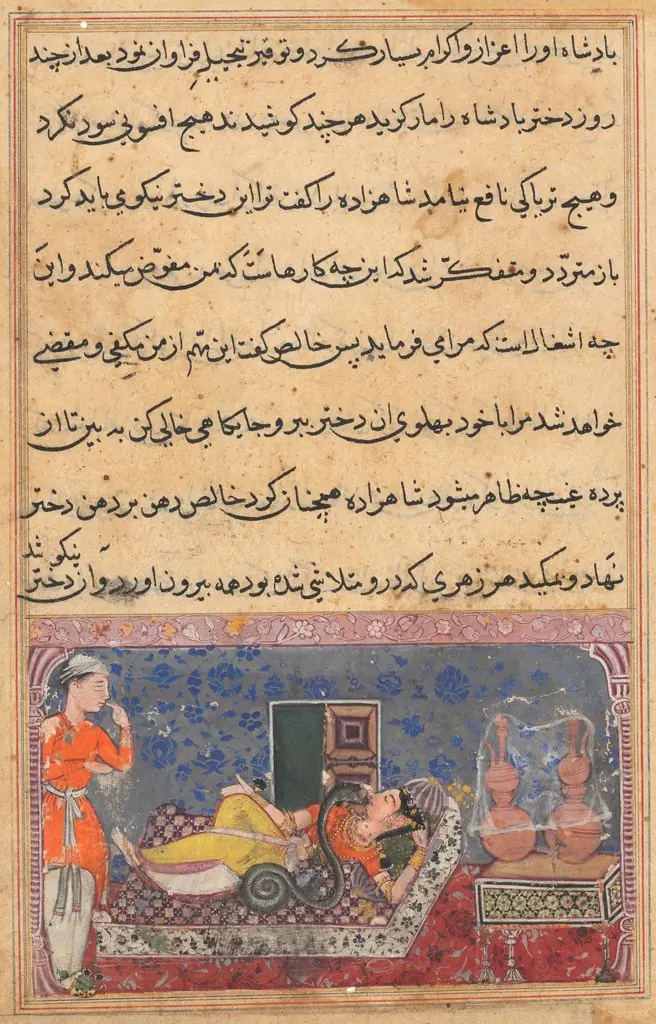 Khalis repays the prince for his kindness by changing into a snake and sucking the poison from the king’s daughter, from a Tuti-nama (Tales of a Parrot): Eighteenth Night
 Vabhruvahana Approaches Arjuna, page from the Khan Khanan's Razm-nama
 The daughter of the merchant of Mazanderan asks the gardener for the rose, from a Tuti-nama (Tales of a Parrot): Twelfth Night
 Untitled