Artwork
Untitled
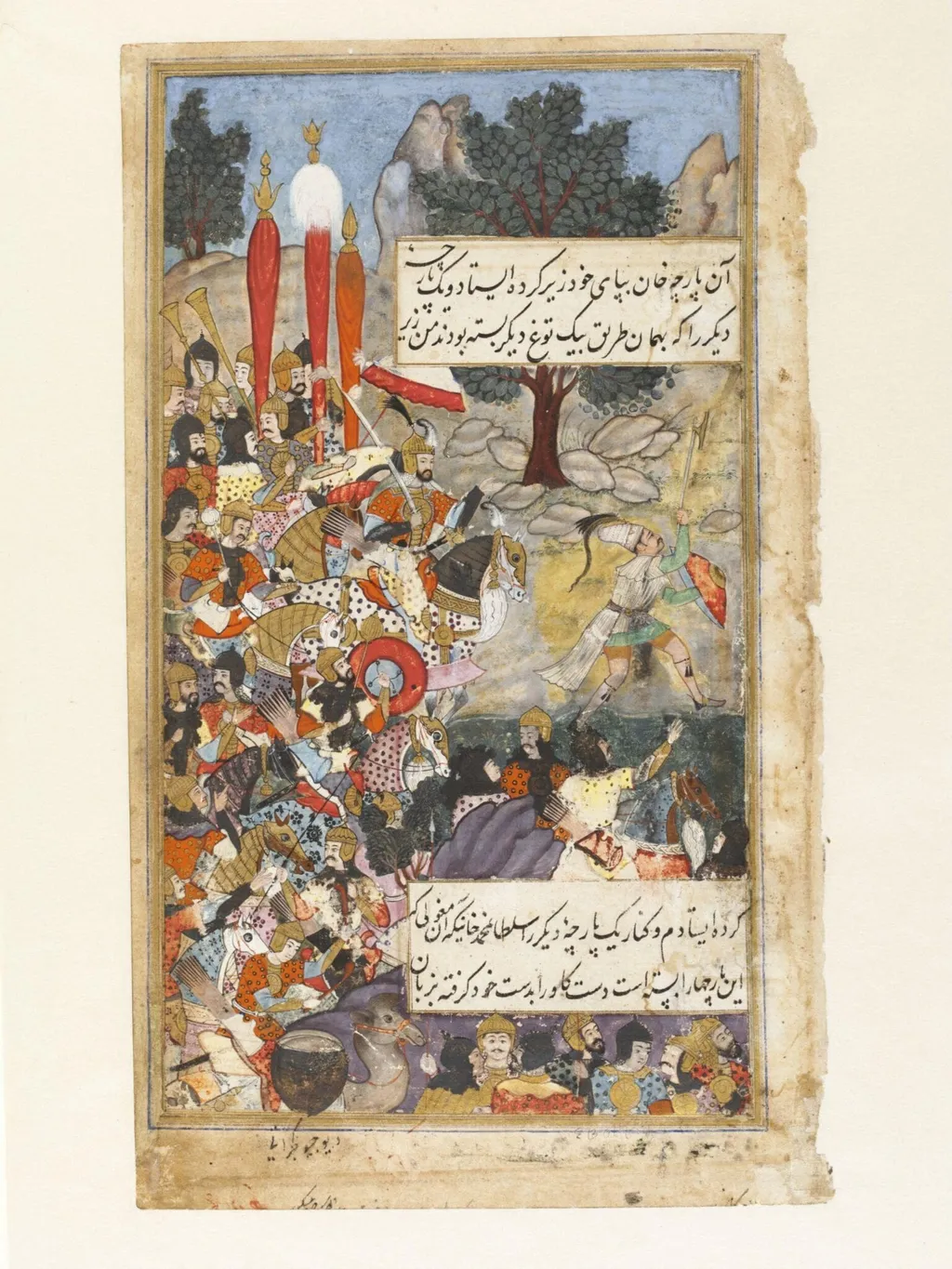
Untitled is a paint painting by the Mughal Painting artist Devji Gujarati. It dates from 1590 and is held in the collection of the Victoria and Albert Museum.
About this work
Overview
The work was produced during the early Mughal period, reflecting the imperial court’s interest in documenting historical events through visual narrative.
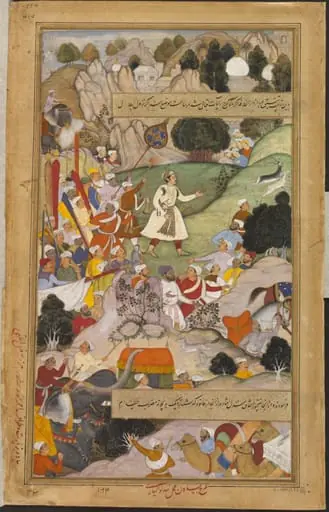
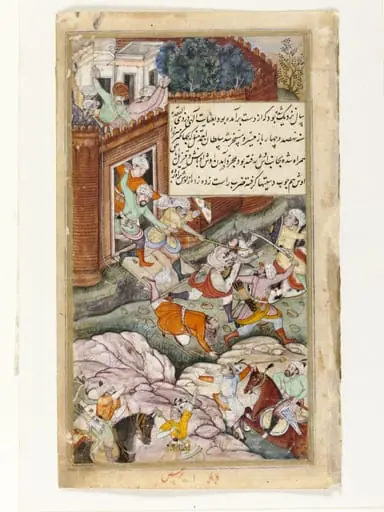
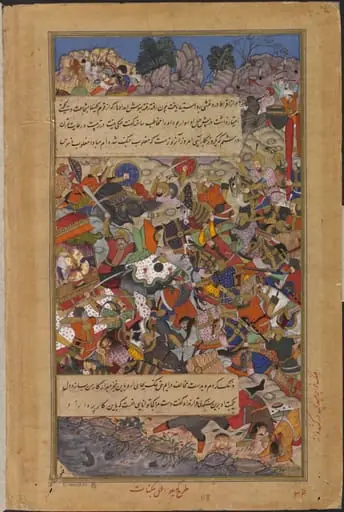
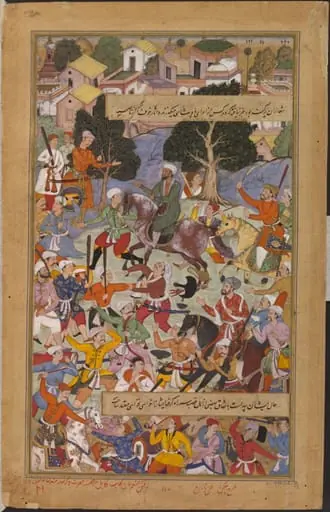
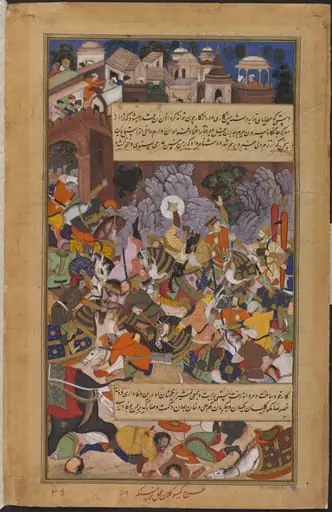
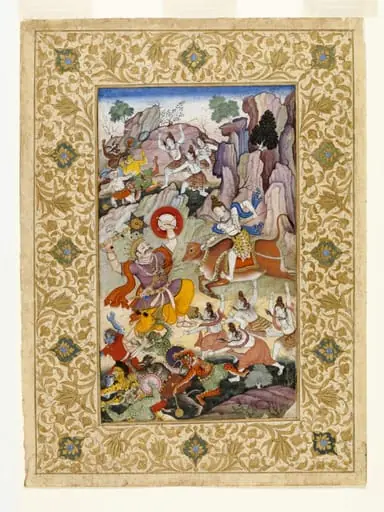
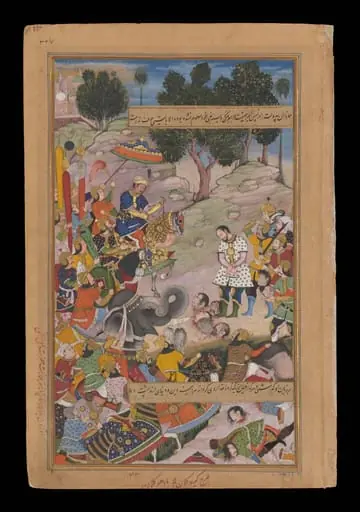
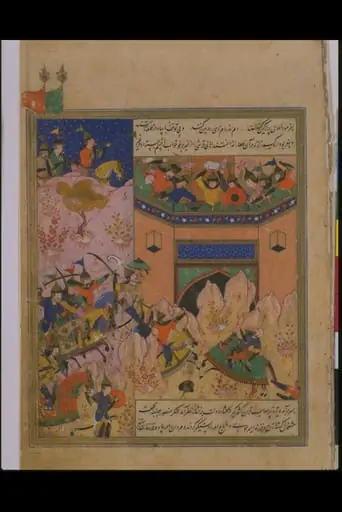
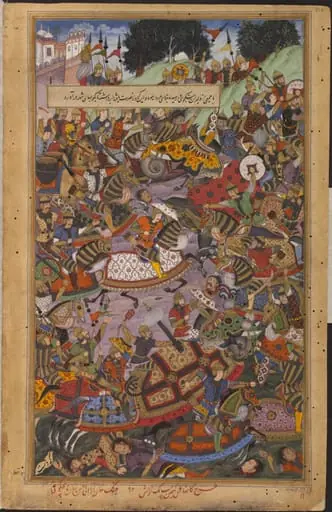
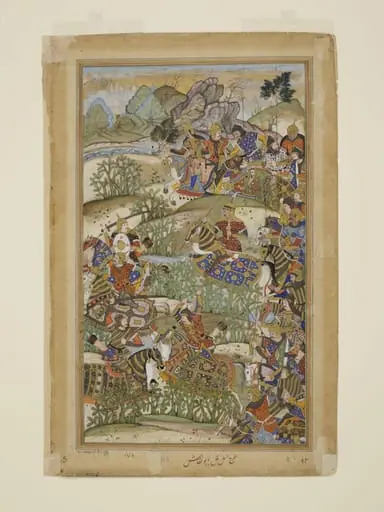
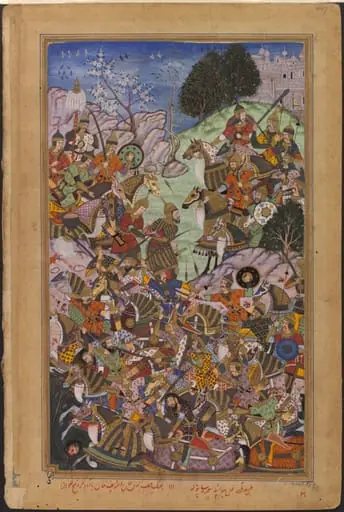
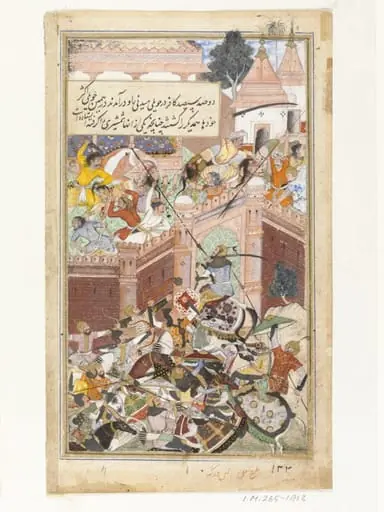
This watercolor on paper, created in 1590 by Devji Gujarati, is one of many illustrations commissioned for the *Baburnama*, the memoir of Babur, founder of the Mughal Empire. It depicts a military ceremony in the mountains near Tashkent in 1502, when Babur’s forces formally honored their standards. The work was produced during the early Mughal period, reflecting the imperial court’s interest in documenting historical events through visual narrative.
Subject & Meaning
The scene captures the annual ritual of acclaiming military standards, a symbolic act reinforcing loyalty and order within Babur’s army. Amidst the chaos of mounted warriors, falling figures, and raised weapons, the ceremony remains central—flags are prominently displayed, and key figures observe from below. The composition balances action with ritual, emphasizing discipline even in the midst of turmoil, reflecting the values of leadership and cohesion in Central Asian military culture.
Technique & Style
Devji Gujarati employed fine brushwork and layered watercolor to render intricate details within a compact space. Figures and horses are rendered with precision, their armor and garments distinguished by vivid reds, blues, and golds. The background features sparse, stylized trees and a pale sky, allowing the crowded foreground to dominate. Persian script, likely a caption, is integrated into the composition, aligning with the manuscript’s later Persian translation and Mughal aesthetic conventions.
History & Provenance
The illustration was originally part of a manuscript commissioned by Babur’s descendants, later translated from Chagatai Turkish into Persian and expanded within Mughal imperial archives. It remained in private or court collections until the early 20th century, when it was acquired by the museum in 1912 from the London-based booksellers Messrs Luzac & Co., who specialized in Oriental manuscripts and rare texts.
Context
Produced during the height of Mughal manuscript production, this painting reflects the fusion of Central Asian, Persian, and Indian artistic traditions. The *Baburnama* served both as personal memoir and political record, and its illustrations were tools of imperial memory. Artists like Devji Gujarati worked within established conventions but adapted them to convey specific historical moments, bridging oral tradition and written chronicle.
Legacy
As one of the earliest visual records of Babur’s campaigns, the painting contributes to the understanding of early Mughal historiography and artistic patronage. Its survival and preservation offer insight into how military rituals were documented and idealized in courtly culture. The work remains a key example of how illustration functioned as both art and archive in pre-modern South Asian manuscript culture.
Artist & collection
Artist
Devji Gujarati kept a studio in Surat’s crowded lanes where merchants haggled over cloth.